
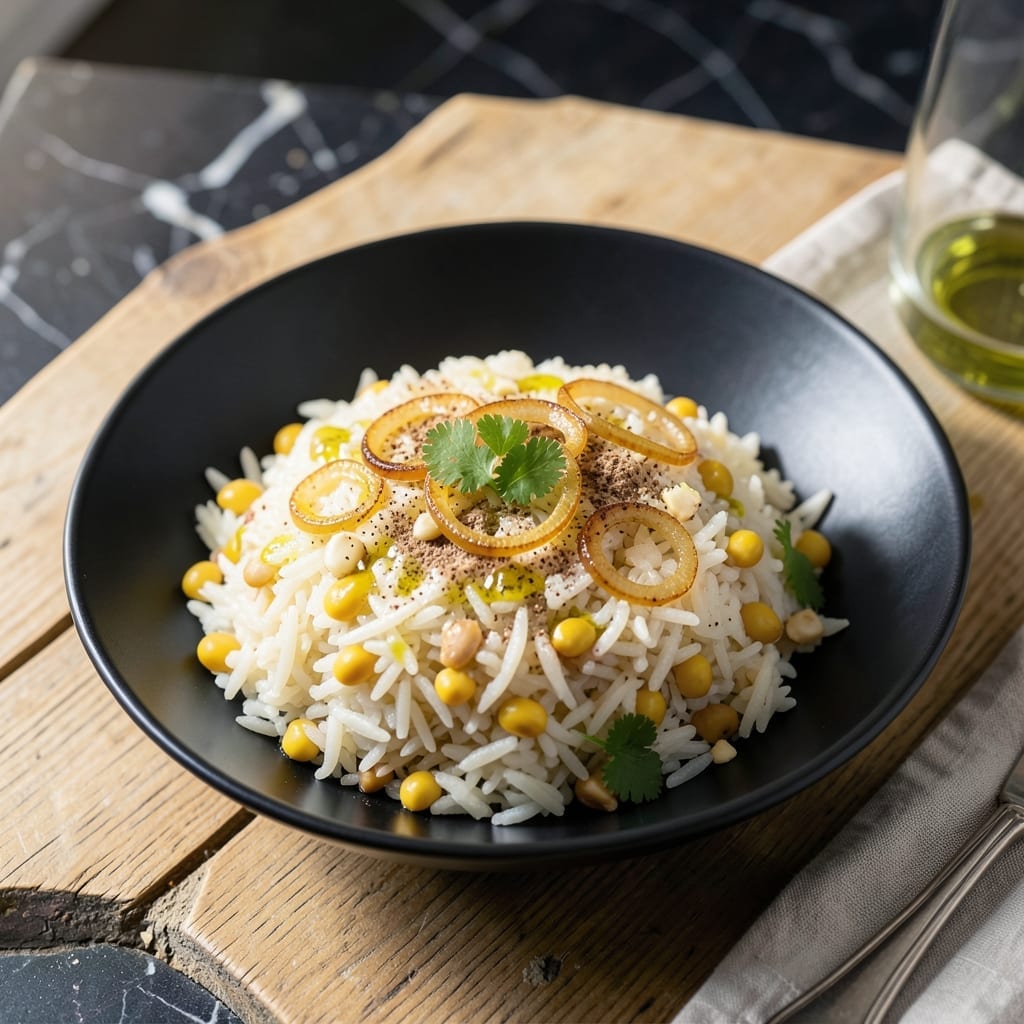
This dish transforms simple ingredients into a nutty, aromatic one-pot meal that satisfies completely. The combination of mung beans and rice creates a perfectly balanced texture that’s both hearty and light.
Cumin and turmeric add warm, earthy notes that elevate the flavors without overpowering. It’s a vegan dish that works as a main course or side, with minimal effort and maximum payoff.
Ingredients for Mung Bean Rice
A handful of pantry staples creates this aromatic, perfectly textured one-pot wonder.
| Ingredient | Amount | Notes |
|---|---|---|
| Mung Beans 🌱 | 1 cup | Dried, split or whole |
| Basmati Rice 🍚 | 1 cup | Rinsed until water runs clear |
| Yellow Onion 🧅 | 1 whole | Finely diced for even cooking |
| Garlic Cloves 🧄 | 4 cloves | Minced for maximum flavor |
| Fresh Ginger 🌿 | 1 tbsp | Grated for aromatic warmth |
| Ground Cumin 🌶️ | 1 ½ tsp | Toasted lightly for depth |
| Ground Turmeric 🟡 | 1 tsp | For golden color and earthiness |
| Green Chilies 🌶️ | 2 pieces | Finely chopped, seeds optional |
| Fresh Cilantro 🌿 | ½ cup | Chopped for garnish |
| Vegetable Oil 🫒 | 2 tbsp | Neutral flavor for sautéing |
| Water 💧 | 4 cups | For cooking mung and rice |
| Salt 🧂 | 1 ½ tsp | Adjust to taste preference |
| Lemon Juice 🍋 | 1 tbsp | Freshly squeezed for brightness |
Optimal quality requires dried mung beans with vibrant green color—avoid those with dull or yellowed hues. Basmati rice from Indian grocery stores offers superior aroma and grain separation. The ginger and garlic should be fresh, not jarred, for maximum punch. Look for organic cumin and turmeric at Whole Foods or Penzeys for the most potent earthy flavors.
No fresh cilantro? Parsley or mint can substitute, though the flavor profile shifts slightly. Out of green chilies? Jalapeño or serrano at half the quantity works well (adjust seeds for heat). Short on time? Pre-minced garlic and ginger from Trader Joe’s saves minutes (drain excess liquid first). The vegetable oil can be swapped for coconut oil for a subtle sweet note.
Cooked mung bean rice keeps beautifully in the fridge for 4-5 days in a sealed container. Freezes well too—up to 3 months. Reheat with a splash of water to restore moisture. The flavors deepen overnight, making leftovers even more delicious.
Why You’ll Love This Recipe
- One Pot Meal: I love tossing everything in a single pot—mung beans, rice, and aromatics—then walking away while it cooks.
- Garlic-Ginger Punch: The combo of fresh ginger and garlic with the earthy mung beans gives this dish a warmth that’s downright addictive.
- Meal Prep Hero: It reheats beautifully, so I make a big batch for lunches all week. (Yes, even on a Tuesday night)
- Budget Stretch: Mung beans and basmati rice are cheap staples that turn into something hearty and filling without breaking the bank.
Step-by-Step Instructions for Mung Bean Rice
This method ensures perfectly cooked grains with vibrant spice infusions and balanced textures.
Step 1: Prepare and Rinse the Base Ingredients
Place the 1 cup Mung Beans in a fine-mesh strainer and rinse thoroughly under cold running water, rubbing gently between your fingers. This removes any surface starch or debris that could make the final dish gummy.
In a separate bowl, rinse the 1 cup Basmati Rice until the water runs completely clear. This step is crucial for fluffy, separate grains. Drain both the mung beans and basmati rice well, then set aside. Proper rinsing prevents a sticky texture in the finished dish.
Step 2: Bloom Spices and Sauté Aromatics
Heat the 2 tbsp Vegetable Oil in a heavy-bottomed pot over medium heat. Add the 1.5 tsp Ground Cumin and 1 tsp Ground Turmeric, stirring constantly for 30-45 seconds until the spices become fragrant and the turmeric turns the oil a vibrant golden hue.
Immediately add the finely diced 1 whole Yellow Onion, minced 4 cloves Garlic Cloves, grated 1 tbsp Fresh Ginger, and finely chopped 2 pieces Green Chilies. Sauté for 4-5 minutes until the onion softens and turns translucent, stirring occasionally to prevent burning. The aromatics should release their fragrance without browning.
Step 3: Toast Grains and Combine Liquids
Add the drained mung beans and basmati rice to the pot, stirring to coat them evenly in the spiced oil and aromatics. Toast for 2-3 minutes until the grains appear slightly opaque and you detect a subtle nutty aroma. This toasting step enhances their natural flavors.
Pour in the 4 cups Water and add the 1.5 tsp Salt. Stir well to distribute all ingredients evenly. The water should appear golden from the turmeric. Bring the mixture to a rolling boil over high heat, which should take approximately 5-6 minutes.
Step 4: Simmer and Steam to Perfection
Once boiling, reduce the heat to low, cover the pot with a tight-fitting lid, and let it simmer undisturbed for 20-25 minutes. Resist the urge to lift the lid during this time—steam is essential for even cooking.
After the cooking time, turn off the heat but keep the lid on for an additional 10 minutes. This resting period allows the grains to absorb any remaining moisture. The mung beans should be tender but still hold their shape, and the rice should be fluffy with no resistance when tested.
Step 5: Finish and Serve
Remove the lid and fluff the mixture gently with a fork, taking care not to break the mung beans. Drizzle the 1 tbsp Lemon Juice evenly over the top and stir lightly to incorporate. This adds a bright, fresh note that balances the earthy spices.
Garnish with the 0.5 cup Fresh Cilantro just before serving. The cilantro should be vibrant green and freshly chopped for maximum flavor impact. Serve warm, ensuring each portion contains an even distribution of mung beans, rice, and aromatic spices.
Pro Tips For Making Mung Bean Rice
- Soak the Beans: Give the mung beans a good 30-minute soak in warm water before cooking—I learned this the hard way after ending up with undercooked centers more times than I’d like to admit.
- Toast the Spices: Sauté the minced onion, garlic, and ginger in oil until fragrant (about 2-3 minutes) before adding the rice and beans. This builds a flavor base that’s noticeable when skipped.
- Use the Right Ratio: Stick to a 1:2 ratio of basmati rice to water, but add an extra ¼ cup for the mung beans—they absorb more than you’d expect, and dry rice is a sad outcome.
- Skip the Stirring: Once the rice and mung beans are simmering, resist the urge to stir—it breaks the grains and turns your dish into a mushy mess instead of light, fluffy bites.
Common Mistakes When Making Great mung bean rice
Skipping the Rinse
I always rinse both the mung beans and basmati rice thoroughly—the starch on unrinsed grains creates a gummy, sticky texture that ruins the dish’s signature fluffy separation. Use cold water and rub between your fingers until the water runs clear. 💡
Overcooking Spices
Blooming the cumin and turmeric is crucial, but burning them is a common mistake. Keep the heat at medium and stir constantly for only 30-45 seconds until fragrant. Burnt spices taste bitter and overpower the dish.
Incorrect Water Ratio
The 4 cups water to 2 cups grains ratio works perfectly, but adding extra “just in case” leads to mushy results. Trust the recipe—if you’re worried, check at 20 minutes and add ¼ cup hot water only if dry.
Lifting the Lid
Resist peeking during the 20-25 minute simmer. Every time you lift the lid, you release precious steam that the rice and beans need to cook evenly. Keep it covered until the full cooking time is up.
Skipping the Rest
That 10-minute rest after cooking isn’t optional. It lets the grains absorb the last bit of moisture and finish cooking gently. I learned this the hard way—my first batch was undercooked until I started resting it properly.
Overcrowding the Pot
Use a heavy-bottomed pot that’s at least 3 quarts to give the grains room to expand. A crowded pot steams unevenly, leading to some grains overcooked while others stay hard. 🔥
Nutrition Facts
Frequently Asked Questions
Can I use canned mung beans instead?
No, canned beans become too soft and lose their shape. Always use dried mung beans for the right texture. Soak them for 30 minutes if you need to reduce cooking time.
Why does my rice turn out mushy?
Mushy rice usually means too much water or lifting the lid. Stick to 4 cups water and keep the pot covered during the 20-25 minute simmer.
What’s the best way to store leftovers?
Store in an airtight container in the fridge for up to 5 days. Reheat with a splash of water to restore moisture. It freezes well for up to 3 months.
Can I skip the lemon juice?
You can, but the 1 tbsp lemon juice adds a bright finish that balances the earthy spices. Without it, the dish may taste flat.

- Mujadara Rice and Lentils Recipe: Earthy Spiced Lentils With Caramelized Onions - November 1, 2026
- Naija Fried Rice Recipe: Street-Style Spice With Veggie Crunch - November 1, 2026
- Mushy Rice Recipe: Fluffy Grains Transformed in Minutes - November 1, 2026