
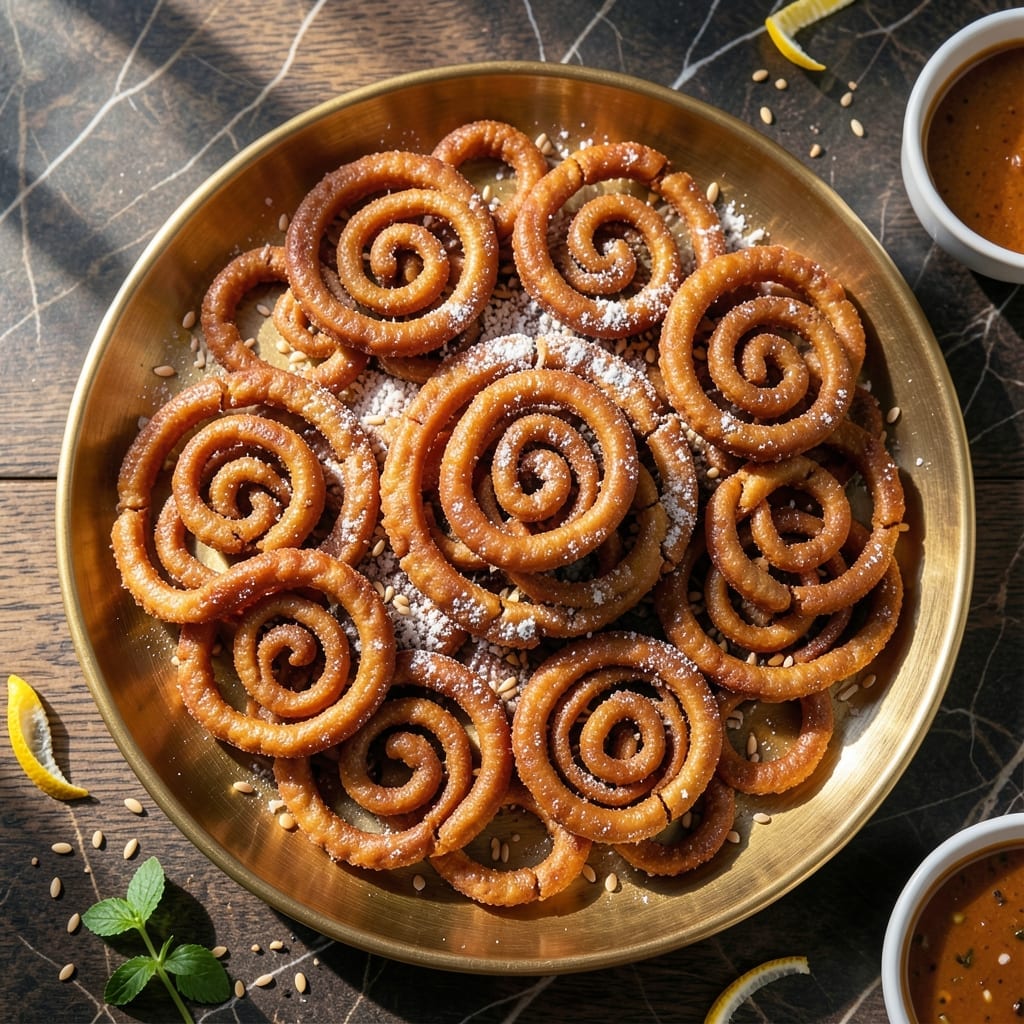
This traditional Tamil murukku transforms simple rice flour into irresistibly crispy spirals that define festive celebrations.
I’ve refined this method over years to ensure the perfect crunch every time, using a classic murukku press for authentic shapes. The dough comes together with just a few ingredients but requires precise consistency.
The secret lies in the hot oil bath—frying at just the right temperature creates layers of delicate crispness that shatter with each bite. These golden spirals stay fresh for weeks when stored properly.
Perfect for Diwali, weddings, or anytime you crave that signature South Indian texture. This technique delivers professional results with minimal equipment.
Ingredients for Murukku Recipe Tamil with Rice Flour
Fine rice flour and a few pantry spices create these crispy Tamil spirals for festive celebrations.
| Ingredient | Amount | Notes |
|---|---|---|
| Rice Flour 🌾 | 4 cups | Fine, store-bought or homemade |
| Roasted Gram Flour 🌾 | 1 cup | Also known as besan |
| Cumin Seeds 🌿 | 1 tbsp | Whole, not ground |
| Sesame Seeds 🌿 | 1 tbsp | White or black variety |
| Asafoetida 🌿 | ¼ tsp | Hing, for authentic flavor |
| Salt 🧂 | 1 ½ tsp | Adjust to taste |
| Red Chili Powder 🌶️ | 1 tsp | Adjust for heat preference |
| Hot Water 💧 | 1 ½ cups | For dough consistency |
| Vegetable Oil 🫒 | 4 cups | For deep frying |
| Curry Leaves 🍃 | 10 pieces | Optional, for extra flavor |
| Butter 🧈 | 1 tbsp | Vegan butter for moisture |
The rice flour is non-negotiable here. Use fine-milled rice flour—coarse textures ruin the crispness. Most Indian grocery stores carry both varieties, so check the label. Roasted gram flour (besan) adds depth, but ensure it’s fresh and not rancid. Asafoetida (hing) is the secret umami element—look for pure hing without additives at specialty spice shops.
No cumin seeds? Caraway seeds at half the amount work in a pinch. Swap sesame seeds for poppy seeds if preferred. If red chili powder is too spicy, paprika provides color without heat. For the water, use just-boiled to get the right dough consistency. The oil must be neutral-flavored—sunflower or peanut oil are ideal alternatives.
Store murukku in airtight containers once completely cooled. They stay crisp for 3-4 weeks at room temperature. Avoid refrigeration as moisture softens them. Perfect for making ahead, as the flavor actually improves over a few days.
Why You’ll Love This Recipe
- No-Fuss Mixing: I just dump the rice flour, roasted gram flour, and spices in a bowl—no fancy steps, just my hands and a little water.
- Crunch in Every Bite: That cumin and sesame seed combo with asafoetida hits different—savory, nutty, and so satisfying.
- Festival Ready: I make a big batch for Diwali, but honestly, it’s my afternoon tea snack too (yes, even on a Tuesday).
- Stays Fresh for Days: One jar lasts me a week—still crispy, still addictive, and costs less than store-bought.
Step-by-Step Instructions for Murukku with Rice Flour
Master the technique for perfectly crisp spirals with this traditional method.
Step 1: Prepare the Dough Base
In a large mixing bowl, combine the 4 cups Rice Flour and 1 cup Roasted Gram Flour. I use a fine-mesh sieve to ensure a lump-free mixture. This foundation gives the murukku its characteristic light, airy texture.
Add the 1 tbsp Cumin Seeds, 1 tbsp Sesame Seeds, 0.25 tsp Asafoetida, 1.5 tsp Salt, and 1 tsp Red Chili Powder. Mix these dry ingredients thoroughly by hand, pressing lightly to distribute the spices evenly through the flours.
Step 2: Create the Perfect Dough Consistency
Gradually incorporate the 1.5 cups Hot Water into the dry mixture, a little at a time. I find using warm water helps the dough come together more smoothly. Knead with your fingertips first, then with your palm, until it forms a soft, pliable dough.
Add the 1 tbsp Butter and knead for an additional 5-7 minutes until the dough becomes smooth and elastic. The dough should be firm enough to hold its shape but soft enough to press through the murukku mold without resistance.
Cover with a damp cloth and let rest for 15-20 minutes. This resting period allows the flours to fully hydrate, which is crucial for achieving the right texture in the final product.
Step 3: Shape and Form the Murukku Spirals
Divide the dough into small, manageable portions. Fill your murukku press with one portion and select the star-shaped disc. I prefer to use a traditional hand press for this, as it gives the most authentic texture.
Press the dough directly into the 4 cups Vegetable Oil heated to 350-375°F. Form concentric circles, starting from the center and working outward, to create the classic spiral shape. The oil temperature is critical—if it’s too cool, the murukku will absorb oil and become greasy.
Step 4: Deep-Fry to Golden Perfection
Fry the spirals in batches, maintaining the oil temperature between 350-375°F. You should see small bubbles forming around the dough as it hits the oil. Fry for 3-4 minutes on each side, or until the murukku turns a deep golden brown color.
As they cook, the murukku will rise to the surface. Use a slotted spoon to turn them gently, ensuring even browning. For added flavor, you can drop a few 10 pieces Curry Leaves into the hot oil during the last minute of frying—this infuses the oil with their aromatic essence.
Remove from oil and drain on paper towels. The murukku should be crisp to the touch and have a uniform golden color throughout. Allow them to cool completely before storing, as they will crisp up further as they cool.
Pro Tips For Making Murukku Recipe Tamil With Rice Flour
- Heat the Oil Right: I learned this the hard way—Medium heat is non-negotiable. Too hot, and the murukku browns outside but stays raw inside; too low, and it soaks up oil like a sponge.
- Roast the Gram Flour: Sounds weird, but it works: Dry-roast the roasted gram flour for 2-3 minutes until fragrant. It removes any raw taste and deepens the flavor.
- Skip the Lumpy Mix: After burning three batches, I finally figured out that the rice flour batter must be smooth—no lumps. Strain it if you have to; it guarantees even frying.
- Add Asafoetida Last: My grandmother swore by this, and she was right: Stir in asafoetida only after the oil is hot. Adding it too early makes it bitter and loses its aroma.
Regional Styles of murukku recipe tamil with rice flour
Chettinad Style
In this variation, I add 1 tsp black pepper powder and ½ tsp fennel seeds to the dough for a bold, aromatic twist. The Chettinad region favors robust flavors, so I also increase the red chili powder to 1½ tsp for extra heat. This version pairs beautifully with coconut chutney. 🌶️
Madurai Special
Madurai-style murukku is thinner and extra crispy. I use ½ cup extra rice flour to achieve a lighter texture. The spirals are pressed into smaller, tighter coils. I fry them at a slightly lower temperature of 325-340°F for a delicate crunch.
Tanjore Tradition
This style incorporates 2 tbsp grated coconut into the dough for a subtle sweetness. I also add ½ tsp turmeric powder for a golden hue. The Tanjore version is slightly thicker, creating a heartier bite. These are often made during temple festivals.
Kongu Region
In Kongu Nadu, I’ve seen murukku made with ½ cup urad dal flour replacing some rice flour. This adds a nutty depth. The dough is rested for 30 minutes to develop flavors. They’re shaped into small rounds rather than spirals.
Coimbatore Style
Coimbatore’s version includes 1 tbsp chopped curry leaves in the dough itself. I also add 1 tsp garam masala for warmth. The murukku are pressed into long ribbons rather than spirals. These are a Diwali staple in many homes. ✨
Nagercoil Twist
This southernmost style uses 1 tbsp toor dal flour for richness. I fry them in coconut oil instead of vegetable oil for a distinct aroma. The spirals are made larger, about 4 inches in diameter, and are slightly softer than other versions.
Nutrition Facts
Frequently Asked Questions
What type of rice flour works best?
Use fine-milled rice flour for the crispiest texture. Coarse varieties create uneven spirals that don’t fry properly.
How do I know the dough is ready?
It should be smooth, pliable, and firm enough to hold shape but soft enough to press easily. Test by pressing a small piece through the mold.
Why did my murukku turn out greasy?
This happens when oil temperature is too low. Maintain oil between 350-375°F and fry in small batches.
Can I bake instead of frying?
Baking won’t achieve the same crispness, but you can try at 375°F for 15-20 minutes. Deep-frying is traditional and recommended.

- Mujadara Rice and Lentils Recipe: Earthy Spiced Lentils With Caramelized Onions - November 1, 2026
- Naija Fried Rice Recipe: Street-Style Spice With Veggie Crunch - November 1, 2026
- Mushy Rice Recipe: Fluffy Grains Transformed in Minutes - November 1, 2026