
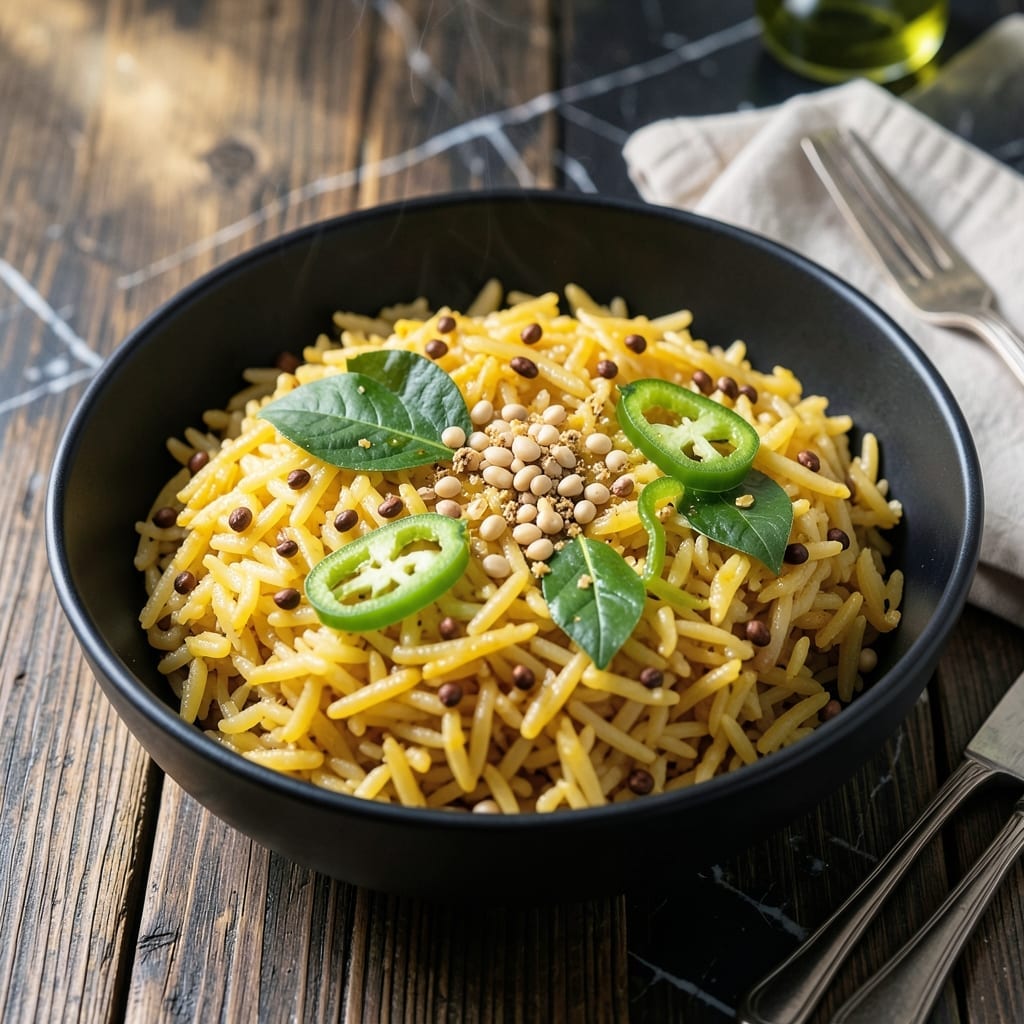
This South Indian specialty transforms humble rice into a vibrant, flavor-packed dish with minimal effort.
The one-pot method simplifies preparation while maximizing taste, using mustard seeds, curry leaves, and turmeric for authentic character. Each grain absorbs the aromatic spices, creating a balanced blend of earthy and tangy notes.
You’ll achieve perfectly cooked rice with a golden hue and subtle crunch from tempered mustard seeds. The dish pairs beautifully with yogurt or vegetable curries, offering a complete vegetarian meal.
Simple ingredients and straightforward steps make this a reliable choice for weeknight dinners or special occasions.
Ingredients for Mustard Rice
Basmati rice and South Indian spices create a vibrant one-pot dish with minimal effort.
| Ingredient | Amount | Notes |
|---|---|---|
| Basmati Rice 🌾 | 2 cups | Rinsed until water runs clear |
| Yellow Mustard Seeds 🌿 | 2 tsp | Black mustard seeds work too |
| Curry Leaves 🍃 | 12 pieces | Fresh preferred, dried acceptable |
| Ground Turmeric 🌼 | ½ tsp | For vibrant golden color |
| Green Chilies 🌶️ | 2 whole | Slit lengthwise, seeds removed |
| Urad Dal 🥜 | 1 tsp | Split black gram lentils |
| Chana Dal 🥜 | 1 tsp | Split chickpea lentils |
| Vegetable Oil 🫒 | 3 tbsp | Or coconut oil for authenticity |
| Asafoetida 🧂 | ¼ tsp | Hing, optional but traditional |
| Water 💧 | 4 cups | Adjust as needed for rice |
| Salt 🧂 | 1 ½ tsp | Adjust to taste |
| Fresh Cilantro 🌿 | ¼ cup | Chopped, for garnish |
| Lemon Juice 🍋 | 1 tbsp | Freshly squeezed for tang |
The mustard seeds are non-negotiable—yellow or black, both work but yellow are more common in South Indian cooking. Curry leaves are the soul of this dish; find them fresh at Indian grocery stores or online. Turmeric quality matters—opt for freshly ground or a reputable brand like MDH for that authentic golden hue. Asafoetida (hing) adds depth, but skip it if you can’t find it.
No curry leaves? Dried curry leaf powder at half the amount works in a pinch. Missing urad or chana dal? Skip them, but the texture won’t be quite the same. For heat adjustments, reduce green chilies or remove seeds entirely. Coconut oil substitutes beautifully for vegetable oil, adding a subtle nuttiness. The cilantro garnish is optional but highly recommended for freshness.
Store dry spices in airtight containers away from light for up to 6 months. Fresh curry leaves keep in the fridge for 2 weeks wrapped in paper towels. Cooked rice stays fresh for 3-4 days refrigerated and reheats perfectly with a splash of water.
Why You’ll Love This Recipe
- One Pot Wonder: I just toss everything in a single pot—basmati rice, mustard seeds, curry leaves—and let it simmer. Minimal cleanup, maximum flavor.
- Punch of Spice: Honestly, the pop of mustard seeds and green chilies with that earthy turmeric? It’s the kind of taste that lingers in the best way.
- Meal Prep Magic: This rice keeps beautifully for days, and it pairs as well with dal as it does with a simple raita. Between us, it’s my lunchbox hero.
- Budget Stretch: A handful of mustard seeds and curry leaves transform plain rice into something special. I’ll be real—it’s my go-to when I need to feed a crowd without breaking the bank.
Step-by-Step Instructions for Mustard Rice
This one-pot method delivers perfectly fragrant rice with minimal cleanup and maximum flavor.
Step 1: Rinse and Prepare the Basmati Rice
Place the 2 cups Basmati Rice in a fine-mesh strainer and rinse under cold running water until the water runs completely clear. This removes excess starch that would otherwise make the rice gummy. I typically rinse it 3-4 times to ensure purity.
After rinsing, let the rice soak in fresh water for 15 minutes. This step ensures even cooking and prevents the grains from breaking. Drain thoroughly before using—the rice should be damp but not dripping when you add it to the pot.
Step 2: Temper the Spices for Maximum Aroma
Heat the 3 tbsp Vegetable Oil in a heavy-bottomed pot over medium heat. Add the 1 tsp Urad Dal and 1 tsp Chana Dal, stirring frequently. When the dals turn light golden brown after about 1-2 minutes, add the 2 tsp Yellow Mustard Seeds.
As soon as the mustard seeds begin to pop, add the 12 pieces Curry Leaves, 2 whole Green Chilies, and 0.25 tsp Asafoetida. Stir for 10-15 seconds until the curry leaves become fragrant and slightly crisp. This tempering process unlocks the full potential of the spices.
Step 3: Toast the Rice and Add Liquids
Add the drained Basmati Rice to the pot and stir to coat the grains with the spiced oil. Toast for 1-2 minutes until the rice turns slightly translucent at the edges. This step enhances the nutty flavor of the basmati.
Stir in the 0.5 tsp Ground Turmeric and 1.5 tsp Salt, ensuring even distribution. Pour in the 4 cups Water and stir once to combine. Bring the mixture to a rolling boil over high heat.
Step 4: Cook and Rest for Perfect Texture
Once boiling, reduce the heat to low, cover the pot with a tight-fitting lid, and simmer for 12-15 minutes. Resist the urge to lift the lid during this time—steam is crucial for even cooking. You’ll know it’s done when all the water has been absorbed and the rice is tender.
Remove from heat and let the rice rest, covered, for an additional 5 minutes. This resting period allows the grains to firm up and absorb any remaining moisture, preventing a mushy result.
Step 5: Finish and Serve
Gently fluff the rice with a fork to separate the grains. Drizzle with the 1 tbsp Lemon Juice and sprinkle with the 0.25 cup Fresh Cilantro. The lemon juice adds a bright finish that balances the earthy spices.
Taste and adjust the salt if needed, though the initial measurement should be sufficient. Serve warm, with the cilantro providing a fresh, herbal contrast to the rich, aromatic rice.
Pro Tips For Making Mustard Rice
- Toast the Mustard Seeds: Heat the mustard seeds in oil until they start popping—I learned this the hard way—raw seeds taste bitter and ruin the dish.
- Rinse the Basmati: Soak the rice for 15 minutes, then rinse until the water runs clear; it removes excess starch and keeps the grains separate.
- Temper the Curry Leaves: Fry the curry leaves in hot oil for 10-15 seconds before adding other ingredients—this releases their aroma and prevents a raw, grassy flavor.
- Use Fresh Green Chilies: Old or dried chilies lose their punch; finely chop fresh ones for consistent heat and color throughout the rice.
Troubleshooting Perfect Results
Mustard Seeds Not Popping
If your mustard seeds refuse to pop, your oil may not be hot enough. Heat the 3 tbsp Vegetable Oil over medium heat until shimmering before adding seeds. Old seeds lose their pop—check expiration dates or buy from Indian grocery stores for freshness. 💡
Rice Turns Mushy
This usually means too much water or lifting the lid during cooking. Stick to the 4 cups Water ratio for 2 cups Basmati Rice and resist peeking while simmering. Over-rinsing can also remove too much starch, making grains fragile.
Bland Flavor Result
Tempering the spices properly is crucial. Make sure your 2 tsp Yellow Mustard Seeds, 12 Curry Leaves, and 0.5 tsp Turmeric bloom in hot oil before adding rice. If still mild, finish with extra 1 tbsp Lemon Juice or a pinch of salt.
Uneven Cooking
Uneven heat or insufficient soaking causes this. Always soak rice for 15 minutes and use a heavy-bottomed pot over low heat. If some grains remain hard, cover and let rest for an extra 5-10 minutes off heat.
Burnt Spices
Burnt tempering tastes bitter. Keep heat at medium and stir constantly once dals and seeds hit the oil. Remove from heat immediately if they darken too quickly. Fresh Curry Leaves burn faster than dried—adjust timing accordingly.
Lack of Golden Color
Old turmeric loses potency. Use freshly ground or MDH brand for vibrant color. If your turmeric is pale, add a pinch more but don’t exceed 1 tsp total. Stir well into oil before adding rice for even distribution. ✨
Nutrition Facts
Frequently Asked Questions
Can I use brown rice instead of basmati?
Yes, but adjust the water to 4.5 cups and increase cooking time to 30-40 minutes. Brown rice needs more liquid and time to soften properly.
Why do we soak the rice first?
Soaking for 15 minutes ensures even cooking and prevents grains from breaking. It also removes excess starch for fluffier results.
What if I don’t have curry leaves?
Use 1 tsp dried curry leaf powder or skip them entirely. The dish will still taste good, though less authentic.
Can I make this ahead of time?
Cooked rice keeps for 3-4 days refrigerated. Reheat with a splash of water to restore moisture.

- Peri Peri Rice Recipe: Spicy Portuguese One-Pot Harmony - November 6, 2026
- Mexican Flavoured Rice Recipe: Authentic Spice-Infused One-Pot Meal - November 6, 2026
- Lao Gan Ma Fried Rice Recipe: Spicy Wok-Tossed Perfection - November 6, 2026