
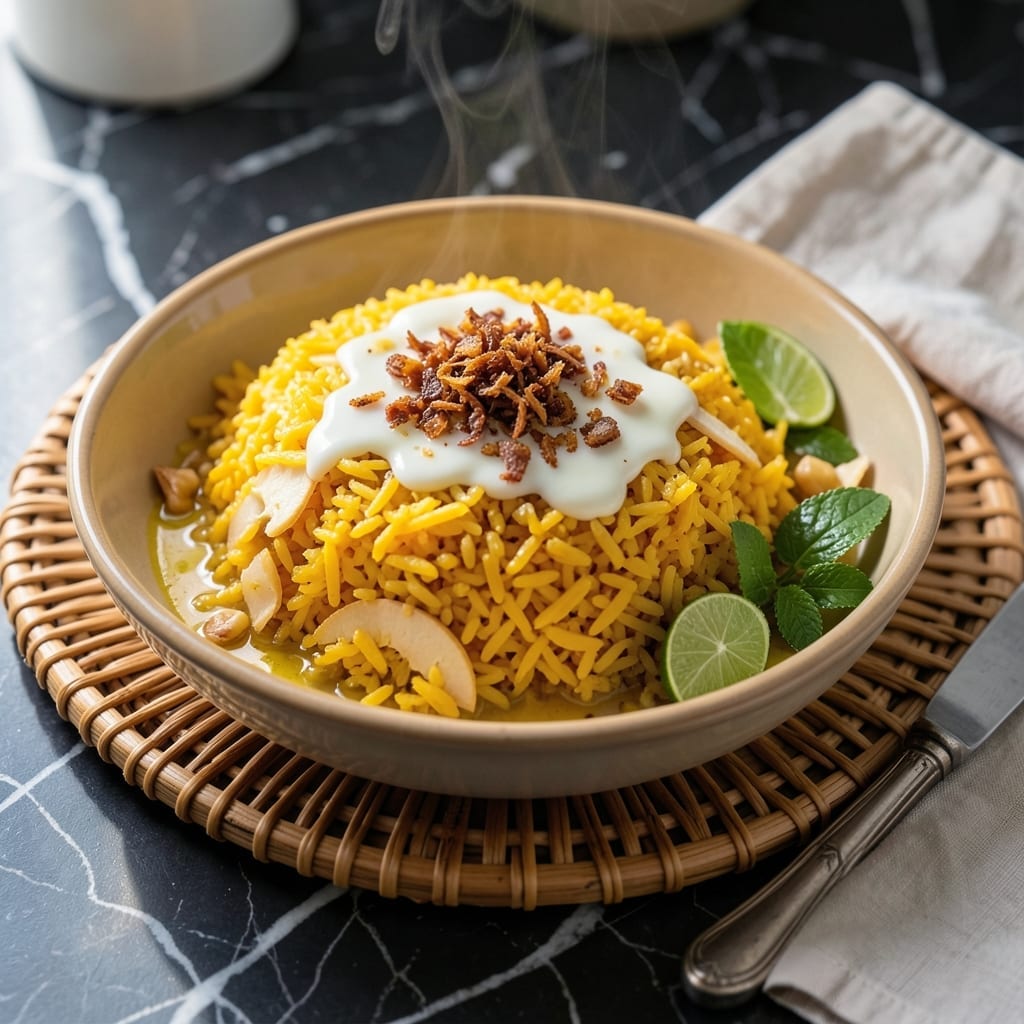
This rice cooker method transforms a traditional Indonesian celebration dish into an effortless one-pot meal. The secret lies in infusing the rice with turmeric and coconut milk for its signature golden hue and rich aroma.
Using simple pantry staples, this recipe captures authentic flavors without complicated techniques. The rice cooker handles the work, ensuring perfectly cooked grains every time with minimal hands-on effort.
What emerges is fragrant, slightly sweet yellow rice that pairs beautifully with fried chicken, eggs, or vegetables. The turmeric lends earthy warmth while coconut milk adds subtle creaminess.
Ideal for special occasions or everyday meals, this method delivers consistent results with the convenience of modern kitchen tools.
Ingredients for Nasi Kuning Recipe Rice Cooker
Aromatic rice infused with turmeric and coconut milk for a vibrant, fragrant celebration dish.
| Ingredient | Amount | Notes |
|---|---|---|
| Jasmine Rice 🍚 | 2 cups | Rinsed until water runs clear |
| Coconut Milk 🥥 | 1 cup | Full-fat for creaminess |
| Turmeric Powder 🧂 | 1 ½ tsp | Ground, for golden color |
| Garlic Cloves 🧄 | 4 cloves | Minced for maximum flavor |
| Shallots 🧅 | 2 whole | Finely chopped, essential for aroma |
| Ginger 🌿 | 1 tbsp | Freshly grated, peeled |
| Lemongrass 🌱 | 1 stalk | Bruised, cut into 2-inch pieces |
| Kaffir Lime Leaves 🍃 | 2 whole | Torn, for citrusy fragrance |
| Salam Leaf 🍂 | 1 whole | Indonesian bay leaf, optional |
| Salt 🧂 | 1 tsp | Adjust to taste |
| Sugar 🍚 | 1 tsp | Optional, balances flavors |
| Water 💧 | 2 ½ cups | For cooking rice |
| Vegetable Oil 🫒 | 1 tbsp | For sautéing aromatics |
The turmeric is non-negotiable for that signature golden hue—look for vibrant color and strong aroma at Whole Foods or Asian markets. Jasmine rice is traditional, but long-grain white works in a pinch. Coconut milk quality matters: Thai Kitchen or Native Forest brands deliver the right creaminess. Fresh aromatics are key—ginger, garlic, and shallots should smell pungent and look firm, not shriveled.
No fresh lemongrass? Lemongrass paste at half the amount works, or substitute with lime zest for brightness. Missing kaffir lime leaves? Lime juice and bay leaf mimic the citrusy depth. Salam leaf is traditional but can be skipped—just add a pinch of ground coriander for complexity. For a richer dish, swap water for coconut water.
Cooked rice stays fresh sealed in the fridge for 3-4 days. The aromatics—ginger, garlic, lemongrass—can be prepped a day ahead and stored covered. Reheat in the rice cooker with a splash of water to restore moisture. Freezing not recommended as texture suffers.
Why You’ll Love This Recipe
- Set and Forget: I just dump everything in the rice cooker and let it work its magic—no stirring, no babysitting.
- Golden Comfort: The turmeric and coconut milk turn plain jasmine rice into this fragrant, slightly sweet bowl I crave all week.
- Crowd Pleaser: I’ve served this at potlucks and weeknight dinners alike—even the picky eaters go back for seconds.
- Budget Stretcher: One batch feeds us for days, and the ingredients cost less than a takeout meal. Honestly, it’s my wallet’s best friend.
Step-by-Step Instructions for Nasi Kuning in a Rice Cooker
Here’s the method. Straightforward, tested, works every time.
Step 1: Prepare and Sauté the Aromatics
Rinse the 2 cups Jasmine Rice until the water runs clear, then drain thoroughly. In the rice cooker pot, heat the 1 tbsp Vegetable Oil over the sauté function if available, or transfer to a stovetop pan.
Add the minced 4 cloves Garlic Cloves, finely chopped 2 whole Shallots, 1 tbsp Ginger, and the bruised, segmented 1 stalk Lemongrass. Sauté for 2-3 minutes until the shallots turn translucent and the mixture emits a fragrant aroma. This builds the flavor foundation.
Step 2: Toast the Turmeric and Rice
Stir in the 1.5 tsp Turmeric Powder and cook for 30 seconds to bloom its earthy, vibrant color. This step intensifies the golden hue and deepens the flavor. Immediately add the drained jasmine rice and stir to coat every grain in the aromatic oil and turmeric mixture.
Toast the rice for 1-2 minutes, stirring constantly, until the grains appear slightly translucent at the edges. This prevents a raw starch taste and ensures even cooking. The rice should glisten with the turmeric oil and emit a nutty scent.
Step 3: Add Liquids and Aromatic Leaves
Pour in the 1 cup Coconut Milk, 2.5 cups Water, 1 tsp Salt, and 1 tsp Sugar. Stir well to distribute the turmeric and aromatics evenly. The liquid should take on a uniform golden color.
Add the torn 2 whole Kaffir Lime Leaves and the 1 whole Salam Leaf to the pot. These leaves infuse the rice with a subtle citrusy and floral depth as it cooks. Do not stir after this point to avoid breaking the rice grains.
Step 4: Cook and Steam
Transfer the rice cooker pot back to the rice cooker if using a separate pan for sautéing. Close the lid and select the standard white rice setting. The cooker will handle the timing, but expect it to take 25-30 minutes for the rice to absorb the liquid fully.
Once the rice cooker switches to the keep-warm function, let the nasi kuning steam for an additional 10-15 minutes. This resting period allows the grains to firm up and the flavors to meld. The rice is done when it’s tender, fluffy, and uniformly golden.
Step 5: Fluff and Serve
Open the lid and remove the 1 stalk Lemongrass, 2 whole Kaffir Lime Leaves, and 1 whole Salam Leaf. Gently fluff the rice with a fork, lifting from the bottom to separate the grains without crushing them. The rice should be moist but not mushy, with each grain distinct and vibrantly colored.
Taste and adjust the seasoning with additional salt if needed. Serve the nasi kuning warm, garnished with additional sliced shallots or a sprinkle of fried garlic for texture. The dish should be fragrant, slightly coconutty, with a gentle turmeric warmth in every bite.
Pro Tips For Making Nasi Kuning Recipe Rice Cooker
- Rinse the Rice: Wash your jasmine rice until the water runs clear—this removes excess starch so your nasi kuning doesn’t turn into a mushy yellow blob. I learned this the hard way after a few gummy batches.
- Bloom the Turmeric: Mix the turmeric powder with 2 tablespoons of warm coconut milk before adding it to the rice cooker. This prevents clumping and gives you that even, vibrant yellow color.
- Sauté the Aromatics: Lightly fry the minced garlic and shallots in a bit of oil before adding to the rice cooker. Sounds like an extra step, but it deepens the flavor and removes the raw bite.
- Use Full-Fat Coconut Milk: Skip the light version—full-fat coconut milk adds richness and the right creamy texture. After trying both, I can tell you the difference is night and day.
Regional Styles of This nasi kuning recipe rice cooker
Javanese Tradition
In Central Java, this dish is a celebration staple, often shaped into cones called tumpeng for special occasions. The golden color symbolizes prosperity and wealth. I love how the Javanese use fresh turmeric root instead of powder for a more vibrant hue and earthier flavor.
Sumatran Spice Twist
Sumatra adds cinnamon and cardamom to the mix, creating a warmer, more complex spice profile. They also incorporate pandan leaves for an extra layer of fragrance. This version pairs wonderfully with rendang or grilled meats. 🗺️
Balinese Offerings
On Bali, nasi kuning is integral to religious ceremonies. They often include galangal alongside ginger for a sharper citrus note. The rice is typically served with shredded omelet, fried shallots, and sambal matah for a complete offering.
Malaysian Adaptation
Across the strait in Malaysia, they call it nasi minyak and sometimes add saffron for an even richer golden color. The coconut milk is often reduced first to intensify its flavor before mixing with the rice. This version tends to be slightly sweeter.
Modern Jakarta
In the capital, street vendors serve nasi kuning with ayam goreng (fried chicken) and tahu tempe for a quick, flavorful meal. The rice cooker method is especially popular here for its convenience. I find the Jakarta style often includes a touch of kecap manis for sweetness. ✨
Nutrition Facts
Frequently Asked Questions
What if my rice cooker doesn’t have a sauté function?
Use a separate pan to sauté aromatics, then transfer everything to the rice cooker pot. This ensures the flavors develop properly before cooking.
Can I use basmati rice instead of jasmine?
Yes, but jasmine yields the best texture. If using basmati, reduce water by 1/4 cup as it absorbs less liquid. The flavor will be slightly different but still delicious.
Why is my rice not golden enough?
Turmeric quality matters. Use fresh powder and bloom it in oil first. For deeper color, add an extra 1/2 tsp or use fresh turmeric root.
Can I make this ahead?
Yes! Cooked rice keeps well in the fridge for 3-4 days. Reheat in the rice cooker with a splash of water to restore moisture.

- Lump Rice Recipe Sri Lanka: Traditional Island-Style Texture - November 4, 2026
- Laos Sticky Rice Recipe: Traditional Steamed Perfection - November 4, 2026
- Magic Rice Recipe: One-Pot Aromatic Wonder - November 4, 2026