
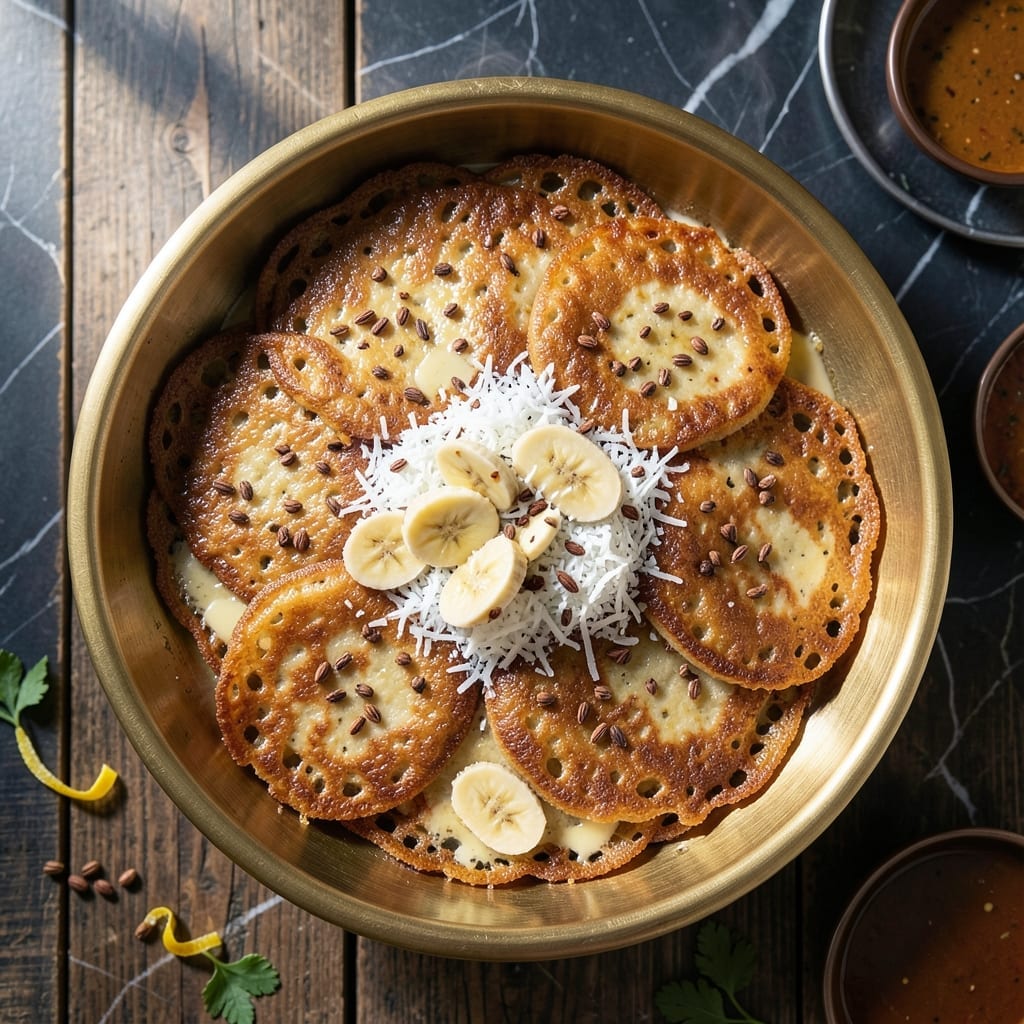
This traditional South Indian sweet transforms humble ingredients into golden, pillowy delights. The combination of rice flour and jaggery creates a tender interior with a subtle caramelized crust.
I developed this method to capture the authentic texture and flavor without complicated techniques. The batter comes together quickly, and the appam cook to perfection in just 3-4 minutes per batch.
Each bite delivers soft, slightly dense cake with pockets of coconut sweetness. The jaggery syrup soaks into the appam, creating a moist, flavorful treat that’s perfect for festivals or everyday indulgence.
The aroma alone signals these are ready to serve warm. This foolproof approach yields consistent results every time.
Ingredients for Nei Appam Recipe with Rice Flour
Transform humble pantry staples into golden, pillowy South Indian sweets with ease.
| Ingredient | Amount | Notes |
|---|---|---|
| Rice Flour 🌾 | 2 cups | Fine, sifted for smooth texture |
| Jaggery 🍚 | 1 ½ cups | Grated or powdered palm sugar |
| Freshly Grated Coconut 🥥 | 1 cup | Unsweetened, tightly packed |
| Banana 🍌 | 2 whole | Very ripe, mashed to paste |
| Cardamom Pods 🌿 | 6 pieces | Seeds removed and crushed |
| Ghee 🧈 | ½ cup | Clarified butter for frying |
| Water 💧 | 1 ¼ cups | Warm, as needed for batter |
| Coconut Milk 🥥 | ¼ cup | Full-fat for richness |
| Cashew Nuts 🌰 | 2 tbsp | Chopped, for garnish |
| Raisins 🍇 | 2 tbsp | Optional, for added sweetness |
| Saffron Strands 🌼 | ¼ tsp | Soaked in warm milk |
| Salt 🧂 | ¼ tsp | To balance sweetness |
Rice flour is the foundation here—opt for fine-milled, unroasted flour from an Indian grocery store for authentic texture. Jaggery quality varies widely; look for dark, moist blocks with a strong molasses aroma. Freshly grated coconut is non-negotiable (the pre-packaged shredded stuff won’t melt properly). Cardamom pods should be plump and green—old spices lose their punch fast.
No jaggery? Dark brown sugar at a 1:1 ratio works, though the caramel depth won’t be as complex. Short on coconut? Unsweetened desiccated coconut rehydrated in warm water substitutes decently. Ghee is traditional, but coconut oil (unrefined) maintains the flavor profile. The banana must be very ripe—green bananas won’t sweeten the batter sufficiently.
The batter ferments best at room temperature for 2-4 hours. Store leftover appam in an airtight container—they stay soft for 2 days but reheat beautifully in a steamer. Jaggery and rice flour keep indefinitely in cool, dry storage, while fresh coconut must be used within 3 days of grating.
Why You’ll Love This Recipe
- One Bowl Wonder: I just mix rice flour, jaggery, and mashed banana—no fancy prep or multiple bowls to wash.
- Sweet Comfort: The jaggery and cardamom create this warm, caramel-like flavor that’s pure nostalgia in every bite.
- Festival Ready: I make these for Diwali and birthdays, but honestly, they disappear just as fast on a regular Tuesday.
- Budget Friendly: Rice flour and jaggery are pantry staples, so I can whip up a batch without a special grocery trip.
Step-by-Step Instructions for Nei Appam With Rice Flour
Master the technique and you’ll create perfectly soft, aromatic appams with a delicate sweetness.
Step 1: Prepare the Batter Base
In a large mixing bowl, combine the 2 cups rice flour with the 1.5 cups jaggery and 0.25 tsp salt. The jaggery should be grated or powdered to dissolve evenly. I use my fingers to break up any lumps in the rice flour for a smooth, consistent texture.
Gradually add the 1.25 cups water while whisking to create a lump-free batter. The consistency should resemble pancake batter—thick enough to coat the back of a spoon but still pourable. This forms the foundation of your appams, so take your time getting it right.
Step 2: Incorporate the Flavor Elements
Add the 2 whole banana (mashed to a paste) and 1 cup freshly grated coconut to the batter. The bananas should be very ripe—look for deep brown spots on the peel for maximum sweetness and easy mashing. Fold these in thoroughly until fully incorporated.
Crush the seeds from the 6 pieces cardamom pods and add them to the mixture along with the 0.25 cup coconut milk. The cardamom will infuse the appams with its warm, citrusy aroma. Stir until the batter is uniform and the coconut milk gives it a rich, velvety appearance.
Step 3: Infuse with Saffron and Rest
Soak the 0.25 tsp saffron strands in 2 tablespoons of warm water for 5 minutes to release its color and flavor. Stir this vibrant saffron water into the batter. The mixture should now have a beautiful golden hue and a complex, fragrant aroma.
Cover the bowl and let the batter rest for 30 minutes at room temperature. This resting period allows the rice flour to fully hydrate and the flavors to meld. You’ll notice the batter thickens slightly during this time, which is exactly what you want.
Step 4: Fry to Golden Perfection
Heat 0.5 cup ghee in a deep, heavy-bottomed pan over medium heat. The ghee should be hot but not smoking—test by dropping a small bit of batter in; it should sizzle and rise slowly. Use a spoon or small ladle to drop golf ball-sized portions of batter into the hot ghee.
Fry the appams in batches, giving them space to expand. They’ll puff up and develop a deep golden brown color as they cook. Turn them occasionally with a slotted spoon to ensure even browning on all sides. This should take 4-5 minutes per batch.
As they near completion, the sizzling will subside and the appams will develop a crisp exterior. Remove them with a slotted spoon and drain on paper towels to remove excess ghee.
Step 5: Garnish and Serve Warm
While the appams are still hot, press a few chopped cashew nuts and raisins into the tops. The residual heat will soften the cashews slightly and make the raisins plump. I like to use about 2 tbsp cashew nuts and 2 tbsp raisins total, distributed evenly across all appams.
Serve immediately while warm. The ideal appam should have a crisp, golden exterior giving way to a soft, pillowy interior with bursts of sweet coconut and banana. The saffron and cardamom will provide a lingering, sophisticated finish to each bite.
Pro Tips For Making Nei Appam Recipe With Rice Flour
- Use ripe bananas: Pick bananas with plenty of brown spots—they’re sweeter and mash easier, so your appam gets natural sweetness without extra jaggery.
- Toast the coconut: Lightly dry-roast the freshly grated coconut for 2-3 minutes until fragrant; it deepens the flavor and removes excess moisture that can make the batter too wet.
- Don’t overmix batter: Stir the rice flour and jaggery syrup just until combined—overmixing makes the appam dense instead of soft and fluffy.
- Cook on low flame: Keep the heat low after adding ghee to the pan; high heat burns the outside before the inside cooks, and you’ll end up with a raw center.
Essential Equipment for This Recipe
Deep Frying Pan
A heavy-bottomed stainless steel or cast iron pan is essential for even heat distribution. I use my 12-inch Lodge cast iron skillet—it retains heat beautifully and gives appams space to expand. Avoid non-stick pans as they can’t handle the high heat needed for proper frying. 🔥
Slotted Spoon
A stainless steel slotted spoon helps turn appams while allowing ghee to drain back into the pan. Look for one with a long handle to keep your hands safe from splatters. I prefer the OXO Good Grips version for its comfortable, non-slip handle.
Mixing Bowls
Use a large, wide mixing bowl for the batter—at least 4-quart capacity. I like glass Pyrex bowls because you can see the batter’s consistency clearly. A wide base makes whisking easier and prevents spills when adding ingredients.
Whisk
A balloon whisk is perfect for breaking up lumps in the rice flour and jaggery mixture. The 10-inch Ateco whisk is my go-to—its flexible wires conform to the bowl’s shape. Stainless steel construction won’t react with acidic ingredients.
Measuring Tools
Accurate measurements matter for consistent results. I use a dry measuring cup set for rice flour and a liquid measuring cup for water and coconut milk. Stainless steel measuring spoons handle the smaller quantities like cardamom and saffron precisely.
Cooling Rack
Place fried appams on a wire cooling rack set over paper towels. This allows air circulation while excess ghee drains away. The Wilton Excel cooling rack fits perfectly over a standard baking sheet and keeps your kitchen organized.
Nutrition Facts
Frequently Asked Questions
Can I use store-bought rice flour?
Yes, but choose fine-milled rice flour from an Indian store for best texture. Coarse flour can make appams gritty.
Why did my appams turn out dense?
This usually happens if the batter was too thick or not rested. Ensure it’s pancake-like consistency and rests for 30 minutes before frying.
How do I adjust sweetness?
Taste the batter before frying. Add more jaggery for sweeter appams or reduce it slightly. 1.5 cups works for most, but preferences vary.
Can I bake instead of frying?
Baking won’t give the same texture. The ghee frying creates the signature crisp exterior and soft interior. Stick to the medium heat method.

- Mujadara Rice and Lentils Recipe: Earthy Spiced Lentils With Caramelized Onions - November 1, 2026
- Naija Fried Rice Recipe: Street-Style Spice With Veggie Crunch - November 1, 2026
- Mushy Rice Recipe: Fluffy Grains Transformed in Minutes - November 1, 2026