
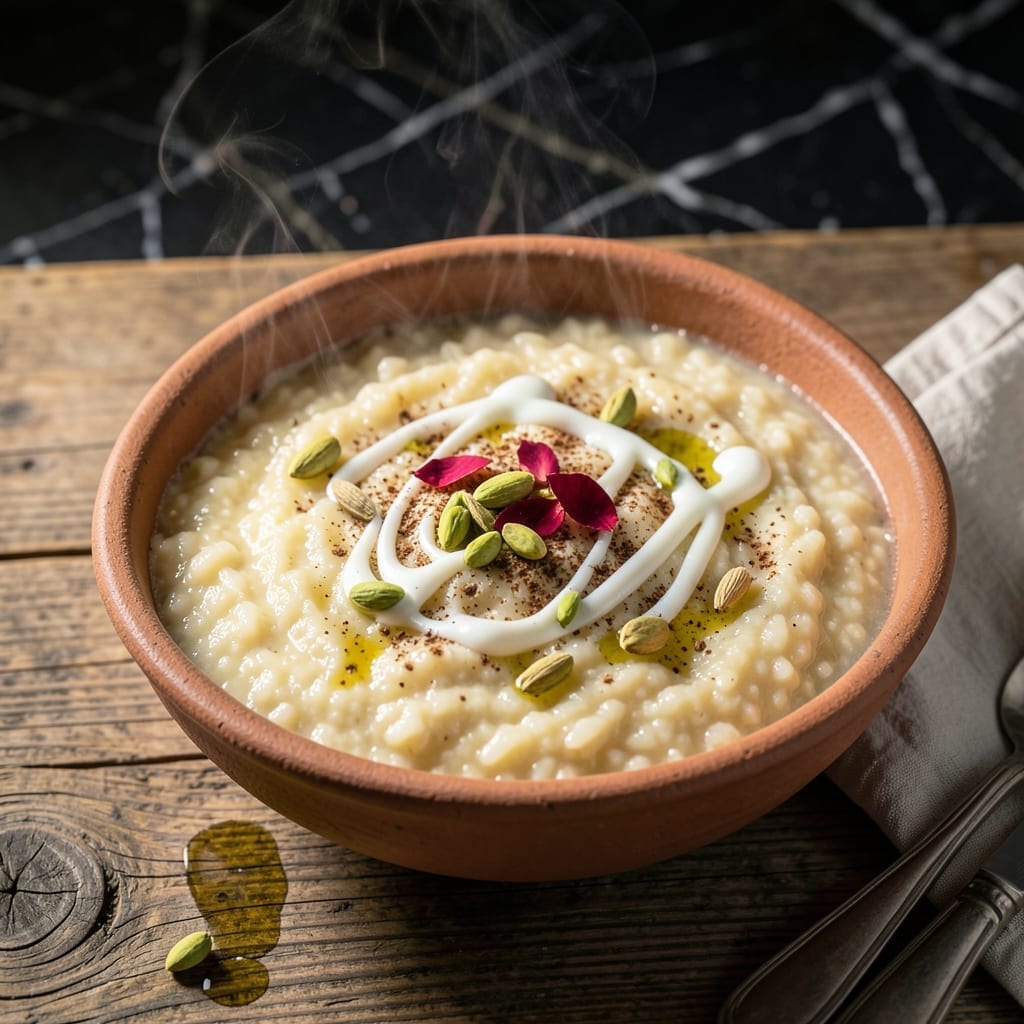
This traditional Nepali dessert transforms simple ingredients into a creamy, aromatic experience. Cardamom takes center stage, infusing every bite with its warm, floral notes.
Slow-cooked rice absorbs sweetened milk until it reaches a rich, pudding-like consistency. The process requires patience, but the result is well worth the wait.
Traditional versions often include ghee-toasted nuts or raisins for added texture and depth. The dish is commonly served warm, making it a comforting finish to any meal.
This recipe stays true to its cultural roots while being approachable for home cooks. The balance of sweetness and spice creates a truly memorable dessert.
Ingredients for Nepali Rice Pudding
Transform humble rice and milk into a fragrant, cardamom-kissed dessert with these ingredients.
| Ingredient | Amount | Notes |
|---|---|---|
| Short-Grain White Rice 🍚 | ¾ cup | Arborio or sushi rice preferred |
| Whole Milk 🥛 | 4 cups | Full-fat for creaminess |
| Heavy Cream 🥛 | 1 cup | For extra richness |
| Granulated Sugar 🍚 | ¾ cup | Adjust to taste |
| Green Cardamom Pods 🌿 | 8 whole | Lightly crushed to release seeds |
| Ground Cardamom 🌿 | 1 tsp | For enhanced cardamom flavor |
| Ghee 🧈 | 2 tbsp | Clarified butter for authenticity |
| Pistachios 🌰 | ¼ cup | Shelled, chopped for garnish |
| Almonds 🌰 | ¼ cup | Sliced, lightly toasted |
| Raisins 🍈 | ¼ cup | Golden or dark variety |
| Rose Water 🌹 | 1 tsp | Optional, for floral aroma |
| Saffron Threads 🌼 | 1 pinch | Soaked in warm milk |
| Salt 🧂 | ¼ tsp | Balances sweetness |
The rice must be short-grain—Arborio or sushi rice yield the creamiest texture. For milk, whole milk is non-negotiable; lower fat versions lack richness. Ghee should be pure, ideally from a trusted Indian or Middle Eastern grocery store. Cardamom pods are essential—look for plump, green pods at specialty spice shops like Patel Brothers or Kalustyan’s. Freshness is key.
No whole milk? Half-and-half works in a pinch but dilute with water slightly. Out of cardamom pods? Ground cardamom at one-third the amount (about 1 tsp) plus a pinch of cinnamon approximates the flavor. For a nut-free version, omit pistachios and almonds entirely—toasted coconut flakes add a nice alternative texture. Saffron can be skipped, but if using, bloom it in 2 tbsp warm milk first.
This pudding thickens as it cools, so serve within 2 hours for best texture. Stores in the fridge for 3-4 days—reheat gently with a splash of milk. The ghee-toasted nuts stay fresh for 1 week in an airtight container at room temperature.
Why You’ll Love This Recipe
- One-Pot Wonder: I just dump everything in a single pot—rice, milk, cream—and let it simmer while I fold laundry.
- Cardamom Magic: The green cardamom pods infuse the pudding with this warm, floral aroma that makes my kitchen smell like a Nepalese home.
- Crowd Pleaser: I bring this to potlucks and it’s always the first thing to disappear, even with picky eaters.
- Stretches Easily: A double batch costs pennies and feeds my family for days—leftovers taste even better cold.
Step-by-Step Instructions for Cardamom-Infused Rice Pudding
Master the technique behind this traditional dessert with precise timing and authentic methods.
Step 1: Prepare the Aromatic Base
Lightly crush the 8 whole green cardamom pods to release their fragrant seeds. In a heavy-bottomed pot, melt the 2 tbsp ghee over medium heat until it shimmers but doesn’t smoke. Add the crushed pods and toast for 30-45 seconds until they become aromatic and slightly darker.
Immediately add the 0.75 cup short-grain white rice and stir for 1-2 minutes until the grains are thoroughly coated in ghee and turn translucent at the edges. This toasting step enhances the nutty depth of the rice, which is essential for authentic flavor.
Step 2: Infuse and Simmer the Liquid
Pour in the 4 cups whole milk and 1 cup heavy cream while stirring constantly to prevent the rice from clumping. Add the 1 pinch saffron threads and 0.25 tsp salt. Increase heat to medium-high and bring to a gentle boil, then immediately reduce to low heat.
Simmer uncovered for 25-30 minutes, stirring every 5 minutes to prevent sticking. You’ll notice the mixture thicken gradually and the rice soften. The liquid should reduce by about one-third, and the rice grains should be tender but still hold their shape.
Step 3: Sweeten and Enhance the Flavor
Stir in the 0.75 cup granulated sugar and 1 tsp ground cardamom. Continue cooking for another 10-15 minutes on low heat, stirring frequently. The pudding should thicken to the consistency of a loose porridge, and the sugar should be fully dissolved without any graininess.
Remove from heat and stir in the 1 tsp rose water if using. Taste and adjust sweetness if needed. The rose water adds a subtle floral note that complements the warm cardamom, but be cautious—too much can overpower the dish.
Step 4: Add Texture and Finish
Gently fold in the 0.25 cup raisins, 0.25 cup pistachios, and 0.25 cup almonds. The residual heat will soften the raisins slightly while keeping the nuts crisp. Cover and let the pudding rest for 10 minutes—this allows the flavors to meld and the texture to set.
Serve warm or chilled, garnished with additional chopped pistachios and almonds for contrast. The pudding should have a creamy consistency with visible rice grains, and each spoonful should deliver the layered flavors of cardamom, saffron, and the richness of milk and cream.
Pro Tips For Making Nepali Rice Pudding
- Soak the Rice: Rinse and soak the short-grain rice for 15-20 minutes before cooking—it softens faster and absorbs the milk more evenly, preventing that annoying grainy texture.
- Crush Cardamom Lightly: Gently crack the green cardamom pods with a mortar and pestle or rolling pin instead of grinding them—this releases the aroma without bitter powdery bits.
- Low and Slow Heat: Keep the flame at its lowest after the first boil, or the milk will scorch and the pudding will turn lumpy instead of creamy.
- Finish with Cream: Stir in the heavy cream only in the last 10 minutes of cooking—adding it too early can make the pudding separate or feel greasy.
Flavor Customization for This Dish
Spice Variations
For a warmer profile, add ½ tsp cinnamon and ¼ tsp nutmeg with the cardamom. This creates a chai-like depth that pairs beautifully with the creamy base. I love this version in colder months. ✨
Floral Twists
Enhance the floral notes by increasing rose water to 1½ tsp or adding ½ tsp orange blossom water. A pinch of dried rose petals (culinary grade) as garnish adds visual appeal and extra fragrance.
Nut Alternatives
Swap pistachios and almonds for cashews or walnuts—toast them in 1 tbsp ghee until golden for 2-3 minutes. For a nut-free version, try toasted coconut flakes or sunflower seeds for crunch.
Fruit Additions
Fold in ½ cup diced mango or ¼ cup chopped dried apricots at the end for natural sweetness and texture. These fruits complement the cardamom beautifully without overpowering the dish. 💛
Richness Adjustments
For an even creamier texture, replace 1 cup milk with coconut milk. This adds a subtle tropical note. Reduce sugar by 2 tbsp if using sweetened coconut milk to balance flavors.
Savory Contrast
A pinch of black salt (kala namak) enhances the overall flavor complexity. Add it with the regular salt—just ⅛ tsp provides a subtle sulfurous aroma that works surprisingly well with the sweetness.
Nutrition Facts
Frequently Asked Questions
What kind of rice works best?
Use short-grain white rice like Arborio or sushi rice. These varieties absorb liquid well and create the creamiest texture. Avoid long-grain rice as it stays firm and separate.
Can I make this dairy-free?
Yes! Replace milk with full-fat coconut milk and use coconut oil instead of ghee. The flavor will be slightly different but still delicious.
How do I prevent it from burning?
Cook on low heat and stir every 5 minutes. Use a heavy-bottomed pot for even heat distribution. The mixture should simmer gently, never boil vigorously.
What’s the ideal serving temperature?
Serve warm or at room temperature. If chilled, reheat gently with a splash of milk to restore creaminess.

- Lump Rice Recipe Sri Lanka: Traditional Island-Style Texture - November 4, 2026
- Laos Sticky Rice Recipe: Traditional Steamed Perfection - November 4, 2026
- Magic Rice Recipe: One-Pot Aromatic Wonder - November 4, 2026