
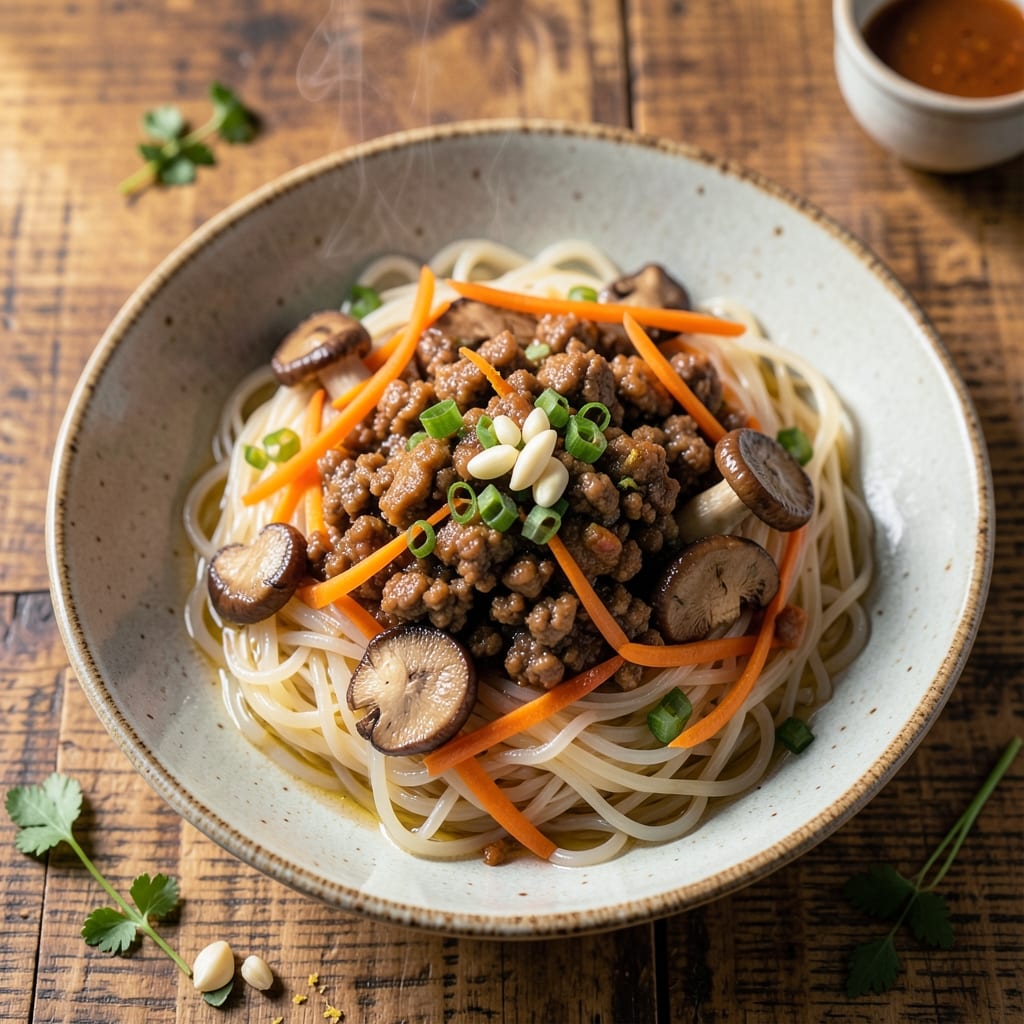
This Hawaiian-style noodle dish brings hearty comfort to your table with its rich, savory flavors and satisfying texture. I’ve perfected this version to stay true to the traditional okazuya taste while keeping it simple for home cooks.
The long rice noodles absorb the umami-packed broth, creating a dish that’s both filling and deeply flavorful. It’s the kind of meal that feels like a warm hug in every bite, perfect for sharing with family or enjoying as a cozy solo dinner.
Ingredients for Okazuya Long Rice
A handful of pantry staples plus fresh veggies bring this comforting noodle dish to life.
| Ingredient | Amount | Notes |
|---|---|---|
| Long Rice Noodles 🍜 | 8 oz | Dried, bean thread or cellophane noodles |
| Ground Pork 🥩 | 1 lb | Or substitute ground chicken |
| Carrots 🥕 | 2 whole | Julienned or thinly sliced |
| Green Onions 🧅 | 4 whole | Thinly sliced, green parts only |
| Shiitake Mushrooms 🍄 | 4 oz | Fresh or dried, rehydrated |
| Garlic Cloves 🧄 | 4 cloves | Minced for depth of flavor |
| Fresh Ginger 🌿 | 1 tbsp | Grated or minced fine |
| Soy Sauce 🫒 | ½ cup | Low-sodium preferred for balance |
| Dashi Stock 💧 | 4 cups | Or substitute chicken broth |
| Sake 🍶 | ¼ cup | Dry variety for cooking |
| Sugar 🥄 | 2 tbsp | Balances the savory flavors |
| Neutral Oil 🫒 | 2 tbsp | Canola or vegetable oil |
| Salt 🧂 | ½ tsp | Adjust to taste at end |
| Black Pepper 🌶️ | ¼ tsp | Freshly ground if possible |
The noodles are key here—look for long rice or cellophane noodles in the Asian aisle. I grab mine at H Mart or any well-stocked Asian grocery. Ground pork adds richness, but ground chicken or turkey works just as well if you prefer. For the mushrooms, fresh shiitake have the best texture, but dried (rehydrated) are a great backup. The dashi stock is traditional, but chicken broth in a pinch keeps it approachable.
No sake? Dry white wine is a fine stand-in. Missing shiitake? Cremini or white mushrooms will do—just slice them thin. The soy sauce should be good quality (I like Kikkoman or Yamasa), but no need for fancy aged varieties here. Green onions add a fresh finish, but scallions or chives work too (use what you’ve got).
This keeps beautifully in the fridge for 4-5 days—the flavors meld and deepen. Freezes well too, up to 3 months. Just add a splash of water when reheating to loosen the noodles (they soak up broth like a sponge).
Why You’ll Love This Recipe
- One Pot Wonder: I love that everything—noodles, pork, mushrooms—cooks together in a single pan.
- Umami Bomb: The shiitake and pork create this deep, savory richness that coats every noodle.
- Weeknight Hero: Honestly, it’s my go-to for busy evenings when I need dinner fast.
- Stretches Far: Leftovers taste even better the next day, and it feeds my family for two meals.
Step-by-Step Instructions for Hawaiian-Style Long Rice Noodles
This method delivers that cozy, island-inspired flavor you’re craving with minimal effort.
Step 1: Soak the Long Rice Noodles
Place the 8 oz Long Rice Noodles in a large bowl and cover completely with hot tap water. They need to soak for 15-20 minutes until pliable and translucent. I always set a timer—under-soaking leaves them brittle, while over-soaking makes them mushy.
Drain the noodles in a colander and rinse briefly with cool water to stop the softening process. Shake off excess water but don’t dry them completely—a little moisture helps them absorb the sauce better. Set them aside while you prepare the other ingredients.
Step 2: Brown the Ground Pork and Aromatics
Heat the 2 tbsp Neutral Oil in a large pot or deep skillet over medium-high heat. Add the 1 lb Ground Pork and cook for 5-6 minutes, breaking it into small pieces with a wooden spoon until it’s no longer pink.
Stir in the 4 cloves Garlic Cloves, 1 tbsp Fresh Ginger, 2 whole Carrots, 4 oz Shiitake Mushrooms, and 4 whole Green Onions. Cook for another 4-5 minutes until the vegetables soften slightly and the pork starts to develop light browning.
Step 3: Simmer with the Flavor Base
Pour in the 0.5 cup Soy Sauce, 4 cups Dashi Stock, 0.25 cup Sake, 2 tbsp Sugar, 0.5 tsp Salt, and 0.25 tsp Black Pepper. Stir well to combine and bring the mixture to a gentle simmer.
Reducethe heat to medium-low and let it cook for 8-10 minutes until the carrots are tender and the flavors begin to meld. The liquid should reduce slightly, but you still want enough to generously coat the noodles later.
Step 4: Combine and Finish the Dish
Add the drained long rice noodles to the pot, gently folding them into the pork and vegetable mixture. The noodles should be fully submerged in the liquid. If it looks dry, add a splash of water or extra dashi stock.
Cover and cook on low heat for 5-7 minutes, stirring once or twice, until the noodles are fully tender and have absorbed most of the liquid. The dish is ready when the noodles are soft but still slightly chewy, and the sauce clings to them beautifully.
Pro Tips For Making Okazuya Long Rice
- Soak the Noodles: Cover long rice noodles in warm water for 10-15 minutes before cooking—I learned this the hard way after ending up with chewy, unevenly cooked strands.
- Brown the Pork: Cook ground pork over medium-high heat until deeply browned, not just gray. This builds flavor that carries through the whole dish.
- Slice Thinly: Cut carrots and shiitake mushrooms into thin, even pieces so they cook quickly and absorb the sauce without turning mushy.
- Reserve Some Green Onion: Add half the green onions while cooking for flavor, then sprinkle the rest on top at the end for freshness and color.
Troubleshooting This Recipe
Noodles Too Dry
If your long rice noodles seem dry after cooking, the issue is likely insufficient liquid. Add ½ cup hot water or dashi stock and let it simmer for 2-3 minutes to rehydrate. Covering the pot helps trap steam and soften the noodles further. 💡
Mushy Noodles
Mushy noodles usually mean they soaked too long or overcooked. Next time, reduce the initial soaking to 12-15 minutes and check for doneness after 4 minutes of simmering. Fresh noodles absorb liquid faster than dried ones.
Bland Flavor
If the dish tastes bland, boost the umami with 1 tbsp additional soy sauce or a splash of fish sauce. Simmer for 2-3 minutes to meld the flavors. I also like adding a pinch of MSG for extra depth.
Pork Not Browned
For better browning, increase the heat to medium-high and cook the pork in smaller batches. Don’t stir too frequently—let it develop a crust for 1-2 minutes before breaking it up. This builds a flavorful fond.
Sauce Too Thin
If the sauce is watery, simmer uncovered for 5-7 minutes to reduce. Alternatively, mix 1 tsp cornstarch with 1 tbsp cold water and stir it in. The sauce should coat the back of a spoon when done.
Vegetables Still Crunchy
For tender veggies, slice them thinner or cook them for 2-3 extra minutes before adding the noodles. Carrots take the longest, so I often parboil them for 2 minutes first. 🥕
Nutrition Facts
Frequently Asked Questions
Can I use a different type of noodle?
Yes, but stick to thin, fast-cooking varieties like rice stick or vermicelli. Avoid thick noodles—they won’t absorb the flavors as well.
How do I store leftovers?
Keep in an airtight container in the fridge for up to 5 days. Reheat with a splash of water to loosen the sauce.
Why are my noodles mushy?
Over-soaking or overcooking is the culprit. Soak noodles for 12-15 minutes max and check doneness early.
Can I make this vegetarian?
Swap pork for tofu or mushrooms. Use vegetable broth instead of dashi for a fully plant-based version.

- Jollof Rice Sauce Recipe: West African Tomato and Spice Infusion - September 25, 2026
- Japanese Rice Soup Recipe: Umami-Rich Comfort in a Bowl - September 25, 2026
- Homemade Cream Of Rice Recipe: Silk-Smooth Breakfast in Minutes - September 25, 2026