
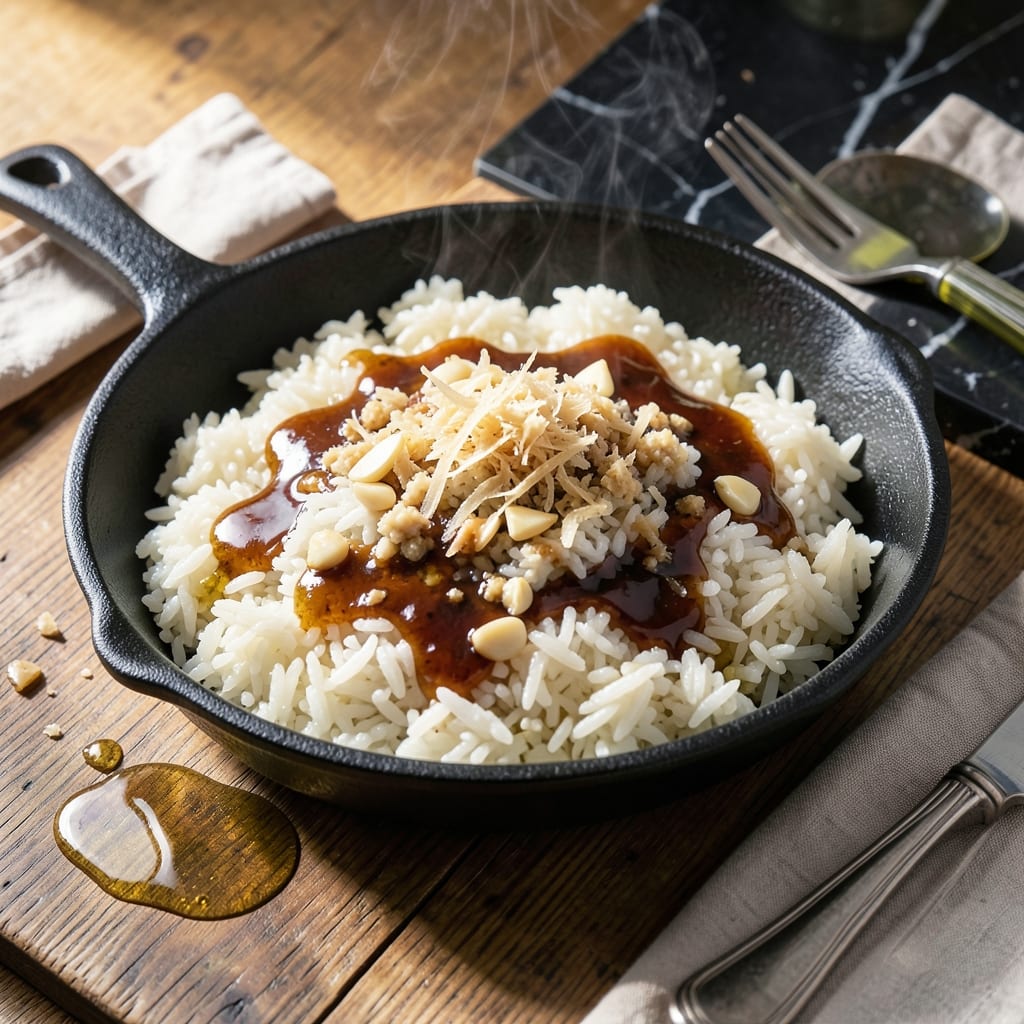
This Japanese-style fried rice delivers the authentic flavors of Osaka with its rich umami depth and satisfying texture.
I developed this recipe after studying traditional techniques, focusing on the perfect balance of savory, sweet, and salty notes that define this regional specialty. The key is using day-old rice and a combination of dashi, soy sauce, and mirin for that signature taste.
The dish comes together quickly in a wok or large skillet, with vegetables and protein cooked at high heat to create that characteristic slightly crispy texture. Each bite offers a harmonious blend of flavors and textures.
This creation works beautifully as a main course or side dish, and it’s surprisingly easy to customize with your favorite additions.
Ingredients for Osaka Rice
Day-old rice, bold flavors, and a handful of fresh ingredients create this authentic dish.
| Ingredient | Amount | Notes |
|---|---|---|
| Day-Old Cooked White Rice 🍚 | 4 cups | Cold, preferably overnight |
| Dashi Stock 🍲 | ½ cup | Traditional Japanese broth |
| Soy Sauce 🥢 | 3 tbsp | Low-sodium preferred |
| Mirin 🍶 | 2 tbsp | Sweet rice wine |
| Neutral Oil 🫒 | 2 tbsp | Vegetable or canola |
| Garlic Cloves 🧄 | 3 cloves | Minced finely |
| Fresh Ginger 🌿 | 1 tbsp | Grated or minced |
| Green Onions 🧅 | 4 whole | Thinly sliced, white and green parts |
| Carrot 🥕 | 1 whole | Peeled and finely diced |
| Frozen Peas 🌱 | ½ cup | Thawed before cooking |
| Large Eggs 🥚 | 2 whole | Lightly beaten |
| Sesame Oil 🫒 | 1 tsp | For finishing touch |
| Nori Sheets 🍣 | 1 sheet | Cut into thin strips |
| Bonito Flakes 🐟 | 2 tbsp | Optional for extra umami |
| White Sesame Seeds 🌰 | 1 tbsp | Toasted for garnish |
The rice is non-negotiable here—day-old, cold rice (preferably overnight) gives you that perfect texture without turning mushy. For dashi stock, I grab Kikkoman or Mizkan at the Asian market, but most well-stocked grocery stores carry it too. The mirin should be the real deal (look for hon-mirin on the label), not the aji-mirin which has added sweeteners. Fresh ginger and garlic? Always better than the jarred stuff (don’t skip the grating).
No day-old rice? Spread freshly cooked rice on a baking sheet and pop it in the fridge for 30 minutes to cool and dry out. Swap bonito flakes for shiitake mushroom powder if you’re vegetarian. Tamari works in place of soy sauce for gluten-free. The nori can be omitted, but it adds that authentic Osaka touch. For extra protein, add shrimp or diced chicken—just cook it through before adding the rice.
This keeps well in the fridge for 3-4 days, though the texture changes slightly. Freeze portions for up to 3 months (thaw in the fridge overnight). Reheat in a skillet with a splash of water to revive the texture. Always garnish fresh with green onions and sesame seeds—it makes a difference.
Why You’ll Love This Recipe
- One-Pan Magic: I just toss the day-old rice in with dashi, soy, and mirin—no extra bowls, no fuss.
- Umami Bomb: That first bite with the soy-mirin glaze and dashi depth? Ridiculously good.
- Weeknight Hero: Between us, it’s my Tuesday lifesaver—ready before the kids finish arguing over homework.
- Budget Stretcher: Honestly, it turns leftover rice into a meal that feels like a treat, not a compromise.
Step-by-Step Instructions for Osaka Rice
Here’s my tested method that turns cold rice into a flavor-packed Japanese classic every time.
Step 1: Prepare and Heat the Aromatics
Heat the 2 tbsp neutral oil in a large skillet or wok over medium-high heat until it shimmers. Add the minced 3 cloves garlic cloves and grated 1 tbsp fresh ginger, stirring constantly for 30 seconds until fragrant but not browned.
Immediately add the finely diced 1 whole carrot and sliced 4 whole green onions (both white and green parts). Cook for 3-4 minutes until the carrot begins to soften and the onions turn translucent. This builds the aromatic foundation that defines the dish.
Add the thawed 0.5 cup frozen peas and cook for another 1 minute—they should brighten in color but remain tender-crisp. The goal is to develop flavor without overcooking any single element.
Step 2: Toast the Rice and Build Flavor
Increase heat to high and add all 4 cups day-old cooked white rice, breaking up any clumps with your spatula. Press the rice into the pan and let it sit undisturbed for 2-3 minutes to develop a light golden crust on the bottom.
Pour the 0.5 cup dashi stock evenly over the rice. The liquid should sizzle and steam immediately. This is where the magic happens—the stock infuses the grains with umami depth while preventing dryness.
Drizzle the 3 tbsp soy sauce and 2 tbsp mirin over the rice. The mirin adds a subtle sweetness that balances the soy’s saltiness. Stir everything together thoroughly for 2 minutes until the rice is evenly coated and heated through.
Step 3: Create the Egg Ribbons
Push all the rice to one side of the pan, creating a clear space. Pour the lightly beaten 2 whole large eggs into the empty area. Let them sit for 10-15 seconds until the edges just begin to set.
Using your spatula, scramble the eggs gently, then immediately fold them into the rice mixture. The eggs should form soft, distinct ribbons throughout the dish rather than disappearing into the grains. This technique ensures each bite has that signature Osaka-style texture.
Continue cooking for another 1-2 minutes, stirring constantly, until the eggs are fully cooked but still moist. The rice should be glistening and slightly sticky, with no dry spots.
Step 4: Finish and Garnish
Remove the pan from heat and drizzle the 1 tsp sesame oil over the rice. This adds a fragrant depth that ties all the flavors together. Stir once more to distribute the oil evenly throughout the dish.
Transfer to a serving platter or individual bowls. Top with the thinly cut strips from the 1 sheet nori sheets, the 2 tbsp bonito flakes (if using), and the 1 tbsp white sesame seeds. The bonito flakes will dance slightly from the residual heat, adding visual appeal.
Serve immediately while hot. The rice should have distinct grains with a glossy sheen, punctuated by the vibrant colors of vegetables and the creamy egg ribbons. Each bite delivers a perfect balance of savory, sweet, and umami notes.
Pro Tips For Making Osaka Rice
- Break Up Rice Clumps: Day-old rice sticks together—rub it between your fingers before frying so each grain gets crispy and absorbs the dashi and soy evenly.
- Preheat the Oil: I learned this the hard way—cold oil makes the rice steam instead of fry, so heat it until it shimmers before adding anything.
- Use Real Dashi: Skip the powdered shortcuts; a quick homemade dashi (kombu + bonito) adds depth that instant versions just can’t match.
- Finish With Mirin: Add the mirin at the very end—it caramelizes fast and can burn if it hits the pan too early, leaving a bitter taste.
Troubleshooting This Recipe
Rice Too Soft
If your rice turns mushy, you likely used fresh rice or over-stirred. Always use day-old, cold rice—it has less moisture. Press it into the pan and let it sit undisturbed for 2-3 minutes to develop texture. 💡
Dry or Bland
This usually means insufficient liquid. Add 2-3 tbsp extra dashi stock or soy sauce during cooking. Taste as you go—Osaka rice should have a glossy sheen, not dry grains.
If it’s already done, drizzle 1 tsp sesame oil and toss gently to revive.
Eggs Overcooked
Scrambled egg ribbons should be soft and distinct. Cook eggs separately in 1 tsp oil first, then fold into rice. Or, push rice aside, pour in eggs, and fold immediately after 10-15 seconds.
Sticking to Pan
Use high heat and a well-seasoned wok or cast iron skillet. Let the rice form a light crust before stirring. If sticking persists, add 1 tbsp more oil at the start.
Weak Umami Flavor
Boost depth with 1 extra tbsp soy sauce or 1 tsp bonito flakes. Ensure your dashi stock is fresh and high-quality—I recommend Kikkoman brand. 🌟
Nutrition Facts
Frequently Asked Questions
Can I use freshly cooked rice instead of day-old?
Spread freshly cooked rice on a baking sheet and chill in the fridge for 30 minutes to remove moisture. Day-old is best, but this quick trick works in a pinch.
What can I substitute for dashi stock?
Use 1 cup chicken or vegetable broth mixed with 1 tsp soy sauce for a similar depth. For vegetarian, try shiitake mushroom powder for authentic umami.
How do I prevent the rice from sticking?
Use high heat and a well-seasoned wok or cast iron skillet. Let rice form a light crust before stirring. Add 1 extra tbsp oil if needed.
Can I add protein to this dish?
Cook shrimp or diced chicken first, then set aside. Add back to the rice at the end to avoid overcooking.

- Jollof Rice Sauce Recipe: West African Tomato and Spice Infusion - September 25, 2026
- Japanese Rice Soup Recipe: Umami-Rich Comfort in a Bowl - September 25, 2026
- Homemade Cream Of Rice Recipe: Silk-Smooth Breakfast in Minutes - September 25, 2026