
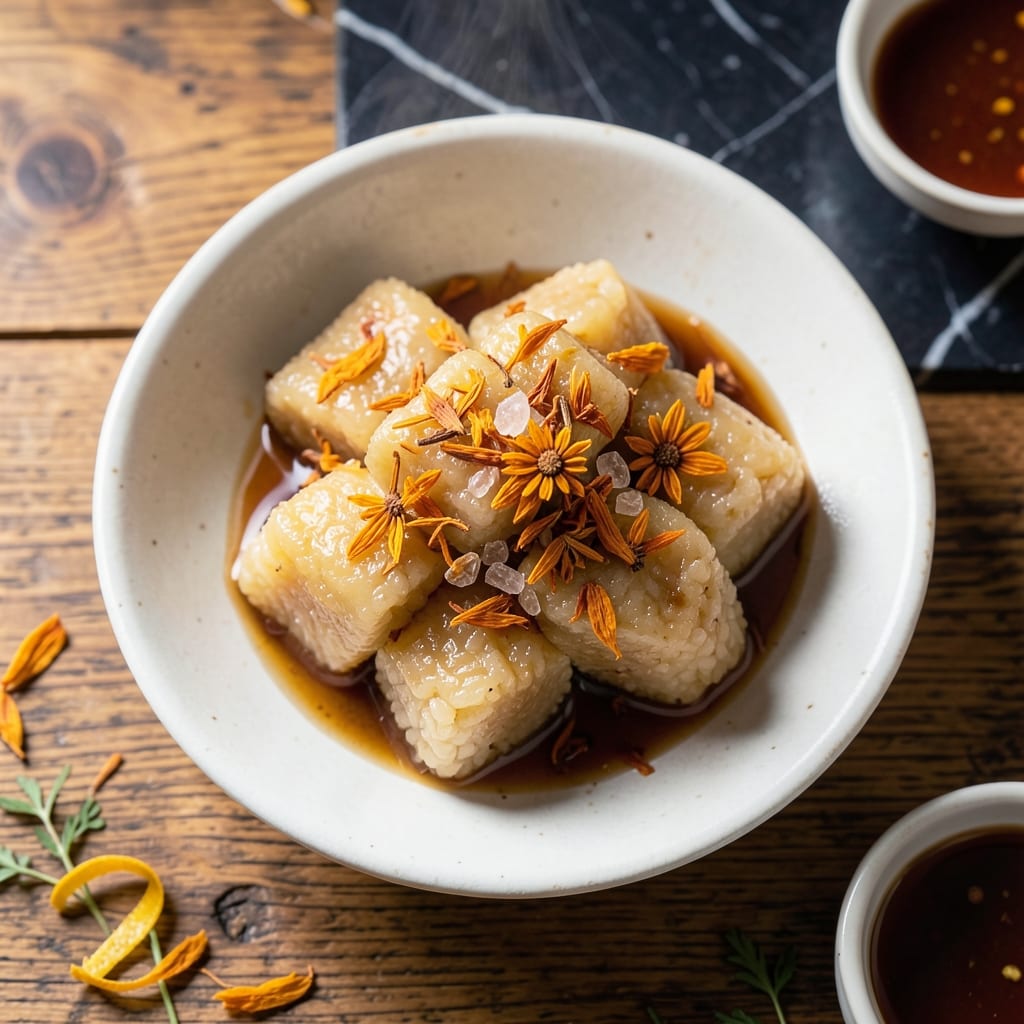
This traditional Chinese dessert captures the delicate floral aroma of osmanthus perfectly. The process transforms simple rice flour into a fragrant, slightly chewy cake that melts in your mouth.
What makes this dish special is the balance between sweetness and floral notes. The osmanthus flowers infuse the cake with their unique scent during steaming, creating a subtle yet distinctive flavor.
The texture is what sets it apart—soft and bouncy with just the right amount of resistance. Each bite releases the flower’s essence, making it a memorable treat for any occasion.
This recipe stays true to tradition while being simple enough for home kitchens. The key is in the steaming method and proper flower preparation.
Ingredients for Osmanthus Rice Cake
Traditional ingredients create this fragrant, delicate Chinese dessert with floral essence and soft texture.
| Ingredient | Amount | Notes |
|---|---|---|
| Glutinous Rice Flour 🌾 | 2 cups | Also called sweet rice flour |
| Dried Osmanthus Flowers 🌸 | 2 tbsp | Food-grade, for infusion |
| Granulated Sugar 🍚 | ½ cup | Adjust to taste preference |
| Water 💧 | 1 ½ cups | Warm, for batter consistency |
| Vegetable Oil 🫒 | 1 tbsp | Neutral flavor, for greasing |
| Rock Sugar 🍬 | 2 oz | Optional, for extra sweetness |
| Vanilla Extract 🌿 | ½ tsp | Pure, for depth of flavor |
| Cornstarch 🌽 | 1 tbsp | For dusting molds |
| Salt 🧂 | 0.125 tsp | Fine grain, balances sweetness |
| Red Bean Paste 🍫 | ½ cup | Sweet, for filling option |
| Sesame Seeds 🌰 | 1 tsp | Toasted, for garnish |
The osmanthus flowers are non-negotiable for authenticity. Asian grocery stores carry food-grade dried flowers in the tea or baking aisle—look for bright orange blooms with no added dyes. Glutinous rice flour is different from regular rice flour; Bob’s Red Mill or Erawan brands are reliable. The rock sugar adds a subtle crunch and layered sweetness that granulated sugar alone can’t achieve.
No osmanthus flowers? Rose water at one-quarter teaspoon can mimic the floral aroma, but use sparingly—it’s potent. Swap glutinous rice flour for mochiko flour if that’s what’s available. Red bean paste can be replaced with lotus seed paste or omitted entirely for a simpler version. The vanilla extract balances the floral notes, but almond extract at half the amount works in a pinch.
Store dried osmanthus flowers in an airtight container away from light for up to 12 months. The rice flour keeps indefinitely in a cool, dry place. Leftovers stay fresh for 3 days at room temperature or freeze for 1 month—reheat by steaming to restore the soft texture.
Why You’ll Love This Recipe
- One Bowl Wonder: I just mix the glutinous rice flour, sugar, and water in a single bowl—no fancy equipment, no fuss.
- Floral Sweetness: The dried osmanthus flowers give it this delicate, fragrant sweetness that’s honestly unlike anything else.
- Gift or Snack: I’ll pack these in little boxes for friends or keep a stash in the fridge for my afternoon tea cravings.
Step-by-Step Instructions for Osmanthus Rice Cake
Master the technique for this delicate, fragrant dessert with precision and finesse.
Step 1: Infuse the Water with Osmanthus Flowers
In a small saucepan, combine the 1.5 cups Water with the 2 tbsp Dried Osmanthus Flowers. Heat over medium-low heat until the water reaches 180°F—small bubbles will form at the edges, but it shouldn’t boil.
Remove from heat, cover, and let steep for 15 minutes. This gentle infusion extracts the flowers’ aromatic essence without bitterness. Strain through a fine-mesh sieve, pressing lightly to extract all liquid. You should have approximately 1.5 cups of fragrant osmanthus water.
Step 2: Prepare the Batter and Steam
In a large bowl, whisk together the 2 cups Glutinous Rice Flour, 0.5 cup Granulated Sugar, 0.125 tsp Salt, and 0.5 tsp Vanilla Extract. Gradually pour in the strained osmanthus water while whisking to prevent lumps.
The batter should be smooth and slightly thicker than heavy cream. Stir in the 2 oz Rock Sugar if using. Let the batter rest for 5 minutes to allow the flour to fully hydrate. This resting period ensures a uniform texture in the final cake.
Step 3: Grease and Fill the Molds
Lightly grease your steaming molds or ramekins with the 1 tbsp Vegetable Oil. Dust the interiors with 1 tbsp Cornstarch, tapping out any excess. This dual treatment creates a non-stick surface and helps achieve the cake’s characteristic smooth finish.
Fill each mold about ¾ full with batter. If making filled cakes, add 1 tsp Red Bean Paste to the center of each mold before topping with more batter. The paste should be completely covered to prevent it from drying out during steaming.
Step 4: Steam to Perfection
Place the molds in a steamer with at least 2 inches of boiling water. Cover with a lid and steam over medium-high heat for 20-25 minutes. The cakes are done when the tops appear set and a toothpick inserted into the center comes out clean.
Maintain a consistent steam throughout the process—adding more boiling water if needed. The steam should be vigorous but not so forceful that it causes water to drip onto the cakes. This gentle, even heat ensures the cakes rise properly and cook through without becoming dense.
Step 5: Cool and Garnish
Remove the cakes from the steamer and let them cool in their molds for 5 minutes. This brief rest allows them to set completely before unmolding. Gently run a thin knife around the edges if they stick slightly.
Unmold onto a serving plate and let cool to room temperature. Sprinkle with 1 tsp Sesame Seeds just before serving. The cakes should have a delicate, slightly springy texture with a glossy surface and the unmistakable floral aroma of osmanthus throughout.
Pro Tips For Making Osmanthus Rice Cake
- Steam Evenly: Use a bamboo steamer lined with parchment paper—poke small holes in it to prevent water pooling on the cake. I learned this the hard way after my first three attempts came out gummy in the middle.
- Bloom the Flowers: Soak the dried osmanthus in warm water for 10 minutes before mixing—it releases way more fragrance than throwing them in dry. Sounds weird, but it works.
- Skip Cold Water: Always use room temperature or slightly warm water for the batter. Cold water makes the glutinous rice flour clump and the texture turns out dense.
- Oil the Pan Well: Brush the cake pan with vegetable oil, then dust it with a thin layer of glutinous rice flour. This is the only way I’ve found to guarantee the cake releases cleanly without tearing.
Serving Suggestions for osmanthus rice cake
Traditional Tea Pairing
Serve this delicate dessert with jasmine tea to complement the floral notes. The subtle aroma of jasmine enhances the osmanthus without overpowering it. I brew mine at 195°F for 3 minutes to preserve its delicate character. 💛
Fresh Fruit Accompaniment
Add a side of sliced strawberries or mandarin oranges for a refreshing contrast. The natural sweetness and acidity cut through the richness of the rice cake beautifully. I prefer 1 cup mixed berries for a colorful presentation.
Sweet Sauce Drizzle
A light drizzle of honey or osmanthus syrup adds extra fragrance and sweetness. Warm 2 tbsp honey slightly before drizzling for easier pouring. This enhances the floral notes without masking the cake’s natural flavor.
Textural Contrast
Toast 1 tbsp sesame seeds and sprinkle generously over the cakes just before serving. The nutty crunch contrasts wonderfully with the soft, chewy texture. I sometimes add crushed peanuts for additional depth.
Elegant Presentation
Serve on a white porcelain plate to highlight the cake’s glossy finish. Garnish with a few fresh osmanthus blossoms if available. This simple touch makes the dish look as beautiful as it tastes. ✨
Warm or Cold
These cakes are delicious served warm or at room temperature. If serving later, steam for 5 minutes to restore softness. I find the floral aroma is most pronounced when enjoyed slightly warm.
Nutrition Facts
Frequently Asked Questions
What can I use if I don’t have osmanthus flowers?
Use 1/4 tsp rose water or 1/2 tsp orange blossom water as a substitute. These provide floral notes similar to osmanthus. Add slowly to avoid overpowering the batter.
Why did my cake turn out dense?
Overmixing the batter or insufficient steaming time causes density. Ensure you steam for 20-25 minutes with consistent heat. The batter should be smooth but not overworked.
Can I make this without a steamer?
Yes! Use a large pot with a steamer basket or a heatproof colander over boiling water. Cover tightly with a lid to trap steam. Check water levels frequently.
How do I store leftovers?
Keep in an airtight container at room temperature for 3 days or freeze for up to 1 month. Reheat by steaming for 5 minutes to restore texture.

- Jollof Rice Sauce Recipe: West African Tomato and Spice Infusion - September 25, 2026
- Japanese Rice Soup Recipe: Umami-Rich Comfort in a Bowl - September 25, 2026
- Homemade Cream Of Rice Recipe: Silk-Smooth Breakfast in Minutes - September 25, 2026