
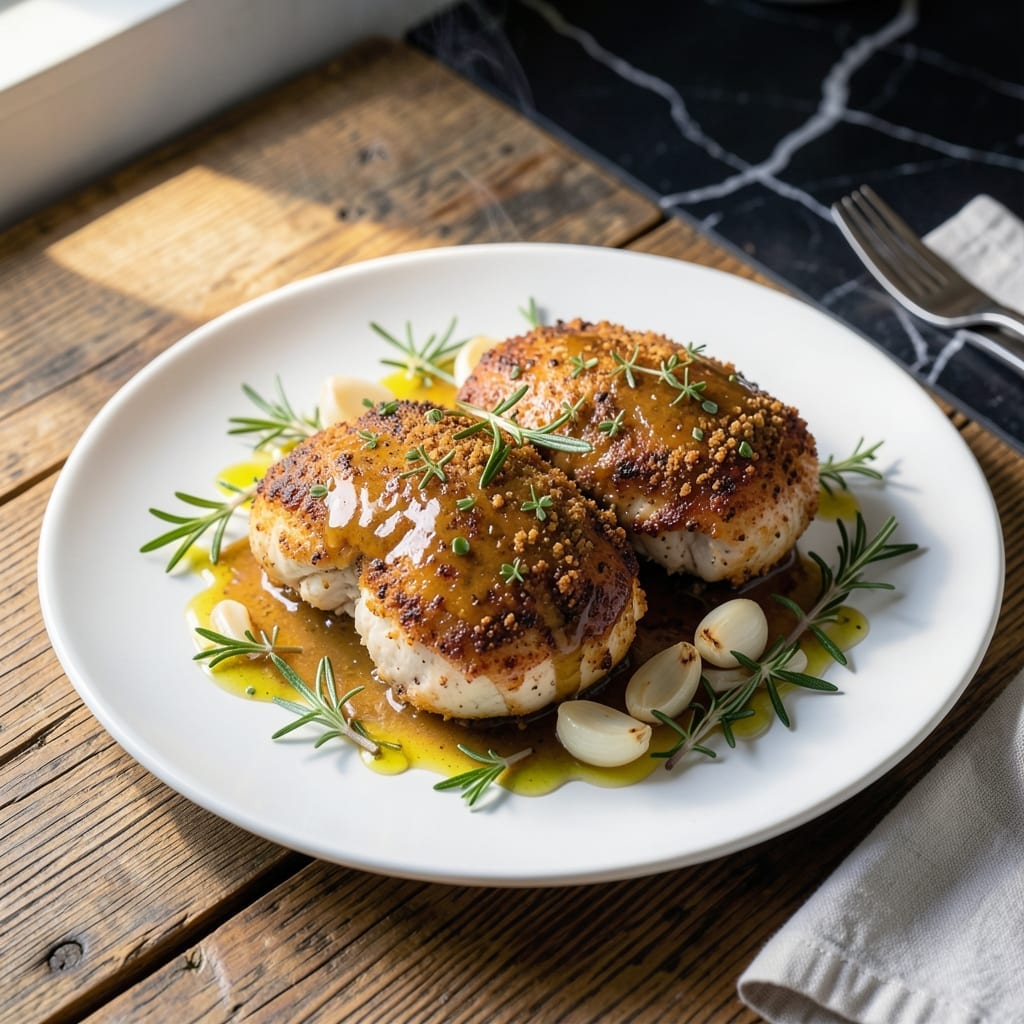
This paleo chicken recipe transforms simple ingredients into a dish with bold, primal flavors. The herbed crust creates a crispy exterior while keeping the meat juicy and tender.
I developed this method to deliver restaurant-quality results using only paleo-compliant ingredients. The technique ensures even cooking and maximum flavor in every bite.
You’ll end up with golden-brown chicken with a fragrant herb crust and perfectly cooked interior. It’s a foolproof way to enjoy a satisfying meal without compromising dietary principles.
Serve with roasted vegetables or a fresh salad for a complete paleo meal. Here’s how to make it.
Ingredients for Paleo Chicken
Transform simple paleo ingredients into restaurant-quality chicken with herbed crispy crust.
| Ingredient | Amount | Notes |
|---|---|---|
| Chicken Breasts 🍗 | 1 ½ lb | Boneless, skinless, pounded to 1/2-inch thickness |
| Almond Flour 🌰 | ¾ cup | Fine, blanched variety preferred |
| Fresh Rosemary 🌿 | 2 tbsp | Finely chopped, stems discarded |
| Fresh Thyme 🍃 | 2 tbsp | Leaves stripped from stems |
| Garlic Cloves 🧄 | 4 cloves | Minced finely for even distribution |
| Dijon Mustard 🟡 | 2 tbsp | Sugar-free, paleo-compliant brand |
| Extra-Virgin Olive Oil 🫒 | ¼ cup | Divided for coating and cooking |
| Sea Salt 🧂 | 1 tsp | Fine grain, divided for seasoning |
| Black Pepper 🌶️ | ½ tsp | Freshly ground for maximum flavor |
| Paprika 🌶️ | 1 tsp | Smoked or sweet variety |
| Eggs 🥚 | 2 whole | Large, for binding crust |
| Coconut Oil 🥥 | 2 tbsp | Refined, for high-heat cooking |
The chicken quality is paramount. Boneless, skinless breasts from Whole Foods or local butchers ensure consistent thickness and superior texture. Almond flour (I prefer Bob’s Red Mill) creates the perfect paleo-friendly crust base. For herbs, fresh rosemary and thyme from the produce section deliver the most vibrant flavor. Avoid pre-ground spices—they lose potency quickly.
No almond flour? Crushed pork rinds (if you eat pork) or coconut flour at half the amount work as substitutes. Dried herbs can replace fresh at one-third the quantity, though flavor will be less bright. Primal Kitchen makes a paleo-compliant Dijon mustard. For oil, avocado oil can replace coconut oil if you prefer a neutral taste.
Store raw chicken in the coldest part of your fridge for up to 2 days. The herb crust mixture keeps in an airtight container for 1 week. Cooked chicken reheats best in a 350°F oven for 10-12 minutes to maintain crispiness.
Why You’ll Love This Recipe
- One Pan Wonder: I just toss the chicken with almond flour and herbs, then bake—no extra bowls or mess.
- Herb Infused Bite: The rosemary and thyme with garlic make every piece ridiculously aromatic.
- Meal Prep MVP: I make a double batch on Sunday and it reheats beautifully for lunches all week.
- Budget Stretcher: Chicken breasts stay affordable, and almond flour goes further than you’d think.
Step-by-Step Instructions for Herbed Paleo Chicken
This method ensures a crispy almond-herb crust with juicy, perfectly cooked chicken every time.
Step 1: Prepare the Chicken and Herb Mixture
Begin by patting the 1.5 lb chicken breasts completely dry with paper towels. This is critical for achieving a crispy crust later. Pound each breast to a uniform ½-inch thickness using a meat mallet—this guarantees even cooking throughout.
In a small bowl, combine the 2 tbsp fresh rosemary, 2 tbsp fresh thyme, 1 tsp paprika, 1 tsp sea salt, and 0.5 tsp black pepper. Stir to blend evenly. The fresh herbs will release their aromatic oils as they mix, creating a fragrant base for your crust.
Step 2: Create the Almond Flour Breading Station
In a shallow dish, whisk the 2 whole eggs with the 2 tbsp Dijon mustard until smooth. The mustard adds tang and helps the coating adhere. In a second shallow dish, combine the 0.75 cup almond flour with half of the herb mixture you prepared earlier, reserving the rest for later.
Dip each chicken breast first into the egg mixture, ensuring it’s fully coated on both sides. Allow any excess to drip off before pressing the chicken into the almond flour mixture. Turn to coat completely, pressing gently so the crust clings tightly. Place the breaded chicken on a plate and let it rest for 5 minutes to set.
Step 3: Pan-Sear the Chicken to Golden Perfection
Heat the 2 tbsp coconut oil in a large skillet over medium-high heat until it shimmers. Add the breaded chicken breasts and cook undisturbed for 4-5 minutes per side. Resist the urge to move them—this allows the crust to develop a deep golden brown color and crisp texture.
While the chicken cooks, drizzle the remaining 0.25 cup extra-virgin olive oil over the top of each breast. This adds richness and helps the crust brown evenly. Sprinkle the reserved herb mixture over the chicken as it cooks, pressing lightly so it adheres to the crust.
Step 4: Finish in the Oven for Even Cooking
Preheat your oven to 375°F. Once the chicken is golden on both sides, transfer the skillet to the oven. Bake for 8-10 minutes, or until the internal temperature reaches 165°F on an instant-read thermometer. The crust should be crisp and aromatic, with the herbs visibly flecked throughout.
If your skillet isn’t oven-safe, transfer the chicken to a baking sheet lined with parchment paper before placing it in the oven. This step ensures the chicken cooks through without drying out, while the crust remains intact.
Step 5: Rest and Serve Immediately
Remove the chicken from the oven and let it rest on a wire rack for 5 minutes. This allows the juices to redistribute, ensuring each bite is moist and flavorful. The crust will remain crisp if you avoid covering it with foil.
Serve the chicken hot, garnished with any remaining fresh herbs. The crust should crack slightly as you cut into it, revealing tender, juicy meat beneath. Pair with a simple salad or roasted vegetables for a complete paleo meal.
Pro Tips For Making Paleo Chicken
- Pound the Chicken: Chicken breasts cook unevenly if left thick—pound them to an even ½-inch thickness so the almond flour crust browns before the meat dries out.
- Toast the Almond Flour: I learned this the hard way: raw almond flour tastes pasty. Spread it in a dry pan for 2-3 minutes until golden and nutty before breading.
- Skip the Wet Dip: After burning three batches, I finally figured out that egg washes make the almond flour slide off. Just press the flour onto the chicken with your hands—it sticks better.
- Rest Before Serving: Give it a solid 5 minutes under foil after baking, or all the juices will end up on the plate instead of in the meat.
Common Mistakes When Making Great paleo chicken
Overworking the Meat
Pounding the chicken too thin or handling it excessively can break down the muscle fibers, leading to dry, tough meat. Aim for a consistent ½-inch thickness and handle the chicken gently during breading. I’ve found that using a meat mallet with a flat side gives the best results without tearing.
Skipping the Rest Step
Rushing to cook the breaded chicken without letting it rest for 5 minutes can cause the coating to fall off during cooking. The rest allows the egg wash to set and the almond flour to adhere better. This small step makes a huge difference in keeping that crispy crust intact.
Inadequate Oil Temperature
Adding chicken to oil that isn’t hot enough results in a soggy crust rather than a crispy one. Heat the 2 tbsp coconut oil over medium-high heat until it shimmers before adding the chicken. If the oil isn’t ready, the breading will absorb too much oil and become greasy. 🔥
Frequent Flipping
Turning the chicken too often prevents the crust from forming properly. Cook undisturbed for 4-5 minutes per side to allow a deep golden-brown color to develop. I use a timer to resist the urge to peek—patience pays off with a perfectly crispy exterior.
Overcrowding the Pan
Cooking too many chicken breasts at once lowers the pan temperature, leading to uneven cooking. Use a large skillet and cook in batches if needed. This ensures each piece gets the direct heat required for that ideal crispy texture.
Neglecting Internal Temp
Assuming the chicken is done based on color alone can lead to undercooked or overcooked meat. Always use an instant-read thermometer to check for 165°F internal temperature. The crust may look done before the inside is fully cooked, so verifying the temp is essential. 💡
Nutrition Facts
Frequently Asked Questions
Can I use chicken thighs instead of breasts?
Bone-in, skinless thighs work great and often stay juicier. Adjust cooking time to 6-7 minutes per side in the pan and 12-15 minutes in the oven to reach 165°F.
What if I don’t have almond flour?
Crushed pork rinds or coconut flour (use half the amount) make good substitutes. Both create a crispy crust while keeping it paleo-compliant. The texture will vary slightly but still delicious.
How do I keep the crust crispy when storing leftovers?
Store in a single layer on a wire rack in the fridge for up to 3 days. Reheat in a 350°F oven for 10-12 minutes to restore crispiness. Avoid microwaving—it’ll make the crust soggy.
Can I bake this instead of pan-searing?
Yes, bake at 400°F for 20-25 minutes on a wire rack over a baking sheet. Flip halfway through for even browning. The crust won’t be as crispy but still flavorful.

- Jollof Rice Sauce Recipe: West African Tomato and Spice Infusion - September 25, 2026
- Japanese Rice Soup Recipe: Umami-Rich Comfort in a Bowl - September 25, 2026
- Homemade Cream Of Rice Recipe: Silk-Smooth Breakfast in Minutes - September 25, 2026