
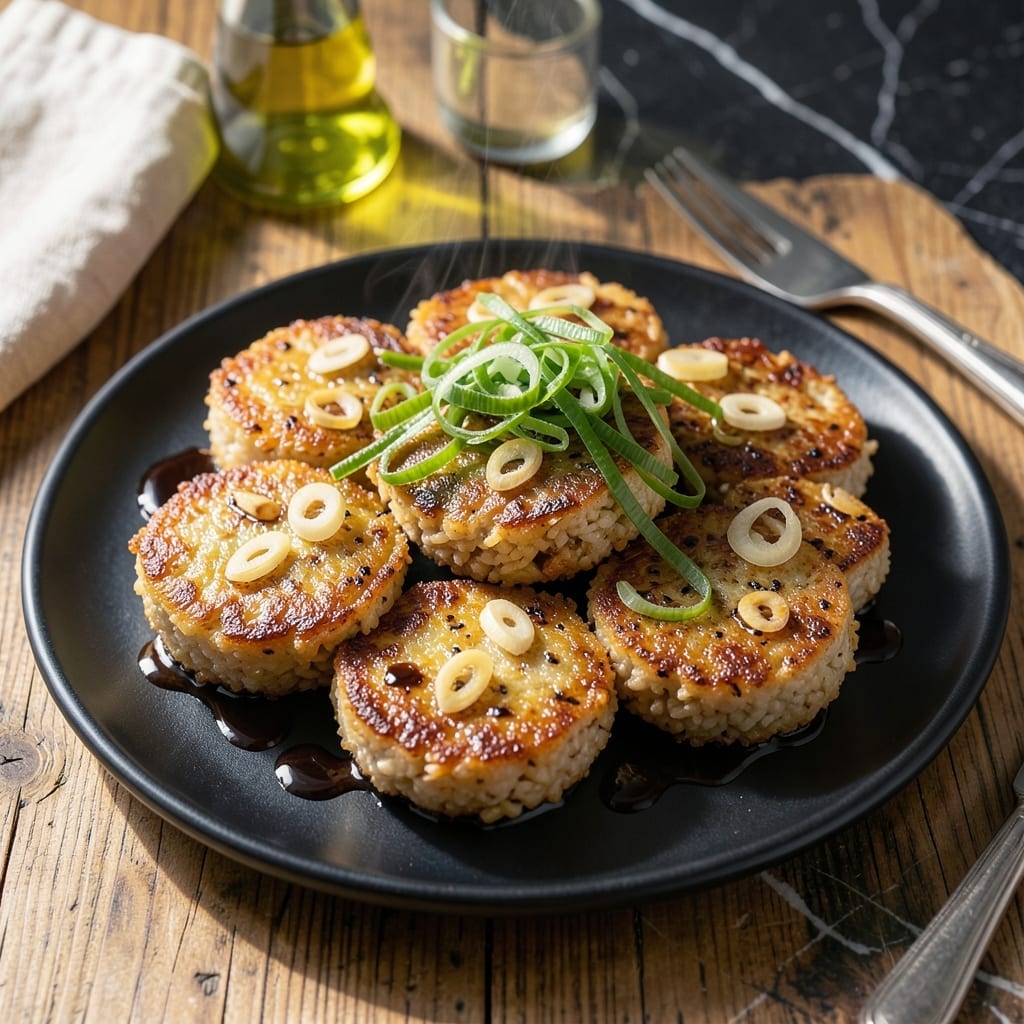
There’s an art to achieving perfectly crispy pan fried rice cakes at home, and this method delivers every time. The secret lies in the contrast—golden, shatteringly crispy edges giving way to soft, chewy centers that melt in your mouth.
I developed this technique after countless attempts to replicate the restaurant versions I loved. The key is high heat, proper oil temperature, and not crowding the pan. Each cake needs space to develop that coveted crunch without steaming in its own moisture.
What emerges is a dish that’s both comforting and exciting—each bite offers texture and flavor in perfect balance. The exterior shatters between your teeth while the inside remains tender and slightly springy.
Serve these as a main course or satisfying side dish. The technique works with both traditional and modern variations, making it versatile for any meal.
Ingredients for Pan Fried Rice Cake
Thick rice cakes, bold seasonings, and a hot pan create magic. Crispy perfection in minutes.
| Ingredient | Amount | Notes |
|---|---|---|
| Rice Cakes 🍚 | 8 pieces | Thick-cut, plain variety |
| Neutral Oil 🫒 | ½ cup | High smoke point, like avocado or vegetable |
| Garlic Cloves 🧄 | 4 cloves | Minced for aroma |
| Green Onions 🧅 | 3 whole | Thinly sliced, green parts only |
| Soy Sauce 💧 | 3 tbsp | Low-sodium preferred |
| Sesame Oil 🫒 | 1 tbsp | Toasted for depth |
| Rice Vinegar 💧 | 1 tbsp | Unseasoned variety |
| Gochujang 🌶️ | 1 tbsp | Korean chili paste, optional |
| Sesame Seeds 🌿 | 2 tbsp | Toasted for garnish |
| Red Pepper Flakes 🌶️ | ½ tsp | Adjust to taste |
| Salt 🧂 | ½ tsp | Kosher or sea salt |
| Black Pepper 🌶️ | ¼ tsp | Freshly ground |
The rice cakes are the star here. Look for thick-cut, plain varieties at Asian markets or the international aisle—thin ones crisp up too fast and burn. I always grab a few extra packs from H Mart when I spot them (trust me, they disappear fast). Freshness matters, so check the date. The oil needs a high smoke point—avocado or vegetable oil works best for that shatteringly crisp edge.
No gochujang? Sriracha mixed with a pinch of sugar gets you close. Green onions can be subbed with chives (use half as much). If you’re out of rice vinegar, apple cider vinegar at half the amount works—just taste before adding all. The sesame oil is non-negotiable though—it adds that toasty depth. Skip the pre-toasted sesame seeds and toast your own (freshness is worth the extra minute).
Leftovers keep 2-3 days in the fridge, but they’re best fresh. Reheat in a dry pan to revive the crisp. Freeze uncooked cakes for 1 month—thaw before frying. Always store rice cakes sealed tight (they dry out fast).
Why You’ll Love This Recipe
- One Pan Magic: I just toss the rice cakes in hot oil with minced garlic and they crisp up in minutes—no fancy techniques.
- Umami Bomb: The soy sauce caramelizes on the edges while the garlic infuses every bite. Honestly, I keep going back for “just one more.”
- Weeknight Hero: It’s my go-to when I need dinner fast, but it’s also great cold the next day in lunchboxes.
- Pantry Friendly: Rice cakes stay shelf-stable for ages, and I always have garlic and soy sauce on hand. I’ll be real: this saves me from last-minute grocery runs.
Step-by-Step Instructions for Pan Fried Rice Cakes
Here’s the method I use for that perfect contrast of textures in every bite.
Step 1: Bloom the Aromatics in Hot Oil
Heat ½ cup neutral oil in a large skillet over medium-high heat until it shimmers but doesn’t smoke. I always use an oil with a high smoke point here—avocado or vegetable oil works perfectly. The shimmering oil is your signal that it’s ready for the aromatics.
Add the 4 cloves minced garlic and cook for 30 seconds until just golden at the edges but not browned. Garlic burns quickly, so keep it moving. Immediately add the 3 thinly sliced green onions and stir for another 15 seconds until fragrant. You want to infuse the oil with their flavor without letting them color.
This aromatic base is crucial—it’ll coat the rice cakes and build that deep, savory foundation. If the garlic starts to brown, reduce the heat immediately; burnt garlic tastes bitter and will ruin the dish.
Step 2: Pan-Fry the Rice Cakes to Golden Perfection
Carefully add the 8 pieces rice cakes to the skillet in a single layer. They’ll sizzle immediately—that’s the sound of crispy edges forming. Cook undisturbed for 3-4 minutes until the bottoms turn deep golden brown and slightly puffed.
Flip each rice cake using tongs—they’ll be delicate but should hold together. Cook the second side for another 2-3 minutes until equally golden brown. The key here is patience; don’t flip too early or they won’t develop that crispy exterior we’re after.
If your skillet isn’t large enough to hold all rice cakes in one layer, work in batches. Crowding the pan drops the oil temperature and leads to soggy results instead of crispy ones.
Step 3: Build the Glaze and Coat Evenly
Reduce heat to medium-low and add the 3 tbsp soy sauce, 1 tbsp sesame oil, 1 tbsp rice vinegar, and 1 tbsp gochujang to the skillet. Stir to combine, scraping up any browned bits from the bottom. These will dissolve into the sauce, adding incredible depth of flavor.
The sauce will bubble vigorously at first. Let it simmer for 1 minute until it thickens slightly and becomes glossy. Tilt the pan and use a spoon to baste the rice cakes with the sauce, ensuring each piece gets an even coating.
Sprinkle with ½ tsp salt and ¼ tsp black pepper, then add the ½ tsp red pepper flakes for a subtle kick. The glaze should cling to the rice cakes without making them soggy.
Step 4: Garnish and Serve Immediately
Transfer the rice cakes to a serving platter and immediately sprinkle with the 2 tbsp toasted sesame seeds. The contrast of the crispy rice cakes with the nutty sesame seeds is irresistible. I like to use a mix of white and black sesame seeds for visual appeal when I have them.
Serve right away while the rice cakes are still hot and crispy. The texture changes quickly as they cool, so timing is everything. If you need to hold them, place the platter in a 200°F oven for up to 10 minutes, but they’re truly best fresh from the pan.
Each bite should deliver that perfect balance of crispy edges, chewy centers, and the umami-rich glaze that ties it all together.
Pro Tips For Making Pan Fried Rice Cake
- Soak Rice Cakes: If using dried rice cakes, soak them in warm water for 15-20 minutes first—I learned this the hard way after ending up with rock-hard bites that refused to soften in the pan.
- Hot Pan, Hot Oil: Get your pan screaming hot before adding the oil and rice cakes. After burning three batches, I finally figured out that medium heat just steams them instead of frying.
- Skip the Crowding: Resist the urge to overload the pan. Give each rice cake space to crisp up, or you’ll end up with a sad, soggy pile instead of golden edges.
- Add Sauce Last: Wait until the rice cakes are browned before adding soy sauce—tossing it in too early creates steam that softens the crust you worked so hard to build.
Health Benefits of This Dish
Energy Boost
These cakes provide a steady release of energy from their complex carbohydrates, making them perfect for active days. Rice cakes have a low glycemic index, which means they won’t cause blood sugar spikes. I notice I stay fuller longer after eating them. 💪
Digestive Health
Rice cakes are naturally low in fat and contain 1-2 grams of fiber per cake, supporting digestive regularity. The fermentation process in some traditional varieties adds beneficial probiotics. They’re gentle on sensitive stomachs too.
Gluten-Free Goodness
Naturally gluten-free, these cakes are safe for celiacs or anyone avoiding gluten. I love that they let me enjoy a crispy, satisfying texture without wheat. Always check labels for cross-contamination warnings though.
Rich in B Vitamins
Rice provides essential B vitamins like thiamine and niacin, which help convert food into energy. A serving of 2 cakes gives you about 10% of your daily B vitamin needs. These nutrients support brain function and metabolism.
Low Calorie Option
Each plain rice cake contains only about 35-50 calories, making them an excellent base for a lighter meal. When pan-fried, they absorb minimal oil if cooked properly. I often serve them with veggie-heavy sides to keep meals balanced. ✨
Nutrient Absorption
The garlic and sesame oil in this recipe contain healthy fats that help your body absorb fat-soluble vitamins from other foods in your meal. This combination makes the dish both flavorful and nutritionally efficient.
Nutrition Facts
Frequently Asked Questions
What oil works best for frying?
Use a neutral oil with a high smoke point like avocado or vegetable. These handle the medium-high heat needed for crispy edges without burning. Avoid olive oil—its low smoke point can create bitter flavors.
How do I prevent soggy rice cakes?
Don’t crowd the pan—cook in batches if needed. Ensure oil is hot before adding cakes, and avoid flipping too soon. The 3-4 minutes per side creates that perfect crisp.
Can I make this without gochujang?
Yes! Substitute with 1 tbsp sriracha mixed with ½ tsp sugar for similar heat and sweetness. The glaze will still cling beautifully to the cakes.

- Jollof Rice Sauce Recipe: West African Tomato and Spice Infusion - September 25, 2026
- Japanese Rice Soup Recipe: Umami-Rich Comfort in a Bowl - September 25, 2026
- Homemade Cream Of Rice Recipe: Silk-Smooth Breakfast in Minutes - September 25, 2026