
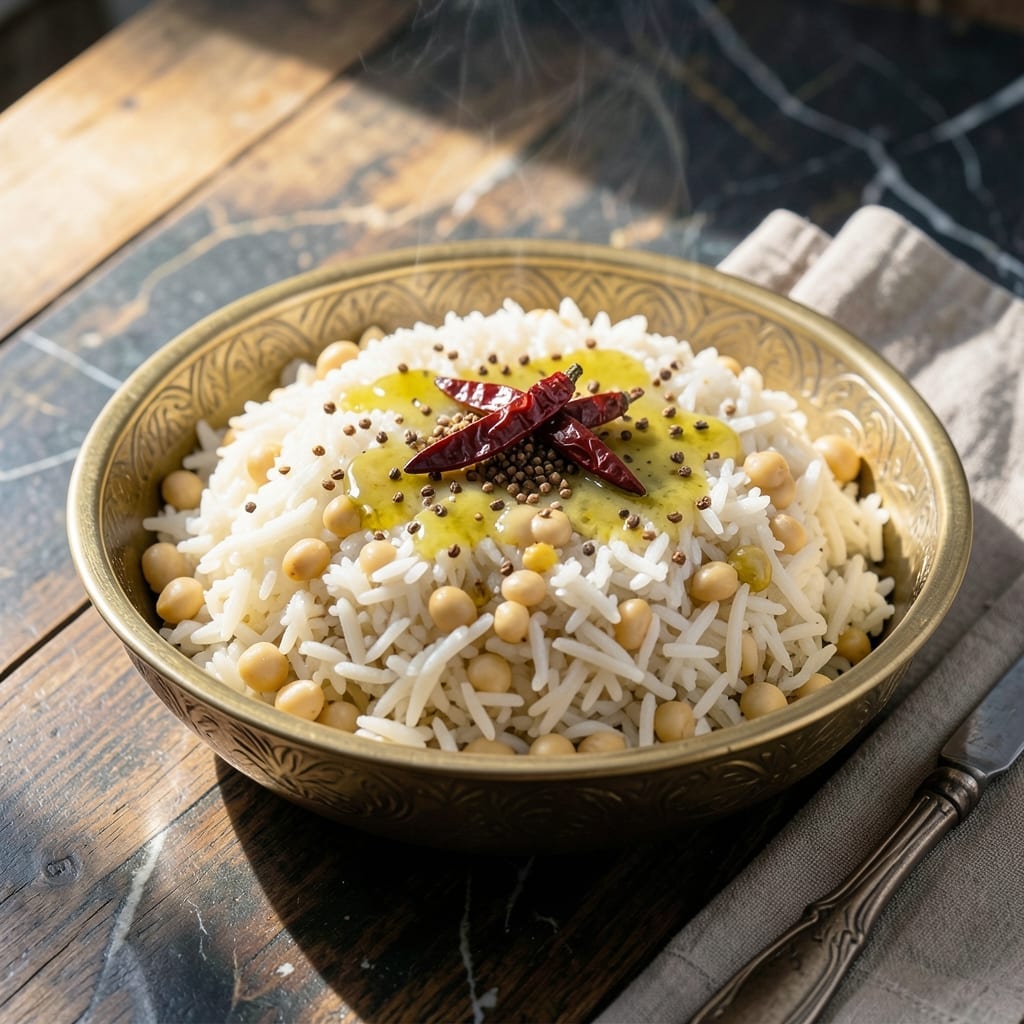
There’s a reason this South Indian dish has comforted generations—it’s simple, hearty, and deeply satisfying.
This one-pot creation combines rice and lentils with mild spices, creating a balanced meal that’s both nourishing and comforting. The lentils break down slightly, infusing every grain of rice with their earthy flavor.
What makes it special is its effortless preparation. Just a handful of ingredients, minimal prep, and 30 minutes of simmering deliver a dish that feels like a warm embrace.
The result is a fluffy, fragrant bowl where each bite carries the gentle warmth of cumin, turmeric, and ghee. It’s tradition served simple.
Ingredients for Paruppu Rice
Pantry staples plus fresh aromatics create this deeply comforting one-pot meal.
| Ingredient | Amount | Notes |
|---|---|---|
| Basmati Rice 🌾 | 1 ½ cups | Rinsed until water runs clear |
| Yellow Moong Dal 🥣 | ¾ cup | Split and washed thoroughly |
| Ghee 🧈 | 2 tbsp | Clarified butter, or use vegan alternative |
| Cumin Seeds 🌿 | 1 tsp | Whole for tempering |
| Mustard Seeds 🌿 | ½ tsp | Black or yellow variety |
| Dried Red Chilies 🌶️ | 2 whole | Broken into pieces |
| Curry Leaves 🍃 | 8 pieces | Fresh for authentic flavor |
| Turmeric Powder 🌶️ | ½ tsp | Ground for color and earthiness |
| Asafoetida 🧂 | ¼ tsp | Hing, optional but traditional |
| Green Chilies 🌶️ | 2 whole | Slit lengthwise for heat |
| Fresh Ginger 🌿 | 1 piece | 1-inch, grated or minced |
| Water 💧 | 4 cups | For cooking rice and lentils |
| Salt 🧂 | 1 ¼ tsp | Adjust to taste |
| Fresh Cilantro 🌿 | ¼ cup | Chopped, for garnish |
The dal and rice form the foundation here. Indian grocery stores carry the best quality yellow moong dal—look for bright, unbroken lentils. Basmati rice should be aged for optimal texture. Patel Brothers or local South Asian markets are ideal for sourcing curry leaves and asafoetida, which are non-negotiable for authentic flavor. Ghee is traditional, but vegan butter works for a plant-based version.
Out of moong dal? Split pigeon peas (toor dal) can substitute, though cooking time may vary. No fresh curry leaves? Dried curry leaf powder at half the amount is acceptable. Missing asafoetida? A pinch of garlic powder adds depth. For heat adjustment, reduce or omit green chilies. The ginger is flexible—ground ginger at one-third the amount works in a pinch.
Store dal and rice in airtight containers in a cool, dry place for up to 6 months. Fresh cilantro keeps 1 week wrapped in damp paper towels. Leftovers reheat beautifully—flavors deepen after 24 hours and keep 3-4 days refrigerated.
Why You’ll Love This Recipe
- One Pot Wonder: I just dump rice, moong dal, and spices in one pot and let it simmer—no fancy techniques.
- Golden Comfort: The ghee-toasted cumin and mustard seeds make every bite warm and nutty.
- Meal Prep Hero: It reheats beautifully, so I make a big batch for lunches all week.
- Pantry Friendly: Basmati rice and moong dal are cheap staples I always have on hand.
Step-by-Step Instructions for Paruppu Rice
Master this traditional method and you’ll create a comforting one-pot meal with perfect texture every time.
Step 1: Prepare and Rinse the Base Ingredients
Begin by thoroughly rinsing the 1.5 cups Basmati Rice under cold water until the water runs completely clear. This removes excess starch and prevents the rice from becoming gummy during cooking. I use a fine-mesh strainer for this process to ensure no grains escape.
In a separate bowl, rinse the 0.75 cup Yellow Moong Dal until the water is no longer cloudy. The dal should be bright yellow and free of any grit. Drain both the rice and dal completely and set aside. Proper rinsing is crucial for achieving fluffy, separate grains in the final dish.
Step 2: Temper the Spices for Maximum Flavor
Heat the 2 tbsp Ghee in a heavy-bottomed pot over medium heat. Once melted, add the 0.5 tsp Mustard Seeds and 1 tsp Cumin Seeds. Watch closely—the mustard seeds will begin to pop within 30-45 seconds, signaling they’re ready.
Immediately add the 2 whole Dried Red Chilies, 8 pieces Curry Leaves, 0.25 tsp Asafoetida, 2 whole Green Chilies, and 1 piece Fresh Ginger (grated). Sauté for 1-2 minutes until the curry leaves release their aroma and the ginger turns slightly golden. This tempering process unlocks the full potential of the spices.
Step 3: Combine and Cook the Rice-Dal Mixture
Add the drained rice and dal to the pot, stirring to coat all grains with the spiced ghee. Pour in the 4 cups Water, then add the 0.5 tsp Turmeric Powder and 1.25 tsp Salt. Stir well to distribute the turmeric evenly, which will give the dish its characteristic golden hue.
Bring the mixture to a gentle boil over medium-high heat, then reduce to low heat, cover, and simmer for 18-20 minutes. Resist the urge to stir during cooking—this can break the grains. You’ll know it’s done when all liquid is absorbed and the surface appears dry with small steam holes.
Step 4: Rest and Garnish for Serving
Turn off the heat and let the paruppu rice sit covered for an additional 5-10 minutes. This resting period allows the grains to steam and absorb any remaining moisture, resulting in perfectly cooked rice and dal with distinct yet harmonious textures.
Gently fluff the mixture with a fork, being careful not to mash the dal. Transfer to a serving dish and garnish with the 0.25 cup Fresh Cilantro. The cilantro adds a bright, fresh contrast to the earthy, comforting flavors of this traditional South Indian dish.
Pro Tips For Making Paruppu Rice
- Toast the Dal First: Dry roast the yellow moong dal in a pan for 2-3 minutes until lightly golden before cooking—it deepens the flavor and removes any raw taste.
- Use Aged Ghee: I learned this the hard way—fresh ghee can make the dish greasy, but aged ghee (even just a week old) adds a richer, nuttier aroma to the tempering.
- Skip Overcooking Rice: Cook the basmati rice and dal together, but pull them off the heat when the rice is 90% done—it’ll finish in the residual steam and stay fluffy.
- Bloom Spices Slow: Temper the cumin and mustard seeds in ghee on medium-low heat until they sputter gently—cranking it too high burns them and turns the flavor bitter.
Health Benefits of This Dish
Protein Powerhouse
This dish delivers a complete plant-based protein punch—1.5 cups rice and 0.75 cup moong dal together provide about 30g protein per serving. Moong dal is especially rich in essential amino acids, making it a vegetarian powerhouse. 💪
Fiber for Digestion
The combination of whole grains and lentils offers over 10g fiber per serving, supporting healthy digestion and keeping you full for hours. I notice this meal satisfies me longer than plain rice dishes ever do.
Rich in Micronutrients
Turmeric provides curcumin, a potent anti-inflammatory compound, while curry leaves add iron and calcium. The ginger aids digestion and the cilantro garnish delivers a vitamin K boost. Every bite packs nutritional value.
Low Glycemic Impact
The protein-fiber combo slows carbohydrate absorption, preventing blood sugar spikes. With about 45g complex carbs per serving, this creates steady energy without the crash you might expect from rice dishes. 🌱
Gut Health Support
Fermented during cooking, the lentils become easier to digest and promote healthy gut bacteria. The cumin and asafoetida in the tempering further aid digestion, reducing post-meal discomfort.
Heart-Healthy Fats
While minimal, the 2 tbsp ghee provides heart-healthy conjugated linoleic acid. For a lighter version, I sometimes substitute coconut oil without sacrificing the authentic flavor profile.
Nutrition Facts
Frequently Asked Questions
What’s the best rice-to-dal ratio?
Use a 2:1 ratio of rice to dal by volume for the perfect texture. This recipe uses 1.5 cups rice with 0.75 cup moong dal for ideal balance.
Can I make this without ghee?
Substitute with vegan butter or coconut oil. Use the same 2 tbsp amount for authentic flavor without dairy.
Why does my paruppu rice turn mushy?
Over-stirring or using too much water causes this. Stick to 4 cups water and avoid stirring while cooking. Let it rest 5-10 minutes after cooking.
How long can I store leftovers?
Store in an airtight container in the fridge for 3-4 days. Flavors actually deepen after 24 hours, making leftovers delicious!

- Jollof Rice Sauce Recipe: West African Tomato and Spice Infusion - September 25, 2026
- Japanese Rice Soup Recipe: Umami-Rich Comfort in a Bowl - September 25, 2026
- Homemade Cream Of Rice Recipe: Silk-Smooth Breakfast in Minutes - September 25, 2026