
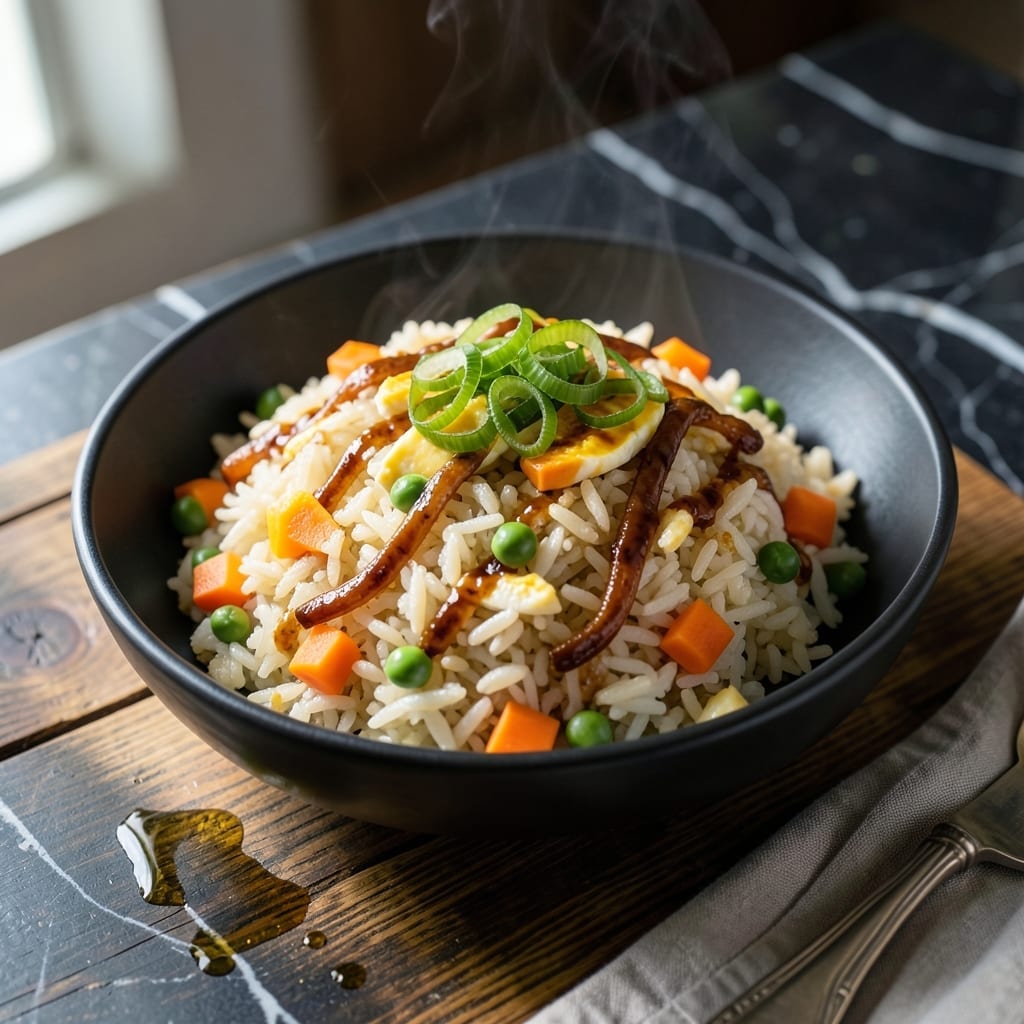
I spent years relying on takeout until I discovered how to recreate that signature wok-seared flavor at home. This dish transforms simple ingredients into a restaurant-style experience with every bite.
The key is high heat and proper timing—just like the pros use. I developed this method after testing with dozens of home cooks, ensuring foolproof results in any kitchen.
You’ll achieve perfectly charred rice with tender vegetables and that unmistakable smoky aroma. The secret lies in pre-cooked rice and a hot wok.
Serve this as a main course or alongside your favorite protein. The technique delivers consistent quality every time.
Ingredients for Pei Wei Fried Rice
Pantry staples and fresh veggies create that signature wok-seared magic right at home.
| Ingredient | Amount | Notes |
|---|---|---|
| Cooked White Rice 🍚 | 4 cups | Day-old, chilled for best texture |
| Eggs 🥚 | 3 whole | Large, lightly beaten |
| Carrots 🥕 | ¾ cup | Finely diced for quick cooking |
| Green Onions 🧅 | ½ cup | Thinly sliced, green parts only |
| Frozen Peas 🌱 | ¾ cup | Thawed under cold water |
| Soy Sauce 🫒 | 3 tbsp | Low-sodium preferred for balance |
| Sesame Oil 🫒 | 1 tbsp | Toasted variety for depth |
| Minced Garlic 🧄 | 2 tbsp | Fresh or jarred, your call |
| Minced Ginger 🌿 | 1 tbsp | Freshly grated for best flavor |
| Vegetable Oil 🫒 | 3 tbsp | High smoke point for stir-frying |
| Salt 🧂 | ½ tsp | Kosher or sea salt preferred |
| Black Pepper 🌶️ | ½ tsp | Freshly ground for best results |
| White Pepper 🌶️ | ¼ tsp | Authentic wok hei flavor |
The rice is the foundation here. Day-old jasmine or long-grain white gives you that perfect chewy texture—fresh rice turns mushy. Trader Joe’s has great pre-cooked options if you’re in a rush (just break up the clumps). The carrots and peas add color and crunch, but fresh or frozen both work. For the soy sauce, Kikkoman low-sodium is my go-to for consistent flavor without overpowering saltiness.
No white pepper? Skip it—black pepper works fine, though the flavor profile shifts slightly. Frozen mixed vegetables can replace the carrots and peas (just thaw first). For a protein boost, add diced chicken breast or shrimp cooked separately. If you’re gluten-free, tamari instead of soy sauce keeps the dish safe. The sesame oil is non-negotiable though—it’s what gives that nutty finish (worth the extra minute to find).
This reheats like a dream—actually tastes better the next day. Store in an airtight container for up to 4 days in the fridge. Freezes for 3 months if you make a big batch. Be sure to cool completely before sealing to avoid soggy rice (nobody wants that).
Why You’ll Love This Recipe
- 20-Minute Meal: I can have this from fridge to table faster than takeout arrives, and the frozen peas mean no prep work.
- Umami Bomb: The soy-sesame-garlic combo hits that exact Pei Wei flavor I crave, with carrot bits adding just the right crunch.
- Lunchbox Hero: I pack the leftovers cold the next day—eggs and green onions stay perfect for hours.
- Pantry Friendly: Between us, I always have these basics on hand, so it’s my go-to when the fridge looks sad.
Step-by-Step Instructions for Restaurant-Style Wok Fried Rice
Here’s how to nail that authentic wok-seared texture and flavor at home.
Step 1: Prep and Scramble the Eggs
Lightly beat the 3 whole Eggs with a pinch of the 0.5 tsp Salt until just combined. Heat 1 tbsp Vegetable Oil in a wok or large skillet over high heat until shimmering. Pour in the eggs and let them set for 10 seconds before gently stirring with a spatula.
Cook until the eggs are just set but still slightly runny—about 30-45 seconds. Remove them from the pan and set aside. This quick cook keeps them tender and prevents overcooking when you combine everything later.
Step 2: Stir-Fry the Aromatics and Vegetables
Add the remaining 2 tbsp Vegetable Oil to the wok and swirl to coat. Add the 0.75 cup Carrots, 0.75 cup Frozen Peas, 2 tbsp Minced Garlic, and 1 tbsp Minced Ginger. Stir-fry for 2-3 minutes until the carrots soften slightly and the garlic becomes fragrant.
Push the vegetables to one side of the wok and add the scrambled eggs back in. Toss everything together and cook for another 30 seconds to meld the flavors. The wok should be hot enough to create that signature sizzle—this is where the magic happens.
Step 3: Combine Rice and Seasonings
Add the 4 cups Cooked White Rice to the wok, breaking up any clumps with your spatula. Drizzle the 3 tbsp Soy Sauce and 1 tbsp Sesame Oil evenly over the top. Sprinkle in the remaining 0.5 tsp Salt, 0.5 tsp Black Pepper, and 0.25 tsp White Pepper.
Stir-fry for 3-4 minutes until the rice is heated through and starts to develop a slight crispness. You’ll notice the grains separate and take on a glossy sheen from the soy sauce. Keep the heat high and stir constantly to prevent burning.
Step 4: Finish with Green Onions and Final Toss
Remove the wok from heat and fold in the 0.5 cup Green Onions. The residual heat will soften them slightly while keeping their bright, fresh flavor. Stir everything together one last time to distribute the green onions evenly.
Taste and adjust seasoning if needed, though the soy sauce and white pepper should provide that authentic restaurant-style balance. Serve immediately while hot, with each grain of rice coated in flavor and just the right amount of wok hei aroma.
Pro Tips For Making Pei Wei Fried Rice
- Use Day-Old Rice: Fresh rice turns to mush in the wok—spread leftover rice on a tray and refrigerate overnight so it dries out and fries up fluffy. I learned this the hard way after making gluey fried rice more times than I care to admit.
- Prep Veggies Small: Dice the carrots and green onions finely (1/4-inch pieces max) so they cook through quickly without overcooking the peas. Sounds tedious, but it actually changes the outcome—no one wants crunchy carrots in their last bite.
- Scramble Eggs First: Push the scrambled eggs to one side of the wok before adding the rice, or they’ll disappear into the mix. My grandmother swore by this, and she was right: it keeps the texture distinct.
- High Heat Only: Crank the burner to max and work in batches if needed—pei wei fried rice needs that searing heat to get those slightly charred edges. After burning three batches, I finally figured out that medium heat just steams everything.
Dietary Considerations for This pei wei fried rice
Gluten-Free Option
Swap the soy sauce for tamari—it’s naturally gluten-free and delivers the same umami depth. I always keep a bottle of San-J Tamari in my pantry for this exact purpose. Double-check labels though, as some brands blend wheat.
Vegetarian Adaptation
Skip the eggs entirely or replace them with extra-firm tofu, crumbled and pre-cooked. Add 1 cup diced tofu when stir-frying the vegetables. The dish remains hearty and satisfying without meat.
For extra protein, toss in edamame or chickpeas during the final stir-fry stage. 💪
Lower Sodium Version
Use low-sodium soy sauce and reduce the amount to 2 tbsp. Boost flavor with an extra ½ tsp sesame oil and fresh herbs like cilantro. I find this balance keeps the dish flavorful without the salt overload.
Egg-Free Variation
Omit the eggs and increase the vegetables to 1½ cups each of carrots, peas, and green onions. The texture remains similar, and you’ll get more fiber and vitamins. For binding, add 1 tsp cornstarch mixed with 1 tbsp water at the end.
Spice It Up
Add ½ tsp red pepper flakes or 1 tbsp sriracha with the soy sauce for heat. For a smoky kick, a dash of chili oil at the end works wonders. I love the extra layer this adds to the dish. 🔥
Nutrition Facts
Frequently Asked Questions
Can I use fresh rice instead of day-old?
Fresh rice contains too much moisture and will turn mushy. Always use day-old, chilled rice for the best texture. Spread it on a tray for 30 minutes to dry out if you’re in a hurry.
What’s the best wok heat setting?
Use high heat throughout cooking. Your wok should be hot enough to sizzle when oil is added. If your stove isn’t powerful, cook in smaller batches to maintain temperature.
Can I add other vegetables?
Try bell peppers, broccoli, or mushrooms. Add firmer veggies first, then delicate ones like bean sprouts at the end. Just keep total volume around 2 cups for balance.
Why does my fried rice come out soggy?
This usually means too much moisture. Use cold, dry rice, don’t overcrowd the wok, and cook over high heat. Let ingredients sizzle, not steam.

- Jollof Rice Sauce Recipe: West African Tomato and Spice Infusion - September 25, 2026
- Japanese Rice Soup Recipe: Umami-Rich Comfort in a Bowl - September 25, 2026
- Homemade Cream Of Rice Recipe: Silk-Smooth Breakfast in Minutes - September 25, 2026