
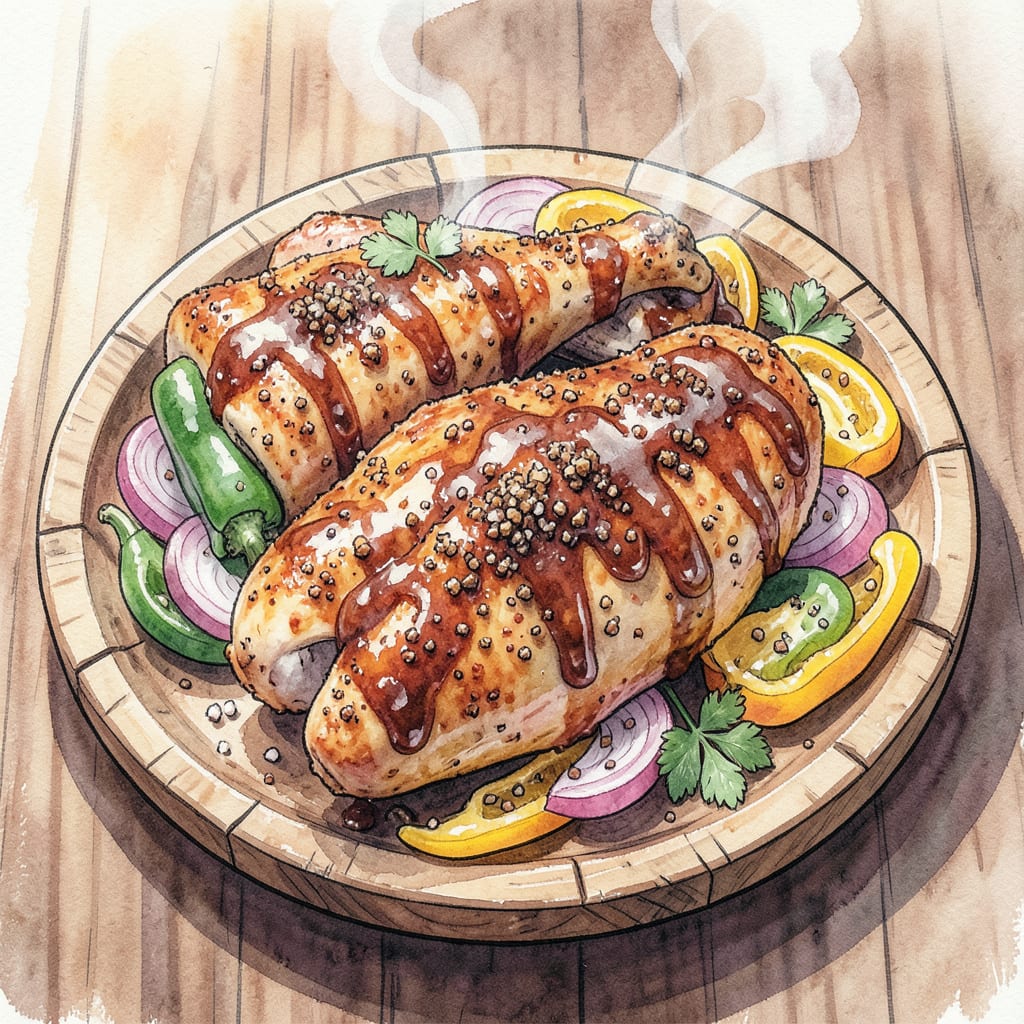
I’ve perfected my pellet grill BBQ chicken recipe to deliver smoky flavor every time. The key is low-and-slow cooking at 225°F, which makes the chicken tender and juicy.
With just a few simple ingredients and 2 hours of cooking time, you’ll achieve perfect BBQ-style chicken. Let’s get started and make some mouth-watering pellet grill BBQ chicken that’s sure to impress!
Ingredients for Pellet Grill Bbq Recipes Chicken
Simple ingredients come together for smoky, tender chicken every time, guaranteed.
| Ingredient | Amount | Notes |
|---|---|---|
| Bone-In Chicken Thighs 🍗 | 2 ½ lb | Skin-on for crispy texture |
| Smoked Paprika 🌶️ | 2 tbsp | For smoky depth |
| Brown Sugar 🍮 | 1 tbsp | Balances smokiness |
| Garlic Powder 🧄 | 1 tbsp | Not garlic salt |
| Onion Powder 🧅 | 1 tbsp | Adds savory depth |
| Kosher Salt 🧂 | 1 tbsp | Diamond Crystal preferred |
| Black Pepper 🌶️ | 1 tsp | Freshly ground |
| Cayenne Pepper 🔥 | ½ tsp | Optional, for heat |
| Apple Cider Vinegar 🍎 | ¼ cup | Adds tanginess |
| Olive Oil 🫒 | ¼ cup | For moisture |
| Wood Pellets 🌲 | 2 cups | Hickory or apple |
| BBQ Sauce 🍯 | 1 cup | Optional, for glazing |
The chicken matters here. Costco and Whole Foods have great options. Look for plump, fresh thighs—they hold up better to low heat. I prefer bone-in for that fall-off-the-bone texture, but boneless works too if that’s what you’ve got on hand.
No smoked paprika? Regular paprika with liquid smoke gets you close. The brown sugar helps balance the smokiness—you can reduce it if you’re watching sugar. For the BBQ sauce, go for something thick like Sweet Baby Ray’s or make your own (worth the effort). If you skip the cayenne, it’s still delicious—just less kick.
This keeps beautifully in the fridge for 4-5 days. Reheat gently in the oven or microwave. You can freeze portions for up to 3 months—just thaw overnight in the fridge. The rub can be made ahead and stored in an airtight container for 6 months.
Step-by-Step Instructions for Pellet Grill BBQ Chicken
Here’s the method that delivers perfectly smoky chicken every time.
Step 1: Prepare the Chicken and Dry Rub
Start by preparing the dry rub mixture. In a small bowl, combine the 2 tbsp Smoked Paprika, 1 tbsp Brown Sugar, 1 tbsp Garlic Powder, 1 tbsp Onion Powder, 1 tbsp Kosher Salt, 1 tsp Black Pepper, and 0.5 tsp Cayenne Pepper. Mix these spices thoroughly until they’re well combined.
Next, pat the 2.5 lb Bone-In Chicken Thighs dry with paper towels, making sure to remove excess moisture from both sides. This step is crucial for achieving crispy skin. Generously apply the dry rub mixture to all surfaces of the chicken thighs, pressing the spices gently onto the meat to ensure they adhere properly.
Step 2: Marinate the Chicken
In a large bowl, whisk together the 0.25 cup Apple Cider Vinegar and 0.25 cup Olive Oil. Add the chicken thighs to this marinade, turning them to coat evenly. Cover the bowl with plastic wrap and refrigerate for at least 2 hours or overnight for maximum flavor penetration.
The acidity in the apple cider vinegar helps break down the proteins in the chicken, making it more tender, while the olive oil adds moisture. This marinade is key to achieving that perfect balance of flavor and texture.
Step 3: Set Up Your Pellet Grill
Preheat your pellet grill to 275°F, using the 2 cups Wood Pellets of your choice (hickory or apple work well for this recipe). Once the grill is preheated and smoking, remove the chicken thighs from the marinade, letting any excess liquid drip off.
Place the chicken thighs on the grill grates, skin side up if they have skin. Close the lid and smoke the chicken for 2-3 hours, or until it reaches an internal temperature of 165°F. You want the meat to be tender and the skin crispy.
Step 4: Glaze with BBQ Sauce (Optional)
If you’re using the 1 cup BBQ Sauce for glazing, brush it onto the chicken thighs during the last 15-20 minutes of cooking. This will give the chicken a sweet and sticky glaze. Keep an eye on the chicken during this time to prevent the sauce from burning.
The BBQ sauce adds a layer of sweetness that complements the smokiness from the grill. It’s optional, but it makes the dish even more delicious and visually appealing.
Step 5: Rest and Serve
Once the chicken is cooked, remove it from the grill and let it rest for 10-15 minutes. This resting period allows the juices to redistribute throughout the meat, ensuring that each bite is juicy and flavorful.
Serve the chicken hot, garnished with fresh herbs if desired. The result should be tender, flavorful chicken with a perfect smoky flavor that your guests will love.
Flavor Customization for This pellet grill bbq recipes chicken
Spice Level Customization
For those who like a little extra kick, increase the cayenne pepper to 1 tsp or add hot sauce to your marinade. If you prefer mild flavors, simply omit the cayenne pepper entirely. You can also experiment with different types of pepper, like Ancho chili powder or chipotle powder, to add unique flavors. 🔥
Herb Infusions
Add fresh or dried herbs to your dry rub for an aromatic twist. Thyme and rosemary pair beautifully with smoky flavors, while oregano adds a Mediterranean touch. For a more complex flavor profile, mix different herbs together—just be sure not to overpower the other spices. I like to add 2 tbsp of chopped fresh herbs to my dry rub.
Sweetness Variations
Adjust the brown sugar in the dry rub to suit your taste. For a sweeter BBQ flavor, increase it to 2 tbsp. If you prefer less sweetness, reduce it to 1 tsp or substitute with honey powder. You can also add a drizzle of honey during the last few minutes of cooking for an extra layer of sweetness.
Smoky Flavor Enhancements
Experiment with different types of wood pellets to change the smokiness of your chicken. Mesquite gives a strong, earthy flavor, while cherry wood adds a fruity sweetness. Mixing different woods can create complex flavor profiles—I often blend hickory and apple for a balanced smokiness.
BBQ Sauce Alternatives
If you choose to glaze your chicken, try different BBQ sauce styles. Kansas City-style BBQ sauce is thick and sweet, while Carolina vinegar-based sauce adds a tangy kick. You can also make your own BBQ sauce using a combination of ketchup, brown sugar, and apple cider vinegar. Brush it on during the last 15-20 minutes of cooking.
Regional BBQ Styles
Customize your pellet grill BBQ chicken with regional BBQ styles. For a Texas-style dry rub, emphasize chili powder and cumin. For a Carolina-style vinegar-based flavor, increase the apple cider vinegar in your marinade. Experimenting with these variations can help you find your new favorite flavor profile. 🌶️
Nutrition Facts
Frequently Asked Questions
What’s the best temperature for cooking chicken on a pellet grill?
The ideal temperature is 275°F for low-and-slow cooking that makes the chicken tender and juicy. This temperature allows for perfect smoke penetration without drying out the meat.
How long does it take to cook chicken thighs on a pellet grill?
Cooking time typically ranges from 2-3 hours depending on the size of the thighs and your desired level of doneness. The chicken is done when it reaches an internal temperature of 165°F.
Do I need to marinate the chicken before grilling? While not strictly necessary, marinating for at least 2 hours or overnight enhances flavor and tenderness. The acidity in the marinade helps break down proteins, resulting in more tender chicken. You can use a simple mixture of apple cider vinegar and olive oil for excellent results.
Can I use boneless chicken thighs for this recipe?
Yes, you can use boneless chicken thighs, but keep in mind they’ll cook slightly faster than bone-in thighs. Reduce the cooking time to 1.5-2 hours and monitor their internal temperature closely to avoid overcooking.

- Jollof Rice Sauce Recipe: West African Tomato and Spice Infusion - September 25, 2026
- Japanese Rice Soup Recipe: Umami-Rich Comfort in a Bowl - September 25, 2026
- Homemade Cream Of Rice Recipe: Silk-Smooth Breakfast in Minutes - September 25, 2026