
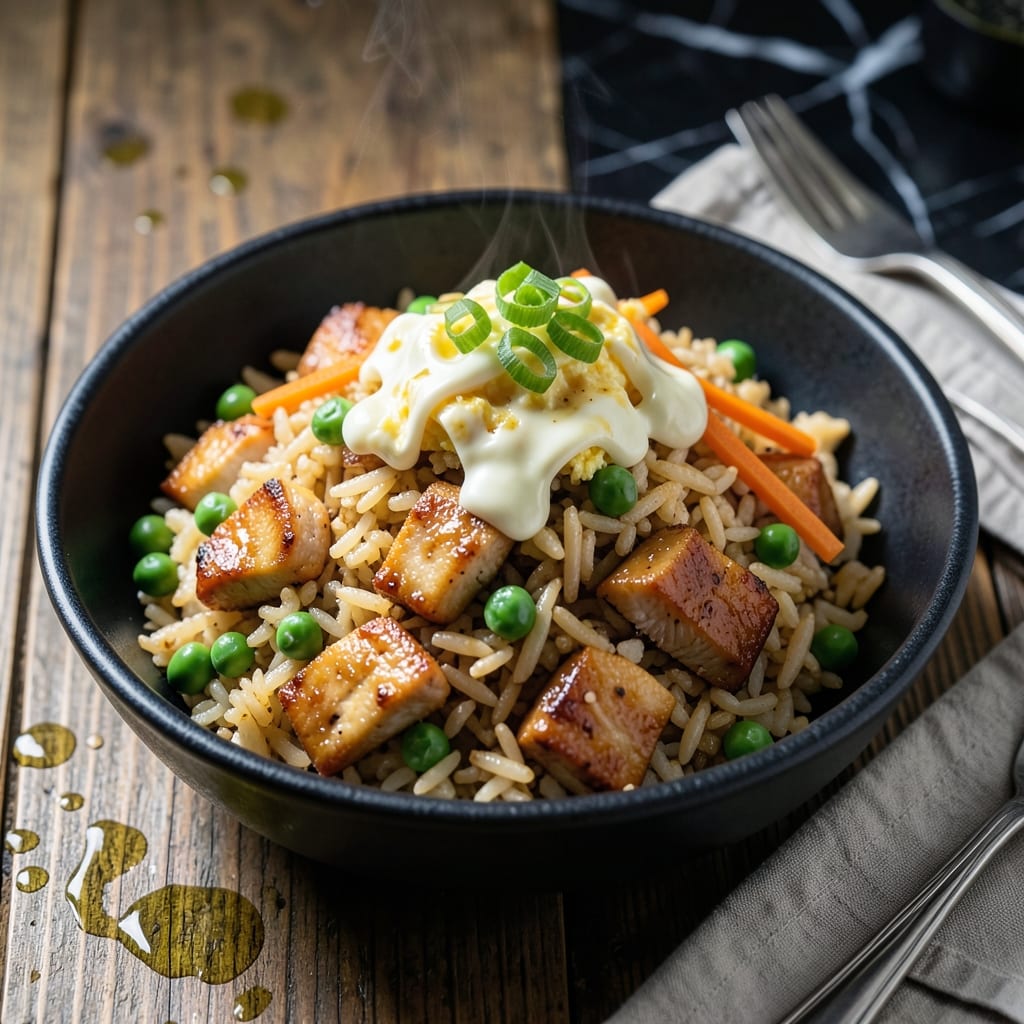
Achieving restaurant-quality fried rice at home starts with the right technique and timing. This method delivers perfectly seared chicken, crisp vegetables, and that signature wok-hei flavor without a professional kitchen.
The secret lies in pre-cooked rice and high heat. Day-old rice prevents mushiness, while a screaming-hot wok creates those coveted charred bits. Every grain stays separate, coated in savory sauce with just enough resistance.
You’ll taste the balance of umami from soy sauce, sweetness from peas and carrots, and the satisfying crunch of properly cooked vegetables. The chicken remains tender and juicy, never dry or rubbery.
Master this foundation and you’ll have a dish that outshines takeout every time. The process is precise but the results are consistently perfect.
Ingredients for Perfect Chicken Fried Rice
Quality ingredients and precise timing create this wok-seared classic with authentic flavor and texture.
| Ingredient | Amount | Notes |
|---|---|---|
| Day-Old Cooked White Rice 🍚 | 4 cups | Cold, preferably overnight, separated |
| Boneless Skinless Chicken Thighs 🍗 | 1 lb | Cut into small uniform pieces |
| Large Eggs 🥚 | 2 whole | Lightly beaten for scrambling |
| Frozen Green Peas 🌱 | ¾ cup | No need to thaw first |
| Carrots 🥕 | 2 whole | Medium, finely diced |
| Green Onions 🧅 | 3 whole | Thinly sliced, whites and greens separated |
| Garlic Cloves 🧄 | 3 cloves | Minced for maximum flavor |
| Soy Sauce 🥄 | 3 tbsp | Low-sodium preferred for control |
| Oyster Sauce 🥄 | 1 tbsp | Substitute with vegetarian oyster sauce if needed |
| Sesame Oil 🫒 | 1 tsp | Pure toasted for finishing |
| Neutral Oil 🫒 | 3 tbsp | High smoke point like vegetable or peanut oil |
| Kosher Salt 🧂 | ½ tsp | Diamond Crystal preferred |
| Ground White Pepper 🌶️ | ¼ tsp | Subtle heat without color |
The rice is non-negotiable—day-old, cold, and dry is what gives you those separate grains. Use jasmine or long-grain white rice; short-grain gets gummy. For the chicken, thighs beat breasts every time—they stay juicy through high-heat cooking. Pat them completely dry before cutting to prevent steaming. Whole Foods and most Asian markets carry pre-cooked rice if you’re short on time.
No oyster sauce? Hoisin or fish sauce works in a pinch (use half the amount). Vegetarian? Swap in mushroom-based oyster sauce. Fresh peas are great but frozen hold their color and texture better. The sesame oil is for finishing only—never cook with it (it burns). If you can’t find toasted, regular works but lacks depth.
Cooked rice keeps 4-5 days in the fridge—perfect for planning ahead. The chicken can be prepped a day early (store airtight). Once cooked, fried rice is best hot but reheats well in a skillet with a splash of water to revive the texture within 3-4 days.
Why You’ll Love This Recipe
- One Pan Magic: I love that everything—chicken, eggs, veggies—cooks together in one wok or skillet. Cleanup is a breeze.
- Umami Bomb: The chicken thighs and day-old rice soak up the soy sauce and garlic like a flavor sponge. Honestly, it’s the little charred bits that get me every time.
- Meal Prep Hero: This tastes even better the next day, so I make a big batch for lunches. Cold or reheated, it’s solid.
- Budget Stretcher: Between us, frozen peas and carrots keep costs low, and a little chicken goes a long way. Feeds my family of four without breaking the bank.
Step-by-Step Instructions for Chicken Fried Rice
Master the wok technique for evenly seared ingredients and maximum flavor in every bite.
Step 1: Prepare and Veloute the Aromatics
Heat 1 tablespoon neutral oil in a wok or large skillet over high heat until it shimmers. Add the finely diced carrots and cook for 2 minutes, stirring constantly, until they begin to soften but retain a slight bite.
Push the carrots to one side and add the minced garlic cloves to the center. Stir for 15-20 seconds until fragrant but not browned—burnt garlic will impart bitterness. Immediately add the whites of the green onions and cook for another 30 seconds.
Step 2: Cook the Chicken and Scramble the Eggs
Increase heat to maximum and add the remaining 2 tablespoons neutral oil. When the oil is nearly smoking, add the small uniform pieces of boneless skinless chicken thighs in a single layer. Let them sear undisturbed for 1 minute to develop color.
Stir-fry for 2-3 minutes until the chicken is cooked through and no longer pink. Push the chicken to one side, pour in the lightly beaten large eggs, and scramble quickly with a spatula until just set but still slightly runny—about 30 seconds.
Step 3: Incorporate Rice and Seasonings
Add the cold, separated day-old cooked white rice to the wok, breaking up any clumps with your spatula. Stir-fry for 2-3 minutes until the rice is heated through and begins to crisp slightly in spots.
Drizzle the soy sauce, oyster sauce, and kosher salt around the edges of the wok. Add the frozen green peas (no need to thaw) and ground white pepper. Toss everything together vigorously for 1-2 minutes until the rice is uniformly coated and the peas are heated through.
Step 4: Finish and Garnish
Remove from heat and drizzle with the sesame oil. Toss once more to distribute evenly. The rice should be glistening with a light, even coating of sauce, and each grain should be distinct rather than clumped.
Garnish with the green parts of the green onions. Serve immediately while hot—the texture is best right out of the wok, with each bite offering a balance of tender chicken, crisp vegetables, and umami-rich rice.
Pro Tips For Making Perfect Chicken Fried Rice
- Crank the Heat: Use a screaming-hot wok or skillet—at least 375°F—and keep it there. I learned this the hard way after too many sad, soggy batches of fried rice that just wouldn’t crisp. —
- Dry the Rice: Spread your day-old rice on a tray and let it sit uncovered for 10 minutes before cooking. Sounds weird, but it works: this removes excess moisture so it fries up fluffy, not mushy. —
- Skip the Overcrowding: Cook the chicken in batches if needed—about 6-8 pieces at a time in a 12-inch pan. Steer clear of piling it all in at once, or you’ll end up steaming it instead of searing. —
- Beat Eggs First: Whisk your eggs with a pinch of salt and white pepper, then scramble them in the pan before adding the rice. This isn’t the prettiest method, but it’s the tastiest—guarantees silky, evenly distributed egg throughout.
Best Sauces and Condiments for This Recipe
Classic Soy-Based Sauce
I always start with a simple mix of 2 tbsp soy sauce and 1 tbsp oyster sauce for authentic flavor. This combo delivers the perfect balance of salty and umami that defines great fried rice. Use low-sodium soy sauce if you’re watching your salt intake. 🥄
Spicy Sriracha Kick
For heat lovers, add 1-2 tsp Sriracha to your sauce mix. I stir it in at the end so the spice stays bright and fresh. The garlic and chili in Sriracha complement the chicken and vegetables beautifully.
Sweet and Tangy
Mix 1 tbsp hoisin sauce with 1 tsp rice vinegar for a sweeter profile. This works especially well if you’ve added extra carrots or peas. The vinegar cuts through the richness of the dish.
Sesame Garlic Finish
Whisk 1 tsp toasted sesame oil with 1 minced garlic clove and drizzle over the finished rice. This adds a fragrant, nutty layer that elevates every bite. I use Kadokawa brand for consistent quality.
Chili Garlic Paste
Stir in ½ tsp chili garlic sauce (like Lee Kum Kee) for a garlicky, spicy depth. It adds complexity without overpowering the dish’s natural flavors. Start with less—you can always add more to taste.
Fresh Herb Garnish
Finish with chopped cilantro or Thai basil for brightness. The herbs add a fresh contrast to the rich, savory flavors. I sprinkle them on just before serving to preserve their color and aroma. ✨
Nutrition Facts
Frequently Asked Questions
Why use day-old rice?
Fresh rice contains too much moisture, leading to mushy results. Day-old rice is drier, allowing it to crisp up and stay separate in the wok. This is the secret to that authentic restaurant texture.
Can I use chicken breast instead?
You can, but thighs are recommended—they stay juicier at high heat. If using breast, cut into small pieces and cook for 1-2 minutes less to prevent dryness.
How do I prevent soggy vegetables?
Cook veggies over high heat first to remove moisture. Use frozen peas (no thawing needed) and finely diced carrots for even cooking.
What if I don’t have a wok?
A large skillet works, but use high heat and work in batches. The key is maintaining that sizzling temperature to get proper searing.

- Jollof Rice Sauce Recipe: West African Tomato and Spice Infusion - September 25, 2026
- Japanese Rice Soup Recipe: Umami-Rich Comfort in a Bowl - September 25, 2026
- Homemade Cream Of Rice Recipe: Silk-Smooth Breakfast in Minutes - September 25, 2026