
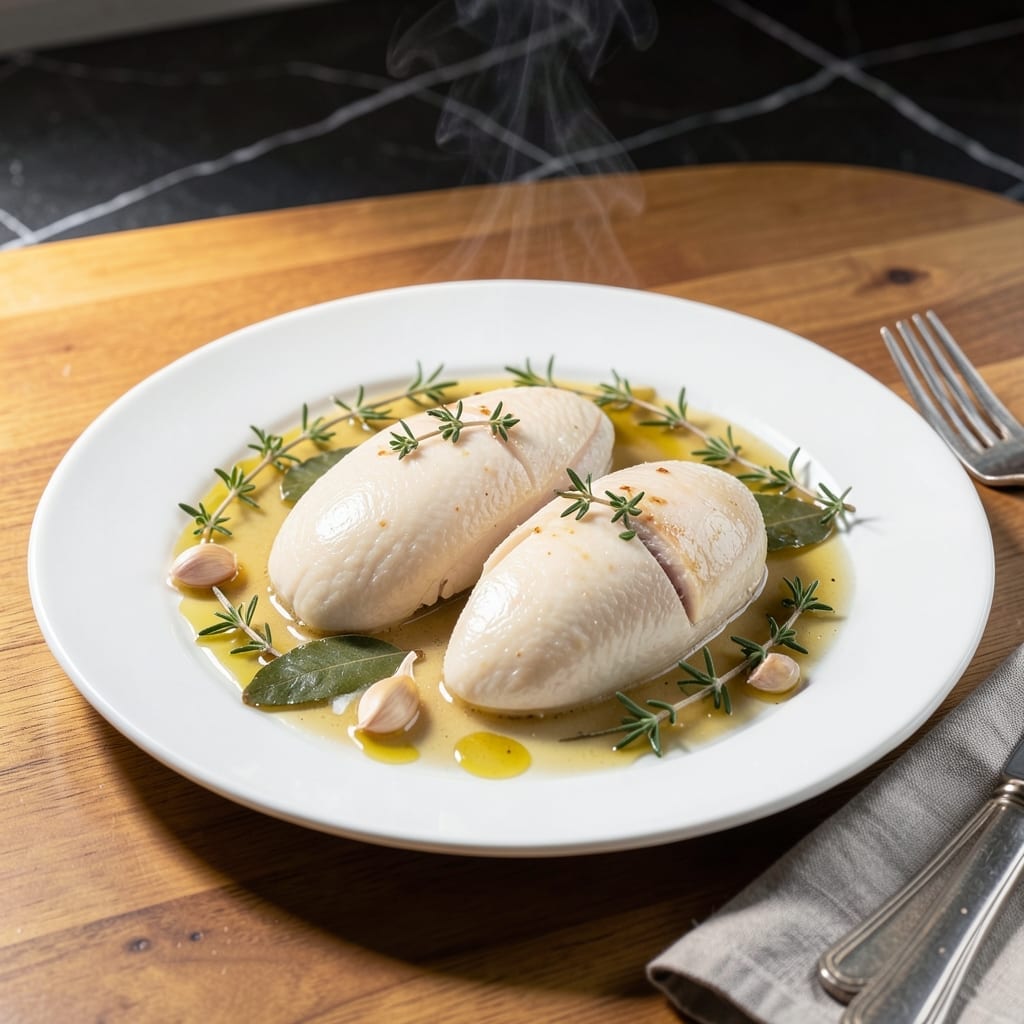
There’s a quiet elegance to perfectly poached chicken—tender, moist meat with a delicate texture that shines in any dish. This method transforms humble ingredients into something extraordinary with minimal effort.
The secret lies in maintaining a gentle simmer and using a flavorful broth. I’ve refined this technique to ensure the chicken stays silky and juicy, never dry or overcooked. The herb-infused liquid adds subtle depth to every bite.
What emerges is meat so tender it falls apart at the touch of a fork, infused with the aromatic essence of herbs and spices. It’s versatile enough for salads, soups, or sandwiches, always delivering restaurant-quality results.
Ready in under 30 minutes, this is the kind of foundational recipe every home cook should master.
Ingredients for Poached Chicken
Simple ingredients elevated by technique create this delicate, restaurant-quality chicken every time.
| Ingredient | Amount | Notes |
|---|---|---|
| Boneless, Skinless Chicken Breasts 🍗 | 1 ½ lb | Even thickness for uniform cooking |
| Chicken Broth 🍲 | 6 cups | Low-sodium preferred for control |
| White Wine Vinegar 🍷 | 2 tbsp | Adds brightness to broth |
| Fresh Thyme Sprigs 🌿 | 4 whole | Stems on for easy removal |
| Fresh Rosemary Sprigs 🌿 | 2 whole | Woody stems intact |
| Bay Leaves 🍃 | 2 whole | Dried, for aromatic depth |
| Garlic Cloves 🧄 | 4 cloves | Lightly crushed, peeled |
| Black Peppercorns 🌶️ | 1 tsp | Whole, for gentle flavor |
| Kosher Salt 🧂 | 1 tsp | Diamond Crystal preferred |
| Lemon Slices 🍋 | 4 slices | Thin, seeds removed |
| Whole Carrot 🥕 | 1 whole | Roughly chopped for broth |
| Celery Stalks 🌿 | 2 whole | Cut into large pieces |
| Yellow Onion 🧅 | ½ whole | Quartered, skin on |
The chicken quality matters here. Boneless, skinless breasts from a trusted butcher or Whole Foods ensure consistent texture. Look for plump, pale pieces without dark spots—signs of freshness. For the broth, low-sodium chicken stock from Bonafide Provisions or Kettle & Fire offers clean flavor without overpowering salt. Fresh herbs should be vibrant green, not wilted (the good stuff, not the pre-cut kind).
No white wine vinegar? Apple cider vinegar at equal amount works fine. Fresh out of thyme? Dried thyme at one-third the quantity plus a pinch of oregano bridges the gap. If you’re missing whole peppercorns, freshly ground black pepper in a tea infuser does the trick. The carrots, celery, and onion form the classic mirepoix—frozen mirepoix mix saves time in a pinch.
Poached chicken stays moist for 3-4 days refrigerated in its broth. For longer storage, strain and reserve the broth, then freeze both separately for up to 3 months. Reheat gently in the liquid to prevent drying (worth the extra minute).
Why You’ll Love This Recipe
- Set It & Forget It: I just simmer the chicken in broth with thyme and rosemary—no flipping, no fuss.
- Bright & Herby: The white wine vinegar tang with fresh herbs makes every bite crave-worthy.
- Meal Prep MVP: Shreds perfectly for salads, wraps, or soup all week long.
- Budget Stretch: One batch gives me three meals from two chicken breasts. Here’s what sold me—no waste, all flavor.
Step-by-Step Instructions for Poached Chicken
Master this technique for consistently tender, flavorful chicken with a velvety texture.
Step 1: Prepare the Aromatic Broth Base
In a large pot, combine the 6 cups Chicken Broth, 2 tbsp White Wine Vinegar, 4 whole Fresh Thyme Sprigs, 2 whole Fresh Rosemary Sprigs, 2 whole Bay Leaves, 4 cloves Garlic Cloves, 1 tsp Black Peppercorns, and 1 tsp Kosher Salt.
Add the 4 slices Lemon Slices, 1 whole Whole Carrot (roughly chopped), 2 whole Celery Stalks (cut into large pieces), and 0.5 whole Yellow Onion (quarter, skin on). These vegetables and herbs build a complex, aromatic foundation that infuses every bite.
Bring the mixture to a gentle simmer over medium-high heat, then immediately reduce to low heat to maintain a bare simmer—you should see only occasional small bubbles breaking the surface.
Step 2: Add the Chicken and Monitor Temperature
Place the 1.5 lb Boneless, Skinless Chicken Breasts into the broth, ensuring they are fully submerged. If necessary, add a small heatproof plate on top to keep them under the liquid. The chicken will cook evenly only if completely covered.
Maintain the broth at a temperature between 160-180°F. Use a thermometer for precision—this range is critical for achieving the silky texture poaching is known for. Any higher, and the chicken may toughen; any lower, and it won’t cook through properly.
You’ll notice the chicken begins to turn opaque around the edges within 5-7 minutes. This visual cue indicates the cooking process has begun, but resist the urge to poke or prod it unnecessarily.
Step 3: Poach to Perfection and Rest
Poach the chicken for 12-15 minutes, depending on thickness. The chicken is done when an instant-read thermometer inserted into the thickest part registers 165°F, and the meat feels firm yet springy to the touch.
Remove the pot from heat and let the chicken rest in the broth for an additional 5-10 minutes. This resting period allows the juices to redistribute, ensuring maximum moisture and tenderness. The internal temperature will continue to rise slightly during this time.
Using a slotted spoon, transfer the chicken to a cutting board or plate. The broth can be strained and reserved for soups, sauces, or grains—its flavor is too good to waste.
Step 4: Serve or Store for Later Use
Let the chicken cool slightly before slicing or shredding. For whole pieces, slice against the grain for the most tender texture. The poached chicken can be served immediately in salads, sandwiches, or alongside vegetables, or cooled and stored in the broth for up to 4 days.
To store, submerge the chicken in the strained, cooled broth in an airtight container. This keeps the meat moist and enhances its flavor over time. When ready to use, simply remove from the broth and proceed with your recipe.
Pro Tips For Making Poached Chicken
- Simmer, Don’t Boil: Keep the broth at a gentle simmer—just a few bubbles breaking the surface. I learned this the hard way after turning my first batch of poached chicken into rubbery hockey pucks.
- Pound the Breasts: Use a rolling pin or meat mallet to even out the thickness of the chicken breasts to about 1 inch. This guarantees even cooking, so no part ends up dry while waiting for the thicker bits to finish.
- Skim the Surface: As the broth heats, skim off any foam that rises to the top with a fine-mesh strainer. Sounds tedious, but it keeps your poaching liquid clean and your chicken tasting fresh, not murky.
- Use a Thermometer: Pull the chicken at 160°F—it’ll coast to 165°F while resting. I was skeptical until I tried it, but now my poached chicken stays juicy every time, no guesswork involved.
Creative Variations of This Recipe
Asian-Inspired Ginger Soy
Swap the herb bundle for 3 slices fresh ginger, 4 smashed garlic cloves, and 2 star anise pods. Replace 2 cups broth with low-sodium soy sauce for a savory depth. The result is tender meat perfect for ramen or rice bowls. 🌟
Mediterranean Lemon Garlic
Add 1 tbsp lemon zest and 6 smashed garlic cloves to the broth. Toss in 10 cracked coriander seeds and 1 tsp fennel seeds for warmth. This version shines in Greek salads or pita sandwiches.
Spicy Southwest Twist
Include 1 chopped jalapeño, 1 tbsp cumin seeds, and 1 tsp smoked paprika in the poaching liquid. The subtle heat pairs wonderfully with cilantro-lime rice or tacos. I love this for meal prep. 🔥
French Herb Variation
Use 3 tarragon sprigs, 2 parsley stems, and 1 tbsp white wine in place of vinegar. This classic combination elevates the chicken for elegant dishes like chicken salad with tarragon mayo.
Citrus and Fennel
Add 1 orange slice and 1 sliced fennel bulb to the broth. The bright, aromatic notes work beautifully in light summer salads or as a topping for crostini.
Tea-Infused Elegance
Steep 2 green tea bags or 1 tbsp loose Earl Grey in the hot broth before adding chicken. The tea imparts a subtle earthiness that pairs well with Asian-inspired dishes. A chef’s secret I swear by. ✨
Nutrition Facts
Frequently Asked Questions
What’s the ideal temperature for poaching?
Keep the broth between 160-180°F for perfect texture. Use a thermometer to stay in this range. Too hot, and the meat toughens; too cool, and it won’t cook through.
Can I use chicken thighs instead of breasts?
Yes! Thighs stay juicy and may need 5-7 extra minutes. Their higher fat content makes them more forgiving. Just ensure they reach 165°F internally.
How do I prevent the chicken from drying out?
Don’t let the broth boil—maintain a gentle simmer. Also, rest the chicken in the warm broth for 5-10 minutes after cooking to lock in moisture.
Can I reuse the poaching liquid?
Strain and use the flavorful broth for soups, sauces, or cooking grains within 3-4 days. It’s packed with herb and chicken essence.

- Jollof Rice Sauce Recipe: West African Tomato and Spice Infusion - September 25, 2026
- Japanese Rice Soup Recipe: Umami-Rich Comfort in a Bowl - September 25, 2026
- Homemade Cream Of Rice Recipe: Silk-Smooth Breakfast in Minutes - September 25, 2026