
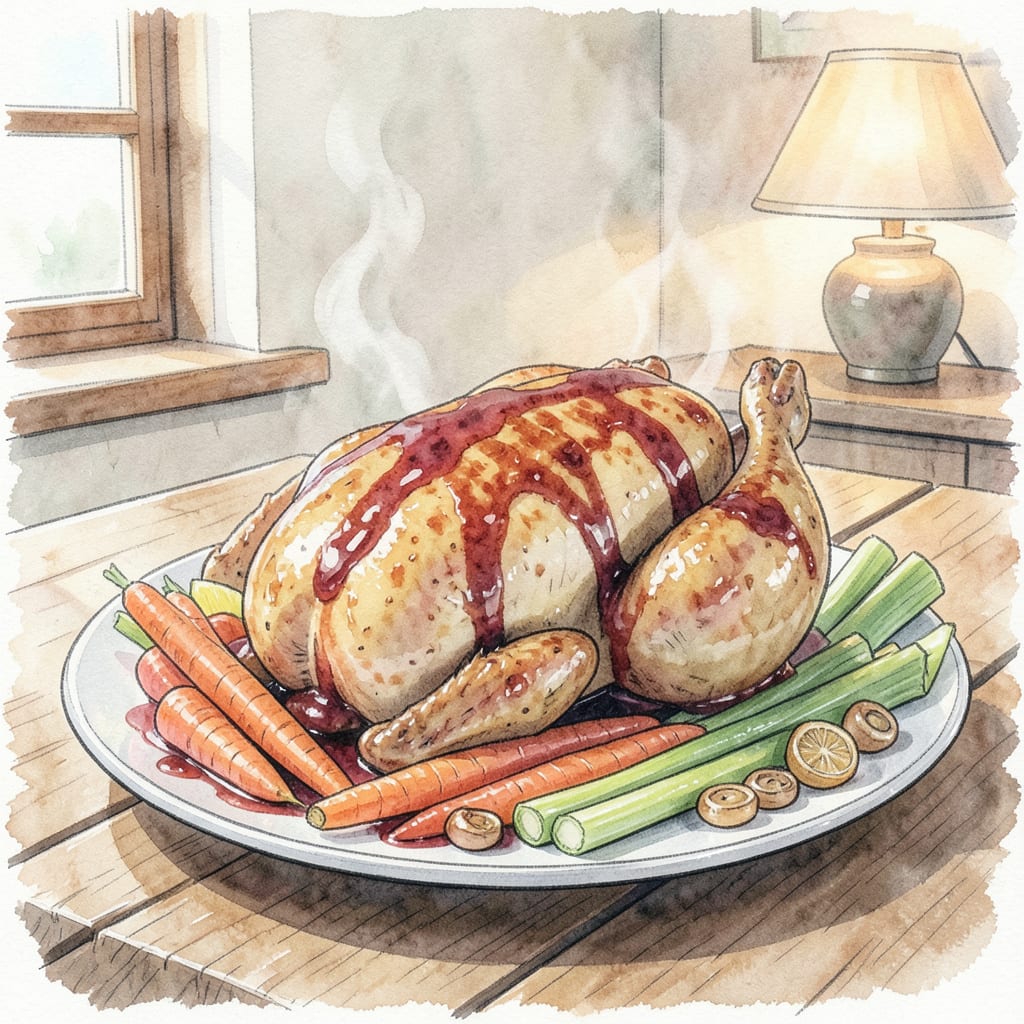
I’ve perfected the art of poaching a whole chicken, achieving tender and moist results every time. This technique ensures a perfectly cooked chicken with minimal effort, making it ideal for any occasion.
The process involves submerging the chicken in simmering water, typically between 165°F to 180°F, for about 45-60 minutes, or until it reaches an internal temperature of 165°F. Serve with your favorite sides for a complete meal.
Ingredients for Poached Whole Chicken
Gather these ingredients for a perfectly poached whole chicken, moist and tender.
| Ingredient | Amount | Notes |
|---|---|---|
| Whole Chicken 🐓 | 3 ½ lb | Fresh or organic preferred |
| Carrots 🥕 | 2 whole | Peeled and chopped |
| Celery Stalks 🥕 | 2 stalks | Chopped, with leaves |
| Onion 🧅 | 1 whole | Peeled and halved |
| Garlic Cloves 🧄 | 4 cloves | Smashed, not minced |
| Black Peppercorns 🌶️ | 1 tbsp | Freshly cracked preferred |
| Bay Leaves 🌿 | 2 whole | Dried or fresh |
| Fresh Thyme 🌿 | 2 sprigs | Or 1 tsp dried |
| Kosher Salt 🧂 | 2 tbsp | Or sea salt |
| Water 💧 | 4 cups | Cold, filtered preferred |
| White Wine 🍷 | 1 cup | Optional, for flavor |
| Fresh Parsley 🌿 | ¼ cup | Chopped, for garnish |
For the best results, choose a fresh, organic chicken if possible. Most grocery stores carry them, but butcher shops often have better quality. The aromatics matter too—fresh carrots and celery make a difference. Don’t skip the black peppercorns; they add depth to the poaching liquid.
No white wine? Use extra chicken broth or water. Fresh thyme is ideal, but dried works at one-third the amount. For the garlic, smashing the cloves releases more flavor than mincing. If you can’t find kosher salt, sea salt is a good substitute. The bay leaves add a subtle flavor—don’t skip them.
This chicken keeps beautifully—3-4 days in the fridge, 3 months frozen. Store it in its poaching liquid for maximum moisture. When reheating, add some of the reserved broth to keep it tender. You can also use the leftover broth as a base for soups or risottos.
Step-by-Step Instructions for Poached Whole Chicken
Here’s the method that guarantees moist and tender results every single time.
Step 1: Prepare the Poaching Liquid
Start by combining the 4 cups Water, 1 whole Onion (halved), 2 whole Carrots (peeled and chopped), and 2 stalks Celery Stalks (chopped with leaves) in a large pot. I like to use a heavy-bottomed pot as it distributes heat evenly. Bring this mixture to a gentle simmer over medium heat.
Once it’s simmering, add the 4 cloves Garlic Cloves (smashed), 1 tbsp Black Peppercorns, 2 whole Bay Leaves, and 2 sprigs Fresh Thyme. Let this aromatic mixture simmer for 10 minutes to develop a rich flavor profile. You’ll know it’s ready when the aroma fills your kitchen and the vegetables are tender.
Step 2: Add the Chicken and Poach
Carefully lower the 3.5 lb Whole Chicken into the poaching liquid, breast-side up. If the chicken isn’t fully submerged, you can either add more Water or weigh it down gently with a heatproof plate. Make sure the liquid is at a gentle simmer – you want to see tiny bubbles rising to the surface, not a rolling boil.
Poach the chicken for 45-50 minutes, maintaining the simmer. The chicken is done when an instant-read thermometer inserted into the thickest part of the thigh (without touching bone) reads 165°F. The meat should be tender and the juices should run clear.
Step 3: Rest and Strain the Broth
Using tongs or a slotted spoon, carefully remove the chicken from the pot and transfer it to a cutting board. Tent it loosely with foil to keep warm. Strain the poaching liquid through a fine-mesh sieve into a clean pot, discarding the solids. Skim off any excess fat that rises to the surface.
Let the chicken rest for 10-15 minutes before carving. This resting period allows the juices to redistribute, making the meat even more tender. Meanwhile, you can reduce the strained broth over high heat to concentrate the flavors if desired.
Step 4: Season and Serve
Carve the rested chicken into serving pieces. Season with 2 tbsp Kosher Salt and garnish with 0.25 cup Fresh Parsley (chopped). If you used 1 cup White Wine in your poaching liquid, you might want to adjust the seasoning accordingly as it adds depth to the broth.
Serve the chicken with some of the strained and reduced poaching liquid spooned over the top. This not only adds flavor but also keeps the chicken moist. Enjoy your perfectly poached whole chicken with your favorite sides.
Common Mistakes When Making This Dish
Temperature Control Mistakes
One of the most common mistakes is letting the poaching liquid boil too vigorously. This can cause the chicken to cook unevenly and become tough. I maintain a gentle simmer between 165°F to 180°F throughout the cooking process. If your liquid starts to boil, reduce the heat immediately or remove the pot from the burner for a minute to calm it down.
Improper Chicken Preparation
Not properly preparing the chicken before poaching can lead to less flavorful results. I always
Insufficient Poaching Liquid
Using too little poaching liquid is another common error. The chicken must be fully submerged to cook evenly. If necessary, add more water or chicken broth to cover the chicken completely. You can also weigh it down gently with a heatproof plate if it floats.
Overcooking the Chicken
Overcooking is a frequent mistake that results in dry meat. I always use an instant-read thermometer to check for doneness. The chicken is perfectly cooked when it reaches 165°F in the thickest part of the thigh without touching bone. Letting it rest for 10-15 minutes after cooking also helps retain moisture.
Skipping the Resting Period
Not letting the chicken rest after cooking can cause the juices to run out when carved, leaving the meat dry. I always tent the chicken loosely with foil and let it rest for at least 10 minutes before carving. This resting period is crucial for redistributing the juices and keeping the meat tender.
Not Straining the Broth
Failing to strain the poaching liquid can result in a cloudy, fat-laden broth. After removing the chicken, I strain the liquid through a fine-mesh sieve into a clean pot, discarding the solids. Skimming off any excess fat that rises to the surface further improves the quality of the broth. This step is essential for achieving a clear, flavorful broth that’s perfect for serving alongside the chicken.
Nutrition Facts
Frequently Asked Questions
What’s the best way to ensure my poached chicken stays moist?
The key is maintaining a gentle simmer between 165°F to 180°F and not overcooking the chicken. Using an instant-read thermometer helps achieve perfect doneness. Letting it rest for 10-15 minutes before carving also helps retain moisture.
Can I use chicken broth instead of water for poaching?
Yes, using chicken broth instead of water adds extra flavor to both the chicken and the poaching liquid. You can also combine broth and water for a balanced flavor. For added depth, include aromatics like onion, carrots, and celery.
How do I know when the chicken is fully cooked?
The chicken is done when an instant-read thermometer inserted into the thickest part of the thigh (without touching bone) reads 165°F. The meat should be tender and the juices should run clear. This typically takes 45-50 minutes for a 3.5 lb chicken.
Can I poach a larger or smaller chicken?
Yes, you can adjust the size of the chicken. For larger chickens, add 5-10 minutes per pound. For smaller chickens, reduce the cooking time accordingly. Always use a thermometer to ensure the chicken reaches 165°F internally.

- Jollof Rice Sauce Recipe: West African Tomato and Spice Infusion - September 25, 2026
- Japanese Rice Soup Recipe: Umami-Rich Comfort in a Bowl - September 25, 2026
- Homemade Cream Of Rice Recipe: Silk-Smooth Breakfast in Minutes - September 25, 2026