
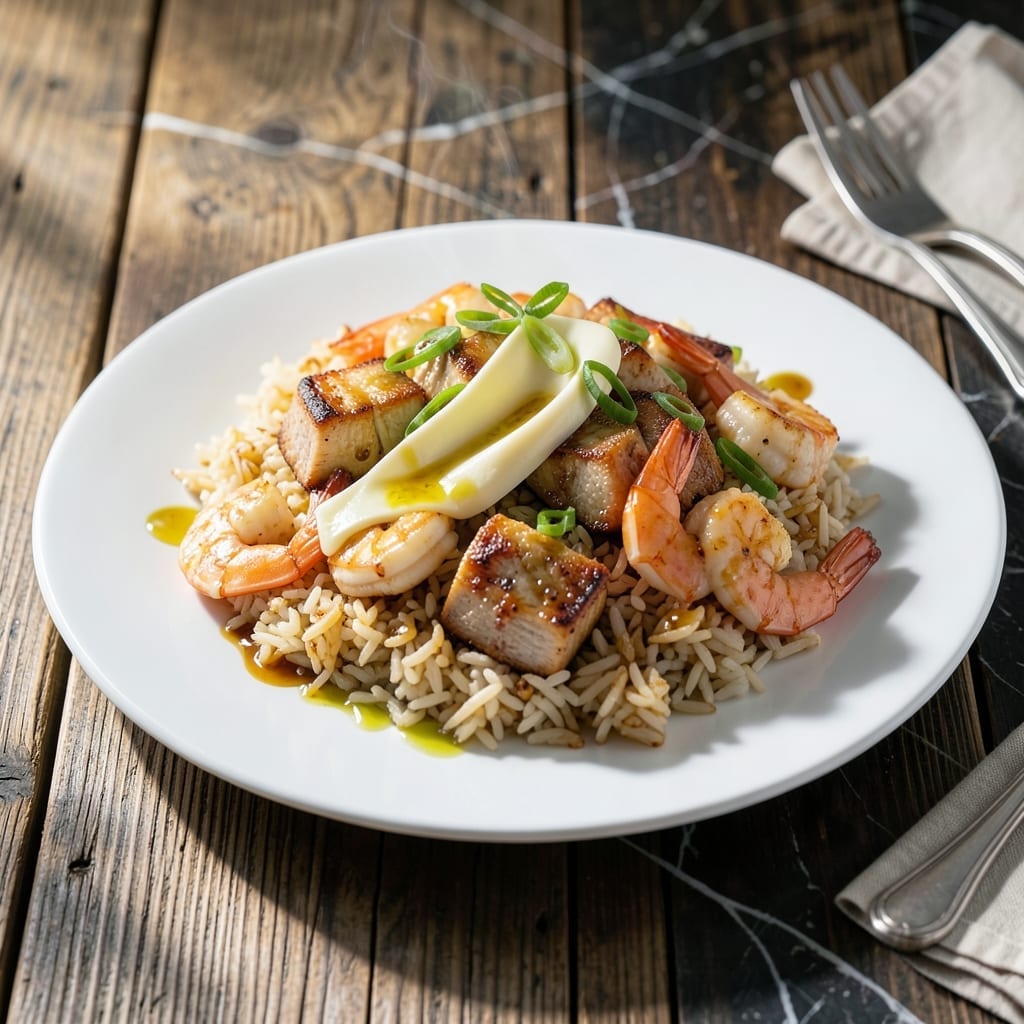
This dish brings together the best of land and sea in a single pan, creating a wok-seared masterpiece that’s both hearty and refined. The combination of tender pork and succulent shrimp with fragrant rice makes every bite unforgettable.
I’ve perfected this recipe to balance textures and flavors—crispy pork, juicy shrimp, and fluffy rice all come together with a savory depth from soy sauce and aromatics. It’s a one-pan meal that feels special but stays simple.
The key is high heat and quick cooking to lock in freshness. Each ingredient shines while contributing to the dish’s harmony. The result is a restaurant-quality fried rice that’s ready in under 30 minutes.
Serve it hot for a meal that satisfies completely. Here’s how to make it.
Ingredients for Pork and Shrimp Fried Rice
This surf and turf harmony requires just the right balance of proteins and aromatics.
| Ingredient | Amount | Notes |
|---|---|---|
| Boneless Pork Shoulder 🥩 | ¾ lb | Diced into small cubes |
| Large Shrimp 🦐 | ¾ lb | Peeled, deveined, tails off |
| Cooked White Rice 🍚 | 4 cups | Day-old, cooled completely |
| Large Eggs 🥚 | 2 whole | Lightly beaten |
| Soy Sauce 🫒 | 3 tbsp | Low-sodium preferred |
| Oyster Sauce 🫒 | 1 tbsp | Vegetarian optional |
| Sesame Oil 🫒 | 1 tbsp | Toasted variety for aroma |
| Garlic Cloves 🧄 | 3 cloves | Minced finely |
| Fresh Ginger 🌿 | 1 tbsp | Grated or minced |
| Green Onions 🧅 | ½ cup | Thinly sliced, white and green parts |
| Frozen Peas 🌱 | ¾ cup | Thawed, optional |
| Carrot 🥕 | ½ cup | Diced into small cubes |
| Neutral Cooking Oil 🫒 | 2 tbsp | High smoke point like vegetable or peanut |
| Kosher Salt 🧂 | ½ tsp | Adjust to taste |
| Black Pepper 🌶️ | ¼ tsp | Freshly ground |
The pork is critical here. Boneless shoulder has the right fat-to-meat ratio for crispy edges and tender bites. Costco or Whole Foods have excellent pre-cut options, but ask the butcher to trim excess fat if buying whole. Shrimp should be wild-caught when possible—look for firm, translucent flesh. Day-old rice is non-negotiable (fresh will turn mushy).
No pork shoulder? Pork loin works too but lacks fat—add an extra tablespoon of oil. Shrimp allergic? Swap for chicken breast cut similarly. Vegetarian? Use extra-firm tofu and skip oyster sauce. Soy sauce can be tamari for gluten-free. Frozen peas are flexible—edamame or corn add nice texture. Always taste before final seasoning.
Leftovers keep 3-4 days refrigerated in an airtight container. Freeze for up to 3 months (reheat from frozen in a skillet). Cooked rice can be prepped 1 day ahead—spread on a tray to cool quickly. Shrimp and pork are best cooked fresh.
Why You’ll Love This Recipe
- One Pan Wonder: I toss everything—pork, shrimp, rice, and eggs—into one skillet. Honestly, cleanup takes longer than cooking.
- Umami Bomb: The soy sauce soaks into the rice while the pork and shrimp add this deep, savory richness. I’ll be real: I always sneak a bite before serving.
- Feeds the Crew: Between us, this stretches to feed six with leftovers for lunch. Even my picky nephew cleans his plate.
- Budget Hero: Boneless pork shoulder and frozen shrimp keep costs low. I use day-old rice, so nothing goes to waste.
Step-by-Step Instructions for Pork and Shrimp Fried Rice
Master the wok with this precise method for perfectly seared protein and vibrant vegetables every time.
Step 1: Prep and Season the Proteins
Dice the 0.75 lb boneless pork shoulder into small, even cubes. Toss with 0.5 tsp kosher salt and 0.25 tsp black pepper—this ensures every bite is seasoned. Pat the 0.75 lb large shrimp dry with paper towels to prevent splattering when they hit the hot wok.
I like to keep the pork and shrimp separate until cooking. The pork needs more time to develop a golden crust, while the shrimp cooks in just 2-3 minutes until opaque and pink. This prevents overcooking the shrimp while waiting for the pork to finish.
Step 2: Stir-Fry Aromatics and Proteins
Heat 1 tbsp neutral cooking oil in a wok or large skillet over high heat until shimmering. Add the seasoned pork and spread it into a single layer. Let it sear undisturbed for 2 minutes until the edges turn golden brown.
Push the pork to one side and add the remaining 1 tbsp neutral cooking oil to the empty space. Add the shrimp and cook for 1-2 minutes per side until just cooked through. Remove both proteins to a plate—they’ll finish cooking when returned to the wok later.
In the same wok, add the 3 cloves minced garlic cloves and 1 tbsp fresh ginger. Stir-fry for 30 seconds until fragrant but not browned. This builds the flavor base that ties the dish together.
Step 3: Scramble Eggs and Add Vegetables
Pour the 2 whole lightly beaten large eggs into the wok and scramble quickly with a spatula. Cook until just set but still slightly runny—this takes about 1 minute. The eggs will continue cooking with the residual heat.
Add the 0.5 cup diced carrot, 0.5 cup green onions, and 0.75 cup frozen peas. Stir-fry for 2-3 minutes until the carrots soften slightly and the peas are heated through. The green onions should remain vibrant and slightly crisp.
Step 4: Combine with Rice and Sauces
Add the 4 cups cooked white rice to the wok, breaking up any clumps with your spatula. Day-old rice works best here because it’s drier and fries up fluffier. Distribute it evenly across the wok surface.
Drizzle the 3 tbsp soy sauce, 1 tbsp oyster sauce, and 1 tbsp sesame oil over the rice. Toss everything together vigorously for 2-3 minutes until the rice is evenly coated and heated through. The sauces should create a glossy sheen on each grain.
Return the pork and shrimp to the wok and stir-fry for another 1-2 minutes until everything is hot and well combined. Taste and adjust seasoning if needed, though the sauces should provide ample flavor.
Pro Tips For Making Pork And Shrimp Fried Rice
- Use Day-Old Rice: Fresh rice turns to mush in the wok—I learned this the hard way after ruining two batches. Spread leftover rice on a tray and refrigerate overnight, or at least 4-6 hours, to dry it out before frying.
- Velvet the Pork: Cut the pork shoulder into thin strips, marinate with 1 tsp soy sauce and 1 tsp cornstarch for 15 minutes. Sounds weird, but it works: the pork stays tender and juicy instead of chewy.
- Skip the Crowding: Cook the shrimp and pork in separate batches, then set aside. Overcrowding the pan steams the ingredients instead of searing them, and nobody wants soggy fried rice.
- Scramble Eggs First: Push the eggs to one side of the wok and scramble until just set before mixing with the rice. This keeps them fluffy and distinct instead of disappearing into the dish.
Serving Suggestions for pork and shrimp fried rice
Plating Ideas
Serve this dish in a large shallow bowl to showcase the vibrant colors of the pork, shrimp, and vegetables. The presentation pops when you garnish with extra green onions and a drizzle of sesame oil. I always add a lime wedge on the side for a bright finish. ✨
Side Dish Pairings
A simple cucumber salad with rice vinegar and a pinch of sugar complements the richness perfectly. For heartier meals, pair with egg rolls or steamed dumplings from your favorite Asian market. These add texture contrast without overpowering the dish.
Condiment Bar
Set out small bowls of sriracha, hoisin sauce, and chili garlic sauce so everyone can customize their plate. I love adding a splash of fish sauce for an extra umami kick. These little extras make the meal feel interactive and fun.
Family-Style Serving
This recipe serves 4 generously, so place it in the center of the table with serving spoons. The communal style encourages sharing and makes for a lively meal. I always make extra—leftovers taste even better the next day. 💛
Garnish Tips
Sprinkle with toasted sesame seeds or crushed peanuts for crunch. A few cilantro leaves add freshness. These small touches elevate the dish from home-cooked to restaurant-worthy. Even a simple sprinkle of black pepper enhances the flavors.
Nutrition Facts
Frequently Asked Questions
Can I use fresh rice instead of day-old?
Fresh rice contains too much moisture and will turn mushy. Always use day-old rice that’s been refrigerated and cooled completely for best texture.
What’s the best oil for high-heat cooking?
Peanut oil or vegetable oil are ideal due to their high smoke points. Avoid olive oil as it can burn at the required high heat.
How do I prevent the shrimp from overcooking?
Cook shrimp separately and remove them once they turn opaque and pink (about 2-3 minutes). They’ll finish cooking when added back to the wok later.
Can I substitute other proteins?
Yes! Try chicken breast or tofu for variation. Adjust cooking times accordingly—chicken needs 5-6 minutes, tofu 3-4 minutes.

- Jollof Rice Sauce Recipe: West African Tomato and Spice Infusion - September 25, 2026
- Japanese Rice Soup Recipe: Umami-Rich Comfort in a Bowl - September 25, 2026
- Homemade Cream Of Rice Recipe: Silk-Smooth Breakfast in Minutes - September 25, 2026