
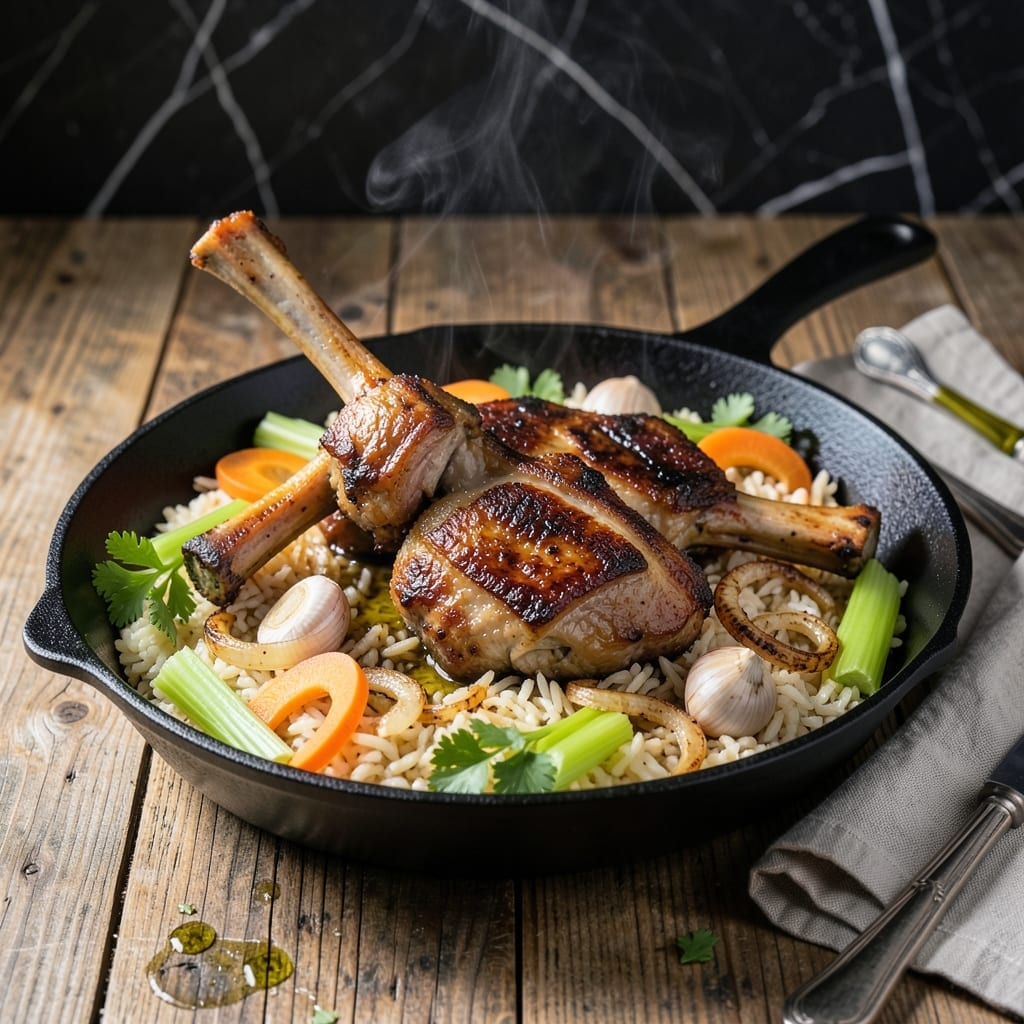
There’s something deeply comforting about a slow-simmered pot of pork neckbones and rice. This classic dish transforms humble ingredients into a meal that warms the soul.
The key is patience—letting the neckbones simmer until the meat falls off the bone. The rice soaks up all that rich, savory broth, creating a dish that’s hearty and full of flavor.
Every bite delivers tender pork, perfectly cooked rice, and a depth of taste that only comes from slow cooking. It’s the kind of meal that brings families together.
Serve it with a side of greens or cornbread for a complete, satisfying dinner. This recipe stays true to its roots while delivering restaurant-quality results at home.
Ingredients for Pork Neckbones and Rice
Meaty pork neckbones and rice come together with aromatic vegetables for a soul-satisfying classic.
| Ingredient | Amount | Notes |
|---|---|---|
| Pork Neckbones 🍖 | 2 lb | Meaty, bone-in pieces preferred |
| Long-Grain White Rice 🍚 | 1 ½ cups | Uncooked, rinsed before use |
| Yellow Onion 🧅 | 1 whole | Medium, finely diced |
| Garlic Cloves 🧄 | 4 cloves | Minced for depth of flavor |
| Fresh Celery Stalks 🥬 | 2 whole | Diced, leaves included |
| Fresh Carrots 🥕 | 2 whole | Peeled, diced uniformly |
| Low-Sodium Chicken Broth 🍲 | 4 cups | Or substitute water with bouillon |
| Tomato Paste 🍅 | 2 tbsp | For rich umami base |
| Dried Thyme 🌿 | 1 tsp | Crushed between fingers |
| Dried Bay Leaves 🍃 | 2 whole | Removed before serving |
| Kosher Salt 🧂 | 1 ½ tsp | Adjust to taste at end |
| Freshly Ground Black Pepper 🌶️ | 1 tsp | Coarse grind preferred |
| Worcestershire Sauce 🫒 | 1 tbsp | Adds savory complexity |
| Vegetable Oil 🛢️ | 2 tbsp | For browning neckbones |
The pork neckbones are the foundation—look for well-marbled pieces with plenty of meat on the bone. Your butcher can cut them to order if the pre-packaged options look sparse. For the rice, long-grain white holds up best to the long simmer, though jasmine works too (just reduce broth by 10%). Most supermarkets carry these cuts, but local butcher shops often have better quality.
No pork neckbones? Pork shoulder cut into chunks works in a pinch, though it lacks the gelatinous richness. Vegetable broth can swap for chicken broth, but the flavor will be milder—add an extra tablespoon of Worcestershire to compensate. Fresh herbs like thyme sprigs can replace dried at triple the amount. The celery and carrots are flexible—use what you have.
This tastes even better the next day once the flavors meld. Keeps 4-5 days refrigerated in an airtight container, or freeze the meat and broth separately for up to 3 months. Reheat gently to prevent the rice from turning mushy.
Why You’ll Love This Recipe
- One Pot Wonder: I just brown the neckbones, toss everything in, and let it simmer—no fancy techniques, just good food.
- Rich and Meaty: The pork neckbones fall-off-the-bone tender, and the rice soaks up all that garlic and onion flavor.
- Feeds the Family: Honestly, it’s my go-to for Sunday dinner when I need something hearty that stretches for seconds.
Step-by-Step Instructions for Pork Neckbones and Rice
Master this technique and you’ll create a dish with fall-off-the-bone meat and perfectly tender rice.
Step 1: Brown the Pork Neckbones
Heat the 2 tbsp Vegetable Oil in a large Dutch oven or heavy pot over medium-high heat. Pat the 2 lb Pork Neckbones dry with paper towels and season generously with the 1.5 tsp Kosher Salt and 1 tsp Freshly Ground Black Pepper.
Working in batches to avoid crowding, add the pork neckbones to the pot. Sear undisturbed for 4-5 minutes per side until deeply browned and a rich crust has formed. The meat should release easily from the pot when properly browned. Transfer to a plate and set aside.
Step 2: Build the Flavor Base
In the same pot, reduce heat to medium. Add the 1 whole Yellow Onion, 4 cloves Garlic Cloves, 2 whole Fresh Celery Stalks, and 2 whole Fresh Carrots. Sauté for 5-6 minutes until the vegetables soften and the onion becomes translucent.
Push the vegetables to one side and add the 2 tbsp Tomato Paste to the cleared space. Cook for 1-2 minutes, stirring constantly, until the tomato paste darkens slightly and develops a rich aroma. Stir in the 1 tbsp Worcestershire Sauce, 1 tsp Dried Thyme, and 2 whole Dried Bay Leaves.
Step 3: Simmer the Pork Neckbones
Return the browned pork neckbones to the pot along with any accumulated juices. Pour in the 4 cups Low-Sodium Chicken Broth, ensuring the liquid covers the meat. Bring to a boil, then reduce heat to low, cover, and let it simmer gently for 1.5 to 2 hours.
The pork is done when the meat easily pulls away from the bone. Skim off any excess fat from the surface of the liquid during simmering. This step ensures the meat becomes tender and absorbs the rich, savory flavors of the broth and aromatics.
Step 4: Cook the Rice and Finish
Remove the pork neckbones from the pot and set aside. Stir in the 1.5 cups Long-Grain White Rice, ensuring it is fully submerged in the cooking liquid. Increase heat to medium-high and bring to a boil.
Reduce heat to low, cover, and cook for 18-20 minutes until the rice is tender and has absorbed most of the liquid. Return the pork neckbones to the pot, nestling them into the rice. Cover and let it rest for 5-10 minutes off the heat before serving. Remove the bay leaves before serving.
Pro Tips For Making Pork Neckbones And Rice
- Brown the Bones: Sear the pork neckbones in batches over medium-high heat until deeply browned—about 4-5 minutes per side. I learned this the hard way: skipping this step leaves the broth bland and the meat less flavorful.
- Soak the Rice: Rinse the long-grain white rice until the water runs clear, then let it soak for 15 minutes before cooking. Sounds tedious, but it removes excess starch and guarantees fluffier grains every time.
- Skip the Salt Early: Resist the urge to salt the neckbones before browning—it draws out moisture and steams them instead of searing. Wait until you add the liquid to season properly.
- Use the Celery Leaves: Don’t toss those celery leaves—chop them fine and add to the pot with the onions and garlic. My grandmother swore by this, and she was right: it adds a fresh, herby depth to the rice.
Health Benefits of This Dish
Rich Protein Source
This dish delivers a hearty dose of high-quality protein from the pork neckbones—about 30 grams per serving. Protein is essential for building and repairing muscles, and it keeps you feeling full and satisfied for hours after eating. 💪
Bone Broth Benefits
The slow simmering extracts gelatin, collagen, and minerals from the bones, creating a nutrient-rich broth. Gelatin supports joint health, while collagen promotes skin elasticity. I always notice how nourishing the broth feels, especially on colder days.
Essential Vitamins
Pork is packed with B vitamins, including B12, which supports nerve function and energy production. The carrots and celery add vitamin A and vitamin K, contributing to immune health and strong bones. A single serving covers a significant portion of your daily needs.
Iron-Rich Meal
Pork neckbones provide heme iron, the most easily absorbed form of iron, which helps prevent anemia and supports oxygen transport in your blood. Pairing it with the vegetables enhances iron absorption, making this dish both delicious and nutritious.
Energy Boost
The combination of protein and complex carbs from the rice provides sustained energy. This meal is perfect for active days when you need long-lasting fuel. I love how it keeps me going without that heavy, sluggish feeling. ✨
Comfort Food With Benefits
Beyond its nutritional value, this dish offers emotional comfort. The slow-cooked flavors and hearty texture can lift your spirits, while the nutrients support overall well-being. It’s soul food that truly nourishes both body and mind.
Nutrition Facts
Frequently Asked Questions
Should I rinse the rice before cooking?
Yes, always rinse long-grain white rice until water runs clear. This removes excess starch so your rice stays fluffy, not gummy. Skipping this step can make the final dish mushy.
Can I use a slow cooker instead?
Brown the neckbones first, then transfer everything to a slow cooker. Cook on low for 6-7 hours or high for 4-5 hours before adding rice.
How do I know when the pork is done?
The meat should pull away from the bone easily with a fork. For safety, internal temperature should reach 145°F. If it resists, simmer 30 more minutes.
What if my rice is undercooked?
Add 1/4 cup hot broth, cover, and cook on low heat for 5-10 minutes. Avoid stirring—this can break the grains. Let it rest off heat to finish.

- Jollof Rice Sauce Recipe: West African Tomato and Spice Infusion - September 25, 2026
- Japanese Rice Soup Recipe: Umami-Rich Comfort in a Bowl - September 25, 2026
- Homemade Cream Of Rice Recipe: Silk-Smooth Breakfast in Minutes - September 25, 2026