
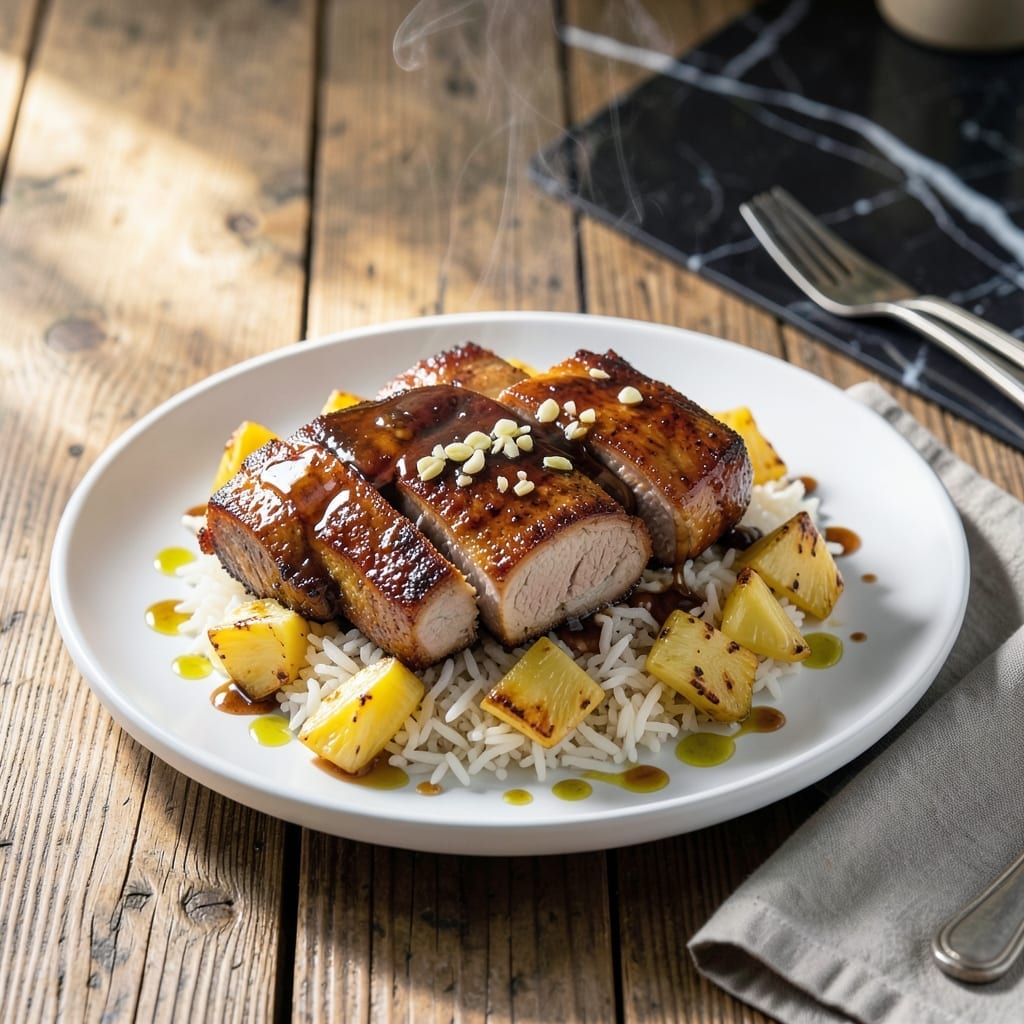
This dish brings together tender pork, sweet pineapple, and fluffy rice in a perfectly balanced one-bowl meal. It’s a classic combination that never fails to satisfy.
The pork is marinated and cooked until juicy, while the pineapple adds a bright, tropical contrast. Served over steamy rice, every bite is a mix of savory and sweet.
What makes this recipe special is how the flavors meld together. The pork absorbs the pineapple’s natural sugars, creating a caramelized crust that pairs beautifully with the rice.
Simple to prepare yet impressive to serve, this dish is ideal for weeknight dinners or casual gatherings. The result is a hearty, flavorful meal that everyone will love.
Ingredients for Pork Pineapple and Rice
Tender pork, juicy pineapple, and fluffy rice come together in this perfectly balanced one-bowl meal.
| Ingredient | Amount | Notes |
|---|---|---|
| Pork Shoulder 🥩 | 1 ½ lb | Cut into bite-sized pieces |
| Fresh Pineapple 🍍 | 2 cups | Cubed, fresh preferred |
| Long-Grain White Rice 🍚 | 2 cups | Uncooked, rinsed before use |
| Soy Sauce 🫒 | ⅓ cup | Low-sodium for controlled flavor |
| Brown Sugar 🍬 | ¼ cup | Light or dark, packed |
| Garlic Cloves 🧄 | 4 cloves | Minced finely for even distribution |
| Fresh Ginger 🌿 | 1 tbsp | Grated or minced |
| Rice Vinegar 💧 | 2 tbsp | Substitute apple cider vinegar |
| Vegetable Oil 🫒 | 2 tbsp | High smoke point for searing |
| Green Onions 🧅 | 4 whole | Thinly sliced for garnish |
| Cornstarch 🌾 | 1 tbsp | For thickening the sauce |
| Water 💧 | 1 ½ cups | For cooking rice |
| Salt 🧂 | ½ tsp | Kosher or sea salt preferred |
| Black Pepper 🌶️ | ½ tsp | Freshly ground for best flavor |
The pork shoulder is ideal here—its fat content ensures juicy, tender results. Look for well-marbled pieces at Whole Foods or your local butcher. Fresh pineapple is non-negotiable for this dish; the canned variety lacks the brightness and texture. Trader Joe’s often has pre-cut fresh pineapple that saves time without sacrificing quality.
No pork shoulder? Pork loin can work, though it’s leaner and may dry out—brine it first or cook it shorter. Brown sugar can be swapped for coconut sugar at a 1:1 ratio. If fresh ginger isn’t available, ground ginger at one-quarter the amount works in a pinch. The soy sauce can be replaced with tamari for a gluten-free version.
This dish stores well—leftovers taste even better the next day. Keep in an airtight container in the fridge for up to 4 days. Reheat gently on the stove with a splash of water to keep the pork moist. Not recommended for freezing, as the pineapple can become mushy.
Why You’ll Love This Recipe
- One Pot Wonder: Honestly, I just brown the pork, dump everything else in, and let the rice soak up the pineapple juice and soy sauce while I do laundry.
- Sweet & Savory: The brown sugar caramelizes with the pork, and fresh pineapple cuts through with a bright pop that makes every bite ridiculous.
- Feeds Everyone: Between us, this stretches to feed six with leftovers that taste even better the next day for lunch.
- Budget Winner: Pork shoulder is cheap, pineapple doubles as dessert, and one bag of rice goes a long way in this dish.
Step-by-Step Instructions for Pork Pineapple and Rice
This method ensures perfectly balanced flavors with tender pork and fluffy rice every time.
Step 1: Sear and Brown the Pork Shoulder
Cut the 1.5 lb Pork Shoulder into bite-sized pieces and pat dry with paper towels. Season with 0.5 tsp Salt and 0.5 tsp Black Pepper, ensuring even distribution for maximum flavor penetration.
Heat 2 tbsp Vegetable Oil in a large skillet over medium-high heat until shimmering. Add the pork pieces in a single layer, working in batches if necessary to avoid overcrowding. Sear for 3-4 minutes per side until deeply browned and a crust forms. This step creates a flavorful fond that will enrich the sauce later.
Step 2: Create the Pineapple Sauce Base
In the same skillet, reduce heat to medium and add minced 4 cloves Garlic Cloves and 1 tbsp Fresh Ginger. Sauté for 30 seconds until fragrant, being careful not to let the garlic burn.
Add cubed 2 cups Fresh Pineapple, 0.25 cup Brown Sugar, 0.33 cup Soy Sauce, and 2 tbsp Rice Vinegar. Stir to combine, cooking for 5-7 minutes until the pineapple softens and releases its juices. The mixture should become syrupy and slightly reduced.
Step 3: Thicken the Sauce and Finish the Pork
In a small bowl, mix 1 tbsp Cornstarch with 2 tbsp of cold Water to create a slurry. Pour this into the skillet with the pineapple mixture while stirring constantly. The sauce will thicken within 1-2 minutes of simmering, coating the back of a spoon with a glossy sheen.
Return the seared pork to the skillet, coating each piece in the sauce. Reduce heat to low and let it simmer for 5-7 minutes until the pork is cooked through and absorbs the flavors. The pork should be tender and the sauce should cling to each piece.
Step 4: Cook the Rice and Assemble
While the pork finishes, rinse 2 cups Long-Grain White Rice under cold water until the water runs clear. In a separate pot, combine the rice with 1.5 cups Water and bring to a boil. Reduce heat to low, cover, and simmer for 15-18 minutes until the water is absorbed and the rice is fluffy.
Once the rice is done, fluff it with a fork and transfer to a serving platter. Top with the pork and sauce, ensuring each serving gets an equal amount. Garnish with thinly sliced 4 whole Green Onions for a fresh, crisp finish.
Pro Tips For Making Pork Pineapple And Rice
- Brown the Pork First: Sear the pork shoulder in batches over medium-high heat until deeply browned—this builds flavor and prevents steaming. I learned this the hard way after my first few attempts tasted bland.
- Use Ripe Pineapple: Pick a pineapple that gives slightly when pressed and smells sweet at the base. Underripe fruit stays hard and sour, even after cooking.
- Rinse the Rice: Wash the long-grain rice until the water runs clear to remove excess starch. Skipping this step makes the rice gummy in the final dish.
- Deglaze with Soy: After browning the pork, pour in the soy sauce to scrape up the browned bits—this adds depth to the sauce. Sounds simple, but it actually changes the outcome.
Perfect Pairings for This Recipe
Side Dish Ideas
Steamed bok choy makes a simple, fresh side that balances the sweetness. Just 4 baby bok choy halves steamed for 5 minutes with a drizzle of soy sauce works perfectly. I also love cucumber salad with rice vinegar for crunch. 🥗
Beverage Pairings
A crisp Riesling cuts through the richness while complementing the pineapple. For beer, try a wheat beer like Hoegaarden—its citrus notes harmonize beautifully. Iced tea with a squeeze of lime offers a non-alcoholic option. 🍷
Fresh Additions
Top with chopped cilantro or thai basil for an herbaceous lift. A sprinkle of crushed peanuts adds delightful texture. For heat, serve with sriracha or chili garlic sauce on the side.
Rice Variations
Swap white rice for jasmine rice for extra fragrance. For a heartier version, use brown rice—increase water to 3 cups and cook for 40 minutes. Cauliflower rice works for a low-carb option. ✨
Nutrition Facts
Frequently Asked Questions
Can I use canned pineapple instead of fresh?
Fresh is best for texture, but canned works in a pinch. Drain well and pat dry to avoid excess moisture.
How do I know when the pork is fully cooked?
Use a meat thermometer—it should read 145°F internally. The pork will be tender but not falling apart.
Can I make this ahead of time?
Yes! Cook and store separately in the fridge for up to 4 days. Reheat gently with a splash of water.
What if my sauce is too thin?
Mix 1 tsp cornstarch with 1 tbsp cold water, then stir into simmering sauce until thickened.

- Jollof Rice Sauce Recipe: West African Tomato and Spice Infusion - September 25, 2026
- Japanese Rice Soup Recipe: Umami-Rich Comfort in a Bowl - September 25, 2026
- Homemade Cream Of Rice Recipe: Silk-Smooth Breakfast in Minutes - September 25, 2026