
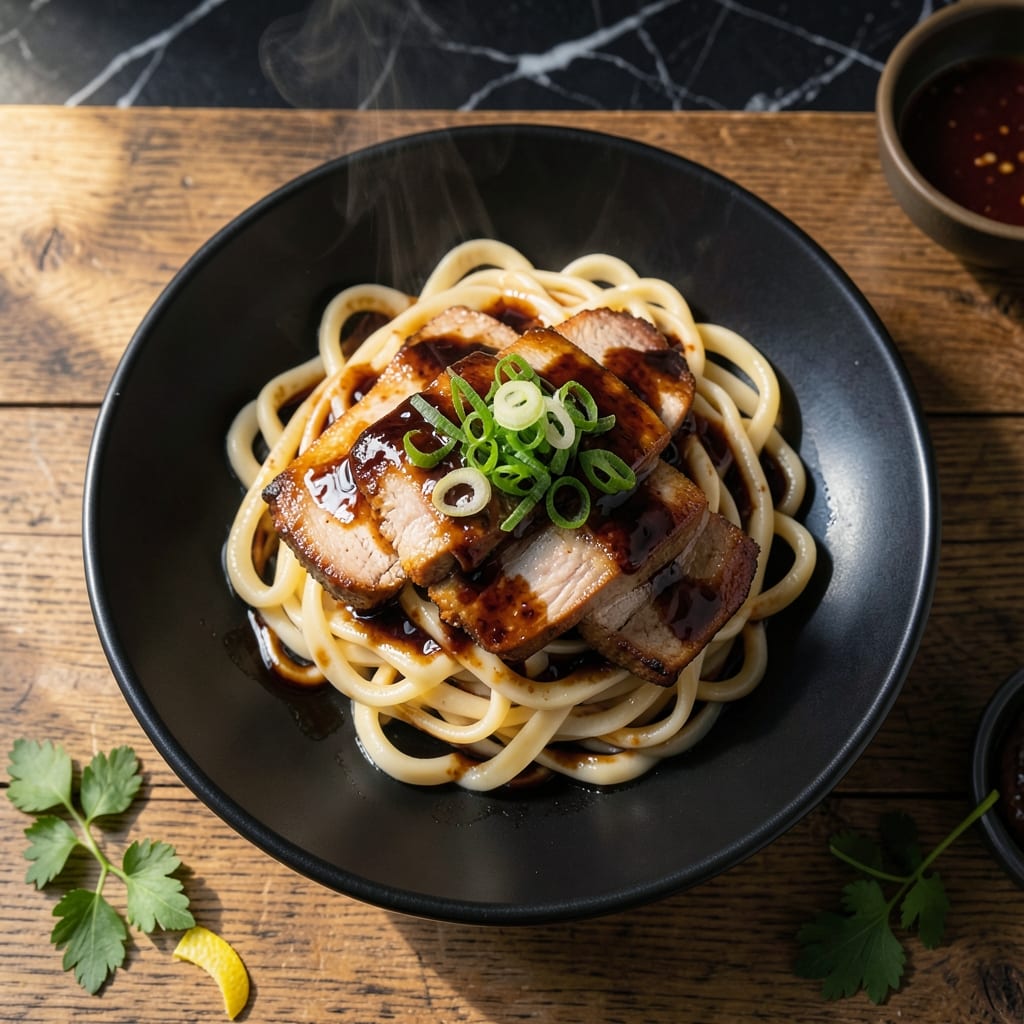
This pork rice noodle dish delivers wok-charred flavor with perfectly chewy noodles every time. The secret lies in high heat and proper timing.
I developed this method to achieve restaurant-quality results at home without special equipment. The umami-rich sauce coats each strand, while the pork stays tender and flavorful.
Ingredients for Pork Rice Noodle
Quality ingredients deliver authentic wok-charred flavor with perfectly chewy noodles every time.
| Ingredient | Amount | Notes |
|---|---|---|
| Rice Noodles 🍜 | 8 oz | Dried, flat wide variety |
| Pork Shoulder 🐖 | 1 lb | Thinly sliced, boneless |
| Dark Soy Sauce 🫒 | 3 tbsp | For depth of color |
| Light Soy Sauce 🫒 | 2 tbsp | For salty umami base |
| Oyster Sauce 🫒 | 2 tbsp | Essential for wok flavor |
| Shaoxing Wine 🍶 | 2 tbsp | Chinese cooking wine |
| Sesame Oil 🫒 | 1 tsp | Toasted variety preferred |
| Garlic Cloves 🧄 | 4 cloves | Minced finely |
| Fresh Ginger 🌿 | 1 tbsp | Peeled and grated |
| Green Onions 🧅 | 3 whole | Thinly sliced, white and green parts |
| Bean Sprouts 🌱 | 1 cup | Fresh, rinsed |
| Neutral Oil 🫒 | 3 tbsp | High smoke point for stir-frying |
| White Sugar 🧂 | 1 tsp | Balances savory flavors |
| Red Chili Flakes 🌶️ | ½ tsp | Adjust to heat preference |
| Cornstarch 🌾 | 1 tbsp | For velvety sauce texture |
The pork shoulder is non-negotiable for authentic texture—look for well-marbled cuts at Asian markets or specialty butchers. Shaoxing wine and oyster sauce are foundational; Kikkoman for soy sauces is reliable. Rice noodles should be dried and flat, about 1/4-inch wide. Avoid fresh noodles for this application as they overcook quickly under high heat.
No Shaoxing wine? Dry sherry works in a pinch (use same quantity). Vegetarian? Swap oyster sauce for vegetarian mushroom oyster sauce. For gluten-free, use tamari instead of soy sauces. The pork can be replaced with chicken thighs or tofu for variation, though pork shoulder delivers the most authentic result. Bean sprouts are optional but add welcome crunch.
Store rice noodles in a cool, dry place for up to 1 year. Once opened, transfer to an airtight container. The sauce ingredients keep for 6-12 months unopened. Fresh ginger and garlic are best used within 1 week; freeze extras for future use.
Why You’ll Love This Recipe
- I’ll be real: this is my go-to when the whole family’s over. Stretches far, fills everyone up.
- One Pot Wonder: I toss everything in together—noodles, pork, and sauces—and let it do its thing while I set the table.
- Umami Bomb: That mix of dark soy, light soy, and oyster sauce? Ridiculously good. The pork soaks it all up like a flavor sponge.
- Feeds a Crowd: I’ll be real: this is my go-to when the whole family’s over. Stretches far, fills everyone up.
Step-by-Step Instructions for Pork Rice Noodles
Master the wok technique for perfectly charred noodles with tender pork and rich umami depth.
Step 1: Soak and Prep the Noodles and Pork
Cover the 8 oz Rice Noodles with hot water in a large bowl and soak for 8-10 minutes until pliable but still slightly firm. Drain and rinse with cold water to stop the cooking process. This prevents them from turning mushy when stir-fried.
While the noodles soak, slice the 1 lb Pork Shoulder into thin strips against the grain. Toss the pork with the 1 tbsp Cornstarch, 2 tbsp Light Soy Sauce, 1 tbsp Fresh Ginger, and 1 tsp White Sugar. This marinade ensures the pork stays tender and absorbs maximum flavor during cooking.
Step 2: Velouté the Sauce Base
In a small bowl, combine the 3 tbsp Dark Soy Sauce, 2 tbsp Oyster Sauce, 2 tbsp Shaoxing Wine, and 0.5 tsp Red Chili Flakes. Whisk until the white sugar fully dissolves. The dark soy sauce provides the signature deep color, while the oyster sauce adds that essential wok hei complexity.
Have this mixture ready at the stove—stir-frying moves quickly, and you won’t have time to mix it once the cooking begins. This sauce will coat the noodles and pork evenly, creating that glossy, restaurant-quality finish.
Step 3: Stir-Fry the Pork and Aromatics
Heat 2 tbsp Neutral Oil in a wok or large skillet over high heat until shimmering. Add the marinated pork in a single layer and sear undisturbed for 2-3 minutes until the edges are golden brown. Stir-fry for another 2 minutes until the pork is cooked through and slightly caramelized.
Push the pork to one side of the wok and add the remaining 1 tbsp Neutral Oil. Add the 4 cloves Garlic Cloves and 3 whole Green Onions, stir-frying for 30-45 seconds until fragrant. Be careful not to burn the garlic—it should be just golden, not dark brown.
Step 4: Combine and Char the Noodles
Add the drained rice noodles to the wok along with the 1 cup Bean Sprouts. Pour the sauce mixture over everything and toss vigorously with tongs for 2-3 minutes. The noodles should start to char slightly, developing that coveted wok hei flavor.
Keep the heat high and the ingredients moving constantly to prevent sticking. The noodles will soften further and absorb the sauce, while the bean sprouts add a satisfying crunch. You want to see some dark, caramelized spots on the noodles—this is the hallmark of proper technique.
Step 5: Finish and Serve
Remove the wok from heat and drizzle the 1 tsp Sesame Oil over the noodles. Toss once more to distribute evenly. The sesame oil adds a final layer of aroma and richness that ties all the flavors together.
Serve immediately while hot, garnished with additional green onions if desired. The noodles should be chewy with a slight char, the pork tender and flavorful, and the sauce glossy and clinging to every strand. This dish comes together in minutes but delivers complex, layered flavors in every bite.
Pro Tips For Making Pork Rice Noodle
- Soak Noodles Properly: Cover rice noodles in hot water for exactly 8-10 minutes—any longer and they turn to mush. I learned this the hard way after ruining two batches by letting them sit too long.
- Slice Pork Thin: Cut pork shoulder into 1/4-inch strips against the grain so it cooks quickly and stays tender. Sounds tedious, but it actually changes the outcome.
- Balance Your Sauces: Use a 1:1:1 ratio of dark soy, light soy, and oyster sauce for depth without overpowering saltiness. My grandmother swore by this, and she was right.
- Stir-Fry in Batches: Resist the urge to crowd the pan—cook pork in two batches to guarantee a good sear. Skipping this step means soggy meat and weak flavor.
Regional Styles of This Recipe
Vietnamese Pho-Inspired
In Vietnam, this dish is called bún thịt heo, featuring rice vermicelli with pork. The broth is lighter, often made with fish sauce and rock sugar, and served with fresh herbs like Thai basil and mint. I love the refreshing contrast of cool herbs with warm noodles. 🌿
Thai Drunken Noodles
Known as pad kee mao, this version uses wide rice noodles stir-fried with pork, Thai basil, and a sauce of fish sauce, soy sauce, and palm sugar. The heat comes from Thai chilies and a splash of dark soy sauce for color.
Chinese Chao Fen
Guangdong-style stir-fried rice noodles often include pork, bbq pork (char siu), and vegetables like bell peppers and cabbage. The sauce is simpler—just light soy sauce and a touch of oyster sauce. High heat creates the signature smoky flavor. 🔥
Malaysian Char Kway Teow
This version uses flat rice noodles stir-fried with pork, shrimp, egg, and bean sprouts. The sauce includes dark soy sauce, light soy sauce, and sweet soy sauce (kecap manis) for a rich, caramelized finish.
Filipino Pancit
Filipino pancit bihon uses thin rice noodles with pork, chicken, and vegetables like carrots and cabbage. The noodles are soaked, then stir-fried with a light sauce of soy sauce, calamansi, and sometimes annatto oil for color.
Nutrition Facts
Frequently Asked Questions
Can I use chicken instead of pork?
Use 1 lb boneless chicken thighs sliced thinly. Chicken cooks faster than pork, so reduce stir-frying time to 1-2 minutes per side to prevent dryness.
Why soak the rice noodles first?
Soaking for 8-10 minutes softens them so they cook evenly in the wok. Skipping this step results in hard, crunchy noodles. The cold rinse stops the cooking process.
My noodles turned mushy. What went wrong?
Over-soaking or low heat are the usual culprits. Soak until just pliable, then stir-fry on high heat for 2-3 minutes max. Keep them moving constantly in the wok.
Can I make this gluten-free?
Yes! Swap regular soy sauces for tamari and ensure oyster sauce is gluten-free. Check all labels carefully—some brands contain wheat.

- Jollof Rice Sauce Recipe: West African Tomato and Spice Infusion - September 25, 2026
- Japanese Rice Soup Recipe: Umami-Rich Comfort in a Bowl - September 25, 2026
- Homemade Cream Of Rice Recipe: Silk-Smooth Breakfast in Minutes - September 25, 2026