
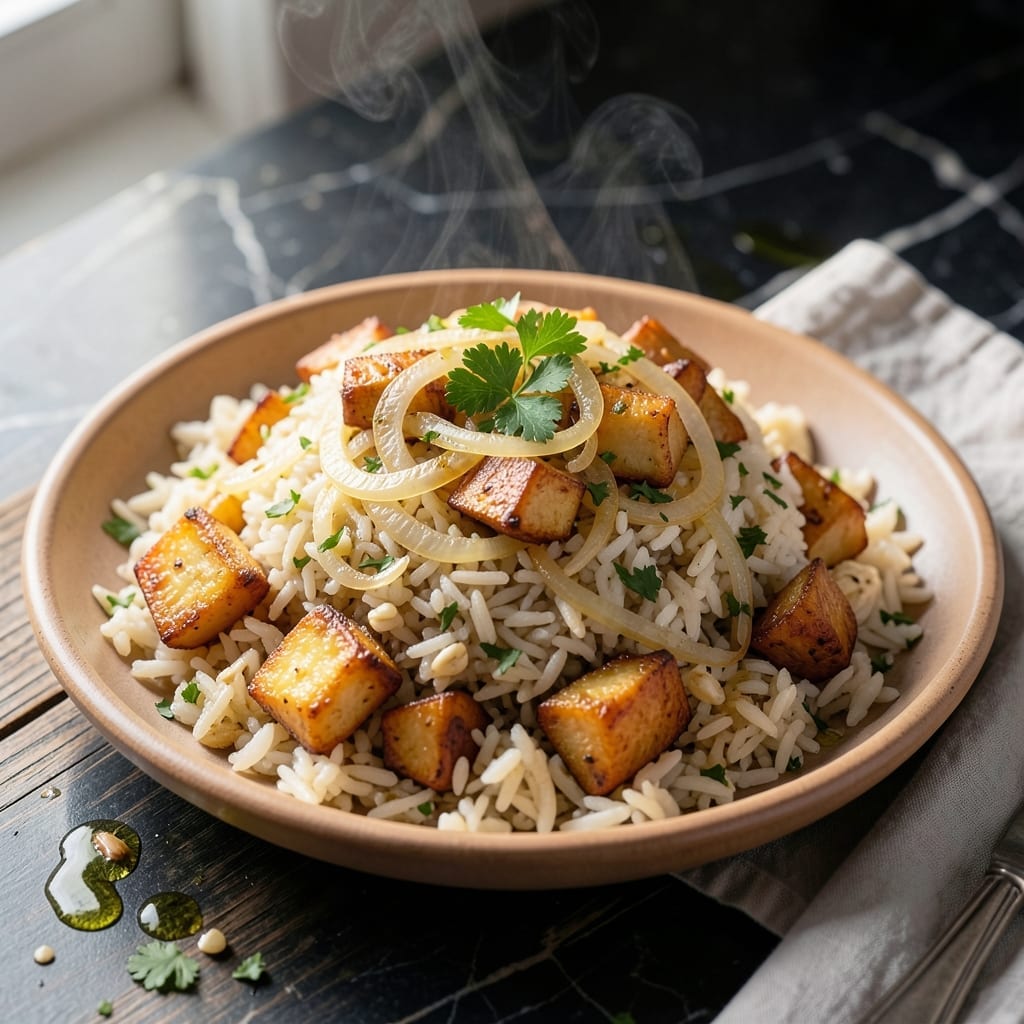
This potato rice delivers the perfect balance of fluffy grains and crispy edges, transforming two humble ingredients into something extraordinary. I developed this method after years of experimenting with different ratios and cooking techniques to achieve that ideal texture.
The secret lies in parboiling the potatoes and rice separately before combining them for the final cook. This ensures even doneness throughout, with each grain distinct yet perfectly tender. The high heat at the end creates that coveted golden crust.
What you get is a dish that’s satisfying as a side or light main, with each bite offering contrasting textures. The potatoes add heartiness while the rice maintains its delicate fluffiness, creating a harmonious combination.
Serve alongside your favorite protein or vegetables for a complete meal. Here’s how to make it.
Ingredients for Potato Rice
Two humble ingredients transform into a dish with fluffy grains and crispy edges.
| Ingredient | Amount | Notes |
|---|---|---|
| Russet Potatoes 🥔 | 2 lb | Peeled and diced evenly |
| Long-Grain White Rice 🍚 | 1 ½ cups | Rinsed until water runs clear |
| Onion 🧅 | 1 whole | Yellow or white, finely diced |
| Garlic Cloves 🧄 | 4 cloves | Minced for maximum flavor |
| Vegetable Oil 🫒 | ¼ cup | High smoke point preferred |
| Butter 🧈 | 3 tbsp | Unsalted for controlled seasoning |
| Chicken Stock 🥣 | 2 cups | Use vegetable stock for vegetarian version |
| Bay Leaves 🍃 | 2 whole | For aromatic depth |
| Salt 🧂 | 1 ½ tsp | Diamond Crystal kosher preferred |
| Black Pepper 🌶️ | ½ tsp | Freshly ground for best flavor |
| Fresh Cilantro 🌿 | ¼ cup | Chopped, for garnish |
| Ground Cumin 🌿 | 1 tsp | Toasted lightly for warmth |
| Turmeric 🌶️ | ½ tsp | For golden color and earthiness |
The potatoes are the foundation here. Russets give you that perfect fluffy texture with crispy edges—avoid waxy varieties like red or new potatoes. I grab mine from the bulk bin at Whole Foods (they usually have the best selection), but any grocery store will do. Look for firm, smooth-skinned potatoes without sprouts or green spots. The rice should be long-grain white for distinct grains that stay separate.
No Russets? Yukon Golds work in a pinch (they’re creamier but still get crispy). Out of fresh cilantro? Parsley or green onions add a similar freshness. For a richer flavor, swap the vegetable oil for ghee. If you don’t have cumin, a pinch of ground coriander gives a different but complementary warmth. The stock can be homemade or store-bought—Better Than Bouillon is my go-to for depth.
This reheats like a dream—actually gets better as the flavors meld. Keeps in the fridge for 4-5 days or freezes for 3 months. I like to make a double batch and freeze half for lazy dinners. Just add a splash of water when reheating to bring back that fresh-cooked texture.
Why You’ll Love This Recipe
- One Pot Wonder: Honestly, I just dump everything in and let the potatoes and rice cook together—no extra pans, no fuss.
- Golden Crisp Edges: The russets get this irresistible crunch while the rice soaks up all the garlic and onion flavor.
- Feeds a Crowd: I make a big batch on Sunday and we’re set for lunches all week. (Yes, even the picky one eats it.)
- Pantry Staples: Between us, it’s just potatoes, rice, and a few basics I always have on hand—no last-minute grocery runs.
Step-by-Step Instructions for Potato Rice
Here’s the method that delivers fluffy grains with perfectly crispy edges every time.
Step 1: Par-Cook and Crisp the Potatoes
Heat the 0.25 cup Vegetable Oil in a large, deep skillet over medium-high heat. Add the 2 lb Russet Potatoes and cook for 8-10 minutes, stirring occasionally, until they begin to soften at the edges.
You’re looking for that moment when the potatoes start to turn golden brown and develop crispy bits. Don’t rush this—it creates the foundation for that perfect texture contrast we’re after. Sprinkle with 0.5 tsp Black Pepper and 1 tsp Ground Cumin as they cook.
Step 2: Toast the Aromatics
Add the 1 whole Onion and cook for 3-4 minutes until it becomes translucent and slightly caramelized. The onions should pick up the golden color from the potatoes. Then add the 4 cloves Garlic Cloves and cook for 30 seconds until fragrant.
Stir in the 0.5 tsp Turmeric—this is what gives the dish its beautiful golden hue. The turmeric will bloom in the hot oil, releasing its earthy aroma. Be careful not to burn the garlic; if it starts to brown too quickly, lower the heat.
Step 3: Incorporate the Rice and Liquid
Add the 1.5 cups Long-Grain White Rice to the skillet and stir to coat the grains in the oil and spices. Cook for 1-2 minutes until the rice becomes slightly opaque at the edges. This toasting step enhances the nutty flavor of the rice.
Pour in the 2 cups Chicken Stock, then add the 2 whole Bay Leaves and 1.5 tsp Salt. Stir well to distribute everything evenly. The liquid should just cover the rice and potatoes.
Step 4: Simmer to Perfection
Reduce heat to low, cover the skillet, and let it simmer for 15-20 minutes. You’ll know it’s ready when the liquid has been fully absorbed and the rice is tender with a slight bite.
Resist the urge to stir during this time—this allows the bottom layer to develop that coveted crispiness. If you hear sizzling, that’s the sound of the crust forming. Turn off the heat and let it sit covered for 5 minutes to steam.
Step 5: Finish and Garnish
Uncover and dot with the 3 tbsp Butter, letting it melt into the rice. Fluff the mixture gently with a fork, breaking up any large clumps but preserving the crispy bits at the bottom.
Sprinkle with the 0.25 cup Fresh Cilantro just before serving. The cilantro adds a bright, fresh contrast to the warm, earthy spices. Serve immediately while the edges are still crispy and the grains are fluffy.
Pro Tips For Making Potato Rice
- Parboil the Potatoes: Boil the diced russets for 5-7 minutes until just fork-tender—this prevents them from turning mushy when mixed with rice later.
- Rinse the Rice: Wash the long-grain white rice until the water runs clear to remove excess starch, so your dish ends up fluffy instead of gummy.
- Don’t Overcrowd the Pan: I learned this the hard way—frying too many potatoes at once steams them instead of browning, so cook in batches if needed.
- Use Cold Water: After parboiling, shock the potatoes in cold water to stop the cooking—this keeps them firm enough to hold their shape in the final dish.
Essential Equipment for This Recipe
Heavy Skillet
A 12-inch cast iron skillet is my top pick for even heat distribution and that perfect crispy bottom. I use my Lodge skillet—it retains heat beautifully and develops an amazing sear. The deep sides prevent spills as you stir. 🔥
Wooden Spoon
Use a flat wooden spoon to gently fold the rice and potatoes without breaking the grains. It won’t scratch your skillet like metal utensils. I keep one dedicated to my cast iron to avoid any off-flavors from other dishes.
Sharp Chef’s Knife
A 8-inch chef’s knife makes quick work of dicing the potatoes evenly. I prefer Wüsthof for its comfortable grip. Uniform ½-inch cubes ensure even cooking, so take your time with this step.
Fine Mesh Strainer
Rinsing the rice until the water runs clear removes excess starch for fluffier grains. A fine mesh strainer prevents any rice from slipping through. I rinse mine under cold water for about 30 seconds.
This also helps prevent clumping during cooking.
Dual-Probe Thermometer
While not essential, a ThermoWorks thermometer helps monitor the oil temperature. Aim for 350-375°F when crisping potatoes. Consistent heat is key to avoiding soggy results.
Tight-Fitting Lid
Your skillet needs a well-fitting lid to trap steam during simmering. If yours doesn’t have one, use heavy-duty foil as a cover. The trapped steam finishes cooking the rice perfectly.
Nutrition Facts
Frequently Asked Questions
Can I use a different type of potato?
Russets work best for fluffiness, but Yukon Golds can add creaminess. Avoid waxy types like red potatoes—they won’t crisp properly.
Why does the rice need rinsing?
Rinsing removes excess starch, preventing sticky clumps. Aim for clear water to ensure light, separate grains.
How do I prevent the bottom from burning?
Keep heat at low during simmering and resist stirring. The sizzling sound means the crust is forming—perfect!
Can I make this ahead?
Yes! It keeps 4-5 days in the fridge. Reheat with a splash of water to restore texture.

- Jollof Rice Sauce Recipe: West African Tomato and Spice Infusion - September 25, 2026
- Japanese Rice Soup Recipe: Umami-Rich Comfort in a Bowl - September 25, 2026
- Homemade Cream Of Rice Recipe: Silk-Smooth Breakfast in Minutes - September 25, 2026