
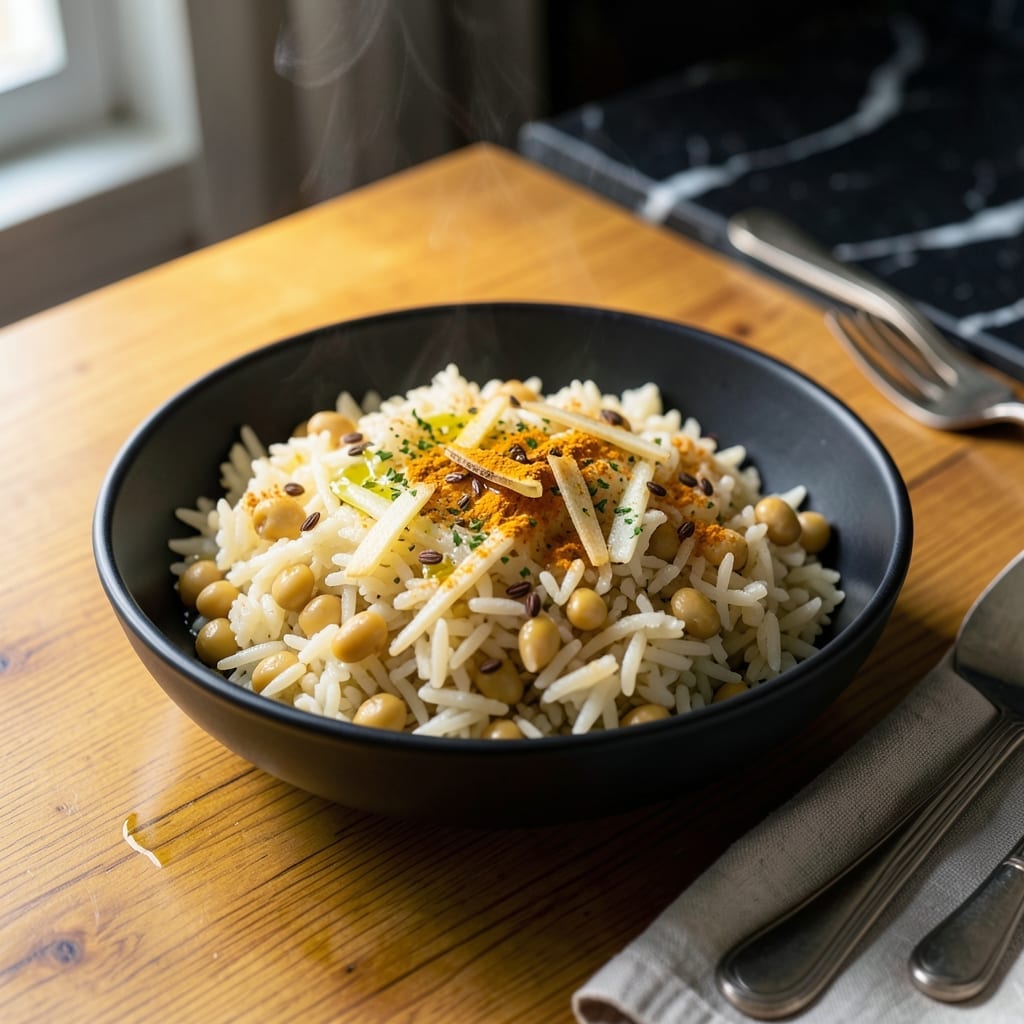
This traditional dish has been cherished for centuries as a healing food in Ayurvedic practice. I’ve refined the method to ensure every bite delivers both comfort and nourishment.
The beauty lies in its simplicity—just rice, lentils, and a handful of aromatic spices cooked together in one pot. This creates a balanced meal that’s gentle on digestion while being deeply satisfying.
What you’ll get is a warm, fragrant porridge-like dish with soft rice and lentils, infused with turmeric, cumin, and ginger. It’s designed to cleanse and restore, making it perfect for any meal.
Serve it plain or with a dollop of yogurt for added richness. Here’s how to make it at home.
Ingredients for Kitchari Rice
Rice, lentils, and warming spices create this nourishing one-pot Ayurvedic classic with minimal effort.
| Ingredient | Amount | Notes |
|---|---|---|
| Basmati Rice 🍚 | 1 cup | Rinsed until water runs clear |
| Yellow Split Mung Lentils 🥣 | ½ cup | Rinsed and drained thoroughly |
| Fresh Ginger Root 🌿 | 1 tbsp | Peeled and finely grated |
| Cumin Seeds 🌿 | 1 tsp | Whole, not ground |
| Turmeric Powder 🟡 | 1 tsp | Ground, high-quality preferred |
| Coriander Powder 🌿 | 1 tsp | Ground, freshly opened for best flavor |
| Asafoetida Powder 🧂 | ¼ tsp | Optional, for authentic flavor |
| Fresh Cilantro 🌿 | ¼ cup | Chopped, for garnish |
| Coconut Oil 🥥 | 2 tbsp | Cold-pressed or virgin variety |
| Yellow Onion 🧅 | 1 whole | Medium-sized, finely diced |
| Carrot 🥕 | 1 whole | Medium, peeled and diced |
| Celery Stalk 🌿 | 1 whole | Finely chopped |
| Water 💧 | 4 cups | Filtered or spring recommended |
| Sea Salt 🧂 | 1 tsp | Adjust to taste after cooking |
| Freshly Ground Black Pepper 🌶️ | ½ tsp | Adjust to preference |
The foundation here is quality Basmati rice and split mung lentils—both should be fresh and free of moisture. Indian grocery stores or Whole Foods carry these reliably. Asafoetida, while optional, adds authentic depth; look for Banyan Botanicals or Frontier Co-op brands. Fresh ginger and turmeric are non-negotiable for their healing properties and vibrant color.
No asafoetida? Skip it—the dish remains delicious. Brown lentils work in a pinch but texture differs. For a milder cumin flavor, toast the seeds briefly before adding. The coconut oil can be swapped for ghee if not strictly vegan (though this version maintains plant-based purity). Fresh cilantro adds brightness, but dried works at one-third the amount.
This dish tastes better the next day as flavors meld. Store in an airtight container for up to 4 days in the fridge. Freeze portions for 3 months. Reheat gently with a splash of water to restore porridge-like consistency.
Why You’ll Love This Recipe
- One-Pot Meal: I love how everything—basmati rice, mung lentils, ginger—simmers together in a single pot. Cleanup is a breeze.
- Warm Spice Hug: The cumin and turmeric bloom into this cozy, earthy flavor that feels like a hug in a bowl. Honestly, it’s my comfort food.
- Meal Prep Hero: Makes a big batch that reheats beautifully for lunches all week. I’ll be real: it tastes even better the next day.
- Pantry Friendly: Basmati rice and split mung lentils are budget staples, and a little ginger and spices go a long way. Feeds my family without breaking the bank.
Step-by-Step Instructions for Kitchari Rice
Master this traditional one-pot method for perfectly balanced texture and authentic Ayurvedic flavor.
Step 1: Prepare and Bloom the Spices
Heat the 2 tbsp coconut oil in a heavy pot over medium heat until it shimmers. Add the 1 tsp cumin seeds and let them sizzle for 30 seconds until they turn fragrant and a shade darker. This bloom releases their essential oils.
Immediately add the 0.25 tsp asafoetida powder, 1 tbsp fresh ginger root, 1 whole yellow onion, 1 whole carrot, and 1 whole celery stalk. Sauté for 5-6 minutes until the onion becomes translucent and the mixture emits a warm, earthy aroma. The vegetables should soften slightly but retain their shape.
Step 2: Toast the Dry Spices and Lentils
Stir in the 1 tsp turmeric powder and 1 tsp coriander powder. Toast for 1 minute to deepen their flavors, ensuring they don’t burn. The turmeric will turn the mixture a vibrant golden color.
Add the 0.5 cup yellow split mung lentils and cook for another 2 minutes, stirring constantly. This step enhances the lentils’ nutty flavor and prevents them from becoming mushy during the final cooking. You’ll notice the lentils begin to absorb the spices’ aroma.
Step 3: Simmer the Kitchari to Perfection
Pour in the 4 cups water and add the 1 cup basmati rice. Stir well to combine, then bring the mixture to a boil. Once boiling, reduce the heat to low, cover the pot, and let it simmer for 25-30 minutes.
The kitchari is done when the rice and lentils are tender and the liquid is fully absorbed. The grains should be distinct but soft, and the lentils should be creamy but not broken down. Stir once or twice during cooking to prevent sticking.
Step 4: Season and Rest Before Serving
Remove the pot from heat and stir in the 1 tsp sea salt and 0.5 tsp freshly ground black pepper. Adjust the seasoning to taste, keeping in mind that the flavors will meld as it rests.
Cover the pot and let the kitchari rest for 10 minutes. This allows the rice and lentils to fully absorb the remaining moisture and the spices to settle. Garnish with the 0.25 cup fresh cilantro just before serving for a bright, fresh finish.
Pro Tips For Making Kitchari Rice
- Toast the Cumin: Heat the cumin seeds in dry oil for 10-15 seconds until fragrant—this wakes up their earthy flavor before adding ginger and turmeric.
- Rinse the Lentils: Give the split mung lentils a quick rinse in cold water to remove dust, but don’t soak them or they’ll turn mushy during cooking.
- Use a 1:2 Ratio: Stick to 1 part lentils to 2 parts basmati rice for the perfect creamy-but-light texture; I learned this the hard way after a few gummy batches.
- Simmer Covered: Once the liquid boils, drop to low heat and keep the lid on—no peeking—for 15 minutes to let the rice and lentils steam together.
Serving Suggestions for Leftovers
Garnish with Freshness
A sprinkle of fresh cilantro just before serving adds a bright, herbal note that cuts through the earthy spices. I also love adding a squeeze of lemon juice for a touch of acidity that wakes up all the flavors. 💛
Yogurt for Creaminess
Stir in ¼ cup plain yogurt per serving for a cooling contrast to the warm spices. This addition makes the dish richer and more satisfying. Use coconut yogurt to keep it strictly vegan.
Crunchy Toppings
For texture, I recommend toasted coconut flakes or roasted cashews on top. A handful adds a delightful contrast to the soft rice and lentils. These toppings also bring healthy fats to the meal.
Fresh Vegetables
Serve with a side of sliced cucumbers or shredded carrots for freshness. These add a crisp bite that balances the warm, porridge-like dish wonderfully. A simple cucumber raita works too.
Bread Pairing
Warm naan or whole wheat roti makes an excellent accompaniment for scooping up every last bit. I sometimes toast mine lightly for extra crunch. This turns the dish into a more filling meal.
Herbal Tea
Pair your meal with a cup of ginger tea or chamomile tea to complement the healing properties. The warmth of the tea enhances the comforting nature of this dish. 🌿
Nutrition Facts
Frequently Asked Questions
Can I use red lentils instead of mung lentils?
Yes, but texture will differ. Red lentils break down more, creating a creamier result. Stick to 1:2 ratio with rice and reduce cooking time by 5 minutes to prevent mushiness.
Why is asafoetida used in this dish?
This resin adds a savory depth and aids digestion in Ayurvedic tradition. It’s potent—just ¼ tsp is enough. Skip it if unavailable; the dish remains flavorful with other spices.
How do I fix kitchari that’s too thick?
Stir in warm water ¼ cup at a time until reaching desired consistency. Return to low heat for 2-3 minutes to blend flavors. Overcooking can make it gluey.
Can I make this in a slow cooker?
Sauté spices first, then combine all ingredients. Cook on low for 4 hours or high for 2 hours. Add water if needed, as slow cookers retain more moisture.

- Jollof Rice Sauce Recipe: West African Tomato and Spice Infusion - September 25, 2026
- Japanese Rice Soup Recipe: Umami-Rich Comfort in a Bowl - September 25, 2026
- Homemade Cream Of Rice Recipe: Silk-Smooth Breakfast in Minutes - September 25, 2026