
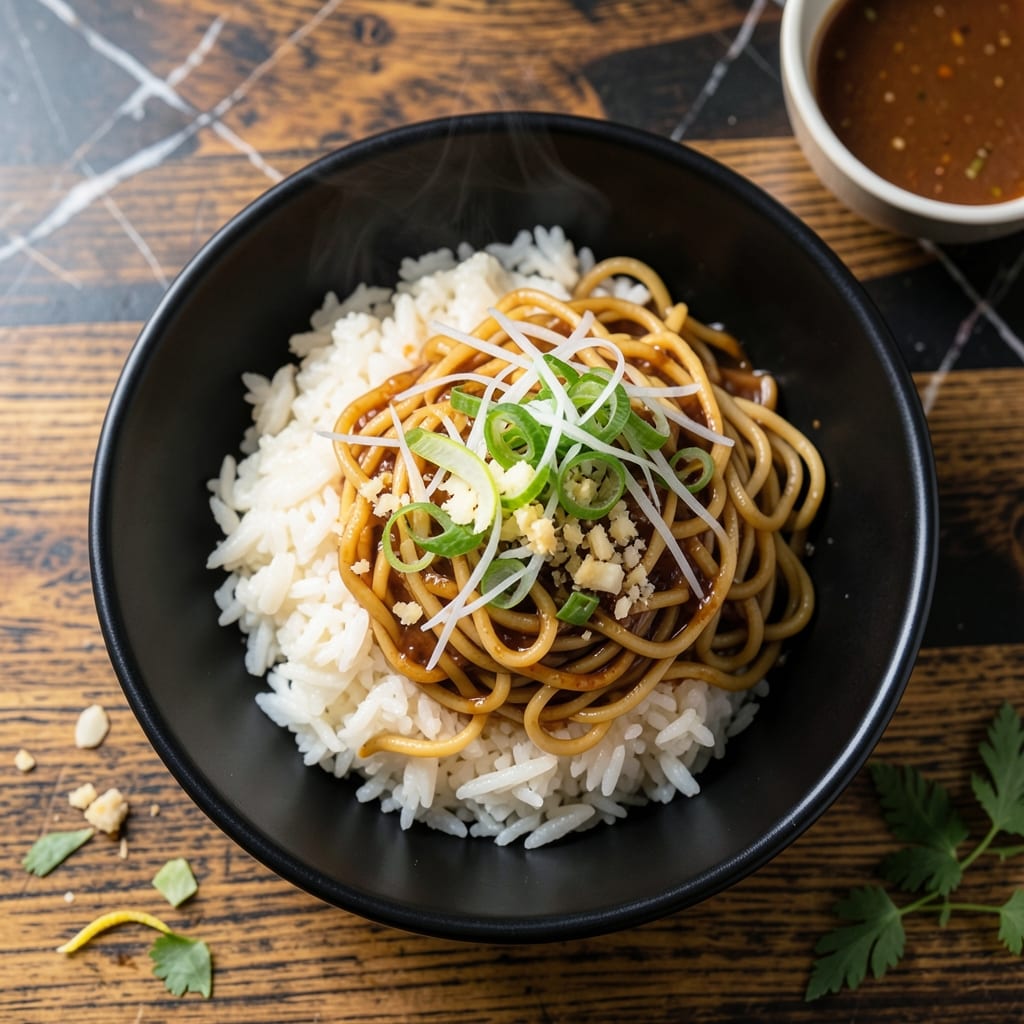
This dish redefines comfort food by blending wok-charred ramen with fragrant rice and deeply toasted aromatics. The combination creates layers of umami that feel both familiar and exciting.
With a few simple techniques, you’ll achieve a restaurant-quality balance of textures and flavors. The ramen soaks up the savory sauce while the rice adds a satisfying chew.
Ingredients for Ramen and Rice
Wok-charred noodles, fragrant rice, and toasted aromatics make this dish sing with umami depth.
| Ingredient | Amount | Notes |
|---|---|---|
| Ramen Noodles 🍜 | 8 oz | Discard seasoning packets, uncooked |
| Jasmine Rice 🍚 | 1 ½ cups | Uncooked, rinsed before use |
| Garlic Cloves 🧄 | 6 cloves | Minced for maximum flavor |
| Fresh Ginger 🌿 | 1 tbsp | Peeled and finely grated |
| Green Onions 🧅 | 4 whole | Thinly sliced, white and green parts separated |
| Soy Sauce 🫒 | ⅓ cup | Low-sodium preferred for control |
| Oyster Sauce 🥜 | 2 tbsp | Vegetarian oyster sauce for diet variation |
| Sesame Oil 🫒 | 1 tbsp | Toasted variety for depth |
| Vegetable Oil 🫒 | 2 tbsp | High smoke point for wok charring |
| Eggs 🥚 | 2 whole | Optional, for topping |
| Shiitake Mushrooms 🍄 | ½ lb | Fresh, sliced thinly |
| Red Bell Pepper 🌶️ | 1 whole | Julienned for texture contrast |
| Chili Flakes 🌶️ | ½ tsp | Adjust to preferred heat level |
| Salt 🧂 | ½ tsp | Diamond Crystal kosher preferred |
| Black Pepper 🌶️ | ½ tsp | Freshly ground for best aroma |
The ramen is key here—discard those seasoning packets (they’re loaded with sodium). I grab Shin Ramyun or Nongshim from the Asian market, but any brand works as long as it’s the brick-style noodles. For the rice, jasmine or basmati both bring the right floral note. Ginger and garlic? Fresh only—the jarred stuff just doesn’t have the same punch.
No oyster sauce? Hoisin or fish sauce (if you’re not vegetarian) can step in. For umami without seafood, mushroom soy sauce is a great alternative. The shiitakes can be swapped for cremini or oyster mushrooms—just keep the slices thin so they char properly. Skip the eggs if you’re vegan, or use tofu for a similar protein boost.
Leftovers keep surprisingly well. Store in the fridge for up to 4 days—the flavors actually deepen overnight. Reheat in a skillet with a splash of water to revive the noodles. Freezing? Not recommended—the rice gets mushy, but the noodles hold up okay if you must.
Why You’ll Love This Recipe
- One Pot Wonder: I toss the ramen, rice, and aromatics together—no extra pans, no fuss, just flavor.
- Garlic-Ginger Punch: That first bite with the sharp ginger and mellow garlic? I make it just to chase that moment.
- Meal Prep Magic: I double the batch and pack it for lunch—still tastes fresh three days later.
- Budget Stretcher: A packet of ramen and a scoop of rice feed my family for under five bucks. Honestly, it’s my wallet’s favorite meal.
Step-by-Step Instructions for Wok-Charred Ramen and Rice
Here’s the method that delivers smoky depth and restaurant-quality texture every time.
Step 1: Cook Rice and Prep Aromatics
Rinse the 1.5 cups jasmine rice thoroughly until the water runs clear, then cook according to package instructions. While it simmers, mince the 6 cloves garlic cloves and finely grate the 1 tbsp fresh ginger—these form the flavor base. Thinly slice the 4 whole green onions, keeping white and green parts separate for layered texture.
This prep work ensures everything moves quickly once the wok gets hot. I always keep the ginger and garlic together in a small bowl so they’re ready to go at the same time. The rice should finish cooking just as you start the stir-fry, keeping your timing tight.
Step 2: Wok-Char Vegetables and Noodles
Heat 1 tbsp vegetable oil in a wok or large skillet over high heat until shimmering. Add the 0.5 lb shiitake mushrooms and 1 whole red bell pepper (julienned) and stir-fry for 3-4 minutes until the edges start to char slightly and the mushrooms release their moisture.
Push the vegetables to one side, add the remaining 1 tbsp vegetable oil, then toss in the 8 oz ramen noodles (discard seasoning packets). Stir-fry for 2-3 minutes until the noodles take on a light golden hue. That charred smell means you’re building layers of flavor.
Step 3: Toast Aromatics and Build Sauce
Make a well in the center of the wok and add the minced garlic, grated ginger, and the white parts of the green onions. Stir constantly for 30-45 seconds until fragrant and just starting to brown—this is where the magic happens. Be careful not to burn them; garlic goes from perfect to bitter in seconds.
Pour in the 0.33 cup soy sauce, 2 tbsp oyster sauce, and 1 tbsp sesame oil. Toss everything together and cook for 1-2 minutes until the sauce coats the noodles and vegetables evenly. The sauce should look glossy and cling to each strand.
Step 4: Season and Finish with Toppings
Sprinkle in the 0.5 tsp chili flakes, 0.5 tsp salt, and 0.5 tsp black pepper, then toss once more to distribute. Taste and adjust seasoning if needed—some soy sauces are saltier than others. The chili flakes should add a subtle heat without overpowering the umami.
Transfer the mixture to a serving platter over the cooked jasmine rice. Garnish with the reserved green onion greens. For the final touch, fry the 2 whole eggs sunny-side up and place them on top of each serving. The runny yolk ties all the flavors together beautifully.
Pro Tips For Making Ramen And Rice
- Pre-cook the Rice: Start the jasmine rice first—it takes about 15 minutes, while ramen noodles cook in under 5. I learned this the hard way after serving mushy noodles waiting for the rice to finish.
- Toast the Aromatics: Sauté minced garlic and ginger in oil for 30 seconds before adding liquids. Sounds simple, but it actually changes the outcome from flat to fragrant.
- Skip Overcooking Noodles: Pull the ramen noodles off the heat when they’re just al dente—about 2 minutes if using instant. They’ll soften more when mixed with the rice and broth.
- Use Noodle Water: Reserve ¼ cup of the starchy ramen water to toss with the rice and noodles. My grandmother swore by this, and she was right: it binds everything with extra flavor.
Troubleshooting This Recipe
Noodles Sticking Together
If your ramen clumps during stir-frying, you likely added it too soon. Always char the vegetables first, then push them aside before adding noodles. Toss in 1 tsp oil with the noodles to prevent sticking. I use a wooden spoon to break up any stubborn clumps.
Sauce Too Thin
A watery sauce usually means the wok wasn’t hot enough. Ensure it’s high heat before adding liquids. If it’s still thin, mix 1 tsp cornstarch with 1 tbsp water and stir into the wok. Let it simmer for 1 minute to thicken.
Burnt Garlic Bitter Taste
Garlic burns quickly over high heat. Toast it for only 30-45 seconds until fragrant. If it burns, start over—bitter garlic ruins the dish. I keep a close eye and pull the wok off heat if needed. 🌡️
Rice Too Dry
Rice absorbs sauce better when warm. Cook it fresh and keep covered until serving. If it’s dry, sprinkle 2 tbsp water over the rice before adding the ramen mixture. The steam will revive the grains.
Mushrooms Not Charring
For proper char, don’t overcrowd the wok. Stir-fry mushrooms in batches if needed. Use high heat and let them sit undisturbed for 1-2 minutes to develop color. Patience is key here.
Eggs Overcooking
Fry eggs last, in a separate pan over medium-low heat. For runny yolks, cook for 2-3 minutes covered. If they overcook, the yolk won’t bind the dish together. I often use a nonstick skillet for this. 💡
Nutrition Facts
Frequently Asked Questions
Can I use instant ramen packets for this?
Discard the seasoning packets—they’re too salty and overpower the dish. Use only the uncooked noodles for best results. Any brick-style ramen works, but avoid pre-cooked or air-dried versions.
What if I don’t have a wok?
A large, deep skillet with high sides works fine. Just ensure it’s very hot before adding ingredients to achieve that smoky char. Cast iron is a great alternative for even heat distribution.
How do I make this dish vegetarian?
Swap oyster sauce for vegetarian oyster sauce or mushroom soy sauce. Use tofu instead of eggs for protein. The umami depth remains just as rich with these simple changes.
Can I meal prep this for the week?
Store in the fridge for up to 4 days. Reheat in a skillet with a splash of water to revive the noodles. Avoid freezing—the rice can turn mushy, but noodles hold up okay if needed.

- Jollof Rice Sauce Recipe: West African Tomato and Spice Infusion - September 25, 2026
- Japanese Rice Soup Recipe: Umami-Rich Comfort in a Bowl - September 25, 2026
- Homemade Cream Of Rice Recipe: Silk-Smooth Breakfast in Minutes - September 25, 2026