
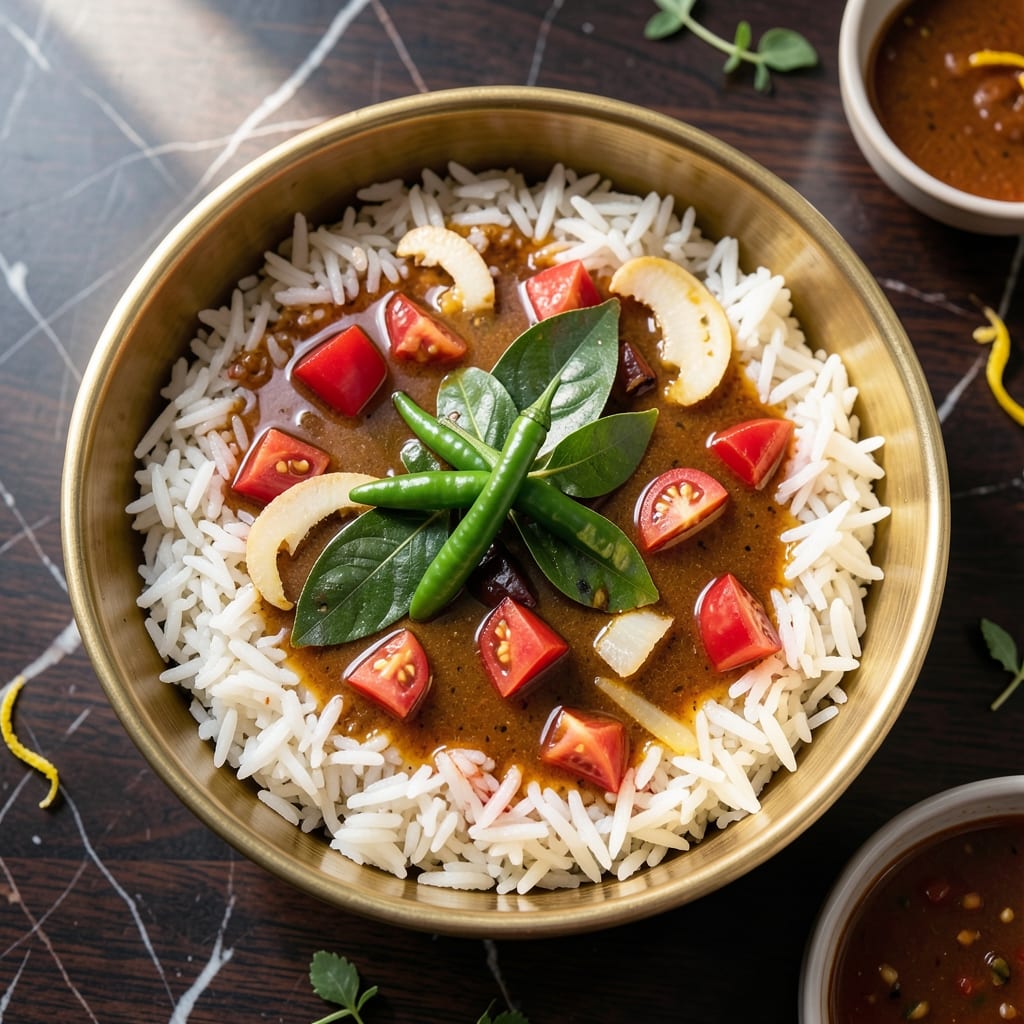
There’s something deeply comforting about a steaming bowl of rasam rice, where every spoonful delivers the perfect balance of tangy, spicy, and aromatic flavors. This South Indian classic transforms simple ingredients into a meal that warms both body and soul.
The magic lies in the rasam—a light, broth-like liquid infused with tamarind, tomatoes, and a blend of traditional spices. When poured over fluffy steamed rice, it creates a dish that’s both nourishing and deeply satisfying, with layers of flavor in every bite.
I’ve perfected this recipe to ensure the rasam is boldly tangy and fragrant, while the rice remains soft and separate. It’s a dish that feels like a hug in edible form, ideal for comforting meals or when you crave something light yet flavorful.
The beauty of rasam rice is its simplicity. With just a handful of ingredients and a little patience, you’ll create a meal that’s authentically comforting and endlessly adaptable to your taste.
Ingredients for Rasam Rice
Simple ingredients transform into a South Indian comfort classic with tangy, spicy depth.
| Ingredient | Amount | Notes |
|---|---|---|
| Basmati Rice 🍚 | 1 ½ cups | Rinsed until water runs clear |
| Tamarind Paste 🍋 | 2 tbsp | Or substitute lemon-sized tamarind pulp |
| Ripe Tomatoes 🍅 | 2 whole | Medium-sized, finely chopped |
| Fresh Green Chilies 🌶️ | 2 whole | Slit lengthwise, adjust to taste |
| Fresh Ginger 🌿 | 1 whole | 1-inch piece, crushed |
| Fresh Curry Leaves 🍃 | 1 sprig | About 10-12 leaves |
| Asafoetida 🧂 | ¼ tsp | Hing, essential for authentic flavor |
| Turmeric Powder 🌶️ | ¼ tsp | Ground, for color and earthiness |
| Cumin Seeds 🌿 | 1 tsp | Whole, for tempering |
| Mustard Seeds 🌶️ | 1 tsp | Black or yellow, for tempering |
| Dried Red Chilies 🌶️ | 2 whole | Broken into pieces |
| Fresh Coriander Leaves 🌿 | ¼ cup | Chopped, for garnish |
| Ghee or Vegetable Oil 🫒 | 2 tbsp | For tempering spices |
| Salt 🧂 | 1 tsp | Adjust to taste |
| Water 💧 | 4 cups | For cooking rice and rasam |
The tamarind is non-negotiable here. Indian grocery stores carry both paste and pulp—paste is more convenient but pulp offers superior depth. Look for vibrant red tomatoes and fresh green chilies with firm skins. Asafoetida (hing) is the secret umami element—Patel Brothers or Bharat Bazaar stock high-quality versions. Curry leaves, while optional, elevate the dish significantly (find them fresh or frozen at South Asian markets).
No tamarind? Lime juice with a pinch of sugar mimics the tang (use 3 tbsp lime juice plus 1 tsp sugar). Skip the green chilies if heat-sensitive, but add half a bell pepper for depth. Fresh ginger can be swapped for 1 tsp ginger paste. For the tempering, coconut oil works beautifully instead of ghee (keeps it vegetarian while adding richness).
Rice stays fluffy for 2 days in the fridge, but rasam is best fresh. Store tamarind paste in the fridge for up to 6 months. Always rinse basmati rice thoroughly—this removes excess starch and prevents clumping (worth the extra minute).
Why You’ll Love This Recipe
- One Pot Wonder: I just dump everything—rice, tamarind, tomatoes, and those fresh green chilies—into a single pot and let it simmer. Honestly, cleanup is just one bowl and a spoon.
- Tangy Comfort: The tamarind paste gives it that sharp, tangy kick while the ginger and tomatoes balance it with a mellow sweetness. It’s ridicuously good.
- Feeds a Crowd: I make a big batch on Sunday and pack it for lunch all week. Leftovers taste even better the next day.
- Budget Friendly: Basmati rice and a handful of pantry staples stretch into a hearty meal. I’ll be real: it costs me less than takeout and fills us up just as well.
Step-by-Step Instructions for Rasam Rice
Master this traditional method for perfectly balanced flavors and comforting results every time.
Step 1: Prepare and Cook the Rice
Rinse the 1.5 cups Basmati Rice under cold water until the water runs clear. This removes excess starch and prevents the grains from sticking together. I recommend soaking the rice for 15 minutes to ensure even cooking.
Drain the rice and transfer it to a pot with 2 cups Water. Bring to a boil, then reduce heat to low, cover, and simmer for 12-15 minutes until the water is absorbed and the grains are tender. Fluff with a fork and set aside, covered, to keep warm.
Step 2: Create the Rasam Base with Tamarind and Tomatoes
In a bowl, mix the 2 tbsp Tamarind Paste with 1 cup Water and set aside. This will form the tangy foundation of your rasam. In a separate pot, combine the finely chopped 2 whole Ripe Tomatoes, crushed 1 whole Fresh Ginger, and slit 2 whole Fresh Green Chilies.
Add 0.25 tsp Turmeric Powder and 1 tsp Salt to the tomato mixture. Pour in the tamarind water and bring to a gentle boil over medium heat. Simmer for 8-10 minutes until the tomatoes soften and the raw tamarind smell dissipates.
Step 3: Temper the Spices for Maximum Flavor
Heat the 2 tbsp Ghee or Vegetable Oil in a small pan over medium heat. Add the 1 tsp Mustard Seeds and wait for them to pop, which should take about 30-45 seconds. This is your cue to add the 1 tsp Cumin Seeds, 2 whole Dried Red Chilies (broken into pieces), and 0.25 tsp Asafoetida.
Stir in the 1 sprig Fresh Curry Leaves and let the spices sizzle for another 20-30 seconds until fragrant. Be careful not to burn them—burnt spices will impart a bitter taste. Immediately pour this tempering mixture into the simmering rasam base.
Step 4: Combine and Finish the Dish
Stir the tempered spices into the rasam and let it simmer for an additional 5 minutes on low heat. This allows the flavors to meld together beautifully. Taste and adjust the salt if needed, though remember the asafoetida and tamarind already contribute to the seasoning.
To serve, place a generous portion of the cooked basmati rice in a bowl and ladle the hot rasam over it. Garnish with the 0.25 cup Fresh Coriander Leaves. The dish should have a perfect balance of tangy, spicy, and aromatic notes, with the rice absorbing the flavorful broth.
Pro Tips For Making Rasam Rice
- Soak the Rice: I learned this the hard way—soak basmati rice for at least 20 minutes before cooking to guarantee fluffy, separate grains that don’t turn mushy in the rasam.
- Balance Tamarind Early: Add tamarind paste gradually and taste as you go; it’s easier to fix under-acidic rasam than to rescue an overly sour batch.
- Toast the Spices: Dry-roast mustard seeds, cumin, and dried red chilies in hot oil until they pop and release aroma—this builds the deep, nutty base rasam needs.
- Use Ripe Tomatoes: Sounds obvious, but underripe tomatoes stay hard and sour; pick soft, red ones for a smooth, sweet-tart balance in the broth.
Essential Equipment for Great rasam rice
Essential Cookware
Start with a heavy-bottomed pot (I love my 2-quart stainless steel from Cuisinart) for both rice and rasam. The even heat distribution prevents burning, especially when tempering spices. A non-stick rice cooker also works for foolproof rice.
Tempering Pan
For the rasam’s flavor foundation, use a small tempering pan (like the 10-inch cast iron kadhai from Lodge). Its deep shape contains sizzling spices while allowing easy pouring. A small saucepan works too if you don’t have a kadhai.
Mixing Bowls
Have 2 medium mixing bowls ready: one for soaking rice and another for dissolving tamarind. I prefer glass bowls from Pyrex—they’re sturdy and won’t absorb odors. Stainless steel works equally well for this purpose. 💡
Precision Tools
A fine-mesh strainer helps remove tamarind pulp fibers. For measuring, OXO Good Grips measuring spoons ensure accuracy with sticky ingredients like ghee. A wooden spoon prevents scratching your cookware while stirring.
Serving Essentials
Use a wide, shallow bowl (I like stoneware from Le Creuset) to showcase the rice and rasam. The shape lets you enjoy both components together. A ladle helps distribute the rasam evenly over the rice. 🍚
Optional Upgrades
For authentic flair, add a mortar and pestle to crush whole spices fresh. A spice box (masala dabba) keeps tempering ingredients organized. These small investments elevate your rasam rice experience significantly.
Nutrition Facts
Frequently Asked Questions
Can I use lemon juice instead of tamarind?
Yes! Substitute 3 tbsp lemon juice plus 1 tsp sugar for 2 tbsp tamarind paste. The sugar balances the acidity.
Why is my rasam too watery?
Simmer the broth longer to reduce it. Aim for 8-10 minutes after adding tamarind. The consistency should coat the back of a spoon lightly.
Can I make this without asafoetida?
Yes, but it adds authentic depth. Skip it if needed, but add an extra pinch of turmeric and cumin for complexity.
How do I store leftovers?
Keep rice and rasam separate in the fridge for up to 2 days. Reheat rasam gently to preserve its tangy flavor.

- Authentic Greek Lemon Rice Soup Recipe: Bright Citrus and Silky Texture - September 26, 2026
- Beef Tomato Rice Chinese Recipe: Wok-Seared Savory Delight with Fragrant Aromatics - September 26, 2026
- Mango Sticky Rice Sauce Recipe: Sweet Coconut Infusion for Dessert - September 26, 2026