
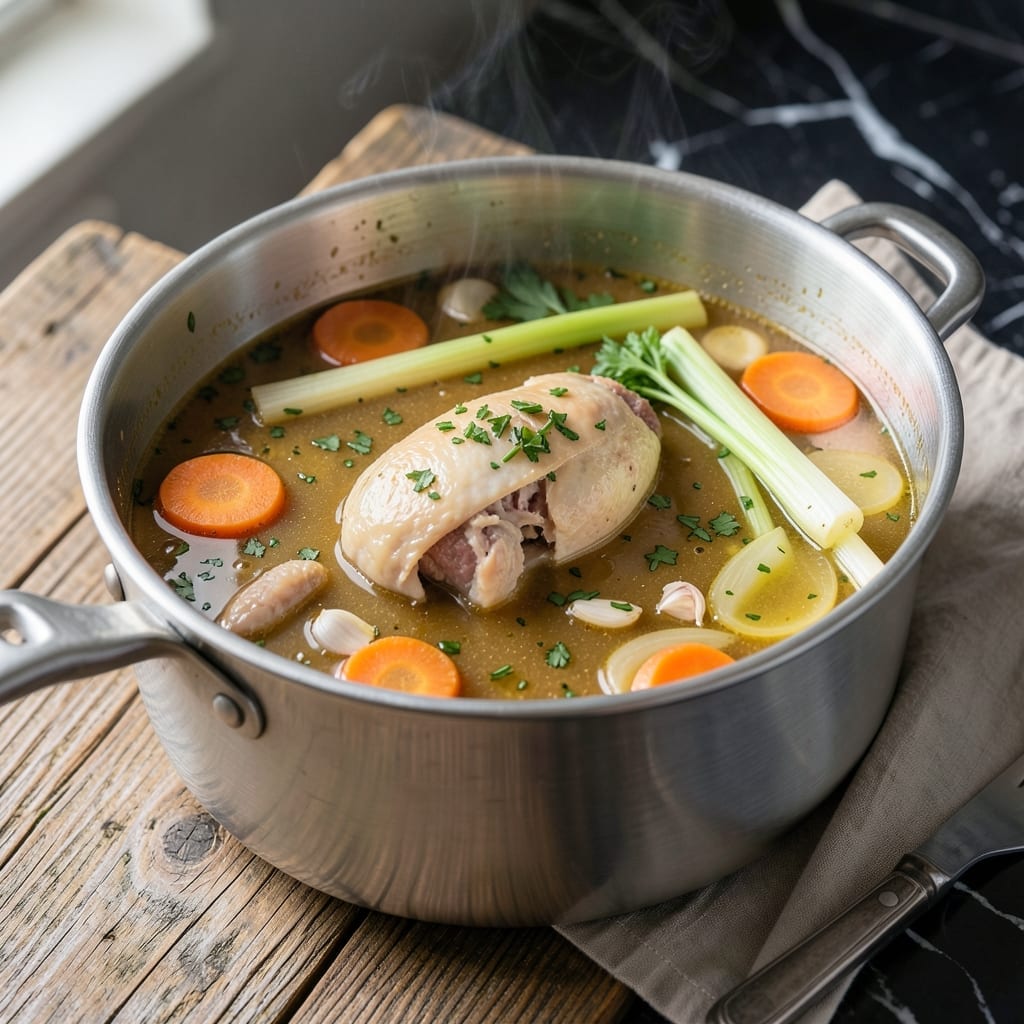
There’s no need to waste a single part of your roast chicken when you can transform the carcass into a rich, flavorful stock. This traditional method extracts every bit of gelatin and depth from bones that most people discard.
Simmering the carcass with aromatic vegetables and herbs creates a golden broth that forms the foundation for countless dishes. The slow extraction process ensures maximum flavor without any bitterness.
You’ll end up with a clear, rich stock that’s perfect for soups, sauces, or cooking grains. It freezes beautifully, so you can always have this kitchen staple on hand.
This zero-waste approach turns what would be trash into liquid gold for your cooking.
Ingredients for Recipe for Chicken Stock with Chicken Carcass
Turn that leftover chicken frame into liquid gold with these basic ingredients.
| Ingredient | Amount | Notes |
|---|---|---|
| Chicken Carcass 🍗 | 1 whole | From roasted chicken, meat removed |
| Cold Water 💧 | 8 cups | Enough to cover bones fully |
| Yellow Onion 🧅 | 1 whole | Quartered, skin on for color |
| Carrots 🥕 | 2 whole | Roughly chopped, no need to peel |
| Celery Stalks 🥬 | 2 whole | Including leafy tops if available |
| Garlic Cloves 🧄 | 4 cloves | Smashed, unpeeled |
| Fresh Parsley Stems 🌿 | ½ cup | Reserve leaves for garnish |
| Fresh Thyme Sprigs 🌿 | 4 sprigs | Whole, for easy removal |
| Bay Leaves 🍃 | 2 whole | Dried, for aromatic depth |
| Black Peppercorns 🌶️ | 2 tsp | Lightly crushed for extraction |
| Kosher Salt 🧂 | 1 tsp | Adjust to taste at end |
| Apple Cider Vinegar 🍏 | 1 tbsp | Helps extract calcium from bones |
The carcass is everything here. Use bones from a roasted chicken—raw just won’t give you the same depth. I save mine in the freezer until I have enough for a batch. The vegetables don’t need to be perfect (the ugliest carrots work great), but organic celery often has more leafy tops for extra flavor. Don’t stress about peeling anything—just give everything a good rinse.
No carcass? Raw chicken wings or necks work too (roast them first for best flavor). Missing fresh herbs? Dried at half the amount is fine—just tie them in cheesecloth. Apple cider vinegar can be swapped for white vinegar or lemon juice. The key is acidity to pull minerals from the bones. Skip the salt if you’re reducing the stock later.
This keeps 4-5 days in the fridge, but honestly it’s better frozen. Portion into quart-sized containers—perfect for soups or cooking grains. The fat will solidify on top when chilled; skim it off or leave it for extra richness.
Why You’ll Love This Recipe
- Minimal Effort: I just toss the carcass, onion, carrots, and celery into a pot with cold water and let it simmer—no fancy techniques.
- Deeply Rich: The slow-simmered bones and veggies create a stock so flavorful it makes every soup or sauce taste like it’s from a five-star kitchen.
- Meal Prep Hero: I make a big batch on Sunday and use it all week for risotto, gravy, or just sipping when I need a cozy pick-me-up.
- Zero Waste: Honestly, it’s the best way to use up a leftover roast chicken—turning scraps into liquid gold for pennies.
Instructions
Here’s my proven method for extracting maximum flavor from every component.
Step 1: Prepare and Combine All Ingredients
Place the 1 whole Chicken Carcass in a large stockpot. Add the 8 cups Cold Water, ensuring it fully covers the bones. I like to break up the carcass slightly to expose more surface area for better flavor extraction.
Add the 1 whole Yellow Onion (quartered, skin on), 2 whole Carrots (roughly chopped), and 2 whole Celery Stalks (including leafy tops). The onion skin adds beautiful color to the finished stock, while the vegetables provide a solid aromatic base.
Step 2: Add Aromatics and Seasonings
Toss in the 4 cloves Garlic Cloves (smashed, unpeeled), 0.5 cup Fresh Parsley Stems, 4 sprigs Fresh Thyme Sprigs, and 2 whole Bay Leaves. These fresh herbs and spices will infuse the stock with complex, layered flavors during the long simmer.
Add the 2 tsp Black Peppercorns (lightly crushed) and 1 tbsp Apple Cider Vinegar. The vinegar helps extract calcium from the bones, creating a richer, more mineral-forward broth. I always include this step—it makes a noticeable difference in the final product.
Step 3: Simmer Gently for Maximum Extraction
Bring the mixture to a boil over high heat, then immediately reduce to a gentle simmer. Skim off any foam or impurities that rise to the surface during the first 10-15 minutes. This ensures a clean, clear stock without any bitter flavors.
Partially cover the pot and maintain a low simmer for 4-6 hours. You’ll know it’s ready when the liquid has reduced by about a third and taken on a deep, golden color. The house will smell incredible—this is when you know you’re building something special.
Step 4: Strain and Season the Finished Stock
Carefully strain the stock through a fine-mesh sieve into a large bowl or another pot. Discard all the solids—they’ve given up all their goodness. Press gently on the vegetables to extract every last bit of flavor, but don’t squeeze or you’ll end up with cloudy stock.
Stir in the 1 tsp Kosher Salt and taste. Adjust the seasoning if needed, remembering that the stock will reduce further when used in recipes. I often leave it slightly under-seasoned so I can control the salt content in my final dishes.
Let the stock cool to room temperature, then refrigerate. Once chilled, skim off any solidified fat from the surface. Your zero-waste chicken stock is now ready to elevate any dish.
Pro Tips For Making Recipe For Chicken Stock With Chicken Carcass
- Start With Cold Water: Always cover the carcass with cold water and bring it to a simmer slowly—this helps draw out impurities and keeps the stock clear. I learned this the hard way after ending up with cloudy stock more times than I’d like to admit.
- Roast the Carcass: Toss the bones in a hot oven (400°F) for 20-30 minutes first to deepen the flavor. Sounds like an extra step, but it actually changes the outcome—your stock will taste richer and more complex.
- Skim the Foam: Keep a spoon handy and skim off the foam that rises to the top in the first 30 minutes. Skip this, and you’ll end up with a bitter, murky stock that looks and tastes off.
- Add Vinegar: Splash in a tablespoon of apple cider vinegar—it helps break down the bones and extract more gelatin. I was skeptical until I tried it, but now I never skip it.
Troubleshooting This Recipe
Cloudy Stock Fix
If your stock turns cloudy, it’s usually from boiling too vigorously or squeezing the vegetables. Next time, maintain a gentle simmer and strain without pressing. For already cloudy stock, try clarifying with 1 egg white whisked into cold stock, then simmered for 20 minutes. 💡
Weak Flavor Solution
Under-extracted stock often results from insufficient simmering time. Extend your cook to 6-8 hours for deeper flavor. Also, roast your carcass and vegetables at 400°F for 30 minutes before simmering to develop more complex, caramelized notes.
Excessive Fat
Skimming while hot is ineffective—the fat separates better when chilled. Refrigerate your stock overnight, then lift off the solidified fat cap. For immediate defatting, use a gravy separator or carefully pour from the side, leaving the fat layer behind.
Bitter Taste
Bitterness usually comes from overcooking or impure bones. Avoid using carcasses from older chickens and always skim the foam during the first 15 minutes. If your stock is already bitter, dilute with 2 cups water and reduce again.
Gelatin Issues
For stock that doesn’t gel when cooled, you need more collagen. Use chicken feet or wings along with your carcass—they’re packed with gelatin. Simmer for the full 6 hours to extract maximum gelatin. The vinegar in the recipe helps, but more joints and connective tissue make the biggest difference.
Storage Problems
If your stock develops off flavors in storage, it may have been contaminated during cooling. Always divide hot stock into shallow containers to cool quickly in the fridge before freezing. For long-term storage, leave 1-inch headspace in containers to prevent freezer burn. 🌡️
Nutrition Facts
Frequently Asked Questions
How long can I store the finished stock?
Refrigerated stock stays fresh for 4-5 days. For longer storage, freeze in airtight containers for up to 3 months.
Can I add other bones to increase gelatin?
Add chicken feet or wings for extra collagen. These parts are rich in gelatin and will give your stock a thicker, more luxurious texture when cooled.
What if my stock turns cloudy?
Avoid squeezing vegetables when straining. For already cloudy stock, clarify with 1 egg white whisked in, then simmer for 20 minutes.
Should I roast the carcass first?
Roasting at 400°F for 30 minutes deepens flavor. This step caramelizes the bones and vegetables, adding rich, complex notes to your finished stock.

- Jollof Rice Sauce Recipe: West African Tomato and Spice Infusion - September 25, 2026
- Japanese Rice Soup Recipe: Umami-Rich Comfort in a Bowl - September 25, 2026
- Homemade Cream Of Rice Recipe: Silk-Smooth Breakfast in Minutes - September 25, 2026