
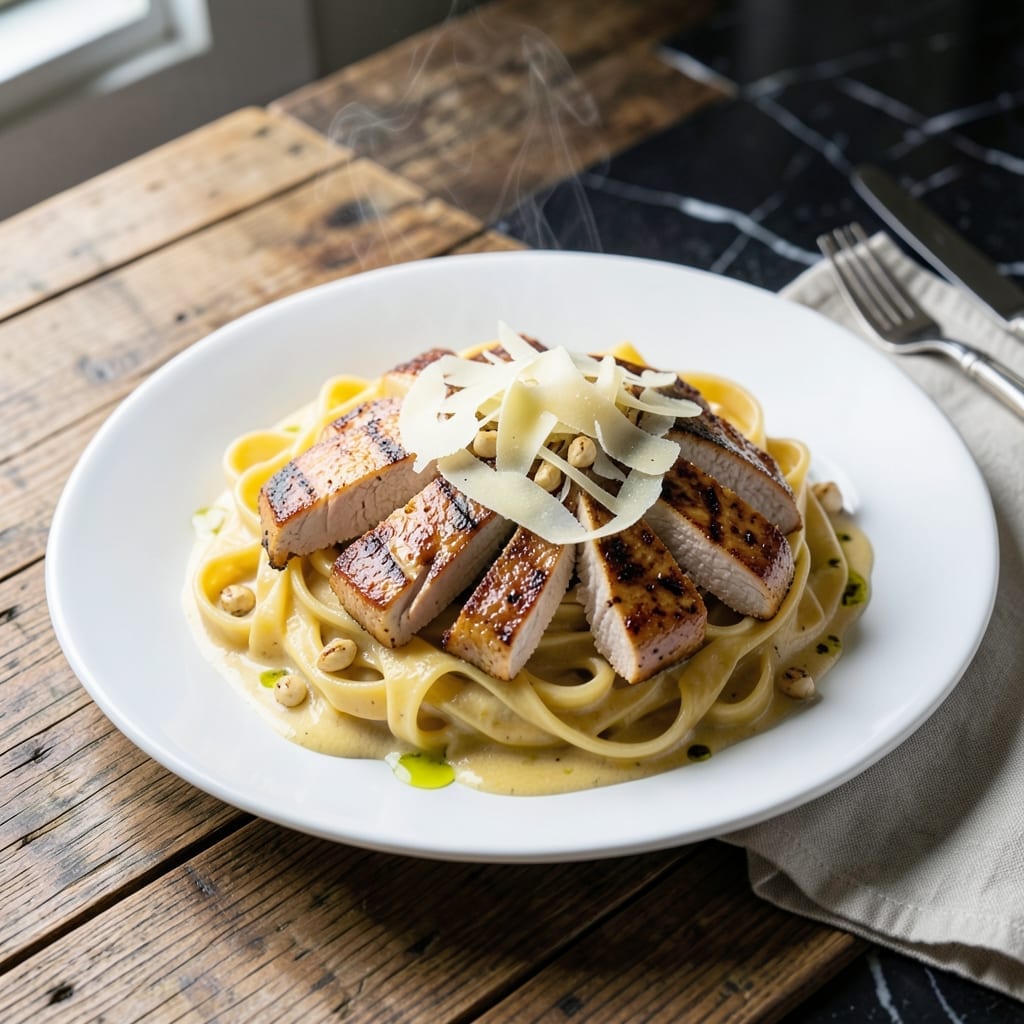
This chicken alfredo recipe delivers creamy, restaurant-quality results with a homemade touch. The secret lies in a perfectly balanced garlic parmesan sauce that clings beautifully to the fettuccine.
I developed this method after years of testing to ensure the chicken stays tender while the sauce achieves that ideal velvety texture. The combination of heavy cream, parmesan, and just the right amount of garlic creates depth without overpowering.
You’ll love how the sauce coats every strand of pasta, with each bite offering tender chicken and rich, creamy alfredo. It’s a complete meal that comes together in about 30 minutes.
Serve with a sprinkle of parsley for a fresh finish. Here’s how to make it perfectly every time.
Ingredients for Recipe to Make Chicken Alfredo
Rich, velvety sauce meets tender chicken and perfect pasta every time with these ingredients.
| Ingredient | Amount | Notes |
|---|---|---|
| Fettuccine Pasta 🍝 | 12 oz | Dried, uncooked weight |
| Boneless Skinless Chicken Breast 🍗 | 1 ½ lb | Cut into thin cutlets |
| Heavy Cream 🥛 | 2 cups | Full-fat for best texture |
| Parmesan Cheese 🧀 | 1 ½ cups | Freshly grated from wedge |
| Unsalted Butter 🧈 | ½ cup | 1 stick, cut into pieces |
| Garlic Cloves 🧄 | 4 cloves | Minced finely for sauce |
| All-Purpose Flour 🌾 | 2 tbsp | For thickening sauce |
| Kosher Salt 🧂 | 1 ½ tsp | Divided for pasta and sauce |
| Freshly Ground Black Pepper 🌶️ | ½ tsp | Divided for seasoning |
| Olive Oil 🫒 | 1 tbsp | For cooking chicken |
| Fresh Flat-Leaf Parsley 🌿 | ¼ cup | Chopped, for garnish |
| Whole Milk 🥛 | ¼ cup | Optional for adjusting consistency |
The Parmesan is non-negotiable here. Parmigiano-Reggiano from a wedge—pre-grated lacks the sharpness and melts poorly. Most Whole Foods or Italian markets will have good quality. For the heavy cream, full-fat is essential (no light cream or half-and-half). The butter should be unsalted so you control the salt level. Fresh pasta works but dried fettuccine holds sauce better.
No Parmesan wedge? Pecorino Romano is a sharper substitute (use slightly less). Out of heavy cream? Half-and-half with a splash of melted butter can work in a pinch. The chicken can be thighs if you prefer darker meat. For gluten-free, rice flour or cornstarch thickens the sauce just as well. Fresh parsley adds brightness, but dried works at one-third the amount.
Sauce thickens as it cools, so add that optional milk to loosen if needed. Leftovers keep 3-4 days refrigerated, but the pasta absorbs sauce over time. Freezes for up to 2 months (best without pasta). Reheat gently to avoid separation.
Why You’ll Love This Recipe
- One Pot Meal: I love that everything—pasta, chicken, and that creamy Parmesan sauce—cooks together in a single pan.
- Velvety Richness: The heavy cream and butter create this decadent sauce that clings to every strand of fettuccine.
- Crowd Pleaser: Honestly, it’s the only dish my picky nephew and foodie sister both request for birthdays.
- Leftovers Gold: The flavors deepen overnight, so I always make extra for tomorrow’s lunch.
Step-by-Step Instructions for Chicken Alfredo
Master the technique for velvety sauce and perfectly cooked components every time.
Step 1: Prepare and Cook the Chicken
Pat the 1.5 lb boneless skinless chicken breast dry and season both sides with ½ tsp kosher salt and ¼ tsp freshly ground black pepper. This prevents sticking and enhances flavor penetration.
Heat 1 tbsp olive oil in a large skillet over medium-high heat until shimmering. Add the chicken and cook for 4-5 minutes per side until golden brown and the internal temperature reaches 165°F. Transfer to a plate and tent with foil to keep warm.
Step 2: Sauté Aromatics and Build the Roux
In the same skillet, melt 0.5 cup unsalted butter over medium heat. Add the 4 cloves garlic cloves and sauté for 30 seconds until fragrant but not browned. Browning garlic adds bitterness, so watch it closely.
Sprinkle in 2 tbsp all-purpose flour and whisk constantly for 1-2 minutes to cook out the raw flour taste. The mixture should form a smooth paste and turn a pale golden color. This roux thickens the sauce without lumping.
Step 3: Create the Creamy Parmesan Sauce
Gradually whisk in 2 cups heavy cream, ensuring no lumps form. Bring to a gentle simmer and cook for 3-4 minutes until the sauce begins to thicken and coats the back of a spoon.
Reduce heat to low and stir in the 1.5 cups parmesan cheese until completely melted and smooth. If the sauce becomes too thick, whisk in 0.25 cup whole milk 1 tbsp at a time until silky. Season with the remaining 1 tsp kosher salt and ¼ tsp freshly ground black pepper.
Step 4: Combine Pasta and Chicken with Sauce
Cook 12 oz fettuccine pasta in salted boiling water until al dente (about 1 minute less than package instructions). Reserve ½ cup pasta water, then drain. The starchy water helps bind the sauce to the pasta.
Add the drained fettuccine to the sauce and toss to coat. If needed, add reserved pasta water 1 tbsp at a time to loosen the sauce. Return the chicken to the skillet and nestle it into the pasta, spooning sauce over the top to heat through for 1-2 minutes.
Step 5: Garnish and Serve Immediately
Sprinkle with 0.25 cup fresh flat-leaf parsley for a pop of color and freshness. The sauce should glisten and cling to each strand of pasta, with the chicken juices mingling with the creamy base.
Serve in shallow bowls while hot. For best texture, avoid letting the dish sit—the sauce will continue to thicken as it cools. Each serving should have a generous portion of pasta, chicken, and that signature creamy sauce.
Pro Tips For Making Recipe To Make Chicken Alfredo
- Pound the Chicken: I learned this the hard way—pound the chicken breasts to an even ½-inch thickness so they cook through without drying out. Uneven pieces mean some bites are raw while others are sawdust.
- Reserve Pasta Water: Before draining, scoop out ½ cup of that starchy pasta water. Sounds weird, but it works: a splash or two loosens the alfredo sauce to the perfect consistency.
- Low and Slow Sauce: Keep the heat at medium-low when adding the cream and parmesan—crank it too high and the sauce will split or turn grainy. Patience pays off here.
- Salt Every Layer: Season the chicken, the pasta water, and the sauce itself. More salt than you think, especially if using unsalted butter—this dish needs it.
Essential Equipment for Perfect Results
Quality Skillet
A heavy-bottomed 12-inch skillet is essential for even heat distribution. I recommend stainless steel or enamel-coated cast iron for the sauce. A nonstick pan works for the chicken but avoid it for the sauce as metal utensils can damage the coating.
Accurate Thermometer
Use an instant-read thermometer to check chicken doneness. I trust ThermoWorks for accuracy. The chicken should reach 165°F internally. This prevents overcooking, which dries out the meat. 🌡️
Whisk and Spatula
A balloon whisk blends the roux and cream smoothly without lumps. For folding pasta into sauce, a wooden spoon or silicone spatula works best. These tools ensure every strand gets coated evenly.
Cheese Grater
Freshly grated Parmigiano-Reggiano melts better than pre-shredded. I use a Microplane for fine, even shreds. The texture difference is noticeable in the final sauce. A box grater works too but requires more effort.
Pasta Pot
Cook pasta in a 5-6 quart pot with plenty of water. I prefer enamel-coated for easy cleaning. Reserve some starchy pasta water—it’s the secret to binding your sauce perfectly. 💡
Serving Bowls
Shallow, wide bowls show off the dish beautifully. I use stoneware for heat retention. The creamy sauce and chicken look especially inviting in bowls with a wide rim for easy twirling.
Nutrition Facts
Frequently Asked Questions
Can I use chicken thighs instead of breasts?
Boneless, skinless thighs are a great choice and often more forgiving. Cook them for 5-6 minutes per side at medium-high heat until they reach 165°F internally. They’ll stay juicier than breasts.
How do I prevent the sauce from breaking?
Keep the heat on low to medium when adding cheese and never let it boil. If it separates, whisk in 1 tbsp of milk or reserved pasta water to bring it back together. Constant stirring is key.
What’s the best way to reheat leftovers?
Reheat gently in a skillet over low heat with a splash of milk or water. Microwaving can make the sauce grainy. Stir frequently until just warmed through—about 3-4 minutes.
Can I make the sauce ahead of time?
Yes, but prepare it separately and store in an airtight container in the fridge for up to 2 days. Reheat slowly on the stove, then toss with freshly cooked pasta and chicken to maintain the best texture.

- Jollof Rice Sauce Recipe: West African Tomato and Spice Infusion - September 25, 2026
- Japanese Rice Soup Recipe: Umami-Rich Comfort in a Bowl - September 25, 2026
- Homemade Cream Of Rice Recipe: Silk-Smooth Breakfast in Minutes - September 25, 2026