
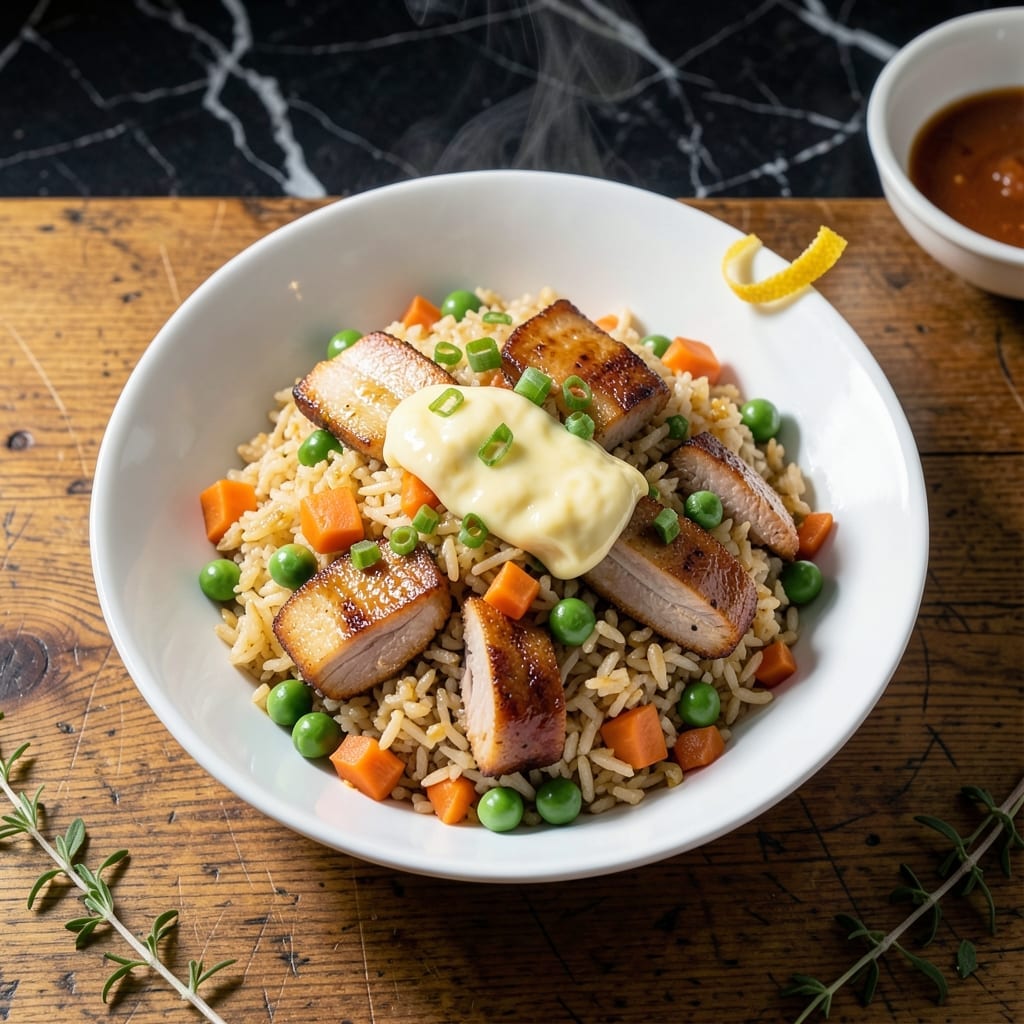
This restaurant-style pork fried rice delivers the authentic wok-hei flavor you crave at home. The secret lies in high heat and proper technique to achieve that signature charred aroma.
I’ve perfected this method using day-old rice, which stays separate and absorbs the savory flavors better than fresh. The pork is marinated briefly for tenderness, then seared to lock in juices before being tossed with the rice.
What you’ll get is a dish with smoky depth, tender pork, and vegetables that retain their crispness. Each bite carries the complex, umami-rich taste of a true Chinese takeout classic.
Serve it hot with a sprinkle of green onions for freshness. The result is worth every minute of effort.
Ingredients for Restaurant Pork Fried Rice
Pantry staples meet fresh veggies and tender pork for that takeout magic at home.
| Ingredient | Amount | Notes |
|---|---|---|
| Day-Old Cooked White Rice 🍚 | 4 cups | Cold, dry, preferably overnight |
| Pork Shoulder 🥩 | ¾ lb | Thinly sliced for quick cooking |
| Large Eggs 🥚 | 2 whole | Beaten for scrambling into rice |
| Green Onions 🧅 | 4 whole | Thinly sliced, green parts only |
| Carrots 🥕 | 1 whole | Small dice for even cooking |
| Frozen Peas 🌱 | ¾ cup | No need to thaw before cooking |
| Garlic Cloves 🧄 | 3 cloves | Minced for maximum flavor |
| Fresh Ginger Root 🌿 | 1 tbsp | Peeled and finely grated |
| Soy Sauce 🫒 | 3 tbsp | Low-sodium preferred for control |
| Oyster Sauce 🍶 | 1 tbsp | Essential for authentic umami depth |
| Sesame Oil 🫒 | 1 tbsp | Toasted variety for aroma |
| Vegetable Oil 🫒 | 3 tbsp | High smoke point for frying |
| Salt 🧂 | ½ tsp | Adjust to taste at the end |
| White Pepper 🌶️ | ½ tsp | Traditional for subtle heat |
| Shaoxing Wine 🍷 | 1 tbsp | Or dry sherry as substitute |
The rice is non-negotiable here—day-old and dry is what gives you those separate grains that absorb flavor without turning mushy. For the pork, pork shoulder has the right fat content for juiciness. Most Asian markets sell it pre-sliced thin, but any grocery store butcher can do it for you. The oyster sauce is key for that restaurant depth, so don’t skip it—Lee Kum Kee is my go-to brand.
No pork shoulder? Pork tenderloin works but needs a quick marinade (soy, garlic, ginger) to keep it from drying out. Out of green onions? Chives or scallions are fine. For the wine, dry sherry is the closest sub. No sesame oil? A dash of toasted sesame seeds in at the end helps (not the same, but close). The peas can stay frozen—no thawing needed.
This reheats like a dream—tastes even better the next day once everything melds. Keeps 3-4 days in the fridge, freezes for 2 months if you’ve got leftovers (unlikely). Store the ginger and garlic together in a bag in the freezer for easy grating.
Why You’ll Love This Recipe
- One Pan Wonder: I love that I can toss the pork, veggies, and day-old rice into a single wok and have dinner ready faster than takeout.
- Umami Bomb: The pork shoulder soaks up soy sauce like a sponge, and that first bite with crispy rice and runny egg yolk? Ridiculously good.
- Weeknight Hero: Between us, this is my backup plan for busy nights—it’s hearty enough for the whole family and still tastes like a treat.
- Stretches Dollars: Pork shoulder is cheap, rice is a pantry staple, and leftovers reheat beautifully for lunch the next day.
Step-by-Step Instructions for Restaurant Pork Fried Rice
Here’s the method. Straightforward, tested, works every time.
Step 1: Prep and Marinate the Pork
Thinly slice the 0.75 lb pork shoulder into bite-sized pieces. In a bowl, toss the pork with 1 tbsp soy sauce, 1 tbsp Shaoxing wine, and ½ tsp white pepper. I like to let it sit for 10 minutes while I prep the rest—this quick marinade adds depth of flavor.
Meanwhile, thinly slice the 4 whole green onions (green parts only), small dice the 1 whole carrot, mince the 3 cloves garlic cloves, and finely grate the 1 tbsp fresh ginger root. Small, even pieces ensure everything cooks quickly and evenly in the wok.
Step 2: Scramble the Eggs and Cook the Pork
Heat 1 tbsp vegetable oil in a wok or large skillet over high heat until shimmering. Add the 2 whole large eggs and scramble quickly until just set but still slightly soft. Remove the eggs and set aside—they’ll finish cooking when combined with the rice.
Add another 1 tbsp vegetable oil to the wok and swirl to coat. Add the pork in a single layer and let it sear undisturbed for 30 seconds before stirring. Cook for 2-3 minutes until the pork is no longer pink and has lightly browned edges. Remove and set aside with the eggs.
Step 3: Stir-Fry the Vegetables
Add the remaining 1 tbsp vegetable oil to the wok. Toss in the garlic, ginger, carrots, and frozen peas. Stir-fry for 2 minutes until the carrots start to soften and the garlic is fragrant but not browned. The frozen peas will thaw quickly in the hot wok.
Add the green onions and cook for another 30 seconds—just enough to take the raw edge off. Push all the vegetables to one side of the wok and add the 4 cups day-old cooked white rice, breaking up any clumps with your spatula.
Step 4: Combine and Season
Drizzle 2 tbsp soy sauce, 1 tbsp oyster sauce, and 1 tbsp sesame oil over the rice. Add the pork and eggs back to the wok. Stir-fry everything together for 2-3 minutes until the rice is heated through and has a lightly charred appearance.
Taste and adjust seasoning with ½ tsp salt if needed. The rice should have a savory, umami-rich flavor with a subtle smokiness from the wok. The grains should be separate, not mushy, with bits of pork, egg, and vegetables evenly distributed.
Step 5: Finish and Serve
Turn off the heat and give everything one final toss. The rice should glisten with sauce, and each bite should have a mix of textures—tender pork, fluffy egg, and crisp vegetables. Serve immediately while hot, garnished with any remaining green onions.
Pro Tips For Making Restaurant Pork Fried Rice
- Crank the Heat: Use the highest flame your stove allows—restaurant woks hit 800°F+, so get your pan screaming hot before adding the pork and rice. I learned this the hard way after too many soggy batches.
- Dry the Rice: Spread day-old rice on a tray and refrigerate uncovered for an hour to dry it out completely. Sounds weird, but it works: this prevents the dreaded mushy texture.
- Skip Fresh Rice: Resist the urge to use just-cooked rice—it releases too much starch and turns to paste. My grandmother swore by this, and she was right: day-old is non-negotiable.
- Pre-Cook the Pork: Par-cook the pork shoulder in small batches first, then set aside. This keeps it tender and guarantees it’s fully done when you toss everything together at the end.
Troubleshooting restaurant pork fried rice
Rice Too Mushy
This usually happens with fresh rice. Always use day-old rice that’s been refrigerated uncovered to dry it out. If you’re in a pinch, spread freshly cooked rice on a baking sheet and refrigerate for 1 hour to remove excess moisture. 💡
Pork is Tough
Thinly slice the pork shoulder against the grain into ¼-inch pieces. Overcooking is another culprit—sear the pork for only 2-3 minutes until just cooked through. The quick marinade with soy sauce and Shaoxing wine helps tenderize the meat.
Not Enough Wok-Hei
True wok-hei requires high heat. If your home stove isn’t powerful enough, cook in small batches to maintain temperature. Use a carbon steel wok and let it get ripping hot before adding oil. The smoky aroma comes from that intense heat.
Flavor is Bland
Don’t skimp on the oyster sauce—it’s essential for depth. I always use Lee Kum Kee brand. Taste before serving and adjust with more soy sauce or a pinch of white pepper if needed. The sesame oil adds a nutty finish. 🌟
Vegetables are Soggy
Cut all vegetables uniformly small (¼-inch dice for carrots) and stir-fry over high heat for just 2 minutes. The frozen peas should go in straight from the freezer—they’ll thaw instantly in the hot wok without turning mushy.
Eggs are Overcooked
Scramble the eggs separately first, then remove them while still slightly soft. They’ll finish cooking when mixed back in with the rice. Use medium-high heat and keep them moving constantly in the wok to create soft, fluffy curds.
Nutrition Facts
Frequently Asked Questions
Why use day-old rice?
Day-old rice is drier, preventing mushiness when stir-fried. Fresh rice contains excess moisture that steams instead of frying. Spread fresh rice on a tray and refrigerate for 1 hour if needed.
Can I substitute the pork?
Yes! Chicken, shrimp, or tofu work well. For chicken, use boneless thighs and cook through in 3-4 minutes. For shrimp, add at the end to avoid overcooking.
How do I get that smoky wok flavor?
Use a carbon steel wok on high heat until smoking. Cook in small batches to maintain temperature. The intense heat creates wok-hei, that signature charred aroma.
What if I don’t have Shaoxing wine?
Dry sherry is the best substitute. In a pinch, use ½ tsp white pepper mixed with 1 tbsp water to mimic the depth. Avoid cooking wine—it’s too salty.

- Jollof Rice Sauce Recipe: West African Tomato and Spice Infusion - September 25, 2026
- Japanese Rice Soup Recipe: Umami-Rich Comfort in a Bowl - September 25, 2026
- Homemade Cream Of Rice Recipe: Silk-Smooth Breakfast in Minutes - September 25, 2026