
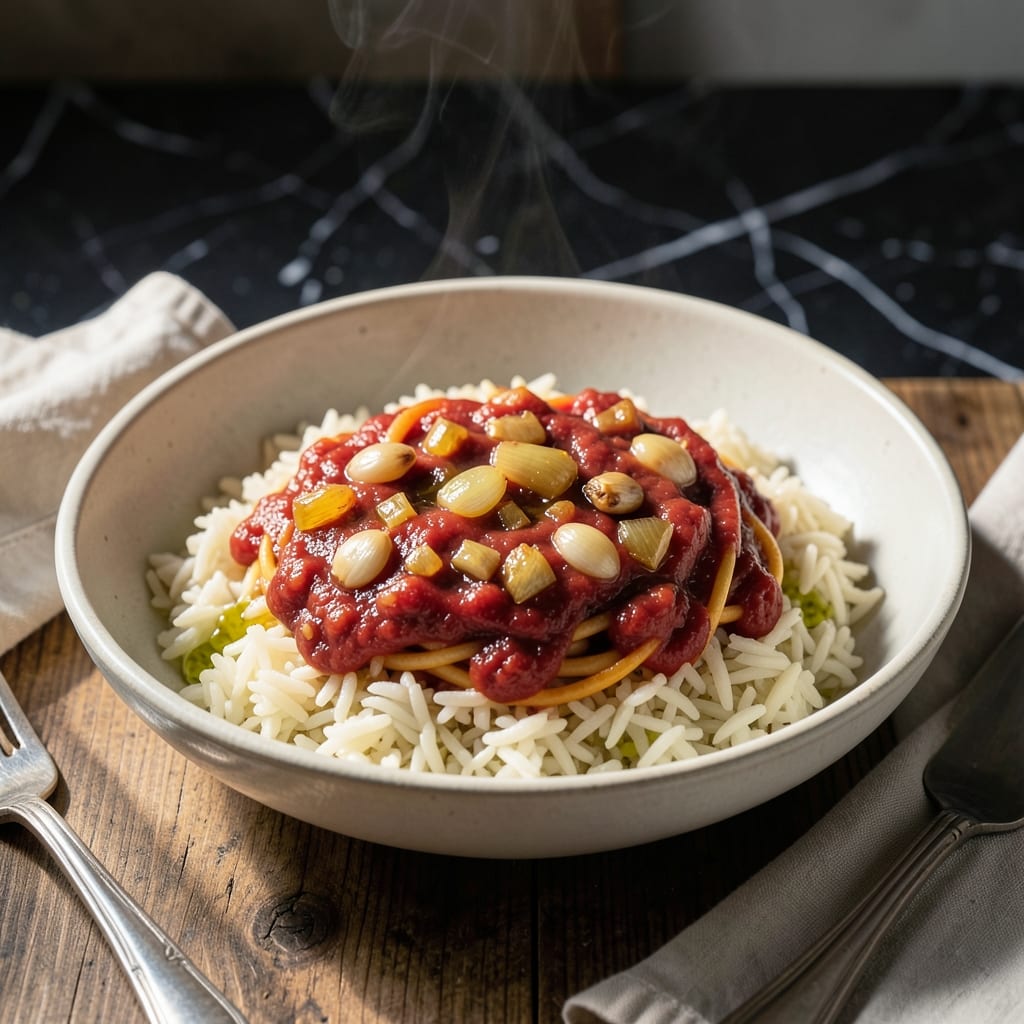
There’s something uniquely satisfying about combining rice with a rich, tomato-infused spaghetti sauce for a hearty fusion dish. This recipe brings together two comfort food staples in a way that feels both familiar and fresh.
The key is cooking the rice separately while developing a deeply flavorful sauce with tomatoes, herbs, and aromatic vegetables. The sauce coats the rice perfectly, creating a satisfying texture in every bite without becoming mushy.
What you’ll get is a dish that’s more than the sum of its parts—tender rice grains soaked in a robust tomato sauce with layers of savory complexity. It’s the kind of meal that tastes like it took hours but comes together surprisingly quickly.
Serve it as a main course or as a side to grilled meats. Here’s how to make this fusion work beautifully.
Ingredients for Rice and Spaghetti Sauce
Quality ingredients create this deeply flavorful tomato-infused fusion with tender rice and robust sauce.
| Ingredient | Amount | Notes |
|---|---|---|
| Long-Grain White Rice 🍚 | 1 ½ cups | Uncooked, rinsed before use |
| Olive Oil 🫒 | 2 tbsp | Extra-virgin preferred for depth |
| Yellow Onion 🧅 | 1 whole | Medium, finely diced |
| Garlic Cloves 🧄 | 4 cloves | Minced for aromatic base |
| Canned Crushed Tomatoes 🍅 | 28 oz | San Marzano preferred for richness |
| Tomato Paste 🍅 | 2 tbsp | For concentrated umami depth |
| Dried Oregano 🍃 | 1 tsp | Mediterranean variety ideal |
| Dried Basil 🌿 | 1 tsp | Or substitute 1 tbsp fresh |
| Red Pepper Flakes 🌶️ | ½ tsp | Adjust to preferred heat level |
| Bay Leaf 🌿 | 1 whole | Removed before serving |
| Beef Broth 🥩 | 1 cup | Low-sodium for controlled seasoning |
| Salt 🧂 | 1 tsp | Diamond Crystal kosher preferred |
| Black Pepper 🌶️ | ½ tsp | Freshly ground for best flavor |
| Granulated Sugar 🥄 | 1 tsp | Balances acidity in tomatoes |
| Parmesan Cheese 🧀 | ½ cup | Freshly grated for serving |
The tomatoes are non-negotiable for depth. San Marzano canned tomatoes from Whole Foods or Eataly deliver superior sweetness and low acidity. Look for whole peeled or crushed with no added salt. The rice should be long-grain white—jasmine or basmati work excellently. For the broth, Better Than Bouillon beef base dissolves easily and offers consistent quality. Avoid pre-minced garlic; fresh cloves yield more aromatic compounds.
No San Marzano tomatoes? Muir Glen organic is a solid substitute. Out of fresh garlic? Jarred minced garlic at half the amount works in a pinch. For a vegetarian version, swap beef broth for vegetable broth. The Parmesan can be omitted for vegan diets, or replaced with nutritional yeast. Dried herbs may be substituted with Italian seasoning blend at equal volume.
The sauce develops more complexity overnight. Store in airtight containers for 4-5 days in the refrigerator or freeze for 3 months. Cooked rice may be kept separately for 1 week refrigerated. Reheat sauce gently to preserve texture, adding a splash of broth if needed to restore consistency.
Why You’ll Love This Recipe
- One-Pot Wonder: I love tossing the rice, onions, and crushed tomatoes into a single pot and letting it simmer while I set the table.
- Garlicky Depth: The crushed tomatoes soak up the olive oil and garlic in a way that makes every bite taste like it cooked all day.
- Weeknight Hero: Honestly, it’s my go-to when I need dinner ready before the kids start asking for snacks.
- Budget Stretch: A pound of rice and a can of tomatoes feed my whole family for pennies, and leftovers taste even better the next day.
Step-by-Step Instructions for Rice and Spaghetti Sauce
Master this technique for a robust tomato-infused base that pairs perfectly with fluffy rice.
Step 1: Sauté Aromatics for Depth of Flavor
Heat the 2 tbsp olive oil in a large saucepan over medium heat until it shimmers. Add the yellow onion and cook for 5-6 minutes, stirring occasionally, until it softens and becomes translucent at the edges.
Add the 4 cloves garlic cloves and cook for an additional 30-45 seconds until fragrant. Be careful not to let the garlic brown—this can impart a bitter taste to the finished dish. The onion should be tender but not caramelized at this stage.
This aromatic base is crucial for building layers of flavor in your sauce. The olive oil carries the fat-soluble compounds from the onion and garlic, creating a rich foundation for the tomatoes.
Step 2: Develop the Tomato Base with Umami Richness
Stir in the 2 tbsp tomato paste and cook for 1-2 minutes, allowing it to deepen in color. This step removes the raw taste from the paste and intensifies its natural sweetness.
Add the 28 oz canned crushed tomatoes, 1 tsp dried oregano, 1 tsp dried basil, 0.5 tsp red pepper flakes, 1 whole bay leaf, 1 cup beef broth, 1 tsp salt, 0.5 tsp black pepper, and 1 tsp granulated sugar. Stir well to combine all ingredients evenly.
The sugar balances the natural acidity of the tomatoes, while the beef broth adds a savory depth that complements the herbs. Bring the mixture to a gentle simmer, then reduce the heat to low.
Step 3: Simmer for Optimal Flavor Concentration
Partially cover the saucepan and let the sauce simmer for 25-30 minutes. This slow cooking process allows the flavors to meld and the sauce to thicken slightly.
Stir occasionally to prevent sticking, and adjust the heat as needed to maintain a gentle simmer. The sauce should reduce slightly, becoming richer and more concentrated in flavor.
As it cooks, the crushed tomatoes will break down further, creating a smooth yet textured sauce with visible herb flecks. The bay leaf infuses subtle earthy notes, so resist the urge to skip it.
Step 4: Cook the Rice to Perfection
While the sauce simmers, rinse the 1.5 cups long-grain white rice under cold water until the water runs clear. This removes excess starch and prevents the rice from becoming gummy.
In a separate pot, bring 3 cups water to a boil. Add the rinsed rice, stir once, then cover and reduce the heat to low. Cook for 15-18 minutes until the water is absorbed and the rice is tender with no chalky center.
Remove from heat and let the rice sit covered for 5 minutes to steam. Fluff with a fork before serving to separate the grains and release excess moisture.
Step 5: Combine and Finish with Parmesan
Remove the bay leaf from the sauce and discard. Taste and adjust seasoning if needed, though the balance should be perfect with the measured ingredients.
Serve the rice in shallow bowls, topping each portion with a generous ladle of the tomato sauce. Finish with a sprinkle of 0.5 cup parmesan cheese, freshly grated for the best texture and flavor.
The hot sauce will slightly melt the Parmesan, creating a beautiful, savory finish that ties all the elements together. The contrast between the fluffy rice and rich, herb-infused sauce makes for a satisfying meal.
Pro Tips For Making Rice And Spaghetti Sauce
- Toast the Rice: Cook the rice in olive oil for 2-3 minutes before adding liquid—it brings out a nutty depth that plain steamed rice lacks.
- Sauté Onions Low: Keep the heat at medium-low when cooking the yellow onion so it sweetens without burning, which can make the sauce bitter.
- Simmer Sauce Uncovered: Let the crushed tomatoes reduce uncovered for 10-15 minutes to thicken the sauce and concentrate the flavor.
- Use Starchy Water: If the sauce is too thick, thin it with a splash of the rice cooking water instead of plain water—it adds body and helps bind the dish.
Storing and Reheating Leftovers
Refrigerator Storage
Let this dish cool for no more than 2 hours before transferring to airtight containers. I use glass containers with locking lids to keep flavors fresh. Store in the fridge at 40°F or below for up to 4 days. The rice will absorb more sauce over time, creating a thicker texture. ❄️
Freezer Storage
For longer storage, freeze the sauce and rice separately. The sauce freezes well for up to 3 months in freezer-safe bags or containers. Leave 1 inch of headspace for expansion. Cooked rice can be frozen for up to 1 month but may become slightly dry when reheated.
Stovetop Reheating
My preferred method: warm the sauce in a pot over medium-low heat for 8-10 minutes, stirring occasionally. Add ¼ cup water or beef broth if it’s too thick. Reheat the rice separately with a splash of water and fluff with a fork.
Microwave Reheating
For quick meals, microwave individual portions covered with a damp paper towel. Heat on 70% power for 2-3 minutes, stir, then continue in 30-second intervals until reaching 165°F. Add a splash of water if the rice seems dry.
Recombining Before Serving
If stored separately, gently fold the reheated rice into the warm sauce. This prevents the rice from becoming mushy. Taste and adjust seasoning with a pinch of salt or red pepper flakes if needed. The flavors will taste even better the next day. 🔥
Nutrition Facts
Frequently Asked Questions
Can I use brown rice instead of white?
Yes, but adjust the cooking time to 40-45 minutes and use 3.5 cups water. Brown rice has a nuttier flavor and firmer texture that holds up well to the rich sauce.
How do I make the sauce thicker?
Simmer uncovered for an extra 10-15 minutes after the initial cooking time. For a quick fix, mix 1 tbsp cornstarch with 2 tbsp cold water and stir into the hot sauce.
What can I add for extra protein?
Brown 1 lb ground beef or Italian sausage with the onions. For a vegetarian option, stir in 1 can drained white beans or 1 cup cooked lentils at the end.
Can I prepare this ahead of time?
Make the sauce up to 3 days ahead and store it in the fridge. Cook the rice fresh when ready to serve, as it can turn mushy when reheated.

- Gambia Jollof Rice Recipe: West African One-Pot Spice Fusion - October 5, 2026
- Cream of Wild Rice Soup Recipe Minnesota: Northwoods Creaminess With Foraged Grains - October 5, 2026
- Frozen Cauliflower Fried Rice Recipe: Quick Low-Carb Wok Magic - October 5, 2026