
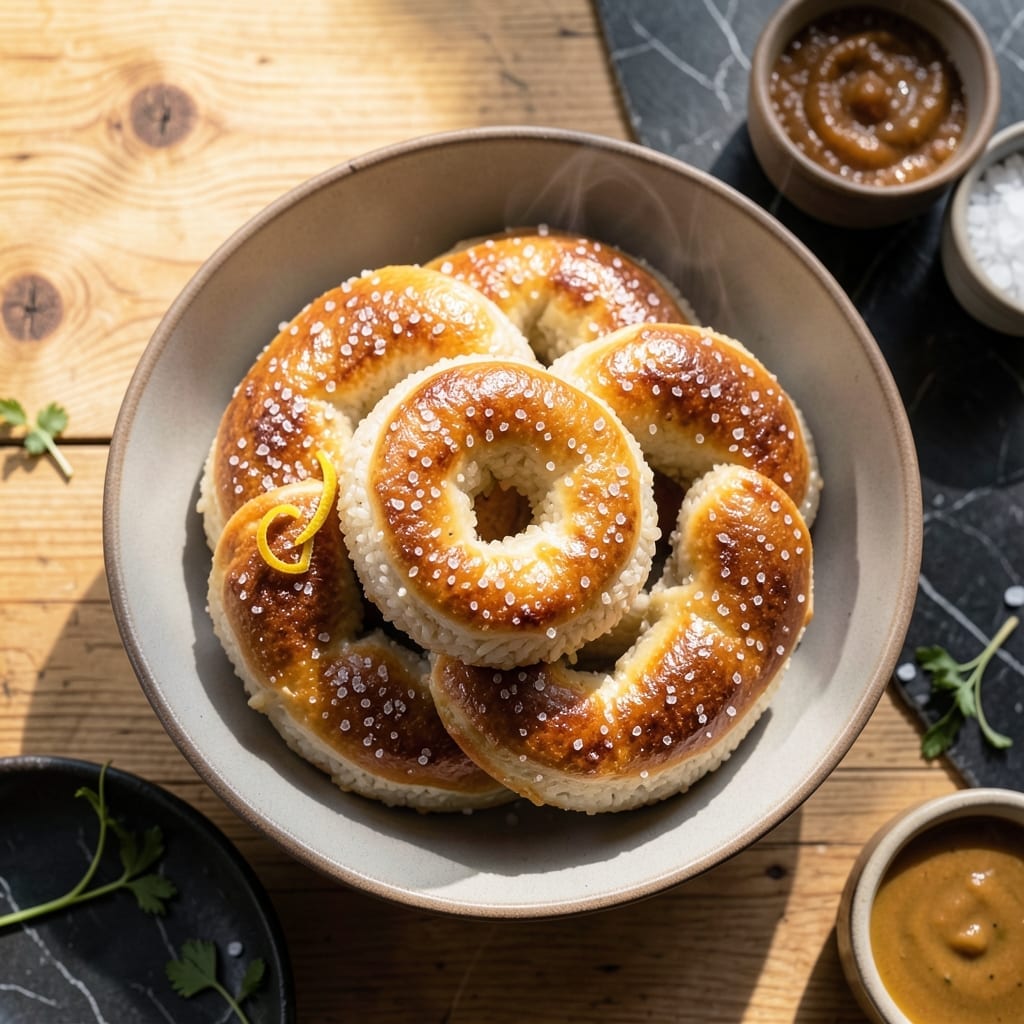
I discovered this rice-based bagel variation while exploring gluten-free baking, and the results surprised even me. The rice flour creates a uniquely chewy texture that rivals traditional wheat bagels, with a subtle nuttiness that sets it apart.
This method requires no special equipment—just a bowl, a baking sheet, and about 90 minutes of mostly hands-off time. The dough comes together quickly and shapes beautifully, proving that gluten-free baking doesn’t mean sacrificing texture or flavor.
The boiling step before baking is crucial for achieving that signature bagel density and shine. It also helps the rice flour develop its full potential, creating a finished product that’s both tender and satisfying.
These bagels toast beautifully and hold up well to all your favorite toppings. The process is straightforward, with results that might just make you rethink what a bagel can be.
Ingredients for Rice Bagel
Simple pantry ingredients transform into chewy, nuttiness-rich gluten-free delights with this method.
| Ingredient | Amount | Notes |
|---|---|---|
| White Rice Flour 🌾 | 2 ½ cups | Superfine grind preferred for texture |
| Tapioca Starch 🌾 | ½ cup | Helps with elasticity and chew |
| Active Dry Yeast 🍞 | 2 ¼ tsp | One standard packet works too |
| Granulated Sugar 🍚 | 1 tbsp | Feeds the yeast for rising |
| Sea Salt 🧂 | 1 ½ tsp | Fine grain for even distribution |
| Warm Water 💧 | 1 ¼ cups | Around 110°F for yeast activation |
| Large Eggs 🥚 | 2 whole | Room temperature for best results |
| Vegetable Oil 🫒 | 2 tbsp | Neutral flavor preferred |
| Apple Cider Vinegar 🍏 | 1 tbsp | Adds slight tang and structure |
| Baking Soda 🧂 | 1 tbsp | For boiling water bath alkalinity |
| Sesame Seeds 🌰 | 2 tbsp | Optional topping for crunch |
| Poppy Seeds 🌿 | 1 tbsp | Optional topping for crunch |
The rice flour is non-negotiable here—Bob’s Red Mill superfine is my go-to for that perfect chewy texture. You’ll find it in the gluten-free aisle at most Whole Foods or well-stocked supermarkets. Tapioca starch adds stretch; if you can’t find it, arrowroot powder works in a pinch (though the texture will be slightly different). Always check your yeast expiration date—old yeast won’t give you that beautiful rise.
No white rice flour? Brown rice flour at a 1:1 ratio works but yields a denser bagel. Out of tapioca starch? Cornstarch at half the amount can substitute, though the chew won’t be as pronounced. Eggs are key for structure here, but if you’re avoiding them, a flax egg (1 tbsp ground flax + 3 tbsp water per egg) will do. The apple cider vinegar can be swapped for white vinegar if that’s what you’ve got.
Dry ingredients keep in airtight containers for 6-12 months—just check for clumps in the flour. The dough can rest overnight in the fridge for a slower rise. Baked bagels freeze beautifully for up to 3 months; toast straight from frozen. Always boil fresh bagels for that signature shine.
Why You’ll Love This Recipe
- Minimal Effort: I just mix rice flour, tapioca starch, and yeast—no kneading, no fuss. Honestly, the dough comes together in minutes.
- Chewy Perfection: That combination of rice flour and tapioca starch gives it the most satisfying chew with a subtle sweetness from the sugar.
- Breakfast or Snack: I’ve served these for brunch, packed them in lunchboxes, and even toasted them for a quick afternoon pick-me-up.
- Budget Friendly: A bag of rice flour and a little tapioca starch make a batch that costs pennies compared to store-bought.
Step-by-Step Instructions for Rice Bagels
Here’s the method. Straightforward, tested, works every time.
Step 1: Activate the Yeast Mixture
In a large bowl, whisk together the 2.25 tsp active dry yeast, 1 tbsp granulated sugar, and 1.25 cups warm water that’s about 110°F. You’ll see the yeast begin to foam within 5 minutes—this confirms it’s active and ready to work its magic.
I always let it sit for the full 5 minutes to ensure complete activation. If the mixture doesn’t foam, your water may have been too hot or cold. In that case, start over with fresh yeast and properly tempered water.
Step 2: Combine Wet and Dry Ingredients
To the yeast mixture, add the 2 whole large eggs, 2 tbsp vegetable oil, and 1 tbsp apple cider vinegar. Whisk until fully combined. The vinegar adds a subtle tang and helps with the dough’s structure.
In a separate bowl, sift together the 2.5 cups white rice flour and 0.5 cup tapioca starch. Add this to the wet ingredients along with the 1.5 tsp sea salt. Mix until a thick, sticky batter forms.
Step 3: Proof the Dough
Cover the bowl with a clean kitchen towel and let the dough rise in a warm place for 1 hour. You’re looking for it to roughly double in volume. I like to place mine near a slightly warm oven or on top of the refrigerator for consistent warmth.
The dough will be stickier than traditional bagel dough—that’s normal for this gluten-free version. Don’t be tempted to add more flour, as this could make your bagels dense. The tapioca starch gives it the necessary elasticity.
Step 4: Shape, Boil, and Bake
Preheat your oven to 375°F and line a baking sheet with parchment. Bring a large pot of water to a boil and add the 1 tbsp baking soda. This alkaline bath gives bagels their signature chewy texture and golden color.
Using wet hands, divide the dough into 4 equal portions and roll each into a ball. Poke a hole in the center and gently stretch to form a bagel shape. Boil each for 1 minute per side, then transfer to the baking sheet. Brush with egg wash if desired and sprinkle with 2 tbsp sesame seeds and 1 tbsp poppy seeds. Bake for 20-25 minutes until deep golden brown.
Pro Tips For Making Rice Bagel
- Proof the Yeast: Always activate your dry yeast in warm water (110°F) with a pinch of sugar first—I learned this the hard way after wasting three batches of rice flour on flat, dense bagels.
- Chill the Dough: After shaping, refrigerate the dough for at least 30 minutes. Rice flour dough is sticky and delicate, and this step makes it way easier to handle without tearing.
- Skip the Overmixing: Mix just until combined, even if the dough looks shaggy. Overworking rice flour activates too much starch, turning your bagels gummy instead of chewy.
- Boil with Sugar: Add 1 tablespoon of granulated sugar to the boiling water before poaching. It doesn’t just add shine—it balances the earthy rice flour flavor and gives that classic bagel sweetness.
Common Mistakes When Making This Recipe
Overproofing the Dough
Letting your dough rise too long is a common pitfall. For this recipe, stick to the 1-hour proofing time—any longer and the bagels may collapse during boiling. I learned this the hard way with my first batch turning into flat, sad discs. 💡
Skipping the Boil
The boiling step isn’t optional—it’s what gives these bagels their signature texture. Use 1 tbsp baking soda in the water bath, and boil each bagel for exactly 1 minute per side. Without this, you’ll miss that chewy density.
Using Cold Ingredients
Room temperature eggs and 110°F water are key for yeast activation. Cold ingredients can shock the yeast, preventing proper rising. I always pull my eggs out 30 minutes before starting to ensure they’re not straight from the fridge.
Overworking the Dough
This gluten-free dough is stickier and more delicate than traditional bagel dough. Resist the urge to over-handle it—wet hands are your best tool for shaping. Adding extra flour will make your bagels dense and dry. Trust the process!
Incorrect Oven Temp
Baking at the wrong temperature can ruin your texture. Preheat your oven to 375°F and verify with an oven thermometer. Too hot, and the outside burns before the inside cooks; too cool, and they’ll be gummy. 🔥
Skipping the Seed Adhesion
To get those toppings to stick, brush your boiled bagels with egg wash or water before sprinkling with sesame or poppy seeds. This simple step ensures your toppings stay put during baking, giving that bakery-style finish.
Nutrition Facts
Frequently Asked Questions
Can I use brown rice flour instead?
Yes, but expect a denser texture. Use the same 2.5 cups measurement, though the flavor will be nuttier. Superfine white rice flour gives the best chew.
Why boil the bagels first?
The 1-minute boil with 1 tbsp baking soda creates that signature chewy crust. It also helps the toppings stick better during baking.
How do I store leftovers?
Keep in an airtight container for up to 3 days, or freeze for 3 months. Toast frozen bagels straight from the freezer for best results.
Can I make these without eggs?
Yes! Use a flax egg (1 tbsp ground flax + 3 tbsp water per egg). The texture will be slightly different but still delicious.

- Rice Bagel Recipe: Chewy Pillows With a Twist - September 25, 2026
- Rice Cheela Recipe: Savory Indian Pancakes With Fresh Herbs - September 25, 2026
- Liver and Rice Recipe: Iron-Rich Comfort With Bold Flavor - September 25, 2026