
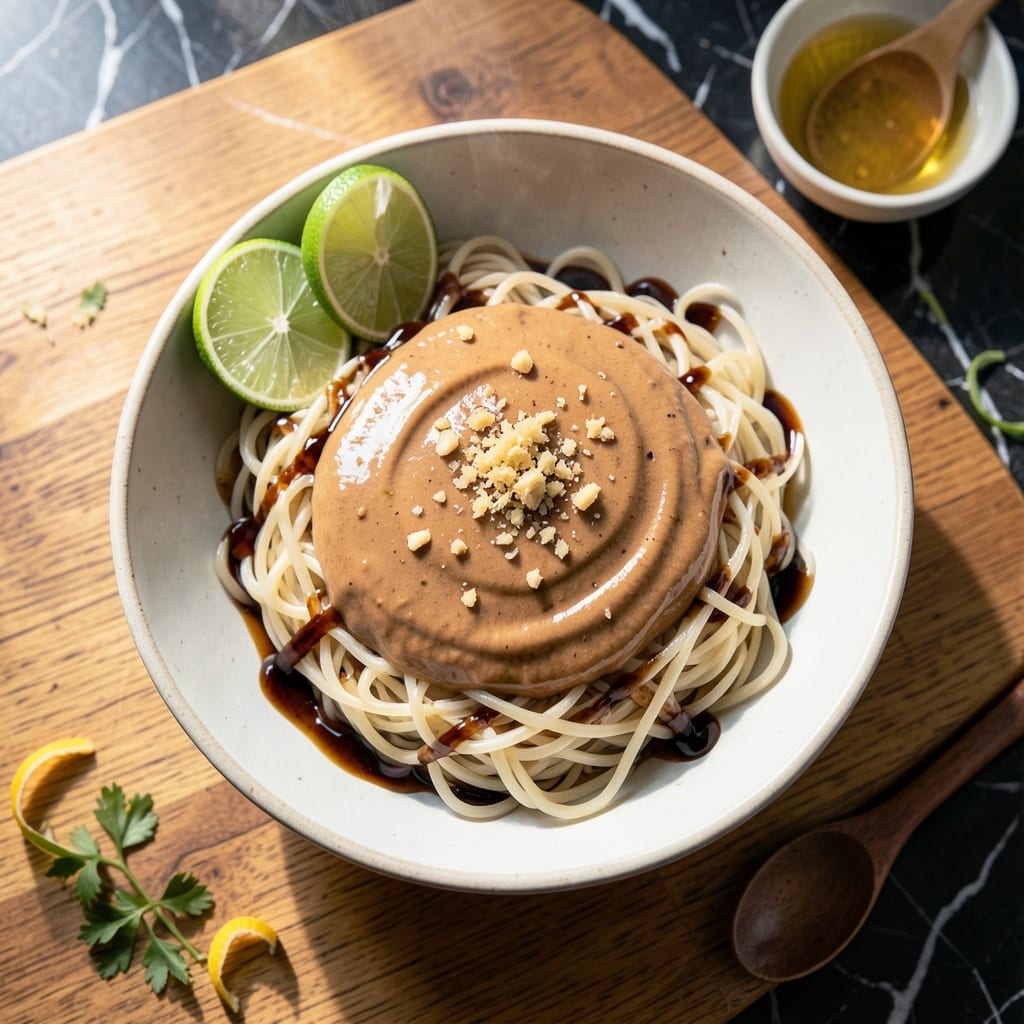
This tangy dressing transforms simple rice noodles into a vibrant, flavor-packed dish. The fusion of lime and peanut creates a balance of bright acidity and rich nuttiness that clings beautifully to every strand.
What makes this sauce special is its simplicity. With just a handful of pantry staples—fresh lime juice, creamy peanut butter, soy sauce, and a touch of sweetness—you’ll achieve a depth of flavor that’s anything but ordinary.
The result is a smooth, versatile dressing that works as both a marinade and a finishing touch. It’s bold enough to stand out yet balanced enough to complement, not overpower, your salad.
Ready in 5 minutes, this dressing keeps well for days, making it ideal for meal prep or last-minute dishes.
Ingredients for Rice Noodle Salad Dressing
A handful of pantry staples creates this bold, tangy dressing for rice noodles.
| Ingredient | Amount | Notes |
|---|---|---|
| Creamy Peanut Butter 🥜 | ½ cup | Unsweetened, natural variety preferred |
| Fresh Lime Juice 🍋 | ⅓ cup | About 3-4 limes, freshly squeezed |
| Soy Sauce 🫒 | 3 tbsp | Low-sodium or tamari for gluten-free |
| Maple Syrup 🍁 | 2 tbsp | Or agave nectar for similar sweetness |
| Rice Vinegar 💧 | 1 tbsp | Adds brightness to balance flavors |
| Sesame Oil 🫒 | 1 tsp | Toasted for nutty depth |
| Garlic Cloves 🧄 | 2 cloves | Minced for even distribution |
| Fresh Ginger 🌿 | 1 tsp | Grated for zesty kick |
| Red Pepper Flakes 🌶️ | ¼ tsp | Adjust for desired heat level |
| Water 💧 | ¼ cup | To thin dressing as needed |
The peanut butter is the foundation here—natural, unsweetened is ideal. I grab mine from Whole Foods bulk section or Trader Joe’s for the creamiest texture. Limes should be fresh (those plastic bottles won’t cut it). Look for vibrant green ones that feel heavy for their size. Soy sauce matters too—low-sodium keeps the salt in check, or tamari if you’re gluten-free.
No maple syrup? Agave or date syrup swaps in perfectly. Missing rice vinegar? Apple cider vinegar at half the amount works in a pinch. Fresh ginger and garlic are worth it—pre-minced from a jar (the kind in water, not oil) saves time. If you’re out of sesame oil, a little extra peanut butter adds richness instead. The water is flexible—add more for a pourable dressing.
This keeps beautifully in the fridge for up to 5 days. The flavors actually deepen overnight, so make it ahead. Freezing isn’t ideal—the textures separate. Just give it a good stir before using. Glass jar is best for storage (don’t ask me how many I’ve broken).
Why You’ll Love This Recipe
- 5-Minute Magic: I just whisk the peanut butter, lime juice, soy sauce, maple syrup, and rice vinegar together—no cooking, no fuss.
- Sweet-Savory Balance: The maple syrup and peanut butter create this rich, creamy base that the lime and rice vinegar cut through beautifully.
- Meal Prep MVP: I make a big batch on Sunday and it keeps perfectly all week for quick noodle bowls or dipping.
- Pantry Superhero: Honestly, I always have these ingredients on hand, so it’s my go-to when I need a flavor boost fast.
Step-by-Step Instructions for Rice Noodle Salad Dressing
Here’s the method. Straightforward, tested, works every time.
Step 1: Bloom the Aromatics in Sesame Oil
Heat a small saucepan over medium-low heat. Add the 1 tsp sesame oil, then immediately add the 2 cloves garlic cloves (minced) and 1 tsp fresh ginger (grated). Sauté for 45-60 seconds until fragrant but not browned.
This step releases the essential oils in the garlic and ginger, creating a flavor base that permeates the entire dressing. Watch carefully—the garlic can burn quickly and become bitter if left too long. You want it just golden at the edges, not dark brown.
Step 2: Whisk in the Nutty and Acidic Base
Remove the pan from heat and let it cool for 1 minute. Add the 0.5 cup creamy peanut butter and stir until it begins to melt and combine with the aromatics. The residual heat will soften the peanut butter, making it easier to incorporate.
Next, whisk in the 0.33 cup fresh lime juice and 1 tbsp rice vinegar. The acidity will cut through the richness of the peanut butter, creating a balanced foundation. The mixture will thicken slightly as the peanut butter emulsifies with the liquid.
Step 3: Incorporate the Seasonings and Sweeteners
Return the pan to low heat and add the 3 tbsp soy sauce and 2 tbsp maple syrup. Whisk constantly for 1-2 minutes until the dressing is smooth and all ingredients are fully integrated. The soy sauce adds umami depth, while the maple syrup balances the acidity with natural sweetness.
At this point, the dressing should be thick and glossy. If it appears too stiff, don’t worry—the next step will adjust the consistency.
Step 4: Thin to Desired Consistency and Add Heat
Remove the pan from heat and let the dressing cool slightly. Gradually whisk in the 0.25 cup water, 1 tablespoon at a time, until the dressing reaches your preferred thickness. I like mine to coat the back of a spoon but still drizzle easily.
Finally, stir in the 0.25 tsp red pepper flakes. This adds a subtle warmth that complements the tangy and nutty flavors. Taste and adjust the seasoning if needed, though the soy sauce and lime juice typically provide enough salt and acidity.
Pro Tips For Making Rice Noodle Salad Dressing
- Warm the Peanut Butter: Microwave the peanut butter for 10-15 seconds before mixing—it blends smoother with the lime juice and soy sauce, and you won’t be left with stubborn clumps at the bottom of the bowl.
- Zest Then Juice: Grate the lime zest directly into the dressing before juicing; the oils in the peel add a brightness that plain juice can’t, and I learned this the hard way after wasting too many limes.
- Skip the Cold Maple: Measure your maple syrup first and let it sit at room temperature while you prep; cold syrup seizes up when it hits peanut butter, turning your dressing into a thick, unworkable paste.
- Whisk Before Tasting: Give the dressing a full 30 seconds of vigorous whisking before adjusting seasoning—peanut butter settles fast, and the first taste might be all vinegar if you don’t mix it thoroughly.
Regional Styles of This Dish
Thai-Inspired Style
For a Thai twist, swap maple syrup for palm sugar and add 1 tbsp fish sauce (or soy sauce for vegan). I also stir in 1 tsp lemongrass paste and a handful of chopped cilantro for freshness. This version pairs perfectly with rice noodles and shredded veggies. 🌿
Vietnamese Variation
Replace peanut butter with hoisin sauce and add 1 tbsp sriracha for heat. Use rice wine vinegar instead of lime juice, and finish with a sprinkle of crushed peanuts. This creates a sweet-spicy dressing that’s a staple in Vietnamese cuisine.
Japanese-Inspired
For a Japanese flair, omit the peanut butter and use 2 tbsp tahini instead. Add 1 tbsp mirin and 1 tsp grated daikon radish for brightness. This lighter version highlights the nutty sesame and umami soy flavors beautifully.
Indonesian Satay Style
Boost the peanut flavor with 2 tbsp crunchy peanut butter and add 1 tsp tamarind paste for tang. A pinch of coriander powder enhances the warmth. This thicker dressing is perfect for drizzling over noodle salads or using as a dip. 🔥
Korean Fusion
Add 1 tbsp gochujang for heat and depth, and replace maple syrup with 1 tbsp honey. A dash of toasted sesame seeds on top adds texture. This fusion style brings a sweet-spicy kick that’s irresistibly bold.
Nutrition Facts
Frequently Asked Questions
Can I make this dressing ahead of time?
It actually tastes better after 24 hours as flavors meld. Store in an airtight container in the fridge for up to 5 days. Stir well before using as it may separate slightly.
What can I use instead of peanut butter?
For nut-free versions, try sunflower seed butter or tahini. Both provide similar creaminess. Almond butter works too, though it adds a slightly different flavor profile.
How do I fix a dressing that’s too thick?
Simply whisk in warm water, 1 tablespoon at a time, until it reaches your desired consistency. The dressing should coat the back of a spoon but still drizzle easily.
Is this dressing gluten-free?
Yes, if you use tamari instead of soy sauce. All other ingredients are naturally gluten-free. Always check labels to be certain.

- Jollof Rice Sauce Recipe: West African Tomato and Spice Infusion - September 25, 2026
- Japanese Rice Soup Recipe: Umami-Rich Comfort in a Bowl - September 25, 2026
- Homemade Cream Of Rice Recipe: Silk-Smooth Breakfast in Minutes - September 25, 2026