
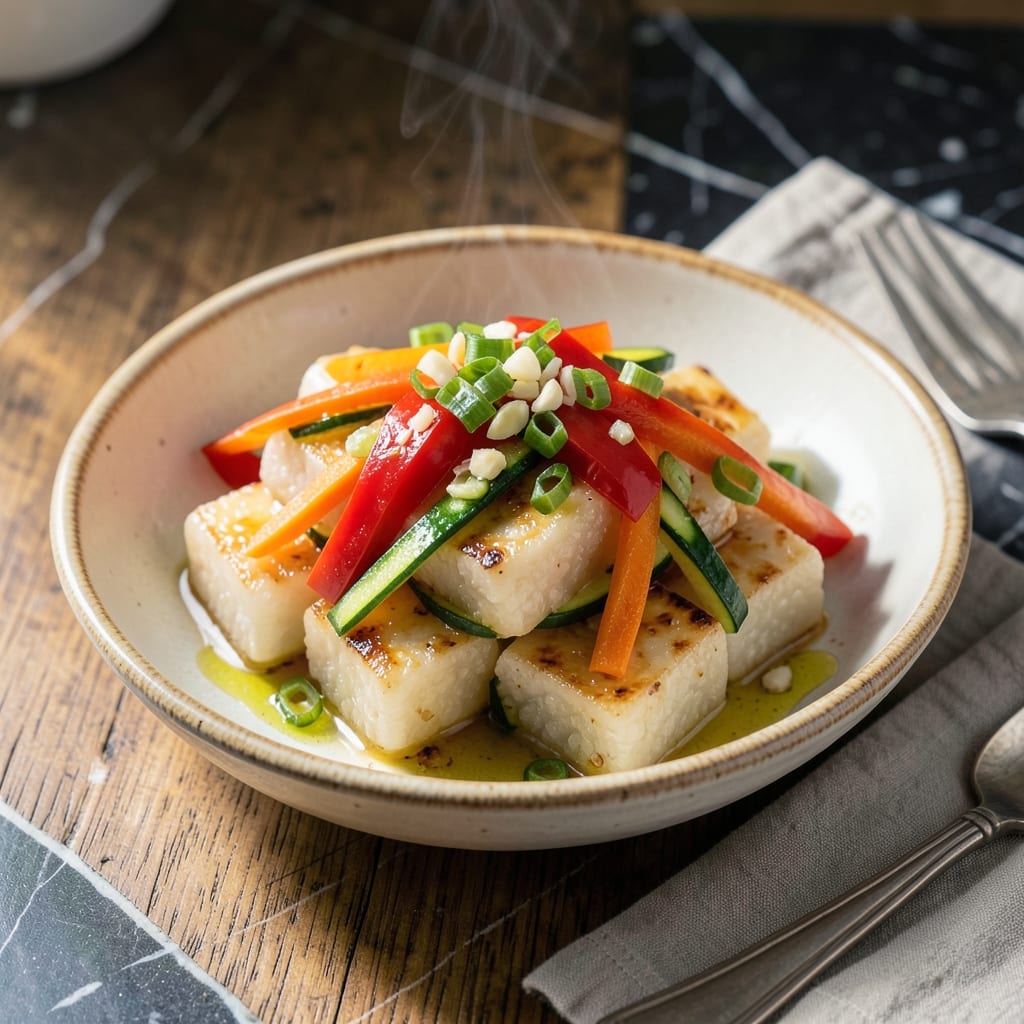
These savory rice cakes with vegetables bring Korean flavors to your table in a light yet satisfying dish.
I developed this recipe to showcase how simple ingredients can create something truly special. The rice cakes absorb the flavors beautifully, while the vegetables add freshness and texture.
This vegan version delivers perfectly tender rice cakes with crisp-tender vegetables in every bite. The dish comes together quickly with minimal effort.
The result is a balanced, flavorful meal that works as a main course or side dish. Here’s how to make these Korean-inspired bites.
Ingredients for Rice Cake with Vegetables
Fresh vegetables and chewy rice cakes soak up bold Korean-inspired flavors beautifully.
| Ingredient | Amount | Notes |
|---|---|---|
| Korean Rice Cakes 🍙 | 1 lb | Cylindrical, fresh or frozen |
| Carrots 🥕 | 2 whole | Julienned for even cooking |
| Zucchini 🥒 | 1 whole | Thinly sliced into half-moons |
| Red Bell Pepper 🌶️ | 1 whole | Sliced into thin strips |
| Green Onions 🧅 | 4 whole | White and green parts separated |
| Garlic Cloves 🧄 | 3 cloves | Minced for maximum flavor |
| Soy Sauce 🫒 | 3 tbsp | Low-sodium or tamari for gluten-free |
| Sesame Oil 🫒 | 1 tbsp | Toasted for depth of flavor |
| Gochujang 🌶️ | 1 tbsp | Korean red pepper paste |
| Rice Vinegar 💧 | 1 tbsp | Adds bright acidity |
| Brown Sugar 🍚 | 1 tsp | Balances spicy and savory notes |
| Vegetable Broth 🥣 | ¾ cup | Low-sodium preferred |
| Toasted Sesame Seeds 🌰 | 1 tbsp | For garnish and crunch |
| Cornstarch 🌾 | 1 tsp | Optional for thicker sauce |
| Neutral Cooking Oil 🫒 | 1 tbsp | For sautéing vegetables |
The rice cakes are everything here. H Mart or Korean markets carry the best fresh ones—look for cylindrical shapes, not the flat disks. Frozen works too (thaw first). For soy sauce, Kikkoman low-sodium or tamari if gluten is a concern. The gochujang adds depth—Sempio or CJ brands are reliable. I always grab extra from H Mart when I’m restocking Asian pantry staples.
No gochujang? Miso paste plus sriracha gets you close—use 1 tbsp each. Missing rice vinegar? Apple cider vinegar at half the amount. Want more heat? Add extra gochujang or red pepper flakes. The vegetables are flexible—mushrooms, cabbage, or spinach work great. Just keep the cuts uniform so everything cooks evenly.
Rice cakes keep in the fridge for 1 week if unopened, or freeze for 3 months. Once cooked, leftovers stay fresh for 3-4 days. Reheat gently with a splash of water to prevent drying out. The sauce thickens as it cools, so thin with broth if needed.
Why You’ll Love This Recipe
- One Pot Meal: I toss everything—the chewy rice cakes, crisp carrots, and sweet bell peppers—into one pan. Minimal cleanup, maximum flavor.
- Sweet and Savory: The rice cakes soak up the sauce while the veggies add a fresh crunch. Honestly, it’s the perfect balance of textures.
- Meal Prep Hero: I make a big batch on Sunday and it reheats beautifully for lunches all week. (Yes, even on a Tuesday night)
- Budget Friendly: A bag of rice cakes and seasonal veggies stretch far. I’ll be real: it’s filling without breaking the bank.
Step-by-Step Instructions for Rice Cake With Vegetables
Master the technique for perfectly chewy rice cakes and vibrant vegetables in a savory Korean-inspired dish.
Step 1: Prepare and Soak the Korean Rice Cakes
If using frozen Korean rice cakes, thaw them in cold water for 15-20 minutes. Drain and rinse under cold water to remove excess starch, which prevents them from clumping together during cooking. For fresh rice cakes, simply rinse them briefly.
Transfer the rice cakes to a bowl of cold water and let them soak while you prepare the vegetables. This step ensures they cook evenly and develop the ideal chewy texture. You’ll notice they plump up slightly as they absorb water.
Step 2: Sauté Aromatics and Vegetables
Heat the 1 tbsp neutral cooking oil in a large skillet or wok over medium-high heat. Add the minced 3 cloves garlic cloves and sauté for 30 seconds until fragrant but not browned. Immediately add the julienned 2 whole carrots, thinly sliced 1 whole zucchini, and sliced 1 whole red bell pepper.
Stir-fry the vegetables for 4-5 minutes until they begin to soften but still retain a slight crispness. The carrots should be just tender, and the zucchini should have a vibrant green color. Push the vegetables to one side of the pan to make room for the rice cakes.
Step 3: Cook the Rice Cakes and Build the Sauce
Drain the rice cakes and add them to the skillet. Pour in the 0.75 cup vegetable broth, 3 tbsp soy sauce, 1 tbsp gochujang, 1 tbsp rice vinegar, and 1 tsp brown sugar. Stir everything together to combine, ensuring the rice cakes are well coated.
Cook over medium heat for 5-7 minutes, stirring occasionally, until the rice cakes are tender and have absorbed most of the liquid. If using the 1 tsp cornstarch, mix it with a small amount of cold water to create a slurry and stir it into the skillet. Cook for an additional 1-2 minutes until the sauce thickens slightly.
Step 4: Finish with Sesame Oil and Garnish
Remove the skillet from heat and drizzle the 1 tbsp sesame oil over the rice cakes and vegetables. Stir gently to incorporate, allowing the nutty aroma of the sesame oil to infuse the dish. Taste and adjust seasoning if needed, though the combination of soy sauce, gochujang, and brown sugar should provide a balanced flavor.
Transfer to a serving dish and garnish with the white and green parts of the 4 whole green onions and the 1 tbsp toasted sesame seeds. The green onions add a fresh, sharp contrast, while the sesame seeds contribute a delightful crunch. Serve immediately while the rice cakes are at their chewiest.
Pro Tips For Making Rice Cake With Vegetables
- Soak the Rice Cakes: I learned this the hard way—dry rice cakes turn gummy. Give them a 10-minute soak in warm water before cooking to guarantee a tender, chewy texture.
- Cut Veggies Thin: After burning three batches, I finally figured out that paper-thin slices of carrots, zucchini, and bell pepper cook evenly and absorb the sauce better.
- Skip Overcrowding: Resist the urge to dump all the rice cakes and veggies in at once—cook in batches so they sear instead of steam.
- Use High Heat: High heat. Seriously, crank it up. This is the only way to get those beautiful charred edges on the rice cakes without turning them mushy.
Dietary Considerations for These Flavors
Vegan and Vegetarian
This dish is naturally 100% plant-based, making it perfect for vegan and vegetarian diets. The combination of rice cakes and vegetables provides a satisfying texture without any animal products. I love how the chewy rice cakes mimic the mouthfeel of meat.
Gluten-Free Option
To make this gluten-free, simply swap the soy sauce for tamari or a certified gluten-free soy sauce. All other ingredients, including the rice cakes, are naturally gluten-free. San-J Tamari is my go-to brand for reliable quality.
Low-Sodium Adaptation
For those watching their sodium intake, use low-sodium soy sauce and reduce the amount to 2 tbsp. You can boost flavor with extra garlic, green onions, or a dash of rice vinegar instead. The gochujang adds depth without much sodium.
Allergen Information
This recipe is free from common allergens like dairy, eggs, and nuts. However, always check your soy sauce and gochujang labels for potential cross-contamination. H Mart brands typically have clear allergen labeling. 💡
Nut-Free and Soy-Free
For a soy-free version, replace soy sauce with coconut aminos. The recipe remains nut-free as written. Coconut aminos provide a similar umami depth without soy or nuts.
Meal Prep Friendly
This dish keeps well in the fridge for 3-4 days, making it ideal for meal prep. The flavors actually deepen as it sits, and the rice cakes maintain their texture when reheated gently with a splash of water. 💛
Nutrition Facts
Frequently Asked Questions
Can I use frozen rice cakes?
Yes! Thaw them in cold water for 15-20 minutes first. This removes excess starch and prevents clumping during cooking.
How do I make it less spicy?
Reduce or omit the 1 tbsp gochujang. For mild heat, use just 1 tsp or replace it with 1 tbsp miso paste instead.
What if my rice cakes are too chewy?
Soak them in warm water for 10 minutes before cooking. This softens them faster. Avoid overcooking, as they toughen if left too long.
Can I add other vegetables?
Try mushrooms, spinach, or cabbage. Cut them uniformly for even cooking and add delicate greens last.

- Jollof Rice Sauce Recipe: West African Tomato and Spice Infusion - September 25, 2026
- Japanese Rice Soup Recipe: Umami-Rich Comfort in a Bowl - September 25, 2026
- Homemade Cream Of Rice Recipe: Silk-Smooth Breakfast in Minutes - September 25, 2026