
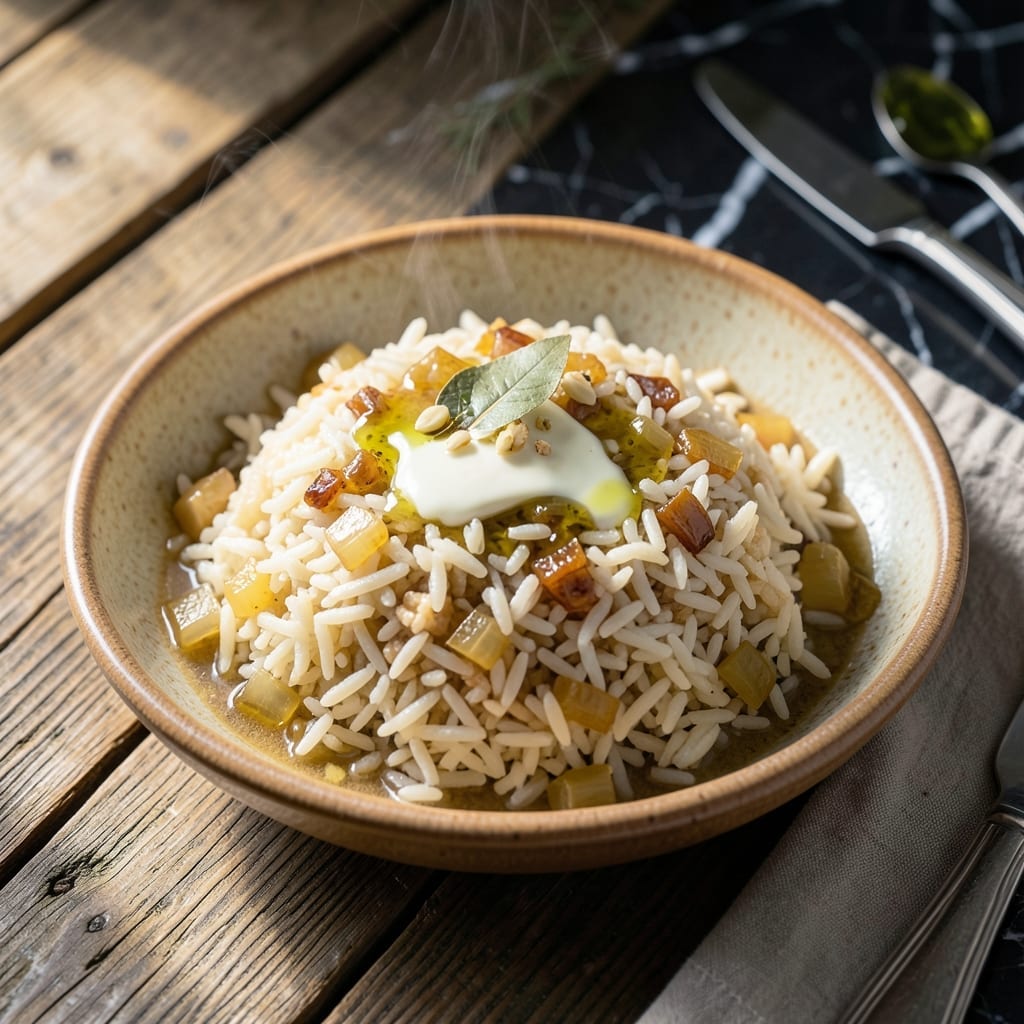
This rice pilaf recipe transforms simple ingredients into a dish with rich depth and aromatic complexity. The chicken broth infuses every grain with savory flavor, while a gentle toasting step enhances the rice’s natural nuttiness.
The technique is straightforward yet precise: sauté onions and rice, toast until fragrant, then simmer in broth until tender. This method ensures fluffy, separate grains with no mushy texture.
What sets this apart is the balance of simplicity and sophistication. The broth adds a subtle richness, while a touch of butter or oil rounds out the flavors.
Perfect as a side or light main, this dish proves that elegant results don’t require complicated steps. The aroma alone will draw everyone to the table.
Ingredients for Rice Pilaf Recipe with Chicken Broth
Elevated yet approachable ingredients create fragrant, fluffy grains with depth in every bite.
| Ingredient | Amount | Notes |
|---|---|---|
| Long-Grain White Rice 🍚 | 1 ½ cups | Rinsed until water runs clear |
| Low-Sodium Chicken Broth 🥣 | 3 cups | Divided for toasting and simmering |
| Yellow Onion 🧅 | 1 whole | Finely diced for even distribution |
| Unsalted Butter 🧈 | 2 tbsp | Or substitute olive oil |
| Garlic Cloves 🧄 | 2 cloves | Minced for aromatic base |
| Bay Leaf 🍃 | 1 whole | Removed before serving |
| Dried Thyme 🌿 | ½ tsp | Crushed between fingers |
| Kosher Salt 🧂 | 1 tsp | Adjust to taste at end |
| Ground Black Pepper 🌶️ | ½ tsp | Freshly ground preferred |
| Fresh Parsley 🌿 | 2 tbsp | Chopped for garnish |
| Lemon Zest 🍋 | 1 tsp | Optional for brightness |
| Olive Oil 🫒 | 1 tbsp | For toasting rice grains |
The rice quality is paramount for optimal texture. Basmatis or jasmine deliver the ideal separate, fluffy grains this dish demands. Whole Foods carries excellent bulk options, but any reputable grocery store’s house brand works for a standard preparation. The chicken broth should be low-sodium to allow precise seasoning control—Swanson or Imagine brands are consistent choices.
No chicken broth on hand? Vegetable broth with a pinch of poultry seasoning approximates the flavor. For a richer result, homemade stock is ideal but not required. The butter can be swapped for olive oil or ghee without textural impact. Fresh thyme at one-third the amount works if you’re using dried—just strip the leaves from the stems first.
Store uncooked rice in an airtight container in a cool, dark place for up to 1 year. Leftover pilaf keeps well in the refrigerator for 4-5 days and reheats beautifully with a splash of broth to restore moisture. The flavors actually deepen overnight, making this even better as leftovers.
Why You’ll Love This Recipe
- One Pot Wonder: I love that everything cooks in a single pot—just sauté the onion and garlic in butter, add rice and broth, then walk away.
- Rich & Toasty: The chicken broth and butter give the rice a deep, savory flavor that plain water just can’t match.
- Weeknight Hero: It pairs with literally anything—grilled chicken, roasted veggies, or even a fried egg on top for a quick dinner.
- Budget Stretcher: Long-grain rice and broth are cheap staples, and this makes enough for leftovers that reheat beautifully.
Step-by-Step Instructions for Rice Pilaf With Chicken Broth
This method ensures perfectly fluffy grains with rich, savory depth in every bite.
Step 1: Toast the Rice for Nutty Flavor
Heat the 1 tablespoon olive oil and 2 tablespoons unsalted butter in a heavy-bottomed pot over medium heat. When the butter melts and starts to foam, add the 1.5 cups long-grain white rice that you’ve already rinsed until the water runs clear.
Stir constantly for 2-3 minutes until the rice turns translucent at the edges and emits a subtle nutty aroma. This toasting step creates a flavor foundation that prevents the dish from tasting flat. Watch carefully to avoid burning—the rice should be fragrant, not browned.
Step 2: Build the Aromatic Base
Add the finely diced yellow onion to the pot with the toasted rice. Cook for 4-5 minutes until the onion becomes translucent and begins to soften, stirring frequently to prevent sticking.
Stir in the 2 minced garlic cloves, 0.5 teaspoon dried thyme (crushed between your fingers to release its oils), 1 whole bay leaf, 1 teaspoon kosher salt, and 0.5 teaspoon ground black pepper. Cook for 1 minute until the garlic is fragrant but not browned—this prevents bitterness.
Step 3: Simmer in Chicken Broth to Perfection
Pour in 3 cups low-sodium chicken broth and stir to combine, scraping up any browned bits from the bottom of the pot. Increase heat to high until the liquid reaches a rolling boil.
Once boiling, reduce heat to low, cover the pot with a tight-fitting lid, and simmer for 15-18 minutes. Resist the urge to peek—steam is critical for even cooking. You’ll know it’s done when all liquid is absorbed and the rice is tender with no chalky center.
Step 4: Rest and Finish for Optimal Texture
Remove the pot from heat and let it sit covered for 10 minutes. This rest period allows the grains to steam and separate, preventing a dense, sticky texture.
Discard the bay leaf, then fluff the rice gently with a fork. Stir in the 1 teaspoon lemon zest (if using) for a bright finish. Taste and adjust seasoning with additional kosher salt if needed—chicken broth varies in saltiness by brand.
Step 5: Garnish and Serve
Transfer the pilaf to a serving dish and sprinkle with the 2 tablespoons chopped fresh parsley. The parsley adds a fresh contrast to the rich, savory rice.
Serve immediately while hot. The grains should be distinct and fluffy, with a subtle sheen from the butter. Each bite should deliver the fragrant aroma of toasted rice and herbs with the deep, savory notes of chicken broth.
Pro Tips For Making Rice Pilaf Recipe With Chicken Broth
- Toast the Rice: Sauté the rice in butter for 2-3 minutes until lightly golden—I learned this the hard way when my pilaf turned out mushy because I skipped this step.
- Use Hot Broth: Pour in chicken broth that’s already simmering, not cold, to keep the cooking temperature steady and prevent gummy rice.
- Skip the Stirring: Once the broth is added, resist the urge to stir—this breaks the rice grains and turns your pilaf into a starchy mess.
- Rest Before Serving: Let it sit covered for 5-10 minutes off the heat; my grandmother swore by this, and she was right—the grains firm up perfectly.
Make-Ahead Tips for This Recipe
Prep Ahead Steps
You can rinse and measure the 1.5 cups long-grain white rice up to 24 hours in advance. Store it in a bowl of cold water in the fridge to prevent drying. Drain and rinse again before cooking. 💡
Chop Vegetables Early
The yellow onion and 2 garlic cloves can be finely diced and minced respectively, then kept in separate airtight containers in the fridge for up to 2 days. This saves precious time on cooking day.
Broth Prep Tip
Measure out the 3 cups low-sodium chicken broth the night before and store it in the fridge. If using homemade stock, skim off any fat that solidifies on top. Cold broth takes slightly longer to reach a boil, so factor in 2-3 extra minutes.
Partial Cook Method
Toast the rice and build the aromatic base, then let the mixture cool completely before refrigerating. The next day, add the broth and simmer as usual. The flavors will be even more developed.
Make Full Batch
This dish reheats beautifully. Make a double batch and store half in the freezer for up to 3 months. Thaw overnight in the fridge before reheating with a splash of broth. ❄️
Day-Of Assembly
If prepping components separately, combine everything in the pot and add the broth. Bring to a boil, then reduce to a simmer. The total cooking time remains 15-18 minutes for perfect results.
Nutrition Facts
Frequently Asked Questions
Why do I need to toast the rice first?
Toasting enhances the natural nutty flavor and prevents a bland taste. It creates a flavor foundation that makes every bite more aromatic and delicious.
Can I use brown rice instead of white?
Yes, but adjust the broth to 3.5 cups and simmer for 40-45 minutes. Brown rice needs more liquid and time to soften properly.
How do I fix mushy pilaf?
Prevent mush by using the correct rice-to-liquid ratio and letting it rest covered for 10 minutes after cooking. Never stir while cooking.
What if my broth is too salty?
Use low-sodium broth or dilute regular broth with water. Taste before adding extra salt at the end to avoid over-seasoning.

- Jollof Rice Sauce Recipe: West African Tomato and Spice Infusion - September 25, 2026
- Japanese Rice Soup Recipe: Umami-Rich Comfort in a Bowl - September 25, 2026
- Homemade Cream Of Rice Recipe: Silk-Smooth Breakfast in Minutes - September 25, 2026