
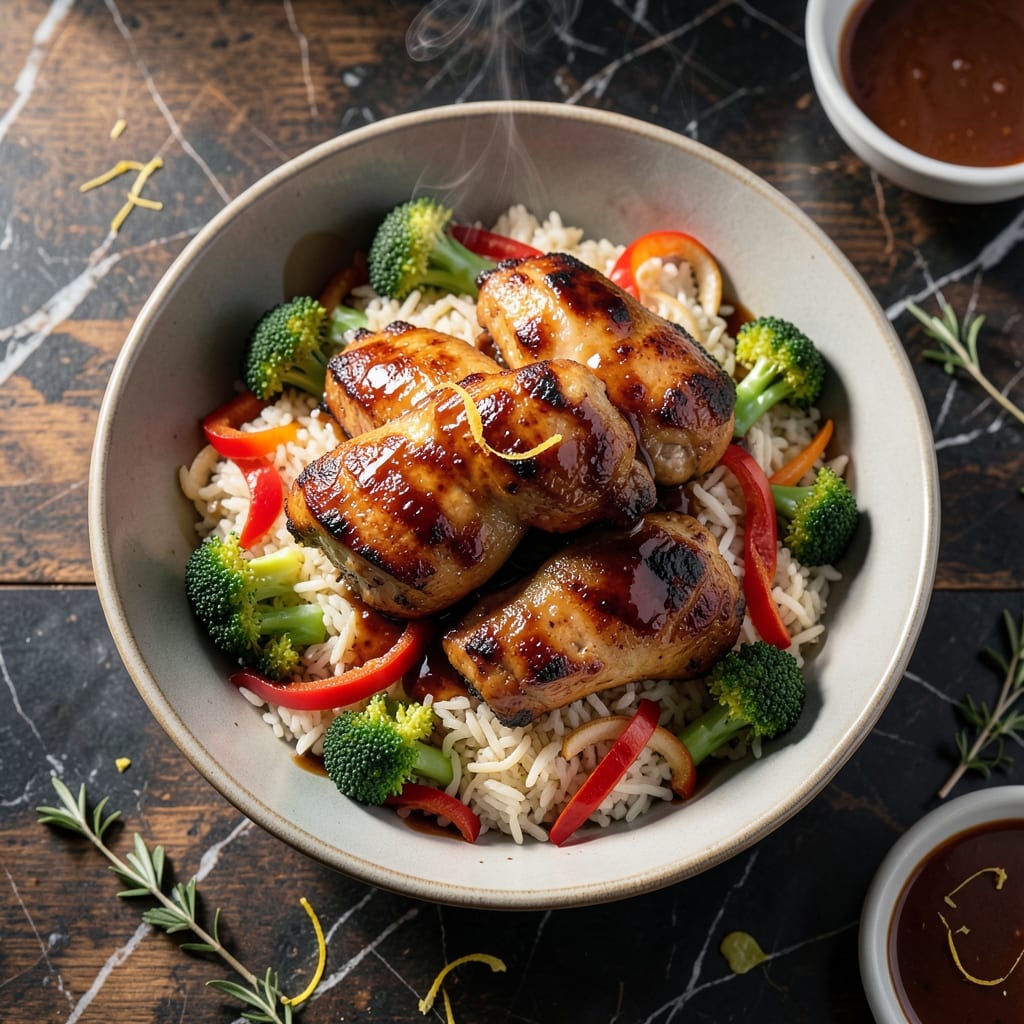
This dish captures the essence of restaurant-quality Asian fusion in your own kitchen. I’ve spent years perfecting a restaurant-style teriyaki chicken that delivers the same bold, savory-sweet flavors found in top-tier eateries.
The key lies in the balance of ingredients—tender chicken, sticky teriyaki glaze, and perfectly steamed rice. Each component is simple yet precisely executed to ensure layers of flavor in every bite.
What sets this bowl apart is the attention to detail, from marinating the chicken to achieving that signature glossy finish. It’s a dish that feels indulgent but comes together with straightforward techniques.
Serve it with fresh vegetables and a sprinkle of sesame seeds for a meal that’s as visually impressive as it is delicious.
Ingredients for Cactus Club Teriyaki Chicken Rice Bowl
Restaurant-quality Asian fusion starts with these carefully balanced ingredients in your own kitchen.
| Ingredient | Amount | Notes |
|---|---|---|
| Boneless Skinless Chicken Thighs 🍗 | 1 ½ lb | Cut into bite-sized pieces |
| Jasmine Rice 🍚 | 2 cups | Uncooked, rinsed thoroughly |
| Soy Sauce 🫒 | ½ cup | Low-sodium preferred for balance |
| Mirin 🍶 | ¼ cup | Sweet rice wine, essential for glaze |
| Brown Sugar 🍚 | ¼ cup | Packed, for caramelized depth |
| Fresh Ginger 🌿 | 1 tbsp | Minced fine, no fibers |
| Garlic Cloves 🧄 | 3 cloves | Minced to paste consistency |
| Cornstarch 🌾 | 1 tbsp | For thickening the glaze |
| Sesame Oil 🫒 | 1 tbsp | Toasted, for aromatic finish |
| Broccoli Florets 🥦 | 2 cups | Fresh or frozen, blanched |
| Carrots 🥕 | 1 whole | Julienned for texture contrast |
| Green Onions 🧅 | ½ cup | Thinly sliced for garnish |
| Sesame Seeds 🌰 | 1 tbsp | Toasted for nutty aroma |
| Neutral Oil 🫒 | 2 tbsp | For high-heat cooking |
| Water 💧 | ¼ cup | For cornstarch slurry |
The chicken is the foundation—boneless skinless thighs stay juicier than breasts through the high-heat cooking. Costco has great pre-cut options if you’re short on time, but any grocery store works. For the rice, jasmine is non-negotiable—its floral aroma is key to that restaurant-style base. Mirin is worth hunting down at Asian markets or the international aisle (look for Hon-Mirin, not aji-mirin which has added sugar).
No mirin? Dry sherry plus a pinch of sugar works in a pinch. Brown sugar can be swapped for honey or maple syrup, but the molasses notes in brown sugar really complete the glaze. For vegetables, snap peas or bell peppers add great color and crunch. The cornstarch slurry is essential—don’t skip it if you want that glossy, clingy sauce we all love (mix it with cold water right before using).
The glaze keeps for 5 days in the fridge—perfect for doubling the batch. Cooked chicken and rice hold well for 3-4 days, but the veggies are best fresh. Toast sesame seeds in a dry pan for 30 seconds (they burn fast) and store in a cool, dark place for up to 3 months.
Why You’ll Love This Recipe
- One Pan Meal: I toss the chicken and sauce together while the rice cooks—no extra pots, no stress.
- Sweet-Savory Glaze: The mirin and brown sugar caramelize into this sticky, finger-licking coating on the thighs.
- Meal Prep Hero: I make a double batch on Sunday and it reheats beautifully for lunches all week.
- Budget Stretcher: Boneless thighs are cheap, jasmine rice is a steal, and it still feels like a restaurant meal.
Step-by-Step Instructions for Teriyaki Chicken Rice Bowl
Here’s the method to recreate that signature restaurant experience right in your kitchen.
Step 1: Cook the Rice and Prep Vegetables
Rinse the 2 cups jasmine rice thoroughly under cold water until the water runs clear. This removes excess starch and prevents gummy rice. Cook it according to package instructions—you want fluffy, separate grains that soak up the teriyaki sauce beautifully.
While the rice cooks, julienne the 1 whole carrots into thin matchsticks and blanch the 2 cups broccoli florets in boiling water for 1 minute to brighten their color and soften slightly. Drain and shock in ice water to stop cooking. Thinly slice the 0.5 cup green onions for garnish later.
Step 2: Sear and Cook the Chicken
Cut the 1.5 lb boneless skinless chicken thighs into bite-sized pieces. Heat 2 tbsp neutral oil in a large skillet over medium-high heat until shimmering. Add the chicken in a single layer and sear undisturbed for 3-4 minutes until golden brown on the first side.
Flip and cook another 3-4 minutes until the chicken is cooked through and reaches an internal temperature of 165°F. Transfer the chicken to a plate but leave the rendered fat in the skillet—this builds the flavor base for your sauce.
Step 3: Create the Teriyaki Glaze
In the same skillet, add the 1 tbsp fresh ginger and 3 cloves garlic cloves, minced to a paste. Sauté for 30 seconds until fragrant but not browned. Pour in the 0.5 cup soy sauce, 0.25 cup mirin, and 0.25 cup brown sugar, stirring to dissolve the sugar.
Bring the mixture to a simmer and let it reduce for 2-3 minutes. In a small bowl, whisk together the 1 tbsp cornstarch and 0.25 cup water to form a slurry. Slowly drizzle this into the simmering sauce while stirring constantly. The glaze should thicken to a syrupy consistency that coats the back of a spoon.
Step 4: Combine and Finish
Return the cooked chicken to the skillet and toss to coat evenly in the teriyaki glaze. Cook for another 1-2 minutes to allow the flavors to meld and the sauce to cling to every piece. The chicken should be glossy and deeply caramelized.
To assemble, divide the cooked rice among bowls. Top with the teriyaki chicken, then arrange the blanched broccoli and julienned carrots around the edges. Drizzle any remaining sauce from the skillet over the top.
Step 5: Garnish and Serve
Finish each bowl with a drizzle of 1 tbsp sesame oil, a sprinkle of 1 tbsp sesame seeds, and the sliced 0.5 cup green onions. The sesame oil adds a nutty aroma that ties all the flavors together, while the seeds and onions provide freshness and crunch.
Serve immediately while the rice is hot and the chicken is at its glossiest. The contrast of textures—tender chicken, crisp veggies, and fluffy rice—with the sweet-savory glaze is what makes this bowl truly restaurant-worthy.
Pro Tips For Making Cactus Club Teriyaki Chicken Rice Bowl
- Marinate the Thighs: Let the chicken thighs soak in the soy sauce, mirin, and brown sugar mix for at least 30 minutes—I learned this the hard way after my first batch came out bland.
- Rinse the Rice: Wash the jasmine rice until the water runs clear, or your bowl will end up gummy instead of light and fluffy.
- High Heat for Glaze: Crank the heat to medium-high when reducing the teriyaki sauce so it thickens fast without turning into syrup.
- Slice Against Grain: Cut the chicken thighs against the grain after cooking—makes each bite tender instead of chewy.
Essential Equipment for cactus club teriyaki chicken rice bowl
Essential Skillet
A heavy-bottomed 12-inch skillet is non-negotiable for this dish. I use my vintage Lodge cast iron—it distributes heat evenly and develops that perfect sear on the chicken. The rendered fat stays in the pan to build your sauce’s flavor base. 🔥
Rice Cooker
For consistently fluffy jasmine rice, a dedicated rice cooker is my go-to. I trust my Zojirushi model—it handles the 1:1.5 rice-to-water ratio perfectly every time. No more guessing or watching pots boil over.
Chef’s Knife
Invest in a sharp 8-inch chef’s knife for prepping. I swear by my Wüsthof for julienning carrots and slicing chicken into uniform, bite-sized pieces. A dull knife makes this tedious and dangerous.
A good knife makes all the difference in texture and presentation.
Mixing Bowls
Have 3 mixing bowls ready: one for your cornstarch slurry, one for marinating chicken, and one for holding cooked chicken. I prefer stainless steel for durability. Organization prevents cross-contamination.
Microplane Grater
For the finest ginger and garlic, a Microplane is unbeatable. It creates a paste-like consistency that blends seamlessly into your teriyaki glaze. I keep mine dedicated to aromatics only.
This small tool makes a big difference in flavor distribution.
Nutrition Facts
Frequently Asked Questions
Can I use chicken breast instead of thighs?
Yes, but thighs stay juicier. If using breast, reduce cooking time to 3-4 minutes total and add a marinade to prevent dryness. Thighs handle the high heat better.
What can I substitute for mirin?
Use 1/4 cup dry sherry + 1 tsp sugar per 1/4 cup mirin. This mimics the sweetness and acidity. Avoid aji-mirin—it’s already sweetened.
Why is my sauce too thin?
Your slurry may need more time. Simmer the sauce for 1-2 extra minutes after adding it, stirring constantly. Ensure the cornstarch is fully dissolved in cold water first.
How do I store leftovers?
Keep components separate in airtight containers for up to 3-4 days. Reheat chicken gently to avoid drying. The glaze thickens when chilled—thin with a splash of water.

- Jollof Rice Sauce Recipe: West African Tomato and Spice Infusion - September 25, 2026
- Japanese Rice Soup Recipe: Umami-Rich Comfort in a Bowl - September 25, 2026
- Homemade Cream Of Rice Recipe: Silk-Smooth Breakfast in Minutes - September 25, 2026