
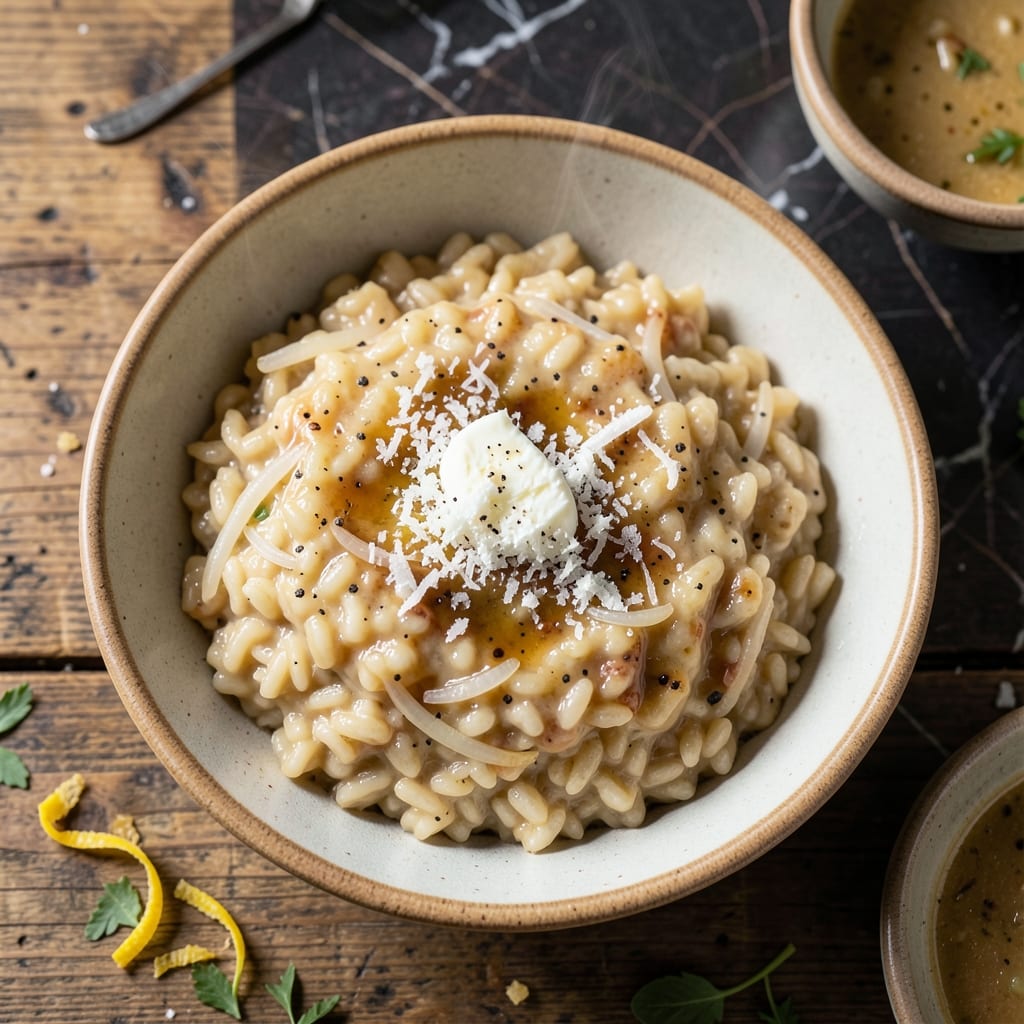
Achieving perfectly creamy risotto doesn’t require constant stirring or culinary expertise. This method delivers restaurant-quality results with a hands-off approach that still builds rich, velvety texture.
The secret lies in a precise ratio of Arborio rice to liquid and controlled heat. By gradually adding warm broth and allowing the rice to absorb it slowly, you create that signature creamy consistency without standing over the stove.
What emerges is a dish with tender yet al dente grains suspended in a silky sauce. The starch released from the rice combines with the broth to form a luxurious base that needs no extra cream.
Serve immediately for the best texture. This technique transforms simple ingredients into something extraordinary.
Ingredients for Risotto Rice
Arborio rice meets warm broth and Parmesan for that signature silky texture without constant stirring.
| Ingredient | Amount | Notes |
|---|---|---|
| Arborio Rice 🌾 | 1 ½ cups | Short-grain for creamy texture |
| Vegetable Broth 🥣 | 6 cups | Warm, low-sodium preferred |
| Dry White Wine 🍷 | ½ cup | Sauvignon Blanc or Pinot Grigio |
| Shallot 🧅 | 1 whole | Finely minced for subtle flavor |
| Garlic Cloves 🧄 | 3 cloves | Minced for aromatic depth |
| Unsalted Butter 🧈 | 3 tbsp | Divided for toasting and finishing |
| Parmesan Cheese 🧀 | ½ cup | Freshly grated for best melt |
| Extra-Virgin Olive Oil 🫒 | 2 tbsp | For sautéing aromatics |
| Kosher Salt 🧂 | 1 tsp | Diamond Crystal preferred |
| Freshly Ground Black Pepper 🌶️ | ½ tsp | Adjust to taste preference |
| Fresh Thyme Sprigs 🌿 | 3 sprigs | Leaves stripped for garnish |
| Lemon Zest 🍋 | 1 tsp | Finely grated for brightness |
The Arborio rice is non-negotiable—short-grain varieties like Carnaroli or Vialone Nano work too but Arborio is widely available at Whole Foods or any well-stocked grocery. Look for plump, chalky grains (avoid broken pieces). The broth makes a difference here: homemade or high-quality low-sodium prevents oversalting. I prefer Imagine or Pacific Foods brands for consistent flavor.
No white wine? Substitute with additional warm broth plus 1 tsp lemon juice. Shallots can be swapped for yellow onion at a 1:1 ratio. For a richer finish, Pecorino Romano works instead of Parmesan. The butter is essential for toasting the rice—don’t replace with oil. If avoiding dairy, use vegan butter but note the flavor will differ slightly.
Cooked risotto waits for no one—serve immediately for optimal creaminess. Leftovers keep 3-4 days refrigerated but will thicken (revive with warm broth). The rice absorbs flavors best when used fresh, so avoid prepping ingredients too far ahead. Freezing is not recommended for this dish.
Why You’ll Love This Recipe
- One-Pot Wonder: I love that I only need a single pot and a wooden spoon—the Arborio soaks up the broth while I stir in the wine and shallots.
- Rich and Creamy: The garlic and white wine build this deep, velvety flavor that feels fancy but tastes like home.
- Dinner Party Hero: I’ve served this at casual weeknights and dinner parties—it’s always the dish everyone asks for seconds of.
- Budget Stretcher: Arborio rice is affordable, and a little goes a long way, especially when I bulk it up with extra veggies or herbs.
Step-by-Step Instructions for Creamy Arborio Risotto
Master the technique that delivers restaurant-quality risotto with rich, velvety texture every time.
Step 1: Toast the Arborio Rice Properly
Heat the 2 tbsp Extra-Virgin Olive Oil and 1 tbsp Unsalted Butter in a heavy-bottomed pot over medium heat. Add the finely minced Shallot and cook for 2-3 minutes until translucent and fragrant.
Stir in the 1.5 cups Arborio Rice and toast for 2 minutes until the edges become slightly translucent. This step develops the nutty base flavor that defines authentic risotto. The grains should look like tiny pearls with a white center when ready.
Step 2: Deglaze with White Wine
Pour in the 0.5 cup Dry White Wine and stir constantly until fully absorbed. The alcohol should cook off completely, leaving behind a subtle acidity that balances the richness. This takes about 2-3 minutes.
Add the minced Garlic Cloves during the last 30 seconds of this step. The wine deglazing lifts all the flavorful browned bits from the bottom of the pot, incorporating them into your dish. You’ll notice the mixture becomes slightly syrupy as the wine reduces.
Step 3: Begin the Broth Addition Process
Add the first ladle of warm Vegetable Broth (about 1 cup) to the pot. Stir frequently but not constantly – the promise of minimal stirring holds true here. Maintain a gentle simmer, adding more broth only when the previous addition is nearly absorbed.
Season with 1 tsp Kosher Salt and 0.5 tsp Freshly Ground Black Pepper during this phase. The rice should always be just barely covered with liquid. This gradual hydration coaxes out the starches that create the signature creamy texture.
Step 4: Complete the Risotto to Perfection
Continue adding the remaining Vegetable Broth in 1-cup increments, stirring occasionally. The process should take 18-22 minutes total from the first broth addition. Test the rice – it should be al dente with a slight bite in the center.
When the rice is nearly done, stir in the remaining 2 tbsp Unsalted Butter and 0.5 cup Parmesan Cheese. The mixture should be creamy but not soupy, with the rice suspended in a rich, velvety sauce. The grains should spread slightly when spooned onto a plate.
Step 5: Finish and Serve Immediately
Remove from heat and stir in the Lemon Zest and the leaves from 3 sprigs Fresh Thyme Sprigs. Let rest for 1-2 minutes – this final moment allows the flavors to meld completely.
Serve immediately while still creamy and warm. The perfect risotto should have a slight flow when spooned, with each grain of rice distinct yet bound together by the luxurious sauce. This is the hallmark of properly executed Arborio risotto.
Pro Tips For Making Risotto Rice
- Toast the Rice: Cook the Arborio in the shallot-garlic oil for 2-3 minutes until the edges look translucent—I learned this the hard way, but it deepens the nutty flavor and prevents a raw center.
- Warm the Broth: Keep your vegetable broth simmering in a separate pot. Cold broth shocks the rice and slows cooking, making the whole process drag.
- Skip the Rinse: Resist the urge to rinse the Arborio—it washes away the starch that gives risotto its creamy texture. I used to do this and wondered why my risotto was always thin.
- Finish with Wine: Deglaze with dry white wine and let it fully evaporate before adding broth. Sounds fussy, but it cuts through the richness and adds a brightness you’ll miss otherwise.
Common Mistakes When Making This Dish
Over-Stirring the Rice
Constant stirring breaks the rice grains, releasing too much starch too soon. This creates a gluey, mushy texture instead of that perfect creamy consistency. I stir just enough to prevent sticking, about every 2-3 minutes. 💡
Using Cold Broth
Adding cold broth shocks the cooking process and interrupts the gradual starch release. Always keep your 6 cups Vegetable Broth warm in a pot on the stove. The temperature consistency is key to even cooking and proper absorption.
Rushing the Process
Risotto can’t be hurried—it needs those 18-22 minutes of gentle cooking to develop its signature texture. If you crank up the heat, you’ll burn the outside while leaving the inside undercooked. Patience truly makes perfect risotto.
Skipping the Toasting Step
Toasting the 1.5 cups Arborio Rice in fat develops a nutty base flavor that’s essential. Skip this, and your dish will taste flat. I watch for those translucent edges that signal the rice is ready for the wine.
Overloading the Pan
Too much rice in your pot prevents even cooking and proper liquid absorption. Use a heavy-bottomed pan that’s wide enough to let the grains spread out. I find a 4-quart saucepan works perfectly for this recipe. ✨
Under-Seasoning
Risotto needs salt to bring out its flavors, but many under-season out of fear. I add my 1 tsp Kosher Salt early in the process, then taste and adjust at the end. The Parmesan adds saltiness too, so balance carefully.
Nutrition Facts
Frequently Asked Questions
Can I use a different rice variety?
Stick with short-grain types like Carnaroli or Vialone Nano for best results. These varieties release starch similarly to Arborio, creating that signature creamy texture. Avoid long-grain rice as it won’t absorb liquid the same way.
Why is my risotto too thick?
This usually means it sat too long after cooking or didn’t get enough liquid. Stir in warm broth, 1/4 cup at a time, until it reaches the desired consistency. Serve immediately for best texture.
How do I know when it’s done?
The rice should be al dente with a slight bite in the center. The mixture will spread slightly when spooned onto a plate, with a creamy but not soupy consistency. Total cooking time is typically 18-22 minutes.
Can I make this ahead of time?
Risotto is best served immediately while still creamy. Leftovers keep 3-4 days refrigerated but will thicken. Revive with warm broth and gentle stirring over low heat.

- Jollof Rice Sauce Recipe: West African Tomato and Spice Infusion - September 25, 2026
- Japanese Rice Soup Recipe: Umami-Rich Comfort in a Bowl - September 25, 2026
- Homemade Cream Of Rice Recipe: Silk-Smooth Breakfast in Minutes - September 25, 2026