
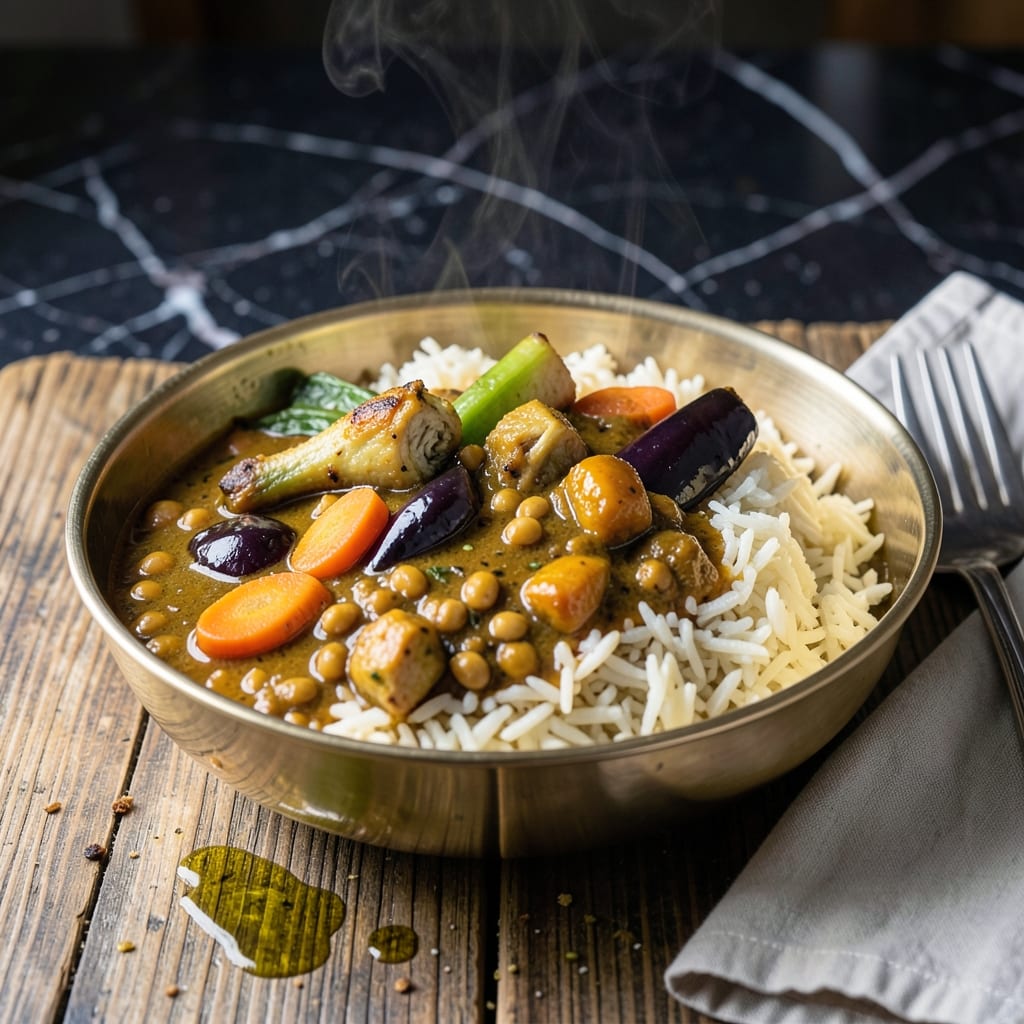
This South Indian classic combines fragrant lentils, fresh vegetables, and a blend of spices to create a dish that’s both hearty and deeply satisfying.
The sambar develops its signature flavor through a slow simmer, allowing the tamarind, spices, and vegetables to meld into a rich, aromatic stew. Meanwhile, perfectly cooked rice serves as the ideal base to soak up every last drop of the flavorful broth.
What makes this recipe special is its balance of textures and tastes—soft lentils, tender vegetables, and a tangy, spiced broth that comes together in every bite. The dish is naturally vegan and packed with protein and fiber.
Serve this comforting meal hot, with a side of crispy papadums or a cooling raita for contrast.
Ingredients for Sambar Rice
Fragrant lentils, fresh vegetables, and warm spices build this comforting South Indian classic.
| Ingredient | Amount | Notes |
|---|---|---|
| Toor Dal 🌱 | 1 cup | Rinsed and drained pigeon pea lentils |
| Basmati Rice 🍚 | 1 ½ cups | Rinsed until water runs clear |
| Tamarind Paste 🍋 | 2 tbsp | Or substitute lemon-sized tamarind pulp |
| Drumsticks 🌿 | 2 whole | Cut into 2-inch pieces |
| Carrot 🥕 | 1 whole | Peeled and cubed |
| Eggplant 🍆 | 1 whole | Cubed into bite-sized pieces |
| Tomato 🍅 | 2 whole | Chopped roughly |
| Onion 🧅 | 1 whole | Finely chopped medium onion |
| Garlic Cloves 🧄 | 4 cloves | Minced for sambar base |
| Green Chili 🌶️ | 2 pieces | Slit lengthwise for heat |
| Mustard Seeds 🌿 | 1 tsp | For tempering the sambar |
| Cumin Seeds 🌿 | 1 tsp | Whole seeds for tempering |
| Turmeric Powder 🌶️ | ½ tsp | Ground turmeric for color |
| Sambar Powder 🌶️ | 2 tbsp | South Indian spice blend |
| Curry Leaves 🍃 | 10 pieces | Fresh leaves for tempering |
| Asafoetida 🌿 | ¼ tsp | Hing, pinch for tempering |
| Coconut Oil 🥥 | 2 tbsp | For tempering the spices |
| Salt 🧂 | 1 ½ tsp | Adjust to taste preference |
| Fresh Cilantro 🌿 | ¼ cup | Chopped for garnish |
The toor dal is non-negotiable for authentic flavor and texture. Indian grocery stores or Patel Brothers carry it—look for whole, unbroken lentils with a pale orange hue. Fresh drumsticks (moringa pods) add a unique earthy note, but okra or green beans work if you can’t find them. The sambar powder is the soul of this dish—MDH or MTR brands are reliable. For tamarind, paste is easier than dealing with pulp.
Out of drumsticks? Zucchini or pumpkin hold up well to the long simmer. No sambar powder? Mix corriander powder, cumin powder, and red chili powder in equal parts as a substitute. Fresh curry leaves are ideal, but dried work at half the amount. The coconut oil can be swapped for vegetable oil, but it won’t have the same aromatic depth. Always taste before adding salt—tamarind is naturally tangy.
The sambar keeps well in the fridge for up to 4 days and actually tastes better the next day. Freeze portions for up to 3 months. Reheat gently to preserve the vegetables’ texture. Cook extra rice—this dish is even more delicious with leftovers for lunch the following day.
Why You’ll Love This Recipe
- One Pot Meal: I love how the toor dal and rice cook together, so I’m not stuck washing multiple pots.
- Tangy Comfort: That tamarind paste with drumsticks and carrots gives it a sour-savory kick I crave every time.
- Lunchbox Hero: Honestly, it’s my go-to for packing leftovers—still tastes amazing the next day.
- Budget Stretch: A handful of dal, some veggies, and rice feeds my family for pennies. Here’s what sold me—it never feels cheap.
Step-by-Step Instructions for Sambar Rice
Master this traditional method for perfectly balanced flavors and textures in every serving.
Step 1: Cook the Toor Dal and Vegetables
In a pressure cooker, combine the 1 cup Toor Dal, 2 whole Drumsticks, 1 whole Carrot, and 1 whole Eggplant with 4 cups water. Add 0.5 tsp Turmeric Powder and 1 tsp Salt.
Cook for 4-5 whistles until the dal is soft and the vegetables are tender. The dal should mash easily between your fingers, and the drumsticks should be fork-tender.
Step 2: Prepare the Sambar Base
In a separate pot, heat 2 tbsp Coconut Oil over medium heat. Add 1 tsp Mustard Seeds and let them sputter. Then add 1 tsp Cumin Seeds, 10 pieces Curry Leaves, 0.25 tsp Asafoetida, 2 pieces Green Chili, and 4 cloves Garlic Cloves.
Sauté for 30-45 seconds until the mustard seeds finish popping and the curry leaves become aromatic. Stir in 1 whole Onion and cook until translucent and lightly golden.
Step 3: Combine and Simmer the Sambar
Add the 2 whole Tomato, 2 tbsp Sambar Powder, and 2 tbsp Tamarind Paste to the tempering. Cook for 3-4 minutes until the tomatoes soften and the raw smell of tamarind disappears.
Pour in the cooked dal and vegetables, then add the remaining 0.5 tsp Salt. Simmer for 8-10 minutes on low heat until the flavors meld and the sambar reaches a medium-thick consistency.
Step 4: Cook the Basmati Rice and Serve
Rinse the 1.5 cups Basmati Rice until the water runs clear. Cook with 3 cups water and a pinch of salt in a separate pot until the rice is fluffy and the water is fully absorbed, about 12-15 minutes.
Serve the hot sambar over a bed of steamed rice. Garnish with 0.25 cup Fresh Cilantro for a fresh finish. The sambar should coat the rice lightly, with each bite offering a mix of tender dal, spiced vegetables, and fragrant rice.
Pro Tips For Making Sambar Rice
- Soak the Toor Dal: I learned this the hard way—soaking the toor dal for at least 30 minutes cuts cooking time in half and prevents that dreaded gritty texture.
- Balance Tamarind Early: Add tamarind paste in small increments and taste as you go; too much too soon can make the sambar unpleasantly sour, and you can’t take it out once it’s in.
- Cook Drumsticks First: Drumsticks take longer to soften than carrots, so add them 5-7 minutes before the carrots to guarantee everything finishes at the same time.
- Use Leftover Rice: Sounds weird, but it works: day-old basmati rice holds its shape better in sambar rice, so cook extra rice the night before if you can.
Troubleshooting sambar rice
Sambar Too Thin
If your sambar is watery after simmering, cook it uncovered on medium-low heat for an additional 5-7 minutes. Stir frequently to prevent sticking. I also mash some lentils against the pot’s side to thicken naturally. 💡
Sambar Too Thick
Thin it with ½ cup hot water at a time until reaching your desired consistency. Remember that sambar thickens as it cools, so err slightly thinner during cooking. Stir well after each addition.
Bland Flavor
Boost flavor by adding 1 tsp Sambar Powder or ½ tsp Salt, then simmer for another 3-4 minutes. A pinch of Asafoetida or a squeeze of lemon can also brighten the dish. Always adjust gradually and taste frequently.
Vegetables Too Soft
Next time, add delicate vegetables like Eggplant during the last 10 minutes of cooking. Harder vegetables like Carrot and Drumsticks can go in with the dal. This ensures even cooking without mushiness.
Tamarind Overpowering
Balance excess tang by adding 1 tsp Jaggery or ½ tsp Sugar. Alternatively, stir in 2 tbsp Coconut Milk to mellow the acidity. I find this happens most often when using tamarind pulp instead of paste.
Rice Sticky or Dry
For perfect rice, use a 1:2 ratio of rice to water and let it rest covered for 5 minutes after cooking. If it’s dry, sprinkle 1-2 tbsp hot water over the rice and cover for 5 minutes. Fluff with a fork before serving. ✨
Nutrition Facts
Frequently Asked Questions
Can I make sambar rice without a pressure cooker?
Yes! Cook the dal and vegetables in a pot with 4 cups water for 45-60 minutes until soft. Check and stir occasionally to prevent sticking.
What’s the best rice-to-water ratio?
Use a 1:2 ratio of basmati rice to water. For 1.5 cups rice, add 3 cups water and cook until fluffy and tender.
How can I adjust the spice level?
Reduce green chilies to 1 for mild heat or omit entirely. For extra spice, add ½ tsp red chili powder with the sambar powder.
Can I use other lentils instead of toor dal?
Yes, split pigeon peas or yellow lentils work. Note that texture and flavor may vary slightly, and cooking times could differ.

- Jollof Rice Sauce Recipe: West African Tomato and Spice Infusion - September 25, 2026
- Japanese Rice Soup Recipe: Umami-Rich Comfort in a Bowl - September 25, 2026
- Homemade Cream Of Rice Recipe: Silk-Smooth Breakfast in Minutes - September 25, 2026