
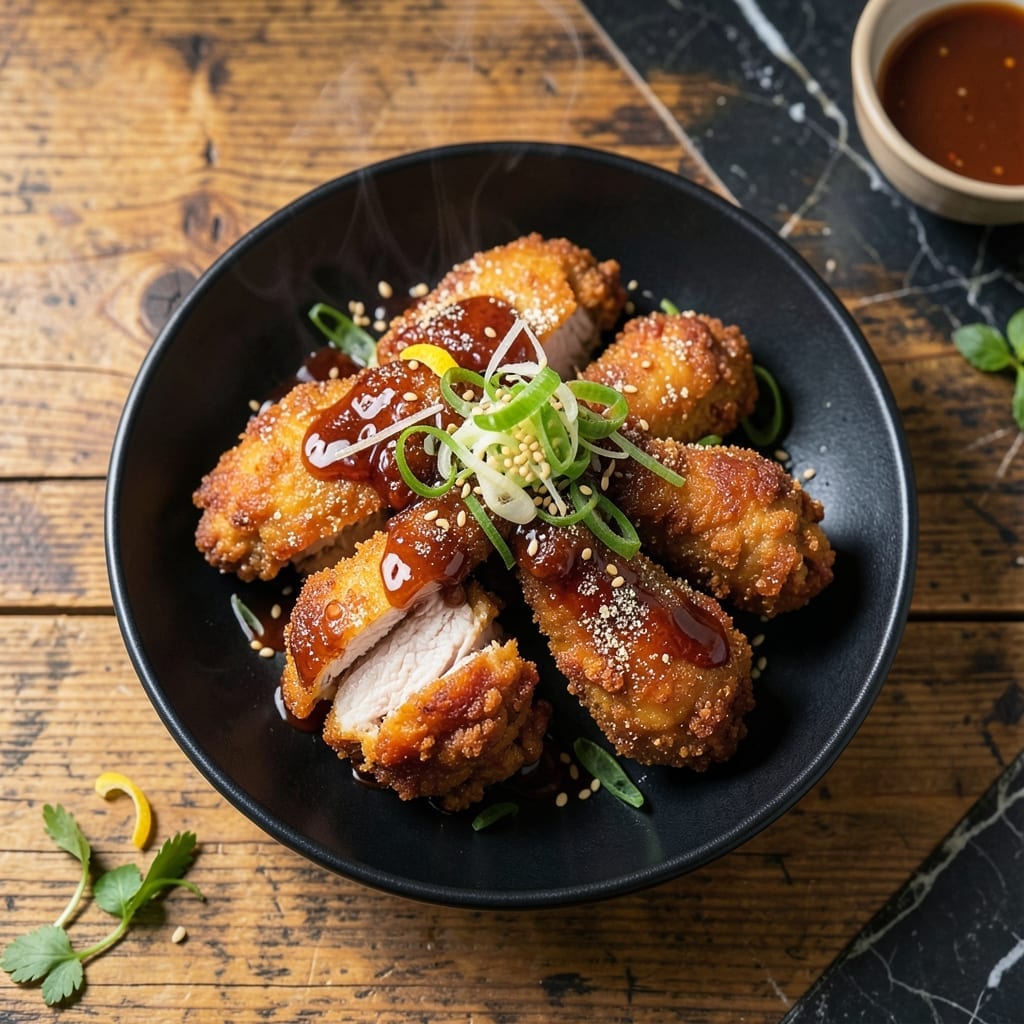
This double-fried technique delivers the ultimate crispy texture that defines authentic Korean fried chicken.
I developed this method after years of testing different frying approaches, and the two-stage process is what creates that shatteringly crispy exterior while keeping the meat juicy inside.
The first fry at a lower temperature cooks the chicken through, while the second fry at higher heat creates that signature golden, glass-like crust.
Each bite offers the perfect contrast of ultra-crispy coating and tender meat, exactly as you’d find in Seoul’s best chicken joints.
Ingredients for Seoul Fried Chicken
Double-fried magic starts with these pantry heroes and a few Korean staples for that signature crunch.
| Ingredient | Amount | Notes |
|---|---|---|
| Chicken Thighs 🍗 | 2 lb | Boneless, skin-on preferred |
| Potato Starch 🥔 | 1 cup | For ultra-crispy coating |
| All-Purpose Flour 🌾 | ½ cup | Combined with starch for texture |
| Baking Powder 🧂 | 1 tsp | Adds lift to coating |
| Kosher Salt 🧂 | 1 tbsp | Divided for seasoning layers |
| Black Pepper 🌶️ | 1 tsp | Freshly ground preferred |
| Garlic Powder 🧄 | 1 tbsp | For depth of flavor |
| Onion Powder 🧅 | 1 tbsp | Balances the seasoning |
| Gochugaru 🌶️ | 1 tbsp | Korean red pepper flakes |
| Soy Sauce 🫒 | 2 tbsp | For umami in coating |
| Neutral Oil 🛢️ | 4 cups | For deep frying, peanut or vegetable |
| Rice Vinegar 🍶 | 2 tbsp | For tangy glaze option |
| Honey 🍯 | 2 tbsp | For sweet-spicy glaze |
| Gochujang 🌶️ | 2 tbsp | Korean chili paste for glaze |
| Sesame Seeds 🌰 | 2 tbsp | For garnish and crunch |
The chicken is everything here—skin-on thighs give you that perfect juicy-meets-crispy contrast (boneless is easier to eat). Potato starch is the secret to that glass-like crust, and I always grab mine from H Mart or the Asian aisle at Whole Foods. Don’t skip the baking powder—it’s what gives the coating that airy lift. For the oil, peanut oil is traditional, but vegetable or canola work just fine.
No gochugaru? Substitute with cayenne for heat, but it won’t have the same fruity depth. Out of gochujang? Sriracha plus a pinch of miso gets you close. The honey in the glaze can be swapped for brown sugar or agave if you’re avoiding bee products. And if you’re gluten-free, swap the soy sauce for tamari—easy fix.
Fry in batches to avoid crowding the pot (this drops the oil temp and makes soggy chicken). Leftovers? Re-crisp in a 400°F oven for 5-10 minutes. The glaze can be made ahead and reheated—keeps in the fridge for 1 week. Pro tip: double the glaze recipe if you love it saucy.
Why You’ll Love This Recipe
- One Pot Wonder: I just toss the chicken thighs in potato starch and flour, then fry—no fancy steps, no fuss.
- That Crispy Bite: The potato starch gives it this insane crunch that stays even after saucing.
- Feeds a Crowd: I made a double batch for game night and everyone went back for seconds.
- Budget Winner: Chicken thighs are cheap, and a little baking powder makes them extra crispy without extra cost.
Step-by-Step Instructions for Seoul Fried Chicken
This double-fry method guarantees that shatteringly crisp crust and juicy interior you crave.
Step 1: Season and Coat the Chicken Thighs
Pat the 2 lb Chicken Thighs completely dry with paper towels—this is non-negotiable for maximum crispiness. In a large bowl, whisk together the 1 cup Potato Starch, 0.5 cup All-Purpose Flour, 1 tsp Baking Powder, 1 tbsp Kosher Salt, 1 tsp Black Pepper, 1 tbsp Garlic Powder, 1 tbsp Onion Powder, and 1 tbsp Gochugaru until fully combined.
Drizzle the 2 tbsp Soy Sauce over the chicken pieces and toss to coat evenly. Then dredge each piece in the starch mixture, pressing firmly to create a thick, even coating. The soy sauce helps the coating adhere beautifully while adding umami depth.
Step 2: First Fry for Even Cooking
Heat the 4 cups Neutral Oil in a deep, heavy pot to 325°F. Use a thermometer—this temperature is crucial for cooking the chicken through without browning too quickly. Fry the chicken in batches (don’t crowd the pot) for 8-10 minutes until the coating sets but isn’t yet golden.
Transfer to a wire rack set over a baking sheet. This first fry develops the structure of your coating and ensures the chicken cooks evenly all the way through. You’ll notice the pieces are pale and matte—this is exactly what you want at this stage.
Step 3: Second Fry for Ultimate Crispiness
Increase the oil temperature to 375°F. This higher heat creates that signature crispy, craggy exterior. Fry the chicken again in batches for 3-4 minutes until deep golden brown and gloriously crisp. The double-fry technique is the secret to that restaurant-quality crunch.
Drain on a fresh wire rack. Here’s the thing—if you stack the pieces, the steam will make the coating soggy. Always use a rack for proper air circulation. You should hear that satisfying crunch when you test a piece.
Step 4: Glaze and Garnish for Maximum Flavor
In a saucepan, combine the 2 tbsp Rice Vinegar, 2 tbsp Honey, and 2 tbsp Gochujang. Simmer over medium heat for 2-3 minutes until thickened slightly. The glaze should coat the back of a spoon but still be pourable.
Toss the hot fried chicken in the glaze until evenly coated. The residual heat from the chicken will help the glaze cling perfectly. Finish with a generous sprinkle of 2 tbsp Sesame Seeds for crunch and visual appeal. Serve immediately while the coating is at its crispest.
Pro Tips For Making Seoul Fried Chicken
- Double Fry for Crisp: Fry the chicken once at 325°F for 8-10 minutes, rest 5 minutes, then fry again at 375°F for 3-4 minutes. This is the only way to get that shatteringly crisp Seoul-style crust.
- Dry the Thighs: Pat the chicken thighs completely dry with paper towels before dredging—I learned this the hard way after my first batch turned out soggy instead of crispy.
- Skip the Overcrowding: Fry in small batches so the oil temperature doesn’t drop. After ruining two batches with greasy, undercooked chicken, I now use a thermometer to keep the oil between 325-375°F.
- Boost with Baking Powder: Add 1 teaspoon of baking powder to your potato starch and flour mix. Sounds weird, but it works: the alkaline helps the coating brown faster and stay extra crispy.
Health Benefits of seoul fried chicken
Protein-Rich Indulgence
This dish delivers 35g of protein per serving from the chicken thighs, supporting muscle repair and satiety. The skin-on approach actually enhances nutritional value by providing healthy fats that help your body absorb fat-soluble vitamins from the meal. 💪
Lower-Carb Crispy Option
Using potato starch instead of traditional flour reduces the carb count while still creating that ultra-crispy coating. One serving contains about 25g net carbs, making it a better choice than many breaded fried chicken recipes.
For even fewer carbs, you could experiment with almond flour, though it won’t achieve the same signature crunch.
Metabolism Boost
The combination of gochugaru and gochujang provides capsaicin, which may temporarily boost metabolism. These Korean chili ingredients also contain antioxidants like vitamin C and carotenoids that support immune health.
Healthy Fats Source
When using peanut oil for frying, you’re getting heart-healthy monounsaturated fats. The oil’s high smoke point of 450°F makes it ideal for the double-frying process without breaking down into harmful compounds. 🥗
Balanced Flavor Nutrition
The glaze ingredients like honey and rice vinegar provide small amounts of natural sugars and probiotics. These help balance the meal while contributing to that addictive sweet-spicy flavor profile Korean fried chicken is famous for.
Nutrition Facts
Frequently Asked Questions
Why use potato starch instead of flour?
Potato starch creates a lighter, crispier coating that stays crunchy longer. It also absorbs less oil than flour during frying, resulting in a less greasy finish.
Can I bake instead of frying?
Baking won’t achieve the same crispiness, but you can try air frying at 375°F for 12-15 minutes. The texture will be different but still delicious.
How do I keep the chicken crispy after frying?
Drain on a wire rack, not paper towels, to prevent steam buildup. Keep pieces in a single layer in a 200°F oven while frying batches.
What if I don’t have gochujang?
Substitute with 2 tbsp sriracha + 1 tsp miso paste for similar heat and depth. The flavor won’t be identical but will still be tasty.

- Jollof Rice Sauce Recipe: West African Tomato and Spice Infusion - September 25, 2026
- Japanese Rice Soup Recipe: Umami-Rich Comfort in a Bowl - September 25, 2026
- Homemade Cream Of Rice Recipe: Silk-Smooth Breakfast in Minutes - September 25, 2026