
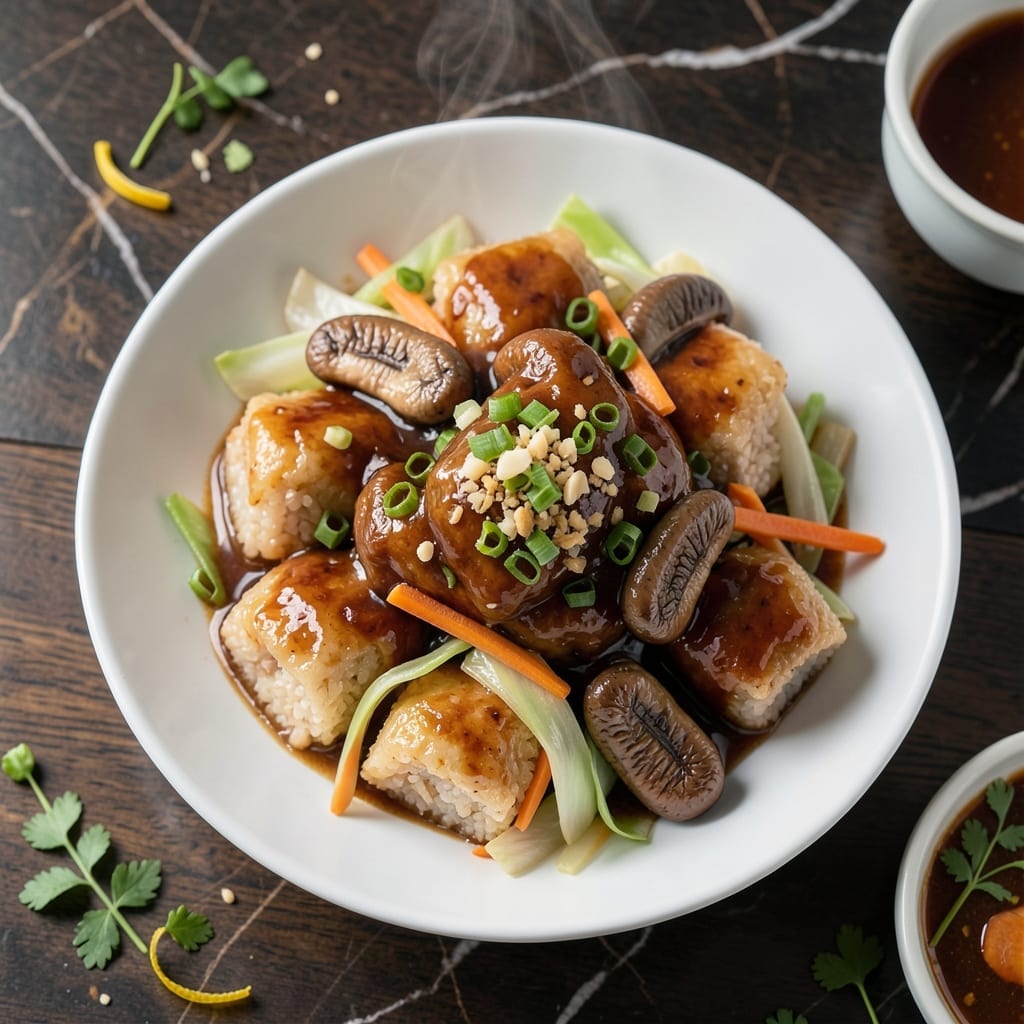
This stir-fry delivers the chewy texture and bold umami that made Din Tai Fung famous. I’ve refined the technique to achieve restaurant-quality results at home with simple ingredients.
The key is pre-soaking the rice cakes to soften them before stir-frying. This ensures they stay tender while absorbing the savory sauce. A high-heat wok and quick cooking preserve their signature bite.
You’ll get a dish with the perfect balance of chewy rice cakes, crisp vegetables, and a glossy, deeply flavored sauce. The umami comes from soy, mushroom, and a touch of oyster sauce.
Serve hot for the best texture. This recipe brings the Din Tai Fung experience to your kitchen.
Ingredients for Shanghai Rice Cake Recipe Din Tai Fung
Restaurant-quality stir-fry ingredients for that signature chewy texture and bold umami at home.
| Ingredient | Amount | Notes |
|---|---|---|
| Shanghai Rice Cakes 🍚 | 1 lb | Pre-soaked for 30 minutes |
| Napa Cabbage 🥬 | 2 cups | Thinly sliced, ribs removed |
| Carrots 🥕 | 1 whole | Julienned for texture |
| Green Onions 🧅 | 4 whole | Cut into 2-inch pieces |
| Shiitake Mushrooms 🍄 | 4 whole | Fresh, sliced thin |
| Garlic Cloves 🧄 | 4 cloves | Minced for sauce |
| Fresh Ginger 🌿 | 1 tbsp | Finely grated, peeled |
| Soy Sauce 🫒 | ¼ cup | Light or all-purpose |
| Dark Soy Sauce 🫒 | 1 tbsp | For color and depth |
| Oyster Sauce 🫒 | 2 tbsp | Vegetarian if preferred |
| Mushroom Sauce 🍄 | 1 tbsp | For umami boost |
| Sesame Oil 🫒 | 1 tsp | Toasted, for finishing |
| Sugar 🧂 | 1 tsp | Balances sauce flavors |
| White Pepper 🌶️ | ½ tsp | Ground, for authenticity |
| Neutral Oil 🫒 | 3 tbsp | For high-heat stir-frying |
The rice cakes are non-negotiable here. Asian grocery stores carry them fresh or frozen—avoid the canned kind. Look for vibrant white cakes with a slightly bouncy texture. For the mushrooms, Shiitake gives that meaty depth, but cremini works in a pinch. Napa cabbage adds sweetness; if unavailable, regular green cabbage is acceptable but less tender.
No oyster sauce? Vegetarian oyster sauce (made from mushrooms) is a perfect sub. Out of dark soy? Double the light soy plus a pinch of sugar for color. The ginger and garlic must be fresh—powdered versions lack punch. For heat control, swap white pepper with black if needed, but the former is traditional for this dish.
Pre-soaked rice cakes can sit in water for up to 2 hours before cooking. Store fresh shiitakes in a paper bag in the fridge for 5 days. The sauce keeps well—mix it ahead and refrigerate for 3 days.
Why You’ll Love This Recipe
- One-Pan Wonder: I love that everything cooks together—just toss the rice cakes, cabbage, and shiitakes in and let the flavors mingle.
- Umami Bomb: The shiitakes and green onions create this deep, savory richness that makes every bite irresistible.
- Meal Prep Star: Honestly, it reheats beautifully so I make a big batch for lunches all week.
- Budget Friendly: A bag of rice cakes and a few fresh veggies stretch into a filling meal for four without breaking the bank.
Step-by-Step Instructions for Shanghai Rice Cake Stir-Fry
Master the technique for perfectly chewy rice cakes with rich umami flavor in every bite.
Step 1: Prepare the Aromatics and Vegetables
Finely mince the 4 cloves Garlic Cloves and finely grate the 1 tbsp Fresh Ginger into a small bowl. These form the aromatic base that infuses every element of the dish with depth.
Thinly slice the 2 cups Napa Cabbage, julienne the 1 whole Carrots, cut the 4 whole Green Onions into 2-inch pieces, and thinly slice the 4 whole Shiitake Mushrooms. Uniform cuts ensure even cooking and optimal texture.
Step 2: Create the Umami-Rich Sauce
In a medium bowl, combine the 0.25 cup Soy Sauce, 1 tbsp Dark Soy Sauce, 2 tbsp Oyster Sauce, and 1 tbsp Mushroom Sauce. These sauces build layers of savory complexity characteristic of Din Tai Fung’s signature flavor profile.
Add the 1 tsp Sugar and 0.5 tsp White Pepper, whisking until the sugar fully dissolves. The sugar balances the saltiness while the white pepper adds authentic Asian warmth without overpowering the dish.
Step 3: Stir-Fry the Vegetables and Aromatics
Heat 2 tbsp Neutral Oil in a wok or large skillet over high heat until it shimmers. Add the Garlic Cloves and Fresh Ginger, stir-frying for 15-20 seconds until fragrant but not browned. This quick cook preserves their pungent qualities.
Immediately add the Shiitake Mushrooms and Carrots, stir-frying for 2-3 minutes until the mushrooms begin to soften. Then add the Napa Cabbage and Green Onions, cooking for another 1-2 minutes until all vegetables are tender-crisp.
Step 4: Combine with Rice Cakes and Sauce
Add the remaining 1 tbsp Neutral Oil to the wok, then add the pre-soaked 1 lb Shanghai Rice Cakes. Stir-fry for 3-4 minutes until the rice cakes develop a slight char and chewy texture. The pre-soaking prevents them from becoming overly hard during cooking.
Pour the prepared sauce over the rice cakes and vegetables. Stir-fry for an additional 2-3 minutes until everything is well-coated and the sauce has thickened slightly, clinging to each piece.
Step 5: Finish and Serve
Remove from heat and drizzle with the 1 tsp Sesame Oil, tossing to distribute evenly. The toasted sesame oil adds a nutty aroma that elevates the dish’s authenticity.
Serve immediately while hot, when the rice cakes are at their chewiest and the vegetables retain their vibrant color. The sauce should glisten, coating each component with its rich, umami-packed flavor.
Pro Tips For Making Shanghai Rice Cake Recipe Din Tai Fung
- Soak Rice Cakes First: I learned this the hard way—dry rice cakes stay chewy and undercooked. Soak them in warm water for 15-20 minutes until pliable before stir-frying.
- Slice Cabbage Thin: Napa cabbage can be tough if cut too thick. Shred it into ¼-inch strips so it wilts quickly and absorbs the sauce evenly.
- Skip the Crowding: Resist the urge to dump all the rice cakes in at once. Cook in batches or they’ll steam instead of getting those desirable lightly crisp edges.
- Use Rehydrated Shiitakes: Fresh shiitakes work, but rehydrated dried ones pack way more umami. Save the soaking liquid—strain and add a splash to the sauce.
Dietary Considerations for This Dish
Gluten-Free Options
Use tamari instead of regular soy sauce to make this dish gluten-free. Tamari is naturally fermented and contains little to no wheat. Check labels for 100% soy tamari to be safe. 💡
Vegetarian Adaptations
Swap oyster sauce for vegetarian mushroom-based oyster sauce, which delivers the same umami depth. Brands like Lee Kum Kee make excellent vegetarian versions that work perfectly here.
Ensure all sauces are vegetarian-friendly, as some dark soy sauces contain fish or animal products. I always double-check the ingredients list.
Vegan Modifications
For a fully vegan version, replace all sauces with certified vegan alternatives. Coconut aminos can substitute for soy sauce, though the flavor profile will differ slightly. Use toasted sesame oil made without animal products.
Low-Sodium Considerations
Reduce the soy sauce to 2 tbsp and replace with low-sodium soy sauce. Omit the mushroom sauce and boost flavor with extra garlic and ginger. The dish will still taste rich and satisfying.
Nut Allergy Note
Most traditional ingredients here are nut-free, but always verify your sesame oil and sauce labels. Some brands process oils in facilities that handle nuts. I recommend Kadoya for reliable nut-free sesame oil. ✨
Nutrition Facts
Frequently Asked Questions
Why do I need to soak the rice cakes first?
Soaking softens the rice cakes, ensuring they cook evenly and develop that signature chewy texture. Without soaking, they may remain too hard in the center. Soak for at least 30 minutes for best results.
Can I use dried rice cakes instead of fresh?
Yes, but rehydrate them first. Cover dried cakes with warm water and let sit for 2-3 hours until fully plump. Drain well before stir-frying to avoid a watery dish.
How do I prevent the rice cakes from sticking?
Use high heat and sufficient oil (3 tbsp total). Keep the rice cakes moving in the wok and avoid overcrowding. A well-seasoned wok or non-stick pan helps too.
What if my sauce is too salty?
Balance it by adding a pinch of sugar or a splash of water. Taste as you go and adjust gradually. The umami should be rich, not overpowering.

- Machboos Rice Recipe: Bahraini Spiced One-Pot Tradition - September 25, 2026
- Recipe For Zucchini Rice Casserole: Cheesy Bake With Garden Freshness - September 25, 2026
- Somali Banana and Rice Recipe: Sweet and Spiced East African Tradition - September 25, 2026