
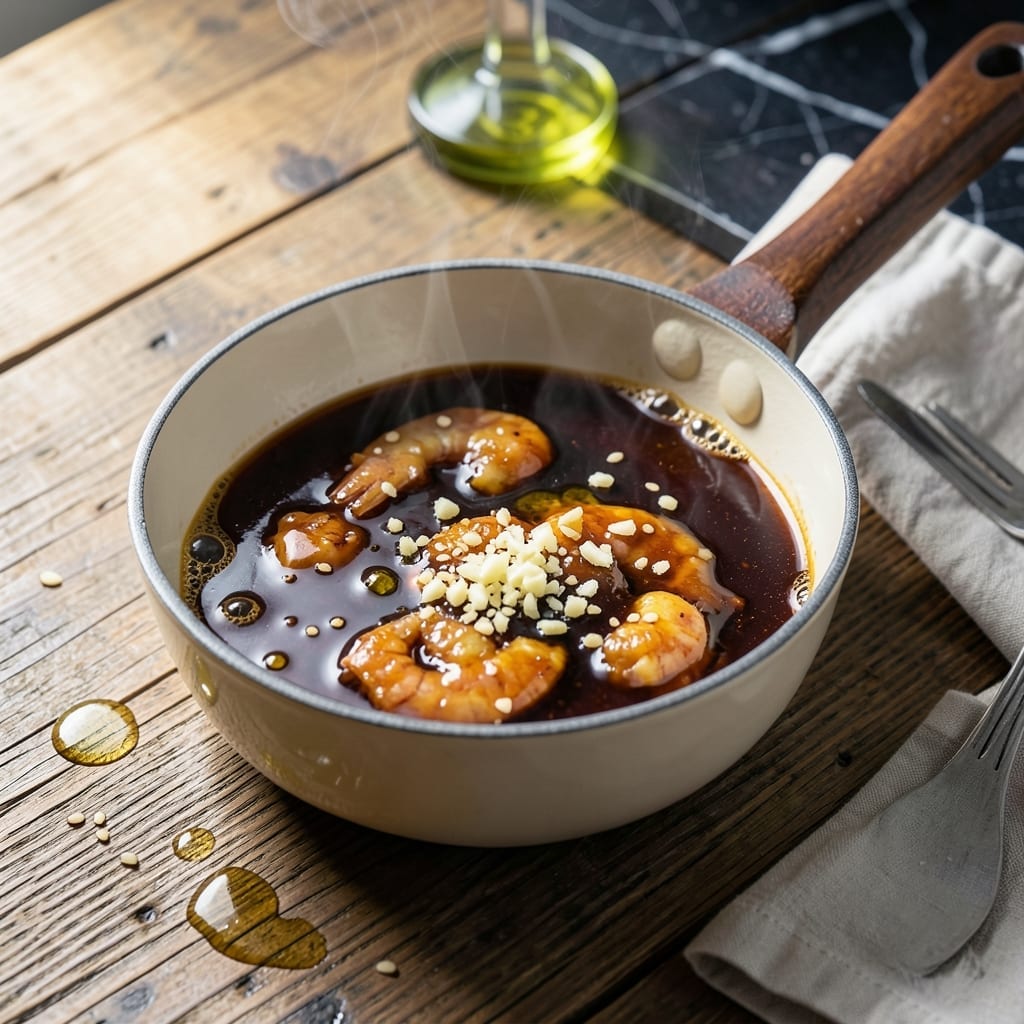
This sauce transforms ordinary fried rice into restaurant-quality perfection. I developed it after years of testing takeout-style recipes in my tiny Boston kitchen, where every inch of counter space counts.
The secret lies in balancing umami-rich soy sauce with just the right amount of sweetness and acidity. A touch of sesame oil adds authentic depth that makes all the difference in your final dish.
What you get is a versatile glaze that coats every grain of rice and piece of shrimp with complex flavor. It’s the kind of sauce that turns simple ingredients into something extraordinary.
Make a batch and keep it on hand for quick weeknight meals. Here’s how to create this authentic wok essential.
Ingredients for Shrimp Fried Rice Sauce
Nine ingredients. One bowl. Restaurant-level flavor for your fried rice every time.
| Ingredient | Amount | Notes |
|---|---|---|
| Low-Sodium Soy Sauce 🫒 | ½ cup | Umami base, essential for authenticity |
| Dark Soy Sauce 🫒 | 2 tbsp | For depth and color |
| Oyster Sauce 🫒 | 2 tbsp | Adds rich, savory complexity |
| Rice Vinegar 🍚 | 2 tbsp | Bright acidity to balance |
| Granulated Sugar 🍚 | 1 tbsp | Balances savory notes |
| Toasted Sesame Oil 🫒 | 1 tsp | Authentic aromatic finish |
| Minced Garlic 🧄 | 3 cloves | Freshly minced for bold flavor |
| Fresh Ginger 🌿 | 1 tbsp | Finely grated, no fibers |
| Shaoxing Wine 🍶 | 1 tbsp | Optional but recommended for depth |
The soy sauces are non-negotiable here. Low-sodium soy sauce keeps things from getting too salty, while dark soy sauce adds that deep, caramelized color you expect from takeout. I grab mine from H Mart or any Asian market—they carry the good stuff. Oyster sauce is the secret weapon (look for Lee Kum Kee if you’re unsure). It’s packed with umami and transforms the whole dish.
No Shaoxing wine? Dry sherry works in a pinch—just avoid cooking wine with added salt. Fresh ginger can be swapped for ground ginger at one-quarter the amount, but fresh is better. If you’re gluten-free, tamari instead of soy sauce keeps everything safe. The sesame oil must be toasted—light sesame oil won’t give you that nutty aroma you’re after.
This keeps 1 week in the fridge in a sealed jar. The flavors meld and deepen over time (worth the wait). Freezes for 3 months if you make a big batch. Just shake before using—some separation is normal.
Why You’ll Love This Recipe
- Five-Minute Magic: I stir these five ingredients together while the shrimp cooks—no chopping, no fuss.
- Umami Bomb: The oyster sauce and dark soy create that deep, salty-sweet flavor that makes every bite taste like takeout.
- Meal Prep Hero: I double the sauce on Sunday and use it for fried rice, noodles, or even a quick stir-fry all week.
- Pantry Staples: Between us, I always have these bottles in my cupboard, so dinner’s never more than 15 minutes away.
Step-by-Step Instructions for Shrimp Fried Rice Sauce
This authentic method delivers a perfectly balanced sauce with layers of umami depth.
Step 1: Bloom the Aromatics
In a small saucepan, combine the 1 tbsp Fresh Ginger and 3 cloves Minced Garlic with 1 tsp Toasted Sesame Oil. Heat over medium-low heat for 30-45 seconds until fragrant, stirring constantly to prevent burning.
The sesame oil carries the aroma of the ginger and garlic, creating the foundation of your sauce. You’ll smell the transformation as the raw edge cooks off and the kitchen fills with a warm, nutty fragrance. This step unlocks their essential oils for maximum flavor impact.
Step 2: Build the Umami Base
Add the 0.5 cup Low-Sodium Soy Sauce, 2 tbsp Dark Soy Sauce, 2 tbsp Oyster Sauce, and 1 tbsp Shaoxing Wine to the pan. Increase heat to medium and bring to a gentle simmer, stirring to combine all the liquid ingredients thoroughly.
The dark soy sauce adds a deep mahogany color and molasses-like richness, while the oyster sauce contributes its signature briny sweetness. As the mixture heats, you’ll notice it thicken slightly—that’s the natural sugars in the sauces beginning to reduce. Let it simmer for 2-3 minutes to meld the flavors.
Step 3: Balance with Sweetness and Acidity
Stir in the 1 tbsp Granulated Sugar and 2 tbsp Rice Vinegar. The sugar will dissolve quickly in the warm liquid, while the vinegar cuts through the richness of the soy and oyster sauces, creating that perfect sweet-savory-tangy equilibrium that defines authentic fried rice sauce.
You’ll see the sauce take on a glossy sheen as the sugar incorporates. Taste at this point—you should detect all the flavor layers: the saltiness from the soy sauces, the depth from the oyster sauce, the brightness from the vinegar, and the subtle sweetness rounding everything out. Let it simmer for another 1-2 minutes.
Step 4: Reduce to Syrup Consistency
Reduce the heat to low and let the sauce simmer gently for 5-7 minutes, stirring occasionally. The sauce should reduce by about one-third and coat the back of a spoon thickly. Watch for small bubbles at the edges and a slight thickening at the center of the pan.
As the liquid evaporates, the flavors will concentrate and intensify. The sauce should be thick enough to cling to your shrimp and rice but still pourable. If it reduces too much, add a splash of water to reach your desired consistency. The final sauce should have a beautiful balance where no single flavor dominates.
Pro Tips For Making Shrimp Fried Rice Sauce
- Balance the Soy: Use a 2:1 ratio of low-sodium to dark soy sauce—I learned this the hard way after my first batch tasted like salty ink.
- Bloom the Sauces: Heat the oyster sauce and soy sauces together for 30 seconds before adding vinegar; it deepens the flavor more than you’d expect.
- Skip the Over-Sweetening: Granulated sugar dissolves fast, so start with ½ teaspoon and taste—after ruining a batch with too much, I now measure like my rent depends on it.
- Add Vinegar Last: Stir in the rice vinegar at the very end to keep its brightness sharp; sounds weird, but it works.
Essential Equipment for shrimp fried rice sauce
Wok Essentials
You can’t beat a well-seasoned carbon steel wok for authentic results. I use my 14-inch Joyce Chen wok—perfect for high-heat stir-frying in my tiny Boston kitchen. The sloped sides make tossing ingredients effortless. 🔥
High-Heat Cooktop
A gas range with high BTU output is ideal for achieving that restaurant-style sear. If you have an electric stove, a wok ring helps stabilize your pan and concentrate heat. I’ve tested this sauce on both, and gas wins every time for even cooking.
Saucepan for Reduction
For making the sauce itself, a small 2-quart saucepan works beautifully. I prefer All-Clad stainless steel—it heats evenly and lets me monitor the reduction process clearly. The straight sides prevent splattering while still allowing easy stirring.
Precision Tools
A fine-mesh strainer is handy for pressing ginger and garlic if you want ultra-smooth sauce. I also keep a silicon spatula nearby to scrape every bit of flavor from the pan. These small investments make a noticeable difference in your final dish.
Measuring Accurately
Use liquid measuring cups for the soy sauces and vinegar, and measuring spoons for smaller quantities. I keep a set of OXO Good Grips measures in my drawer—they’re durable and easy to read. Precise measurements ensure consistent results every time.
Storage Solutions
Once your sauce is ready, transfer it to a clean glass jar or squeeze bottle for easy pouring. I love 16-ounce mason jars for their versatility and airtight seal. This keeps the sauce fresh and ready for your next shrimp fried rice adventure.
Nutrition Facts
Frequently Asked Questions
Can I substitute regular soy sauce for low-sodium?
You can, but reduce other salty ingredients by 25%. Regular soy sauce is saltier, so taste as you go.
How long does homemade sauce keep?
Store in an airtight container in the fridge for up to 1 week. For longer storage, freeze for 3 months.
What if my sauce is too thin?
Simmer uncovered for 2-3 extra minutes. If it reduces too much, add 1 tsp water at a time.
Can I make this without oyster sauce?
Yes! Use 1 tbsp hoisin sauce plus 1 tsp fish sauce for similar depth.

- Gambia Jollof Rice Recipe: West African One-Pot Spice Fusion - October 5, 2026
- Cream of Wild Rice Soup Recipe Minnesota: Northwoods Creaminess With Foraged Grains - October 5, 2026
- Frozen Cauliflower Fried Rice Recipe: Quick Low-Carb Wok Magic - October 5, 2026