
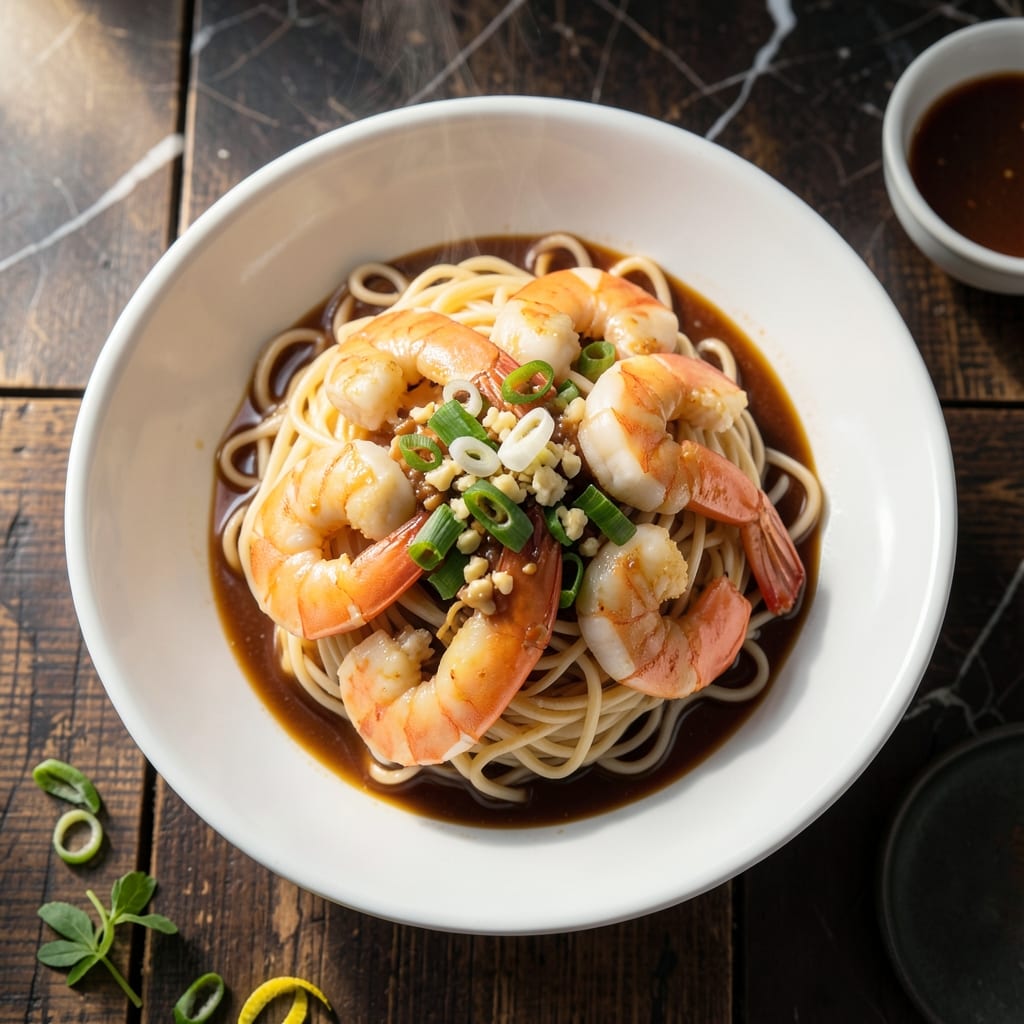
This wok-seared dish brings together plump shrimp and chewy rice noodles in a symphony of umami flavors. The key lies in high-heat cooking that locks in the shrimp’s natural sweetness while creating a deeply savory sauce.
I’ve refined this method to ensure the noodles absorb just enough of the sauce without turning mushy. The shrimp cook quickly, retaining their tender texture, while the aromatics build a complex base that elevates every bite.
The result is a bowl of perfectly balanced noodles with juicy shrimp and a glossy, flavor-packed sauce. Each strand carries the essence of the wok, with a texture that’s both tender and slightly springy.
This dish comes together in under 30 minutes, making it ideal for weeknight dinners. The technique is straightforward, but the results taste anything but ordinary.
Ingredients for Shrimp Rice Noodle
Flat rice noodles, plump shrimp, and bold umami aromatics build this wok-seared dish.
| Ingredient | Amount | Notes |
|---|---|---|
| Rice Noodles 🍜 | 8 oz | Flat, wide variety preferred |
| Large Shrimp 🦐 | 1 lb | Peeled, deveined, tails on |
| Garlic Cloves 🧄 | 4 cloves | Minced finely |
| Fresh Ginger 🌿 | 1 tbsp | Grated or minced |
| Scallions 🧅 | 4 whole | Thinly sliced, whites and greens separated |
| Soy Sauce 🫒 | ⅓ cup | Low-sodium or regular |
| Oyster Sauce 🫒 | 2 tbsp | Vegan oyster sauce if needed |
| Sesame Oil 🫒 | 1 tbsp | Toasted variety for depth |
| Shaoxing Wine 🍶 | 2 tbsp | Dry sherry as substitute |
| Cornstarch 🌾 | 1 tbsp | For velveting shrimp |
| Neutral Oil 🫒 | 3 tbsp | High smoke point, like peanut or vegetable |
| Red Pepper Flakes 🌶️ | ½ tsp | Adjust for heat preference |
| Lime 🍋 | 1 whole | Juiced, for finishing |
| Cilantro 🌿 | ¼ cup | Fresh, chopped for garnish |
The shrimp are the star here. Wild-caught or sustainably farmed from Whole Foods or a trusted fishmonger ensures the best texture and flavor. Look for 16/20 count per pound—large enough to hold their own against the noodles. The rice noodles should be flat and wide (about 1/4-inch) for proper chew. Annie Chun’s or Thai Kitchen brands are reliable and widely available.
No Shaoxing wine? Dry sherry works perfectly. Swap oyster sauce for vegetarian oyster sauce or hoisin if needed. For a gluten-free version, use tamari instead of soy sauce. The ginger and garlic are non-negotiable for the aromatic base, but fresh is essential—powdered won’t deliver the same punch. Need more heat? Add a minced Thai chili along with the red pepper flakes.
Fresh ingredients mean this dish is best the day it’s made, but leftovers keep well for 2-3 days in the fridge. Store in an airtight container—reheat quickly in a hot pan with a splash of water to revive the noodles. The cilantro and lime are best added fresh, so save those for serving.
Why You’ll Love This Recipe
- 20-Minute Meal: I can get this from pantry to plate faster than takeout arrives. Honestly, the rice noodles cook while I sauté the shrimp.
- Garlic-Ginger Magic: That first bite with the punchy garlic and warm ginger hits different. The shrimp soak up every bit of flavor.
- Weeknight MVP: It’s my go-to for busy Tuesdays or lazy Sundays. Even my picky nephew cleans his plate.
- Budget Stretcher: Large shrimp feel fancy but won’t break the bank. Leftovers taste even better the next day for lunch.
Step-by-Step Instructions for Shrimp Rice Noodles
Master the wok technique that delivers perfectly tender shrimp and silky noodles every time.
Step 1: Velvet the Shrimp for Maximum Tenderness
In a bowl, toss the 1 lb Large Shrimp with 1 tbsp Cornstarch and 1 tbsp Shaoxing Wine until evenly coated. This velveting process creates a protective layer that seals in moisture during the high-heat cooking.
Let the shrimp marinate for 15 minutes at room temperature. You’ll notice the cornstarch absorbs some of the wine, creating a slightly sticky texture that helps the shrimp maintain its plumpness. This is the secret to that coveted restaurant-style texture.
Step 2: Prepare the Aromatics and Sauce Base
Combine the 0.33 cup Soy Sauce, 2 tbsp Oyster Sauce, and 1 tbsp Sesame Oil in a small bowl. Whisk until fully emulsified. This sauce base delivers that deep umami flavor characteristic of authentic stir-fry dishes.
Thinly slice the 4 whole Scallions, separating the white and green parts. Mince the 4 cloves Garlic Cloves and grate the 1 tbsp Fresh Ginger. Keep these aromatics within arm’s reach—the stir-fry process moves quickly once started.
Step 3: Stir-Fry the Shrimp and Aromatics
Heat 2 tbsp Neutral Oil in a wok or large skillet over high heat until shimmering. Add the velveted shrimp in a single layer and cook for 1-2 minutes per side until pink and just cooked through. Remove shrimp and set aside.
In the same wok, add the remaining 1 tbsp Neutral Oil and swirl to coat. Add the 0.5 tsp Red Pepper Flakes, minced garlic, and grated ginger. Stir-fry for 30 seconds until fragrant and golden, being careful not to burn the garlic.
Step 4: Combine Noodles and Finish the Dish
Add the white parts of the scallions to the wok and stir for 15 seconds. Pour in the prepared sauce mixture and bring to a simmer. Add the 8 oz Rice Noodles (pre-soaked according to package) and toss to coat evenly with the sauce.
Return the cooked shrimp to the wok and stir-fry for an additional 1-2 minutes until everything is heated through. The noodles should be tender and glossy, with the sauce clinging to each strand. Finish with the green parts of the scallions.
Step 5: Garnish and Serve Immediately
Transfer the shrimp and noodles to a serving platter. Squeeze the juice of 1 whole Lime over the top and sprinkle with 0.25 cup Cilantro. The lime adds a bright acidity that balances the rich umami flavors.
Serve immediately while hot. Each serving should have an equal distribution of shrimp, noodles, and that glossy, flavorful sauce. The cilantro garnish adds freshness and color contrast to the dish.
Pro Tips For Making Shrimp Rice Noodle
- Soak Noodles First: Cover rice noodles in warm water for 8-10 minutes until pliable but still firm—I learned this the hard way after ending up with gummy noodles that stuck together.
- Pat Shrimp Dry: Blot large shrimp with paper towels before cooking to get a proper sear instead of steaming them in their own moisture.
- Skip Raw Garlic: After burning three batches, I finally figured out that garlic should hit the pan after the shrimp, not before, to prevent bitterness.
- Stir in Scallions Last: Toss in chopped scallions at the very end to keep their fresh crunch and bright color—it’s the thing that matters most for presentation.
Pro Cooking Tips for This Recipe
Wok Heat Control
High heat is non-negotiable for this dish. I use a 14-inch flat-bottom wok from Made In on my gas stove, cranked to maximum. The wok should be smoking hot before adding oil—this creates that coveted wok hei (breath of the wok) flavor. 🔥
No Overcrowding
Cook the shrimp in a single layer with space between each piece. Overcrowding steams instead of sears, resulting in rubbery shrimp. I cook in 2 batches if needed, which adds 2-3 minutes total but ensures proper browning.
Noodle Prep
Soak rice noodles in hot water for 8-10 minutes until pliable but still slightly firm. Drain immediately and toss with 1 tsp neutral oil to prevent sticking. They’ll finish cooking in the wok with the sauce.
Sauce Timing
Add the sauce mixture only after the aromatics are fragrant. Pour it around the edges of the wok, not directly on the aromatics, to prevent temperature shock. The sauce should sizzle violently when it hits the hot surface.
Aromatic Technique
Bloom the garlic and ginger first—their flavors develop differently. Add ginger 5 seconds before garlic since it needs more time to release its oils. Remove from heat immediately if garlic starts browning.
Final Toss
Use tongs to toss everything together vigorously for 30 seconds off heat. This ensures even coating without overcooking the shrimp. The noodles should glisten with sauce, not be swimming in it. 💡
Nutrition Facts
Frequently Asked Questions
What’s the best way to prevent noodles from sticking?
Soak rice noodles in hot water for 8-10 minutes, then drain and toss with 1 tsp oil. This keeps them separate while finishing in the wok.
Can I use frozen shrimp?
Yes, thaw frozen shrimp completely in the fridge overnight. Pat them very dry before velveting to ensure proper browning and texture.
How do I know when the shrimp are done?
Cook until they turn opaque pink and curl into a loose “C” shape, about 1-2 minutes per side on high heat. Overcooking makes them rubbery.
What can I substitute for Shaoxing wine?
Dry sherry works perfectly. In a pinch, use white wine with a splash of rice vinegar for similar acidity.

- Jollof Rice Sauce Recipe: West African Tomato and Spice Infusion - September 25, 2026
- Japanese Rice Soup Recipe: Umami-Rich Comfort in a Bowl - September 25, 2026
- Homemade Cream Of Rice Recipe: Silk-Smooth Breakfast in Minutes - September 25, 2026