
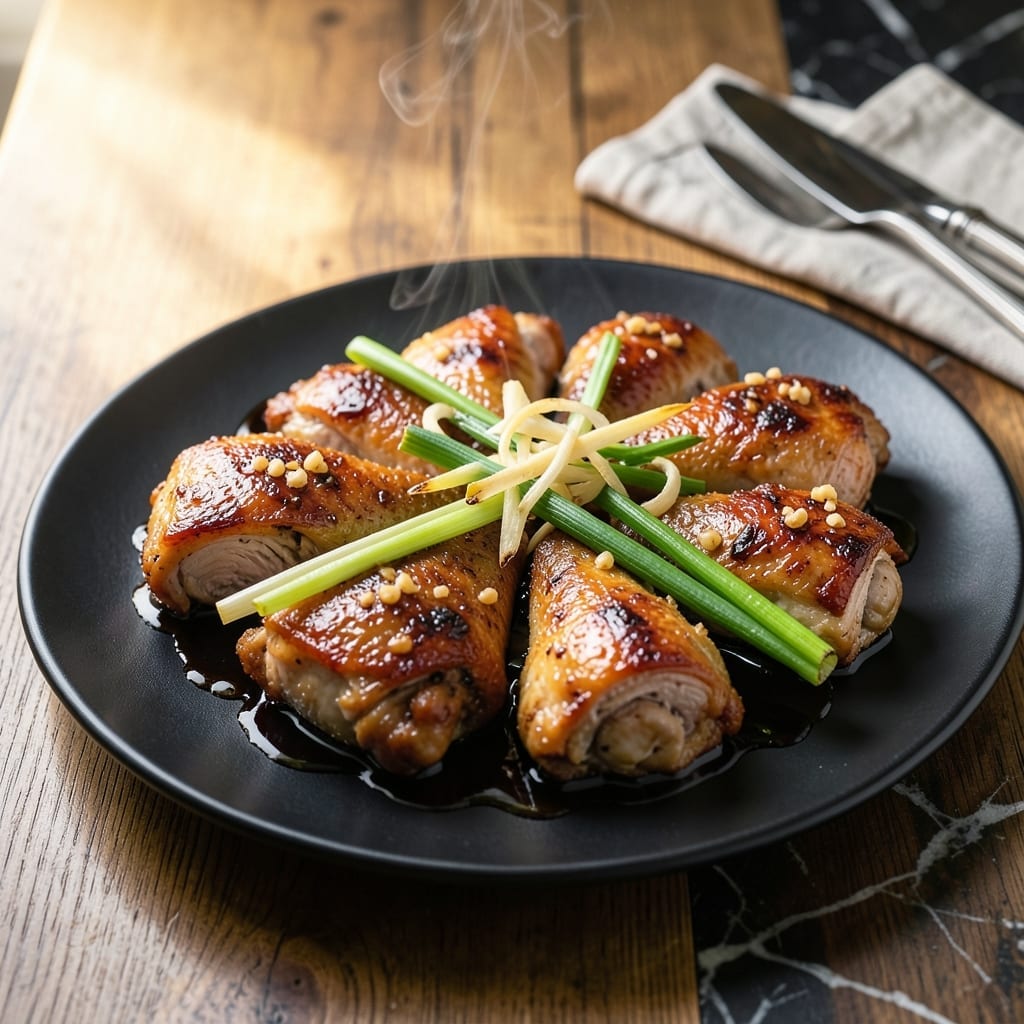
This Hainanese-inspired dish delivers the signature silky smooth texture that defines Singapore chicken. The secret lies in a precise poaching method that transforms humble chicken into a tender, flavorful masterpiece.
I developed this recipe to capture the delicate balance of aromatics and soy-based poaching liquid that infuses every bite. The meat emerges juicy and fall-apart tender, with a subtle sweetness that makes it irresistible.
The final step of drenching the chicken in its concentrated poaching broth creates a glossy finish. Served with fragrant ginger-scallion sauce and steamed rice, it becomes a complete, restaurant-worthy meal.
This technique may seem involved, but the results are consistently perfect. The poaching liquid doubles as an exceptional soup base for a zero-waste approach.
Ingredients for Singapore Chicken
Fourteen ingredients transform humble chicken into a silky, restaurant-worthy masterpiece with ease.
| Ingredient | Amount | Notes |
|---|---|---|
| Chicken Thighs 🍗 | 2 lb | Boneless, skin-on for flavor |
| Ginger 🌿 | 4 oz | Fresh, sliced with skin on |
| Scallions 🧅 | 1 bunch | White and green parts separated |
| Garlic Cloves 🧄 | 6 cloves | Smashed, not minced |
| Light Soy Sauce 🍶 | ½ cup | Low-sodium preferred for balance |
| Dark Soy Sauce 🍶 | 2 tbsp | For depth and color |
| Sesame Oil 🫒 | 1 tbsp | Toasted for aroma |
| Shaoxing Wine 🍷 | ¼ cup | Dry sherry as substitute |
| Chicken Stock 🍲 | 4 cups | Unsalted, homemade ideal |
| Rock Sugar 🍚 | 2 tbsp | Or granulated sugar |
| White Pepper 🌶️ | 1 tsp | Freshly ground preferred |
| Salt 🧂 | 1 tsp | Diamond Crystal kosher |
| Neutral Oil 🫒 | 2 tbsp | For poaching liquid |
| Jasmine Rice 🍚 | 2 cups | Uncooked, rinsed well |
| Cilantro 🌿 | ½ cup | Fresh, chopped for garnish |
The chicken is critical here. Boneless, skin-on thighs deliver the silky texture this dish is known for—breasts dry out too easily. Asian markets often carry pre-cut ginger and scallions, saving prep time. For the soy sauces, Pearl River Bridge is a reliable brand available at most well-stocked grocery stores. The rock sugar adds subtle sweetness without overpowering the aromatics.
No Shaoxing wine? Dry sherry works perfectly as a substitute. If you can’t find rock sugar, regular granulated sugar dissolves just as well. Vegetable stock can replace chicken stock in a pinch (though the flavor profile will shift slightly). The sesame oil should be toasted—light sesame oil lacks the depth needed. For the rice, short-grain varieties like jasmine or sushi rice absorb the poaching liquid best.
The poaching liquid can be refrigerated for up to 3 days or frozen for 3 months. Store cooked chicken in its broth to maintain moisture. Ginger and scallions keep well in the fridge for 1 week if wrapped properly. Always bring chicken to room temperature before poaching for even cooking.
Why You’ll Love This Recipe
- One Pan Wonder: I toss everything in a single pan—ginger, garlic, and those juicy thighs—so cleanup’s a breeze.
- Umami Bomb: The light soy sauce and scallions hit that sweet-savory spot I crave every time.
- Meal Prep Hero: I make a big batch Sunday and it reheats beautifully for lunches all week.
- Budget Friendly: Chicken thighs are cheap, and this recipe stretches them into something ridiculously good.
Step-by-Step Instructions for Singapore Chicken
Master the poaching and sauce technique that defines this Hainanese-inspired dish with silky results.
Step 1: Poach the Chicken Thighs to Silky Perfection
In a large pot, combine the 4 cups Chicken Stock, 4 oz Ginger, 1 bunch Scallions (white parts only), 6 cloves Garlic Cloves, 1 tsp Salt, and 1 tsp White Pepper. Bring to a gentle simmer over medium heat—you want small bubbles, not a rolling boil, to prevent toughening the meat.
Add the 2 lb Chicken Thighs and ensure they’re fully submerged. Maintain a steady 160-170°F and poach for 15-18 minutes until the internal temperature reaches 165°F. The chicken should appear opaque throughout with no pink remaining. Remove from liquid and let cool slightly.
Step 2: Prepare the Aromatic Oil Base
In a clean pot, heat the 2 tbsp Neutral Oil over medium-low heat. Add the reserved scallion greens and cook for 2-3 minutes until fragrant and just beginning to crisp at the edges. This infuses the oil with a subtle onion sweetness.
Strain the poaching liquid through a fine-mesh sieve into the pot with the scallion oil, discarding the solids. You should have about 3 cups of flavored broth. This forms the base for your sauce, packed with ginger, garlic, and scallion essence.
Step 3: Craft the Signature Singapore Sauce
To the strained broth, add the 0.5 cup Light Soy Sauce, 2 tbsp Dark Soy Sauce, 0.25 cup Shaoxing Wine, 2 tbsp Rock Sugar, and 1 tbsp Sesame Oil. Simmer over medium heat for 8-10 minutes until reduced by about one-third.
The sauce should coat the back of a spoon and have a glossy, syrupy consistency. The dark soy sauce adds depth and color while the light soy maintains the salty balance. Taste and adjust seasoning if needed, though the poaching liquid should have infused sufficient flavor.
Step 4: Finish and Serve with Jasmine Rice
Shred the poached chicken thighs into bite-sized pieces and arrange over 2 cups Jasmine Rice that’s been cooked according to package instructions. Ladle the warm sauce generously over the chicken, allowing it to soak into the rice beneath.
Garnish with the 0.5 cup Cilantro for a fresh contrast to the rich, savory flavors. The chicken should be incredibly tender, nearly falling apart, with a delicate ginger-garlic aroma. Serve immediately while the sauce is still glossy and the rice is steaming hot.
Pro Tips For Making Singapore Chicken
- Sear Chicken First: I learned this the hard way—searing the chicken thighs until golden before adding the aromatics locks in the juices and adds depth to the sauce as the fond develops.
- Smash the Aromatics: Lightly smash the ginger and garlic with the side of your knife before mincing so the flavors release more fully into the soy sauce marinade.
- Skip the Overcrowding: Resist the urge to dump all the chicken in at once; cook in batches if needed so each piece browns properly instead of steaming in the pan.
- Rest Before Slicing: Give the chicken a solid 5 minutes off the heat before slicing—it keeps the juices from pooling on the plate and makes the scallion garnish pop.
Storing and Reheating This Recipe
Refrigerator Storage
Let your chicken cool completely in its poaching liquid before transferring to airtight containers. I use glass containers with snap-tight lids. Store in the fridge at 40°F or below for up to 3 days. The flavors deepen as the chicken continues to absorb the aromatic broth. ❄️
Freezer Storage
For longer storage, freeze the chicken submerged in its broth in quart-sized freezer bags. Lay flat to save space and prevent freezer burn. It keeps well for up to 3 months without losing texture or flavor. Thaw overnight in the fridge before reheating.
Stovetop Reheating
Gently reheat the chicken and broth together in a saucepan over low-medium heat for 8-10 minutes. This method preserves the silky texture best. Stir occasionally to prevent sticking and ensure even warming.
Microwave Method
For quick meals, microwave individual portions covered with a damp paper towel. Use 50% power for 2-3 minutes, then stir and continue in 30-second bursts until reaching 165°F. Add a splash of water if the sauce thickens too much. 🔥
Nutrition Facts
Frequently Asked Questions
Can I use chicken breasts instead of thighs?
Thighs work best for that signature silky texture. Breasts tend to dry out during poaching. If you must use breasts, reduce poaching time to 12-14 minutes and check temperature often.
Why do we poach at such a low temperature?
Poaching at 160-170°F keeps the meat moist and tender. Higher heat toughens the protein. The gentle simmer also infuses the chicken with subtle aromatics without overpowering.
What if I don’t have Shaoxing wine?
Dry sherry is the closest substitute. In a pinch, use 1/4 cup mirin with a splash of apple cider vinegar. This maintains the balanced sweetness and acidity.
Can I make this ahead of time?
The chicken tastes even better the next day. Store it submerged in broth in an airtight container for up to 3 days. Reheat gently to preserve texture.

- Jollof Rice Sauce Recipe: West African Tomato and Spice Infusion - September 25, 2026
- Japanese Rice Soup Recipe: Umami-Rich Comfort in a Bowl - September 25, 2026
- Homemade Cream Of Rice Recipe: Silk-Smooth Breakfast in Minutes - September 25, 2026