
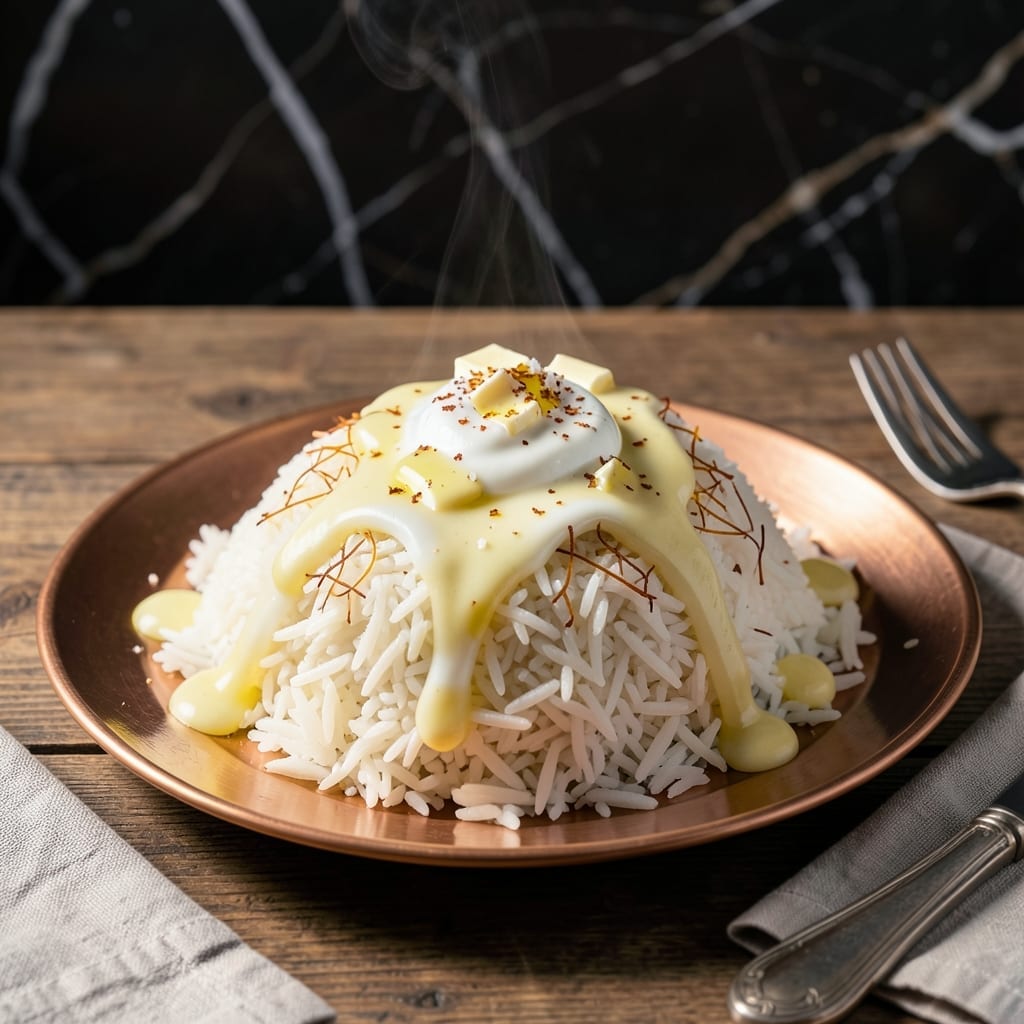
This Persian rice dish delivers a stunning crispy golden crust with fragrant saffron-infused grains above. I perfected this method after years of testing to achieve that signature tahdig layer that stays intact when served.
The key is parboiling the basmati rice before layering it with a butter and yogurt mixture at the bottom of the pot. This creates the coveted crispy foundation while the steam cooks the rice to fluffy perfection.
What emerges is a pot of rice with a shatteringly crispy bottom and light, separate grains scented with saffron. The contrast between textures makes every bite memorable.
Serve this centerpiece dish at gatherings or family dinners for a taste of authentic Persian cuisine. The technique is precise but straightforward.
Ingredients for Sishi Rice
Basmati rice, saffron, and a few pantry staples create this showstopping Persian dish with its signature crispy bottom.
| Ingredient | Amount | Notes |
|---|---|---|
| Basmati Rice 🌾 | 2 cups | Rinsed until water runs clear |
| Saffron Threads 🌼 | ¼ tsp | Crushed and dissolved in hot water |
| Unsalted Butter 🧈 | 4 tbsp | Divided for layers and topping |
| Plain Yogurt 🥛 | ½ cup | Full-fat for best results |
| Water 💧 | 4 cups | For parboiling rice |
| Salt 🧂 | 1 ½ tsp | Divided for boiling and seasoning |
| Sugar 🍚 | 1 tsp | Optional for balancing flavors |
| Cardamom Pods 🌿 | 2 whole | Lightly crushed, optional |
| Cinnamon Stick 🌰 | 1 whole | Optional for infusing water |
| Vegetable Oil 🫒 | 2 tbsp | For crisping the bottom layer |
| Hot Water 💧 | 3 tbsp | For dissolving saffron |
The basmati rice is non-negotiable for authentic texture. Look for aged basmati at Middle Eastern markets or Trader Joe’s—it expands less and stays separate. Saffron should be deep red with a strong aroma; avoid dull, brittle threads. The yogurt needs to be full-fat to create that crispy crust without burning. If your butter is salted, reduce the added salt by half.
Out of saffron? Turmeric at one-eighth the amount adds color but not flavor. No yogurt? Sour cream thinned with milk works in a pinch. Cardamom and cinnamon are traditional but optional—skip them entirely if you prefer a simpler profile. The sugar balances the saffron’s bitterness, but omit it if you like savory rice. The key is patience: don’t rush the parboiling step.
Uncooked rice keeps in a cool, dark place for 6-12 months. Once prepared, this dish holds its crispiness for 2-3 hours at room temperature. Leftovers reheat best in a dry skillet to revive the crust. Saffron threads should be stored airtight in a dark cabinet to preserve potency.
Why You’ll Love This Recipe
- One-Pot Wonder: I just toss everything in—basmati, saffron, butter—and let it simmer. No fancy techniques, no stress.
- Luxurious Comfort: That saffron-infused aroma with the creamy yogurt swirl? It’s like a warm hug in every bite.
- Feeds a Crowd: Honestly, it’s my go-to for gatherings. Doubles easily, and everyone always asks for the recipe.
- Budget-Friendly Luxe: Saffron feels fancy, but a little goes a long way. I stretch it across multiple meals without breaking the bank.
Step-by-Step Instructions for Persian-Style Crispy Bottom Rice
Master the technique for achieving the coveted golden crust with fragrant saffron-infused layers.
Step 1: Prepare the Rice and Saffron Infusion
Rinse the 2 cups Basmati Rice under cold water until the water runs clear, then soak in 4 cups Water with 1.5 tsp Salt, 2 whole Cardamom Pods, and 1 whole Cinnamon Stick for 30 minutes. This removes excess starch and infuses the grains with subtle spice notes.
Meanwhile, crush the 0.25 tsp Saffron Threads between your fingers and dissolve in 3 tbsp Hot Water. Set aside to steep—this creates the vibrant golden liquid that will perfume your dish. The saffron should release its deep red color and aromatic oils into the water.
Step 2: Parboil the Rice
Drain the soaked rice and parboil in a large pot of boiling water with 1 tsp Sugar for 5-7 minutes until the grains are slightly softened but still firm to the bite. Taste a grain—it should have a slight crunch in the center.
Drain immediately in a colander and rinse briefly with warm water to stop the cooking process. This parboiling ensures the rice cooks evenly later and prevents a mushy texture. Gently fold in 0.5 cup Plain Yogurt while the rice is still warm—this adds tang and helps create the crispy bottom layer.
Step 3: Layer and Crisp the Bottom
Heat 2 tbsp Vegetable Oil in a nonstick pot over medium heat. Spread 2 tbsp Unsalted Butter evenly across the bottom, then layer about 1/3 of the rice in the pot, pressing down firmly with a spatula. This first layer will become your crispy tahdig.
Drizzle half the saffron infusion over this bottom layer. Continue layering the remaining rice, sprinkling the last 2 tbsp Unsalted Butter between layers. Use the handle of your spatula to poke 5-6 holes through the rice to the bottom—this allows steam to escape and helps create the crispy crust.
Step 4: Cook to Perfection
Cover the pot with a clean kitchen towel, then place the lid on top. This absorbs excess steam while allowing just enough to circulate. Cook over medium-low heat for 25-30 minutes. You’ll hear a faint sizzling sound as the bottom crisps.
When the rice is done, the edges will pull away from the pot and the bottom will have a deep golden brown crust. The aroma will be intoxicating—sweet, buttery, and floral from the saffron. Resist the urge to peek during cooking; the steam needs to work its magic undisturbed.
Step 5: Serve with Drama
Remove from heat and let rest for 5 minutes. Place a large platter over the pot and carefully flip to reveal the crispy bottom. If any rice sticks, gently scrape it out and place it on top. The tahdig should be a beautiful, caramelized golden disk.
Serve immediately while hot and crispy. The contrast between the fragrant, fluffy rice and the crunchy, buttery bottom is what makes this dish extraordinary. Drizzle any remaining saffron infusion over the top for added color and aroma before serving.
Pro Tips For Making Sishi Rice
- Soak the Basmati: Give the rice a 30-minute soak in cold water—it plumps the grains so they cook evenly and don’t turn to mush. I learned this the hard way after making a few gummy batches.
- Bloom the Saffron: Crush the saffron threads and steep them in 2 tablespoons of hot (not boiling) water for 10 minutes. This extracts way more color and flavor than just tossing them in raw.
- Watch the Yogurt: Use full-fat plain yogurt, and bring it to room temperature first to prevent curdling when mixed with the warm rice. Sounds weird, but it works.
- Low and Slow: After adding the rice to the pot, keep the heat at the lowest setting and resist the urge to stir—it’ll steam perfectly without breaking the grains.
Pro Cooking Tips for sishi rice
Rice Selection Matters
Aged basmati rice is non-negotiable for that perfect separate grain texture. I source mine from Middle Eastern markets where turnover is high. Look for grains that are slightly off-white rather than bright white—this indicates proper aging. Younger rice absorbs too much water and turns mushy. 💡
Perfect Parboiling
Timing the parboil is crucial—5-7 minutes in salted water until grains are al dente. Test by biting a grain; it should have a firm center. Overcooking here means mushy rice later. I set a timer for 6 minutes and check at the 5-minute mark.
Layering Technique
Press the first layer firmly into the butter-oil mixture at the pot’s bottom. This contact creates the crispy tahdig. Use 1/3 of the rice for this base layer. Poke 5-6 steam holes through to the bottom with your spatula handle—this prevents soggy spots.
Steam Control
Cover with a clean kitchen towel before the lid to absorb excess steam. This prevents condensation from dripping back into the rice. Cook on medium-low heat for 25-30 minutes. The sizzling sound you hear is the crust forming—music to my ears. 🔥
Flipping with Confidence
Let the rice rest 5 minutes off heat before flipping. Use a platter larger than your pot. If some rice sticks, don’t panic—just scrape it out and place on top. The tahdig should release cleanly if you’ve built up enough courage and patience.
Nutrition Facts
Frequently Asked Questions
Why soak the rice before cooking?
Soaking removes excess starch to prevent sticky clumps and ensures even cooking. 30 minutes in salted water also infuses subtle flavor from the cardamom and cinnamon.
Can I use a different rice variety?
Aged basmati is essential for the right texture. Jasmine works in a pinch but won’t yield the same separate grains or crispy bottom. Avoid short-grain varieties entirely.
How do I know when it’s done?
Listen for a faint sizzle and watch for edges pulling away from the pot. After 25-30 minutes, the bottom should be deep golden brown.
What if my tahdig sticks to the pot?
Let it rest 5 minutes before flipping. If some sticks, gently scrape it out and place on top—it’s still delicious! Use a nonstick pot next time.

- Jollof Rice Sauce Recipe: West African Tomato and Spice Infusion - September 25, 2026
- Japanese Rice Soup Recipe: Umami-Rich Comfort in a Bowl - September 25, 2026
- Homemade Cream Of Rice Recipe: Silk-Smooth Breakfast in Minutes - September 25, 2026