
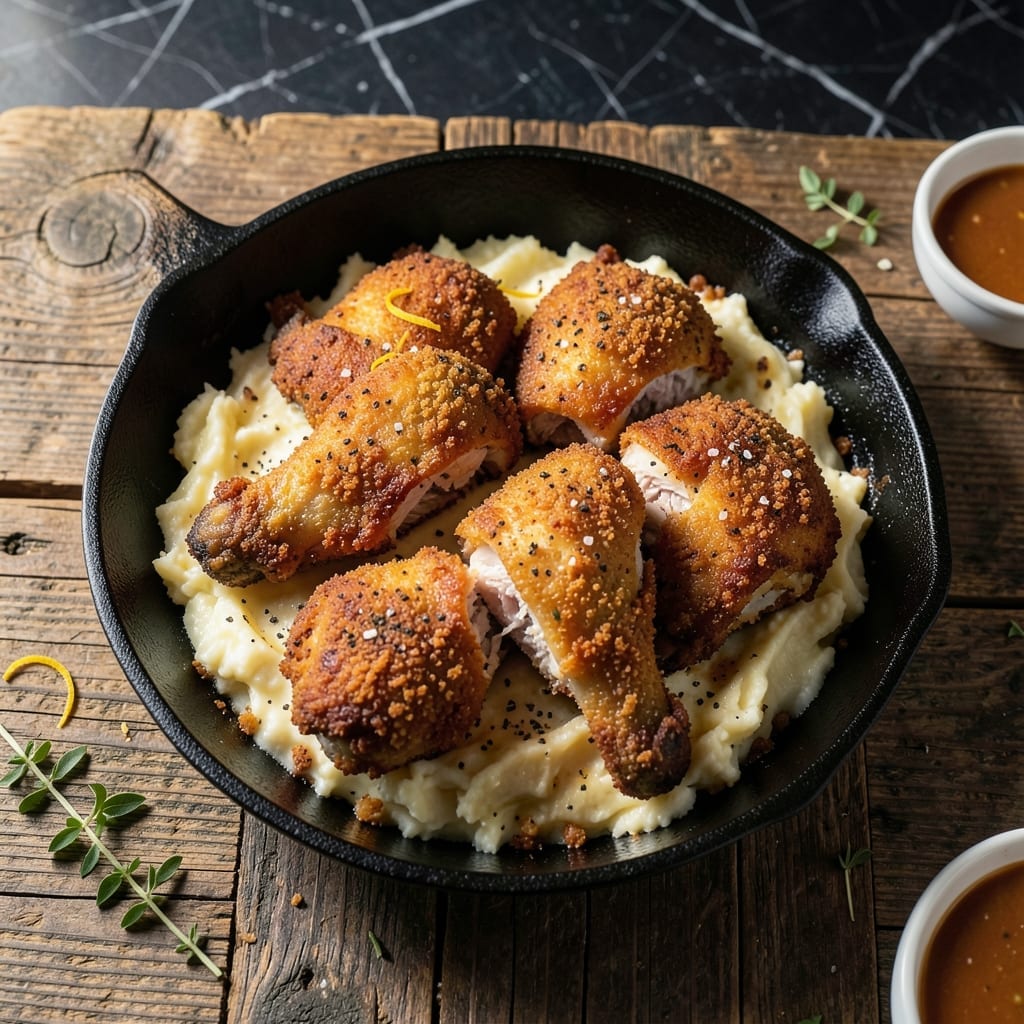
This Southern classic delivers crispy perfection every time through a time-tested buttermilk marinade technique.
The secret lies in a long soak in tangy buttermilk, which tenderizes the meat while creating a base for the seasoned coating to adhere. This traditional method ensures maximum flavor penetration and that signature golden-brown finish.
What emerges from the oil is chicken with a shatteringly crispy exterior and juicy, flavorful meat inside. The buttermilk works its magic during both the marinade and frying process.
Serve hot for the ultimate comfort food experience that honors authentic Southern cooking traditions.
Ingredients for Southern Chicken
Buttermilk marinade plus a crispy coating delivers that signature Southern crunch and juiciness.
| Ingredient | Amount | Notes |
|---|---|---|
| Chicken Thighs 🍗 | 2 ½ lb | Boneless, skin-on for crispiness |
| Buttermilk 🥛 | 2 cups | Full-fat, well-shaken before use |
| All-Purpose Flour 🌾 | 2 cups | For dredging, sifted first |
| Cornstarch 🌾 | ¼ cup | Extra-crispy coating secret |
| Kosher Salt 🧂 | 1 tbsp | Diamond Crystal preferred |
| Freshly Ground Black Pepper 🌶️ | 1 tsp | Coarse grind for texture |
| Garlic Powder 🧄 | 1 tbsp | Not garlic salt |
| Onion Powder 🧅 | 1 tbsp | Balances flavor profile |
| Paprika 🌶️ | 1 tbsp | Sweet or smoked variety |
| Cayenne Pepper 🔥 | ¼ tsp | Adjust for heat preference |
| Vegetable Oil 🫒 | 4 cups | For deep frying, peanut oil works too |
| Large Eggs 🥚 | 2 whole | Helps coating adhere |
| Hot Sauce 🌶️ | 1 tbsp | Crystal or Tabasco recommended |
The buttermilk is non-negotiable here—full-fat provides the acidity needed to tenderize while creating the perfect base for the coating. Chicken thighs (skin-on, bone-in for maximum flavor) are standard in Southern kitchens, though boneless works if you prefer. For the flour, White Lily is the Southern gold standard for its low protein content, but any all-purpose will do. The oil must have a high smoke point—peanut oil is traditional, but vegetable oil works.
No buttermilk? Whole milk plus 1 tbsp vinegar per cup gets you 90% there. Swap thighs for drumsticks if you like dark meat with more bone-in flavor. The cornstarch can be replaced with more flour, but you’ll lose some crunch. For heat, substitute cayenne with smoked paprika for depth without spice. The hot sauce is optional but adds authentic Southern tang.
Marinate the chicken for at least 4 hours (overnight for best results). Fried chicken keeps 2-3 days in the fridge but is best served immediately. Reheat in a 350°F oven for 15 minutes to restore crispiness—microwaving makes it soggy.
Why You’ll Love This Recipe
- One Pan Magic: I just toss the thighs in buttermilk, dredge in flour and cornstarch, and let the oven do the rest—minimal mess, maximum flavor.
- Crispy Outside, Juicy Inside: That buttermilk soak keeps the chicken tender while the cornstarch gives it a crave-worthy crunch.
- Feeds Everyone: Honestly, it’s my go-to for Sunday suppers, weeknight dinners, or even when I need to feed a last-minute crowd.
- Budget Stretcher: Chicken thighs are cheap, and this recipe turns them into something special—leftovers taste even better the next day.
Step-by-Step Instructions for Buttermilk-Marinated Chicken
Master these techniques to achieve shatteringly crisp, juicy chicken with a perfectly seasoned crust.
Step 1: Marinate Chicken in Buttermilk and Hot Sauce
Combine the 2 cups Buttermilk and 1 tbsp Hot Sauce in a large bowl. Whisk until fully incorporated—the acidity will tenderize while the fat ensures moisture retention.
Add the 2.5 lb Chicken Thighs to the mixture, ensuring each piece is fully submerged. Cover and refrigerate for 8-12 hours (overnight works best). The buttermilk’s lactic acid breaks down proteins, guaranteeing tenderness, while the hot sauce adds subtle depth.
Step 2: Prepare the Seasoned Flour Dredge
In a shallow dish, whisk together the 2 cups All-Purpose Flour, 0.25 cup Cornstarch, 1 tbsp Kosher Salt, 1 tsp Freshly Ground Black Pepper, 1 tbsp Garlic Powder, 1 tbsp Onion Powder, 1 tbsp Paprika, and 0.25 tsp Cayenne Pepper.
The cornstarch is critical—it creates micro-crisp edges that plain flour can’t achieve. Sift the mixture first to eliminate lumps, ensuring an even coating that adheres properly during frying.
Step 3: Dredge and Double-Coat the Chicken
Remove the chicken from the buttermilk, letting excess drip off. Dredge each piece thoroughly in the flour mixture, pressing firmly to create a thick, even layer. Shake off any loose flour—excess creates uneven cooking and potential burning.
For maximum crunch, repeat the process: dip back into the buttermilk, then dredge again in the flour. Place the coated pieces on a wire rack set over a baking sheet. This double-coating technique builds layers of crispiness while preventing sogginess.
Step 4: Fry to Golden Perfection
Heat the 4 cups Vegetable Oil in a deep, heavy-bottomed pot or Dutch oven to 350°F. Use a deep-fry thermometer for precision—temperature fluctuations cause uneven cooking.
Working in batches to avoid crowding, carefully lower the chicken into the hot oil. Fry for 12-15 minutes, turning occasionally, until the coating is deep golden brown and the internal temperature reaches 165°F. The cornstarch in your dredge will create an audible sizzle as it crisps—this is your audio cue that it’s working.
Drain on a wire rack set over paper towels, not directly on towels. This prevents steam from making the coating soggy. The rack allows air circulation on all sides, preserving that coveted crunch.
Pro Tips For Making Southern Chicken
- Soak Overnight: Let those chicken thighs swim in buttermilk for at least 12 hours—I learned this the hard way when my first batch came out dry as a bone. The longer soak guarantees juicy meat and helps the flour stick like it’s supposed to.
- Double Dredge: After the first flour coat, dip back in buttermilk and dredge again in flour mixed with cornstarch. Sounds like a hassle, but it creates that thick, shatteringly crisp crust southern chicken is known for.
- Skip Cold Chicken: Pull the thighs from the fridge 30 minutes before cooking. My grandmother swore by this, and she was right: cold meat seizes up in hot oil, leaving the outside burnt before the inside’s done.
- Rest Before Serving: Give the fried chicken a solid 5-10 minutes on a rack after frying. I used to dig in right away and ended up with a soggy bottom—now I let it drain and crisp up properly.
Pro Cooking Tips for This Recipe
Marinade Timing
For maximum tenderness and flavor, I always marinate the chicken for the full 12 hours. The buttermilk’s lactic acid needs time to work its magic on the meat’s proteins. Even 4 hours makes a difference, but overnight is ideal.
Oil Temperature Control
Maintaining 350°F oil temperature is non-negotiable. I use a candy thermometer clipped to the pot side. If the temperature drops below 325°F, the coating absorbs oil and becomes greasy instead of crispy. 🌡️
Double-Coating Technique
The double-dredge creates that signature crunch. After the first coat, let the chicken rest for 5 minutes before the second dredge. This helps the coating adhere better during frying.
Frying in Batches
Never crowd the pot—this lowers oil temperature and causes uneven cooking. I fry 3-4 pieces at a time in my 5-quart Dutch oven. The chicken should have room to move freely.
Draining Properly
Drain on a wire rack, not paper towels. The rack allows air circulation on all sides, preventing steam from making the coating soggy. I place paper towels under the rack for easy cleanup.
Resting Time
Let the fried chicken rest for 5-10 minutes before serving. This allows the juices to redistribute and the coating to set. Serve immediately for that perfect Southern crunch. 🔥
Nutrition Facts
Frequently Asked Questions
Can I use chicken breasts instead of thighs?
Yes, but thighs stay juicier. If using breasts, reduce frying time to 10-12 minutes and marinate for at least 8 hours to prevent dryness.
Why does the recipe call for cornstarch?
Cornstarch creates extra-crispy edges that flour alone can’t achieve. It absorbs moisture and forms a delicate crust during frying.
How do I keep the coating from falling off?
Ensure the oil is at 350°F before frying and don’t move the chicken too much. The double-dredge method also helps the coating adhere better.
Can I bake this instead of frying?
Yes, bake at 400°F for 25-30 minutes on a wire rack. The texture won’t be as crispy, but it’s a healthier alternative.

- Jollof Rice Sauce Recipe: West African Tomato and Spice Infusion - September 25, 2026
- Japanese Rice Soup Recipe: Umami-Rich Comfort in a Bowl - September 25, 2026
- Homemade Cream Of Rice Recipe: Silk-Smooth Breakfast in Minutes - September 25, 2026