
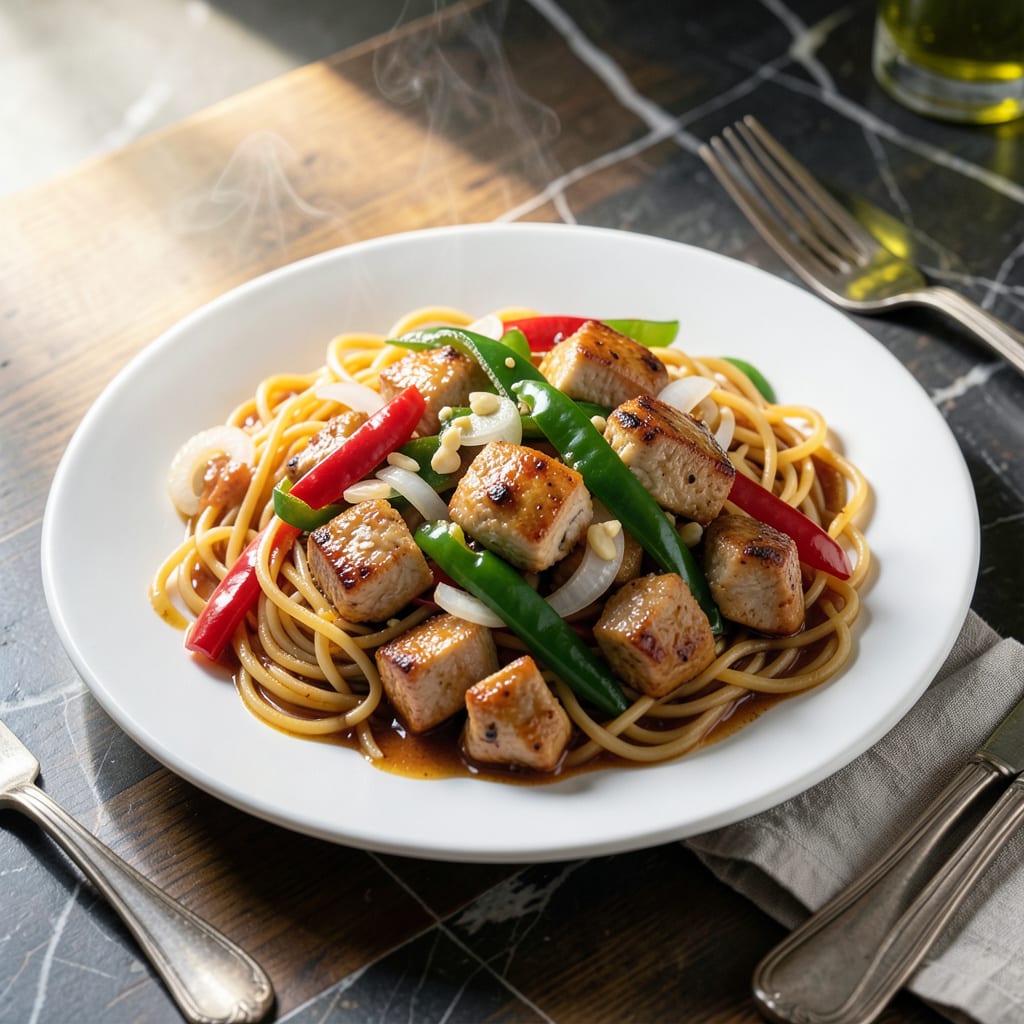
This dish brings classic comfort with a tangy twist, combining tender chicken, chewy noodles, and a vibrant sweet-and-sour sauce. The balance of flavors creates a satisfying meal that feels both nostalgic and fresh.
With simple ingredients and straightforward steps, you’ll achieve restaurant-quality results at home. The sauce clings perfectly to the noodles, while the chicken stays juicy and flavorful.
Ingredients for Sweet and Sour Chicken Noodles
Tender chicken, chewy noodles, and vibrant sweet-and-sour sauce come together beautifully with these ingredients.
| Ingredient | Amount | Notes |
|---|---|---|
| Boneless Skinless Chicken Breasts 🍗 | 1 ½ lb | Cut into bite-sized pieces |
| Egg Noodles 🍜 | 12 oz | Or substitute udon or lo mein noodles |
| Red Bell Pepper 🌶️ | 1 whole | Diced into 1-inch pieces |
| Green Bell Pepper 🌶️ | 1 whole | Diced into 1-inch pieces |
| White Onion 🧅 | 1 whole | Thinly sliced into wedges |
| Garlic Cloves 🧄 | 3 cloves | Minced finely |
| Fresh Ginger Root 🌿 | 1 whole | Peeled and grated |
| Ketchup 🍅 | ½ cup | For base sweetness |
| Rice Vinegar 💧 | ¼ cup | Unseasoned variety preferred |
| Soy Sauce 🫒 | ¼ cup | Low-sodium for control |
| Brown Sugar 🍚 | ⅓ cup | Light or dark works |
| Pineapple Chunks 🍍 | 1 cup | Fresh or canned in juice |
| Cornstarch 🌾 | 2 tbsp | For thickening sauce |
| Vegetable Oil 🫒 | 2 tbsp | Divided for cooking |
| Sesame Oil 🫒 | 1 tsp | For finishing aroma |
[recipeingredientscaler]
The chicken quality matters here. Boneless, skinless breasts stay juicy when cut into even, bite-sized pieces. Costco or Sam’s Club offer great bulk options. For the noodles, look for egg noodles in the refrigerated section—they hold up better than dried. Bell peppers should be firm and glossy; organic often has better texture. Fresh ginger and garlic are non-negotiable for that authentic restaurant flavor.
Need to swap the noodles? Udon or lo mein work perfectly—just adjust cooking time. No fresh ginger? Ground ginger at one-quarter the amount works in a pinch. Short on pineapple? Mandarin oranges add a similar sweetness. For a gluten-free version, use tamari instead of soy sauce. The cornstarch slurry is essential for that glossy sauce—don’t skip it.
Store uncooked chicken in the fridge for up to 2 days or freeze for 3 months. The sauce components keep well: vinegar and soy sauce last 1 year unopened. Cooked leftovers stay fresh for 4-5 days refrigerated. Reheats beautifully—add a splash of water to revive the sauce.
Why You’ll Love This Recipe
- One Pan Wonder: I toss the chicken, peppers, and onions together—no fancy techniques, just a single skillet and 25 minutes.
- Sweet-Tangy Magic: The sauce clings to the egg noodles and chicken in this perfect balance of pineapple sweetness and vinegar zip.
- Feeds a Crowd: I stretch it to four generous servings with minimal extra cost, and it tastes even better the next day.
- Weeknight Lifesaver: Honestly, it’s my backup plan for those evenings when I’m staring at the fridge at 6 p.m. with zero inspiration.
Step-by-Step Instructions for Sweet and Sour Chicken Noodles
Master the technique for this balanced dish with vibrant flavors and perfect texture.
Step 1: Prepare and Cook the Chicken
Cut the 1.5 lb boneless skinless chicken breasts into bite-sized pieces. Heat 1 tablespoon of the 2 tablespoons vegetable oil in a large skillet over medium-high heat until shimmering. Add the chicken in a single layer, being careful not to overcrowd the pan.
Cook undisturbed for 3-4 minutes until the bottoms are golden brown. Flip and cook for another 2-3 minutes until the chicken is cooked through and reaches an internal temperature of 165°F. Transfer to a plate and set aside.
Step 2: Sauté the Vegetables
In the same skillet, add the remaining 1 tablespoon vegetable oil. Add the diced 1 whole red bell pepper, diced 1 whole green bell pepper, and thinly sliced 1 whole white onion. Sauté over medium heat for 4-5 minutes until the vegetables begin to soften.
Add the minced 3 cloves garlic cloves and grated 1 whole fresh ginger root, cooking for an additional 30 seconds until fragrant. This builds the aromatic foundation for your sauce.
Step 3: Create the Sweet and Sour Sauce
In a small bowl, whisk together the 0.5 cup ketchup, 0.25 cup rice vinegar, 0.25 cup soy sauce, 0.33 cup brown sugar, and 2 tbsp cornstarch until smooth. Pour this mixture into the skillet with the vegetables.
Stir in the 1 cup pineapple chunks with any accumulated juices. Cook over medium heat for 3-4 minutes until the sauce thickens to a glossy consistency that coats the back of a spoon.
Step 4: Combine Chicken and Noodles
Return the cooked chicken to the skillet and stir to coat evenly in the sauce. Meanwhile, cook the 12 oz egg noodles according to package instructions until al dente. Drain well and add directly to the skillet with the chicken and sauce.
Toss everything together over low heat for 1-2 minutes until the noodles are fully coated and heated through. The noodles should absorb some of the sauce while maintaining their texture.
Step 5: Finish and Serve
Drizzle the 1 tsp sesame oil over the dish and toss gently to distribute. The sesame oil adds a final aromatic note that ties all the flavors together. Serve immediately while hot, ensuring each portion has a balance of chicken, noodles, and vegetables.
The sauce should be thick enough to cling to the noodles without pooling at the bottom of the plate. The chicken should be tender and juicy, with the vegetables retaining a slight crispness for contrast.
Pro Tips For Making Sweet And Sour Chicken Noodles
- Velvet the Chicken: Slice the chicken thin and marinate it in a little cornstarch and egg white for 15 minutes—I learned this the hard way after my first batch turned out dry and tough.
- Blanch the Peppers: Give those bell peppers a 30-second dip in boiling water before adding them to the wok. Sounds weird, but it keeps them crisp and bright, not sad and soggy.
- Skip Pre-Boiling Noodles: Cook the egg noodles directly in the sauce at the end for 2 minutes—this isn’t the prettiest method, but it soaks up the sweet and sour flavor like nothing else.
- Reserve Some Marinade: After coating the chicken, set aside a couple tablespoons of the marinade to stir into the sauce later. After burning three batches, I finally figured out this is how you layer in the flavor without overpowering it.
Flavor Customization for This Dish
Spice It Up
Add ½ tsp red pepper flakes to the sauce for subtle heat, or 1 tbsp sriracha for a bolder kick. I love how the spice cuts through the sweetness, creating a more complex flavor profile that keeps you coming back for more. 🌶️
Extra Tangy Twist
Increase the rice vinegar to ⅓ cup for a sharper tang that brightens the dish. Balance it with an extra 2 tbsp brown sugar to maintain harmony. This adjustment makes the flavors pop beautifully.
Umami Depth
Stir in 1 tbsp hoisin sauce or 1 tsp fish sauce with the other sauce ingredients. These additions deepen the savory notes, creating a richer, more restaurant-style experience without overpowering the sweet-and-sour balance.
Crunchy Texture
Add ½ cup chopped peanuts or cashews just before serving for a satisfying crunch. Toast them first in a dry pan over medium heat for 2-3 minutes to enhance their flavor. This contrasts perfectly with the soft noodles.
Fresh Finish
Garnish with ¼ cup chopped green onions and 2 tbsp fresh cilantro for a burst of freshness. The herbs add color and brightness, balancing the rich sauce. I always add these right before serving to preserve their crispness. ✨
Citrus Zing
Zest 1 lime into the sauce while cooking, then squeeze in 1 tbsp lime juice at the end. This adds a citrusy brightness that elevates the entire dish, making it taste lighter and more vibrant.
Nutrition Facts
Frequently Asked Questions
Can I use chicken thighs instead of breasts?
Chicken thighs stay juicier and are more forgiving during cooking. Use 1.5 lb boneless, skinless thighs and follow the same cooking times. Their richer flavor pairs beautifully with the sweet-and-sour sauce.
What if my sauce is too thin?
Mix 1 tbsp cornstarch with 1 tbsp cold water and stir into the simmering sauce. Cook for an additional 2-3 minutes until thickened. Avoid adding dry cornstarch directly as it can clump.
Can I make this ahead of time?
Store cooked components separately in the fridge for up to 3 days. Reheat the sauce and chicken together, then toss with freshly cooked noodles. This prevents the noodles from becoming mushy.

- Jollof Rice Sauce Recipe: West African Tomato and Spice Infusion - September 25, 2026
- Japanese Rice Soup Recipe: Umami-Rich Comfort in a Bowl - September 25, 2026
- Homemade Cream Of Rice Recipe: Silk-Smooth Breakfast in Minutes - September 25, 2026