
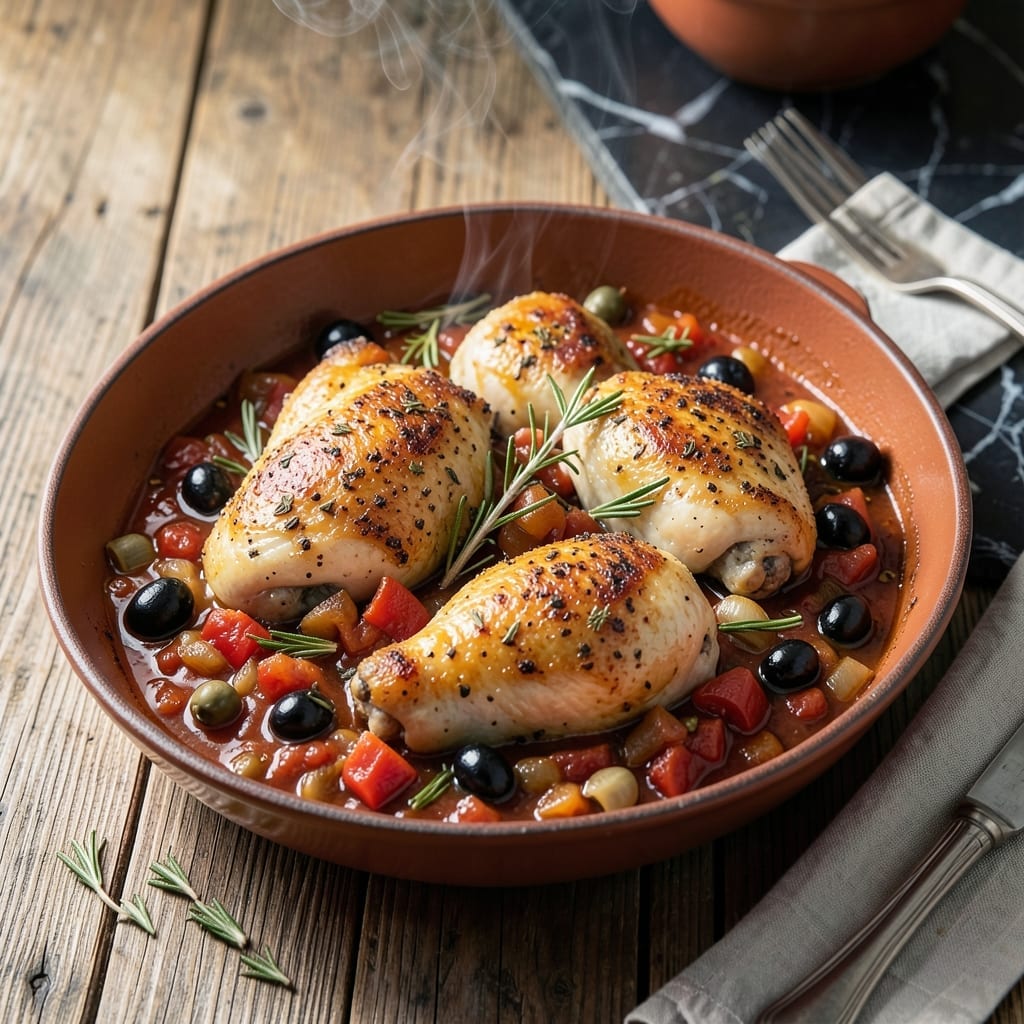
This classic Italian dish brings the rustic flavors of the countryside to your kitchen table. A traditional braised chicken stew with tomatoes, herbs, and vegetables, it’s a hearty meal that feels like a warm embrace.
The secret lies in the slow cooking process, allowing the chicken to become fall-off-the-bone tender while the flavors meld into a rich, savory sauce. Simple ingredients like bell peppers, onions, and white wine create depth without overpowering the dish.
What makes this version special is its authenticity—no shortcuts, just time-honored techniques that deliver restaurant-quality results. The herbs, especially rosemary and oregano, add an aromatic touch that’s unmistakably Italian.
Serve it with crusty bread to soak up every last bit of the sauce. Here’s how to make it at home.
Ingredients for Traditional Chicken Cacciatore
Rustic Italian flavors start with simple, fresh ingredients for this classic braised dish.
| Ingredient | Amount | Notes |
|---|---|---|
| Chicken Thighs 🍗 | 2 lb | Boneless, skin-on preferred |
| All-Purpose Flour 🌾 | ½ cup | For dredging chicken |
| Olive Oil 🫒 | 3 tbsp | Extra-virgin preferred |
| Yellow Onion 🧅 | 1 whole | Medium, finely chopped |
| Red Bell Pepper 🌶️ | 1 whole | Cored, sliced into strips |
| Garlic Cloves 🧄 | 4 cloves | Minced for depth of flavor |
| Dry White Wine 🍷 | ½ cup | Sauvignon Blanc or Pinot Grigio |
| Crushed Tomatoes 🍅 | 1 can | 28 oz can, San Marzano preferred |
| Tomato Paste 🍅 | 2 tbsp | For concentrated tomato flavor |
| Fresh Rosemary 🌿 | 2 tsp | Finely chopped, stems discarded |
| Dried Oregano 🍃 | 1 tsp | Mediterranean variety preferred |
| Bay Leaf 🍃 | 1 whole | For slow-cooked aroma |
| Chicken Stock 🥣 | 1 cup | Low-sodium preferred |
| Green Olives 🫒 | ½ cup | Pitted, halved (optional) |
| Kosher Salt 🧂 | 1 ½ tsp | Diamond Crystal brand preferred |
| Freshly Ground Black Pepper 🌶️ | ½ tsp | Coarse grind for texture |
The chicken matters most here. Bone-in, skin-on thighs deliver the best texture and flavor—avoid breast meat, which dries out. Pat LaFrieda or Murray’s Chicken are excellent sources if available locally. For tomatoes, San Marzano canned tomatoes are the gold standard for Italian cooking, offering a perfect balance of sweetness and acidity. Fresh herbs should be vibrant green (the good stuff, not wilted).
No white wine? Extra chicken stock with a splash of lemon juice works in a pinch. Fresh rosemary can be swapped for half the amount of dried, but dried oregano should be used as-is. If green olives aren’t your thing, capers at half the quantity bring a similar briny note. For a richer sauce, add a parmesan rind while simmering (remove before serving).
This stew improves overnight. Store in the fridge for up to 4 days or freeze for 3 months. Reheat gently to preserve the chicken’s tenderness. Always remove the bay leaf before serving—nobody wants a surprise leaf in their bite.
Why You’ll Love This Recipe
- I’ll be real: the leftovers taste even more amazing after the flavors meld overnight.
- One Pan Wonder: I love that I can brown the chicken thighs and sauté the onions and peppers all in the same skillet—minimal cleanup.
- Ridiculously Rich: The flour-dredged chicken and slow-cooked bell peppers in olive oil create a depth of flavor that’s hard to beat.
- Feeds a Crowd: Honestly, it’s my go-to for Sunday dinner because it stretches easily for family or guests.
Step-by-Step Instructions for Chicken Cacciatore
This classic Italian method delivers deep, rustic flavors with authentic hunter-style technique.
Step 1: Dredge and Sear the Chicken Thighs
Pat the 2 lb chicken thighs dry with paper towels and season both sides with 1.5 tsp kosher salt and 0.5 tsp freshly ground black pepper. Dredge each piece in the 0.5 cup all-purpose flour, shaking off any excess. This creates a light coating that will crisp beautifully in the pan.
Heat 3 tbsp olive oil in a large Dutch oven over medium-high heat until shimmering. Add the floured chicken thighs skin-side down and sear undisturbed for 5-6 minutes until the skin is deep golden brown and crisp. Flip and cook for another 3-4 minutes until browned. Transfer to a plate and set aside.
Step 2: Sauté the Aromatic Vegetables
In the same pot, reduce heat to medium and add the finely chopped yellow onion and sliced red bell pepper. Cook for 5-6 minutes, stirring occasionally, until the vegetables soften and the onion becomes translucent. The fond from the chicken will deepen the flavor of these aromatics.
Add the 4 cloves minced garlic cloves and cook for 30 seconds until fragrant—don’t let it brown. Stir in the 2 tbsp tomato paste and cook for 1-2 minutes until it darkens slightly. This step builds the rich, concentrated tomato base that defines cacciatore.
Step 3: Deglaze and Build the Sauce
Pour in the 0.5 cup dry white wine and scrape up all the browned bits from the bottom of the pot with a wooden spoon. Let it simmer for 2-3 minutes until the liquid reduces by half. This deglazing step captures all the caramelized flavors from the chicken and vegetables.
Add the 1 can crushed tomatoes, 1 cup chicken stock, 2 tsp fresh rosemary, 1 tsp dried oregano, and 1 whole bay leaf. Stir to combine and bring to a gentle simmer. The herbs will infuse the sauce with authentic Italian character as it cooks.
Step 4: Braise the Chicken to Perfection
Return the chicken thighs to the pot, nestling them into the sauce along with any accumulated juices. Add the 0.5 cup green olives if using. Cover and reduce heat to low. Let it simmer gently for 30-35 minutes until the chicken is fork-tender and the sauce has thickened slightly.
Uncover and simmer for an additional 5-10 minutes to allow the sauce to reduce and intensify in flavor. The chicken should be falling off the bone, and the sauce should coat the back of a spoon. Taste and adjust seasoning if needed before serving.
Pro Tips For Making Traditional Chicken Cacciatore
- Brown the Thighs Well: I learned this the hard way—don’t rush browning the chicken thighs. Let them sear in olive oil for 5-6 minutes per side until deep golden; this builds the flavor base that defines cacciatore.
- Dice the Veggies Small: Cut the yellow onion and red bell pepper into 1/4-inch pieces. Sounds tedious, but it actually changes the outcome—smaller bits melt into the sauce and coat the chicken better.
- Skip the Overcrowding: Resist the urge to dump all the chicken in the pan at once. Crowding steams instead of sears, and you’ll end up with pale, soggy thighs instead of crisp, flavorful ones.
- Use Thighs with Skin: My grandmother swore by this, and she was right: skin-on thighs stay juicier and render fat that enriches the sauce. Trim excess skin if you must, but don’t skip it entirely.
Perfect Pairings for traditional chicken cacciatore
Wine Pairings
An Italian red like Chianti Classico complements this dish perfectly—I love how its bright acidity cuts through the rich tomato sauce. Sangiovese is another great choice, offering earthy notes that match the herbs. Serve slightly chilled for best results. 🍷
Bread Options
Crusty ciabatta or a warm baguette is essential for soaking up the sauce. I always toast slices and rub with a garlic clove for extra flavor. For a rustic touch, try focaccia with rosemary and sea salt.
Pasta Pairings
If you prefer pasta, pappardelle or wide egg noodles work beautifully—they hold up to the hearty sauce. Cook 8 oz pasta al dente and toss directly in the cacciatore. The starch helps thicken the sauce slightly.
Side Vegetables
A simple arugula salad with lemon vinaigrette adds freshness to balance the richness. For something warm, try sautéed spinach with 2 minced garlic cloves and a pinch of red pepper flakes. 🥗
Cheese Finishes
Sprinkle Pecorino Romano or Parmigiano-Reggiano over each serving for a salty, nutty finish. I use about ¼ cup grated cheese per plate. The cheese melts slightly into the hot sauce, creating a luxurious texture.
Nutrition Facts
Frequently Asked Questions
Can I use chicken breasts instead of thighs?
Thighs are ideal because they stay juicy during the long braise. Breasts can dry out but work if cooked for only 20-25 minutes instead of 30-35 minutes.
What can I substitute for white wine?
Use extra chicken stock with 1 tbsp lemon juice or apple cider vinegar. The acidity mimics wine’s role in balancing the rich tomato sauce.
Can I make this dish ahead?
The flavors deepen overnight. Store in the fridge for up to 4 days or freeze for 3 months. Reheat gently on the stove.
Why does my sauce taste bitter?
This usually happens if the tomato paste browns too much. Cook it for only 1-2 minutes until it darkens slightly, not burns. A pinch of sugar can help balance any bitterness.

- Jollof Rice Sauce Recipe: West African Tomato and Spice Infusion - September 25, 2026
- Japanese Rice Soup Recipe: Umami-Rich Comfort in a Bowl - September 25, 2026
- Homemade Cream Of Rice Recipe: Silk-Smooth Breakfast in Minutes - September 25, 2026