
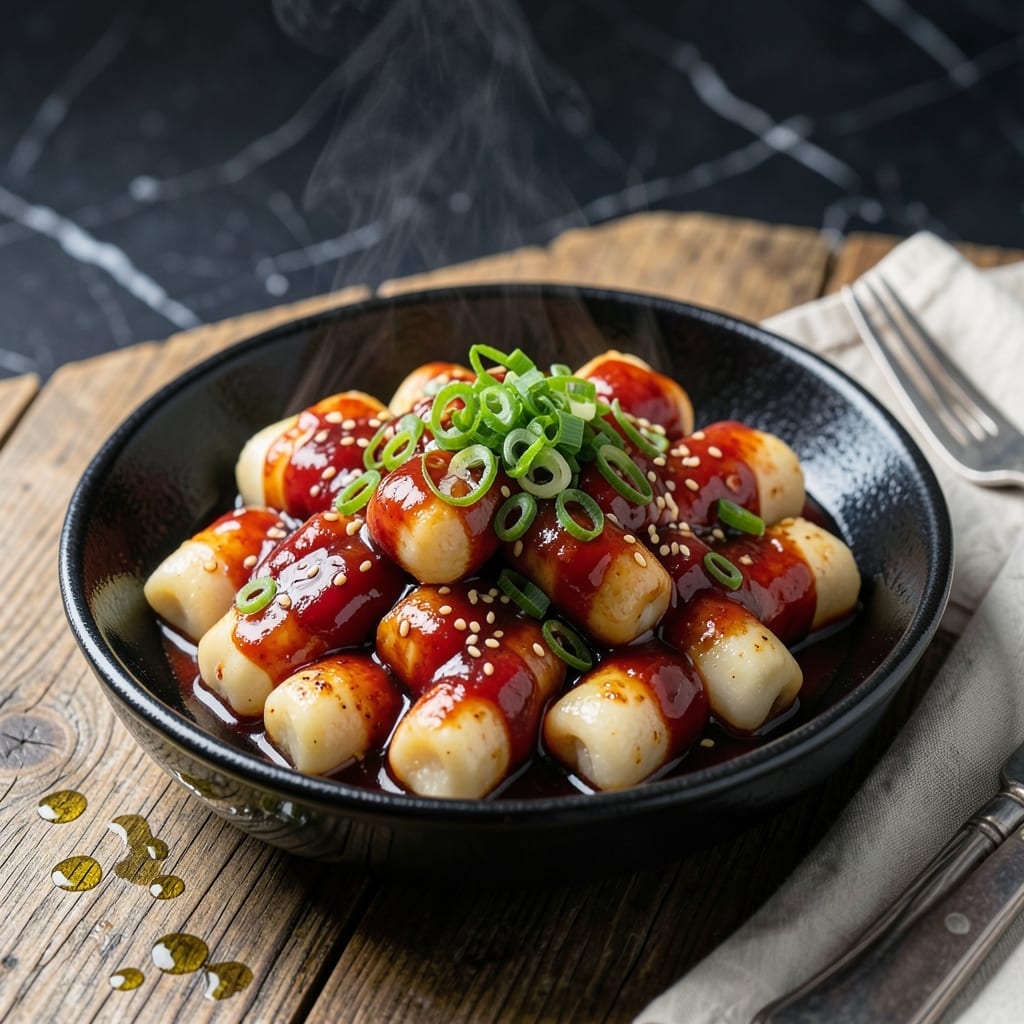
This Korean classic delivers chewy rice cakes in a spicy sauce that’s ready faster than takeout. The secret lies in pre-cooked rice cakes that soften perfectly in a sweet and fiery gochujang-based sauce.
With just 20 minutes and simple ingredients, you’ll achieve that signature glossy, sticky texture. Serve with fish cakes or boiled eggs for an authentic experience.
Ingredients for Tteokbokki Rice Cake
Pre-cooked rice cakes and a fiery gochujang sauce create this Korean classic in minutes.
| Ingredient | Amount | Notes |
|---|---|---|
| Korean Rice Cakes 🍙 | 1 lb | Pre-cooked, cylindrical tteok |
| Gochujang 🌶️ | 3 tbsp | Korean red pepper paste |
| Sugar 🍬 | 2 tbsp | Granulated, adjust to taste |
| Soy Sauce 🫒 | 1 tbsp | Low-sodium preferred |
| Garlic Cloves 🧄 | 4 cloves | Minced finely for depth |
| Sesame Oil 🫒 | 1 tsp | Toasted for aroma |
| Green Onions 🧅 | 4 whole | Thinly sliced, green parts only |
| Dried Red Pepper Flakes 🌶️ | 1 tsp | Optional for extra heat |
| Water 💧 | 2 cups | For cooking rice cakes |
| Sesame Seeds 🌿 | 1 tsp | Toasted, for garnish |
| Hard-Boiled Eggs 🥚 | 2 whole | Peeled, for serving |
| Vegetable Stock 🥬 | 1 cup | For added depth |
| Corn Syrup 🧈 | 1 tbsp | For glossy texture |
The rice cakes are everything. Look for pre-cooked cylindrical tteok in the refrigerated section of H Mart or Korean markets—they soften perfectly without turning mushy. Gochujang brands vary wildly; Sempio or Chung Jung One deliver consistent heat and sweetness. Avoid the ones with added preservatives if possible. Freshness matters most with the garlic and green onions.
No gochujang? Miso plus sriracha gets you a passable substitute, though the flavor won’t be identical. Rice cakes can be swapped for frozen tteok (thaw first) or even thick udon noodles in a pinch. For a sweeter sauce, honey or agave works instead of sugar. The hard-boiled eggs are optional but add that authentic touch—soft-boiled for runny yolks if you prefer.
Finished sauce keeps 3-4 days in the fridge, though the rice cakes absorb liquid over time. Reheat with a splash of water to restore the glossy texture. Gochujang stays fresh for 1 year unopened, 6 months after opening if stored in the fridge.
Why You’ll Love This Recipe
- One Pot Wonder: I can make this in my deepest skillet with zero fancy equipment—just rice cakes, gochujang, and a few pantry staples.
- Sweet-Spicy Addiction: The gochujang and sugar create this ridiculous balance where it’s fiery but you still reach for another bite.
- Weeknight Rescue: Honestly, it’s my go-to when I need dinner ready before the kids start asking what’s for dinner.
- Budget Stretcher: A bag of rice cakes and a spoonful of gochujang feed my family for less than takeout.
Step-by-Step Instructions for Tteokbokki
Master the technique for this classic Korean street food with perfectly chewy rice cakes in a spicy, glossy sauce.
Step 1: Prepare the Rice Cakes and Aromatics
Soak the 1 lb Korean Rice Cakes in warm water for 10-15 minutes if they feel hard or dry. This softens them for even cooking. Meanwhile, thinly slice the 4 whole Green Onions, keeping only the green parts for garnish.
Mince the 4 cloves Garlic Cloves finely—this ensures they melt into the sauce rather than standing out as sharp bits. Drain the rice cakes well and set aside. Proper prep here guarantees the rice cakes absorb the sauce evenly without becoming mushy.
Step 2: Build the Spicy Sauce Base
In a large skillet or pot, combine the 2 cups Water and 1 cup Vegetable Stock over medium-high heat. Add the 3 tbsp Gochujang, 2 tbsp Sugar, 1 tbsp Soy Sauce, and 1 tbsp Corn Syrup, whisking until the mixture is smooth and the gochujang fully dissolves.
Stir in the minced garlic and 1 tsp Dried Red Pepper Flakes (if using). Bring to a gentle simmer, then reduce heat to medium. This step develops the depth of flavor in the sauce, balancing sweet, spicy, and umami elements.
Step 3: Cook the Rice Cakes in the Sauce
Add the drained 1 lb Korean Rice Cakes to the simmering sauce. Stir gently to coat them evenly. Cook for 5-7 minutes, stirring occasionally, until the rice cakes are tender and the sauce thickens enough to cling to them.
Watch for the sauce to turn glossy and slightly syrupy—this is the corn syrup at work. If the mixture thickens too quickly, add a splash of water to loosen it. The rice cakes should be soft but still chewy, with a slight bounce when bitten.
Step 4: Finish and Garnish
Remove the skillet from heat and stir in the 1 tsp Sesame Oil. Taste and adjust seasoning if needed—add a pinch more sugar for sweetness or a dash of soy sauce for saltiness. The sesame oil adds a nutty aroma that complements the spice.
Transfer to a serving dish and garnish with the sliced 4 whole Green Onions and 1 tsp Sesame Seeds. Top with the 2 whole Hard-Boiled Eggs, halved lengthwise, for a classic presentation. Serve immediately while hot and glossy.
Pro Tips For Making Tteokbokki Rice Cake
- Soak the rice cakes: I learned this the hard way—dry rice cakes turn gummy and uneven. Soak them in warm water for 10-15 minutes if they’re fresh, or 20-30 if frozen, until they’re slightly soft but still chewy.
- Bloom the gochujang: Cook the gochujang with a splash of oil for 1-2 minutes before adding liquids—sounds weird, but it deepens the flavor and removes that raw paste taste.
- Skip the cold water: Adding cold water to the sauce while cooking makes the rice cakes seize up and turn starchy. Use hot water or broth to keep them tender and the sauce silky.
- Finish with sugar: Stir in the sugar at the very end, not the beginning. It caramelizes too fast in the hot sauce and can make your tteokbokki bitter instead of sweet-spicy.
Wine and Beer Pairings for This tteokbokki rice cake
Korean Beer Pairings
I love serving this with Hite or Cass, Korean lagers that cut through the heat with their crisp, clean finish. Their light body won’t compete with the bold flavors. For craft options, Klotz Beer from Seoul offers a refreshing alternative. 🍺
Light and Crisp Whites
A chilled Riesling with its touch of sweetness balances the spice beautifully. Look for a German Kabinett or Korean Chateau Mani—both have the acidity to cleanse your palate between bites.
Sparkling Options
Sparkling wine works surprisingly well here. A Prosecco or Lambrusco brings effervescence that lifts the richness of the sauce. The bubbles also help cool the heat from the gochujang. ✨
Non-Alcoholic Choices
For a non-alcoholic pairing, Korean barley tea (boricha) offers a nutty, toasted flavor that complements the dish. Or try sikhye, a sweet rice punch that contrasts the spice beautifully.
Cocktail Pairing
A soju highball with soda water and a lemon wedge is my go-to. The clean, slightly sweet spirit lets the tteokbokki flavors shine. For a twist, add a splash of yuja (citron) juice.
Nutrition Facts
Frequently Asked Questions
Can I use frozen rice cakes?
Yes, but thaw them in warm water for 10-15 minutes first. Frozen tteok often feels harder, so soaking ensures even cooking. Skip this step and they may stay chewy in the center.
How do I make it less spicy?
Reduce gochujang to 1-2 tbsp and add 1 tbsp tomato paste for color. Balance with extra 1 tbsp sugar or honey. The sauce will be milder but still flavorful.
Can I make this ahead?
Cook and store without garnishes for up to 2 days. Reheat with a splash of water to restore the gloss. Add eggs and green onions just before serving.

- Jollof Rice Sauce Recipe: West African Tomato and Spice Infusion - September 25, 2026
- Japanese Rice Soup Recipe: Umami-Rich Comfort in a Bowl - September 25, 2026
- Homemade Cream Of Rice Recipe: Silk-Smooth Breakfast in Minutes - September 25, 2026