
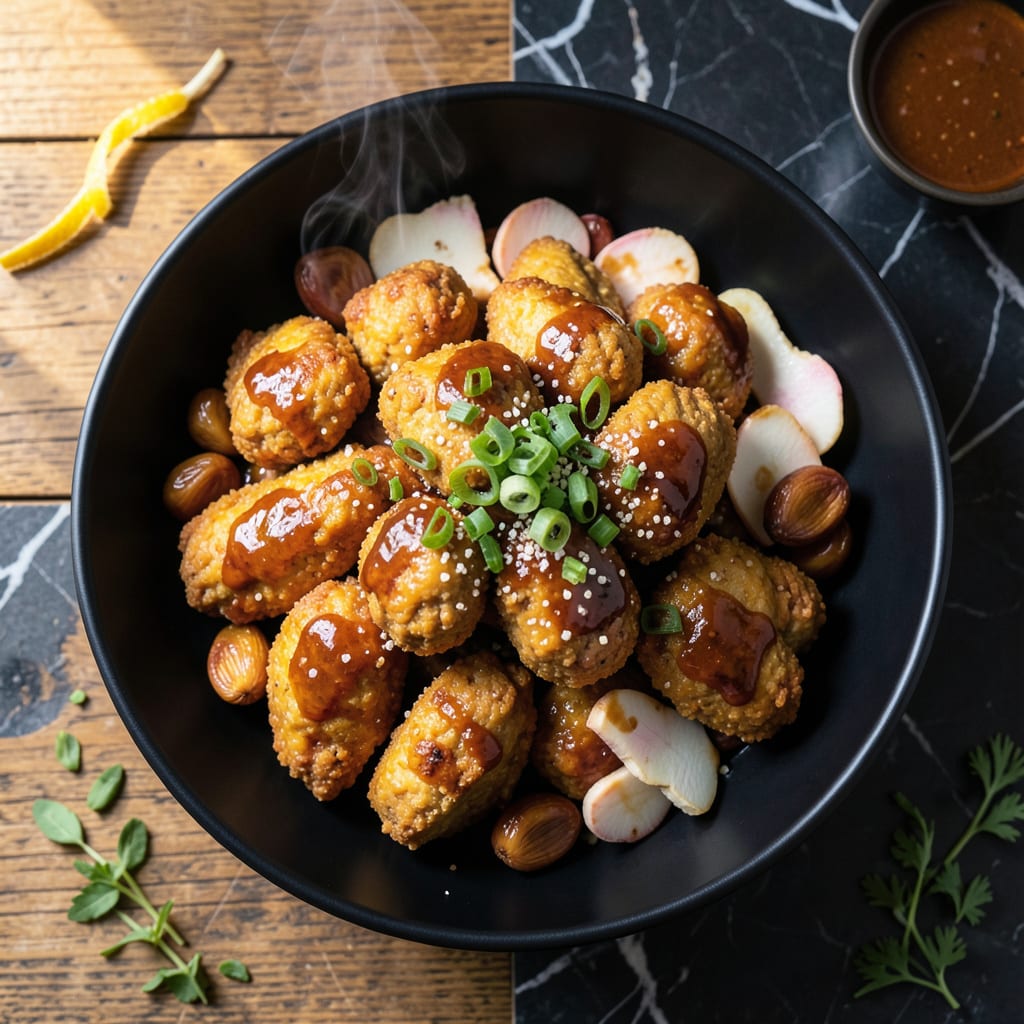
This plant-based dish delivers savory depth without compromising texture or flavor. I developed this recipe to satisfy even the most devoted meat lovers with its remarkably realistic bite and rich seasoning.
The soy-based preparation creates a protein that absorbs marinades beautifully, resulting in a dish that’s both hearty and versatile. Perfect for weeknight dinners or special occasions, this alternative proves vegan cooking can be just as satisfying.
Ingredients for Vegan Soy Chicken
Simple plant-based ingredients combine to create a protein-rich, flavor-packed alternative to traditional chicken.
| Ingredient | Amount | Notes |
|---|---|---|
| Textured Soy Protein 🌱 | 2 cups | Rehydrated in vegetable broth |
| Vegetable Broth 💧 | 2 cups | Low-sodium preferred for seasoning control |
| Soy Sauce 🫒 | ¼ cup | Use tamari for gluten-free |
| Nutritional Yeast 🧀 | ¼ cup | Adds cheesy, umami depth |
| Garlic Cloves 🧄 | 4 cloves | Minced for maximum flavor infusion |
| Fresh Ginger 🌿 | 1 tbsp | Grated, for zesty brightness |
| Maple Syrup 🍁 | 2 tbsp | Balances savory with subtle sweetness |
| Smoked Paprika 🌶️ | 1 tsp | Essential for authentic smokiness |
| Onion Powder 🧅 | 1 tsp | Enhances savory base notes |
| Ground Black Pepper 🌶️ | ½ tsp | Freshly ground for best aroma |
| Olive Oil 🫒 | 2 tbsp | For sautéing and moisture |
| All-Purpose Flour 🌾 | ½ cup | For light coating and texture |
| Cornstarch 🌽 | 2 tbsp | Creates crispy exterior when pan-fried |
| Liquid Smoke 🔥 | ½ tsp | Optional, for extra depth |
[recipeingredientscaler]
Textured soy protein is the foundation here. Bob’s Red Mill offers a high-quality option, but any unflavored TVP works. For the best texture, rehydrate it in hot vegetable broth—this infuses flavor from the start. I source my nutritional yeast from Bragg for its consistent potency and robust cheesy notes, which are vital for that authentic savory depth.
No tamari? Coconut aminos work in a pinch, though the flavor profile shifts slightly sweeter. Out of smoked paprika? Regular paprika plus a tiny pinch of cayenne mimics the smokiness. Fresh ginger can be swapped for ground ginger at one-third the amount, but the texture won’t be as vibrant. For gluten-free, use rice flour instead of all-purpose—just as effective for coating.
Store rehydrated soy protein in the fridge for up to 3 days, or freeze for 3 months. The marinade ingredients keep well in a sealed container for 1 week. Always bring soy sauce and broth to room temperature before mixing for even flavor distribution.
Why You’ll Love This Recipe
- So Simple: I just rehydrate the Textured Soy Protein in warm veggie broth, toss with the rest, and it’s ready—no fancy steps.
- Umami Bomb: The combo of soy sauce, nutritional yeast, and garlic gives it that deep, savory punch I crave in every bite.
- Meal Prep Hero: I make a big batch on Sunday and use it in stir-fries, wraps, or salads all week long.
- Budget Stretcher: Honestly, Textured Soy Protein costs pennies per serving, and it feeds my family for days without breaking the bank.
Step-by-Step Instructions for Vegan Soy Chicken
Master the technique for plant-based protein with restaurant-quality texture and flavor.
Step 1: Rehydrate and Season the Textured Soy Protein
Combine the 2 cups Textured Soy Protein with the 2 cups Vegetable Broth, 0.25 cup Soy Sauce, 0.25 cup Nutritional Yeast, 2 tbsp Maple Syrup, 1 tsp Smoked Paprika, 1 tsp Onion Powder, and 0.5 tsp Ground Black Pepper in a heatproof bowl. Pour boiling water over the mixture to cover completely.
Let it sit for 15 minutes until the textured soy protein absorbs all the liquid and plumps up significantly. The pieces should be tender but still hold their shape. Drain any excess liquid and gently press the rehydrated soy protein with a fork to remove any remaining moisture.
Step 2: Create the Coating Mixture
In a shallow dish, whisk together the 0.5 cup All-Purpose Flour, 2 tbsp Cornstarch, and 0.5 tsp Liquid Smoke until fully combined. This blend will create a crispy, golden exterior when cooked.
The cornstarch is essential for that perfect crunch, while the flour provides structure. The liquid smoke adds that subtle depth reminiscent of traditional smoked chicken, enhancing the overall flavor profile without overpowering the dish.
Step 3: Dredge and Pan-Fry to Perfection
Heat the 2 tbsp Olive Oil in a large skillet over medium-high heat until shimmering. While the oil heats, finely mince the 4 cloves Garlic Cloves and grate the 1 tbsp Fresh Ginger directly into the rehydrated textured soy protein. Toss to coat evenly.
Dredge each piece of soy protein in the flour mixture, pressing gently to ensure an even coating. Shake off any excess. Working in batches to avoid crowding, add the coated pieces to the hot oil. Cook for 3-4 minutes per side until deep golden brown and crispy, turning only once to maintain the crust.
Step 4: Rest and Serve
Transfer the cooked soy chicken to a wire rack set over a baking sheet to maintain crispiness. Let it rest for 5 minutes to allow the coating to set fully. This brief rest ensures the exterior stays crisp while the interior remains tender.
Serve immediately while hot. The finished pieces should have a satisfying crunch on the outside and a moist, flavorful interior. The aroma will be rich and savory, with a hint of smokiness that makes this plant-based version truly satisfying.
Pro Tips For Making Vegan Soy Chicken
- Rehydrate First: Soak the Textured Soy Protein in hot vegetable broth for 10-15 minutes before cooking—this plumps it up and removes any bitter aftertaste.
- Press Out Moisture: After rehydrating, squeeze the soy protein dry in a clean towel. It absorbs marinades better and gets a firmer, meatier bite.
- Don’t Rush the Sear: Cook the soy protein on medium-high heat until it’s golden in spots. I learned this the hard way—under-searing leaves it spongy instead of crispy.
- Boost Umami Early: Add the nutritional yeast and soy sauce to the rehydrating broth. Sounds weird, but it works: the flavors penetrate deeply instead of just sitting on the surface.
Make-Ahead Tips for This Recipe
Prep Ahead Strategy
I always rehydrate the textured soy protein the night before and store it in airtight containers in the fridge. This saves 15 minutes of soaking time on cooking day. The flavors actually deepen as it marinates overnight. 💡
Marinade Mix
Combine all wet ingredients—soy sauce, maple syrup, and spices—in a jar and refrigerate for up to 5 days. Just shake and pour when ready to use. This keeps the flavor base consistent and fresh.
Coating Shortcut
Pre-mix your flour, cornstarch, and liquid smoke in a sealed container. Store at room temperature for up to 1 week. When you’re ready to cook, just dredge and fry.
Freezer-Friendly
Cooked soy chicken freezes beautifully for up to 3 months. Cool completely, then layer pieces between parchment paper in a freezer bag. Reheat in the oven at 375°F for 10-12 minutes to restore crispiness. ❄️
Batch Cooking
Double the recipe and cook in batches. Store cooked pieces in the fridge for 4 days or freeze for future meals. Perfect for meal prep—just reheat and pair with fresh sides.
Day-Of Assembly
If short on time, rehydrate the soy protein in the morning and keep it marinated in the fridge. The coating and frying can be done in 20 minutes when you’re ready to serve.
Nutrition Facts
Frequently Asked Questions
Can I use tofu instead of textured soy protein?
Yes, but the texture will differ. Press and cube extra-firm tofu for best results. It won’t absorb flavors as deeply as soy protein, so marinate longer for better taste.
How do I keep the coating crispy after frying?
Place cooked pieces on a wire rack, not paper towels. This prevents steam from making the coating soggy. If reheating, use an oven at 375°F for 10 minutes.
Can I bake instead of pan-frying?
Bake at 400°F for 20-25 minutes, flipping halfway. Use a light spray of oil for crispiness. The texture will be slightly different but still delicious.
What’s the best way to store leftovers?
Keep in an airtight container in the fridge for up to 4 days. For longer storage, freeze for up to 3 months. Always reheat in the oven for best texture.

- Jollof Rice Sauce Recipe: West African Tomato and Spice Infusion - September 25, 2026
- Japanese Rice Soup Recipe: Umami-Rich Comfort in a Bowl - September 25, 2026
- Homemade Cream Of Rice Recipe: Silk-Smooth Breakfast in Minutes - September 25, 2026