
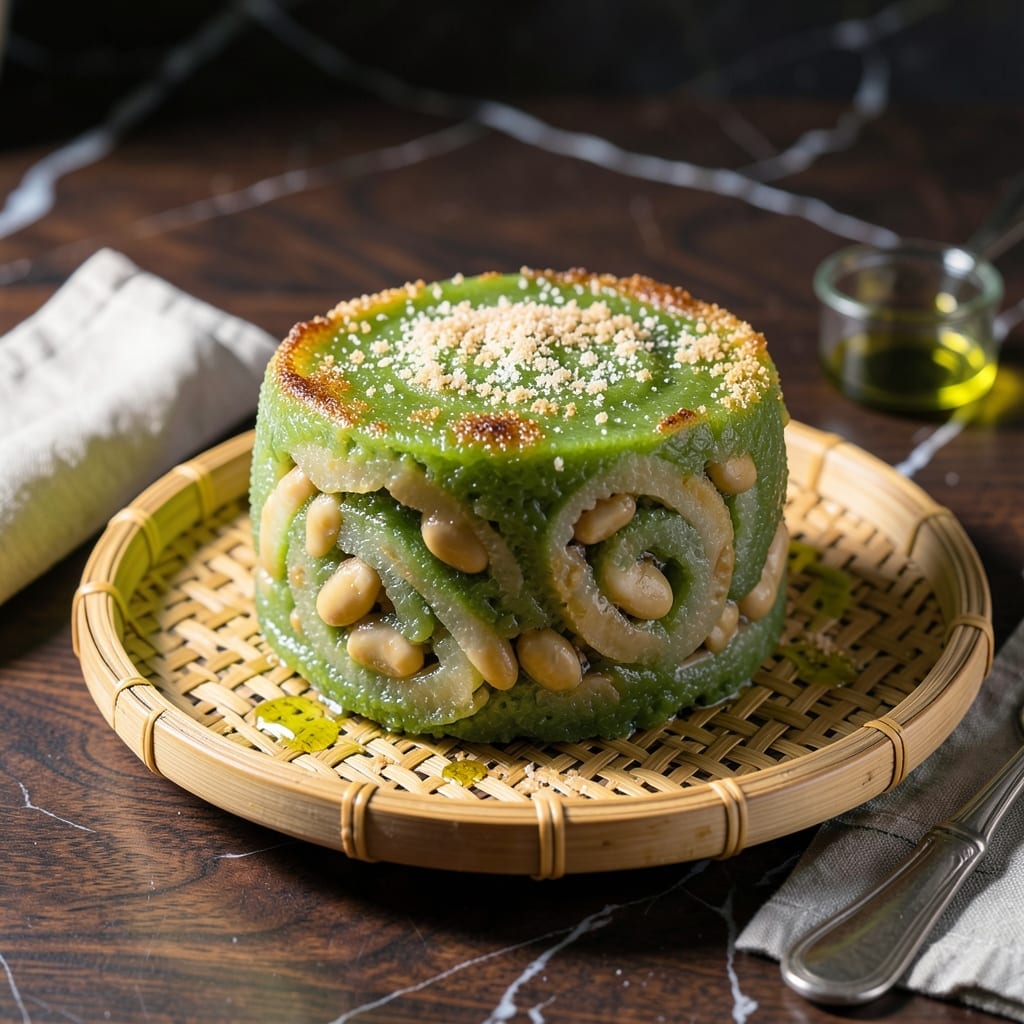
This traditional Vietnamese rice cake brings authentic flavors to your kitchen with minimal effort. The chewy layers and sweet mung bean filling create a perfect balance of textures and tastes.
Using simple ingredients and traditional steaming techniques, this dish captures the essence of Vietnamese street food. The result is a smooth, satisfying treat that’s both comforting and impressive.
Ingredients for Vietnam Rice Cake
Simple ingredients create authentic Vietnamese flavors with chewy rice layers and sweet filling.
| Ingredient | Amount | Notes |
|---|---|---|
| Glutinous Rice Flour 🌾 | 2 cups | Also called sweet rice flour |
| Split Mung Beans 🟡 | 1 cup | Soaked overnight, drained |
| Coconut Milk 🥥 | 1 ½ cups | Full-fat for creaminess |
| Coconut Sugar 🍚 | ¾ cup | Or brown sugar substitute |
| Tapioca Starch 🌾 | ¼ cup | For chewy texture |
| Salt 🧂 | ½ tsp | Fine sea salt preferred |
| Pandan Leaves 🌿 | 2 whole | Fresh or frozen, optional |
| Shallots 🧅 | 2 whole | Finely minced for filling |
| Vegetable Oil 🫒 | 2 tbsp | Neutral flavor for frying |
| Water 💧 | 1 ½ cups | For steaming and soaking |
| Cornstarch 🌾 | 1 tbsp | For dusting work surface |
Glutinous rice flour is essential for the right texture—Bob’s Red Mill or Asian markets carry it reliably. Split mung beans must be soaked overnight (or at least 8 hours) to soften properly. For coconut milk, Thai Kitchen or Native Forest brands offer consistent quality. Pandan leaves add authentic aroma but can be skipped if unavailable. Look for fresh leaves at Vietnamese grocers or use frozen as a backup.
No glutinous rice flour? Regular rice flour won’t work—it lacks the sticky quality needed. For coconut milk, full-fat canned is best, but carton works in a pinch (texture may differ). Swap coconut sugar for brown sugar at 1:1 ratio. Tapioca starch can be replaced with arrowroot powder at the same amount. Shallots add depth—red onion works as a substitute if needed.
Store rice flour in an airtight container in a cool, dry place for up to 1 year. Soaked mung beans keep refrigerated for 2 days before cooking. Once made, the cakes stay fresh at room temperature for 2 days or refrigerated for 5 days. Freeze for up to 3 months if needed.
Why You’ll Love This Recipe
- One Bowl Wonder: I just dump the glutinous rice flour, tapioca starch, and coconut milk in a single bowl—no fancy prep, no fuss.
- Sweet Coconut Magic: The coconut sugar caramelizes into this deep, toasty sweetness that pairs perfectly with the creamy mung bean filling.
- Feeds a Crowd: I make a big batch for potlucks, and honestly, it’s the first thing to disappear.
- Keeps Like a Dream: Leftovers taste even better the next day, and they hold up for three days in the fridge.
Step-by-Step Instructions for Vietnam Rice Cake
Master these precise techniques for perfectly layered cakes with a sweet, chewy filling every time.
Step 1: Prepare the Mung Bean Filling
Drain the soaked 1 cup Split Mung Beans and transfer them to a saucepan with the 1.5 cups Water. Add the 2 whole Pandan Leaves and bring to a gentle boil. Reduce heat and simmer for 25-30 minutes until the beans are completely soft and the water has mostly absorbed.
Remove the pandan leaves and transfer the beans to a food processor. Add the 0.75 cup Coconut Sugar and 0.5 tsp Salt, then blend until smooth. The mixture should be thick and slightly sticky—this ensures the filling holds its shape when assembled.
Step 2: Sauté the Aromatics and Finish the Filling
Heat the 2 tbsp Vegetable Oil in a skillet over medium heat. Add the finely minced 2 whole Shallots and sauté for 2-3 minutes until translucent and fragrant. Be careful not to let them brown, as this could impart a bitter flavor to the filling.
Add the processed mung bean mixture to the skillet and cook for an additional 5-7 minutes, stirring constantly. The filling should darken slightly and pull away from the sides of the pan when ready. Transfer to a bowl and let cool completely before using.
Step 3: Prepare the Rice Cake Batter
In a large bowl, whisk together the 2 cups Glutinous Rice Flour, 0.25 cup Tapioca Starch, and remaining 0.5 tsp Salt until fully combined. Slowly pour in the 1.5 cups Coconut Milk while whisking continuously to prevent lumps from forming.
The batter should be smooth and have the consistency of heavy cream. If it appears too thick, add a small amount of additional water, but be cautious—the coconut milk provides ample moisture. Let the batter rest for 10-15 minutes to allow the flours to fully hydrate.
Step 4: Steam the Rice Cake Layers
Lightly grease a square baking dish or steaming mold with some of the Vegetable Oil. Dust the surface with the 1 tbsp Cornstarch to prevent sticking. Pour half of the batter into the prepared dish, spreading it evenly. The layer should be about ¼-inch thick.
Place the dish in a steamer with 1-2 inches of boiling water. Cover and steam for 10-12 minutes until the layer is set and slightly translucent. Remove from the steamer and spread the cooled mung bean filling evenly over the surface, leaving a small border around the edges.
Step 5: Add the Top Layer and Final Steam
Pour the remaining batter over the mung bean filling, spreading gently to cover completely. Return the dish to the steamer and steam for an additional 15-18 minutes until the top layer is firm and a toothpick inserted comes out clean.
Remove from the steamer and let cool for 10 minutes before slicing. The layers should hold together cleanly, revealing the vibrant green filling between the chewy, slightly sticky rice cake. Serve at room temperature for the best texture.
Pro Tips For Making Vietnam Rice Cake
- Soak the Mung Beans: Give split mung beans at least 4 hours in warm water—I learned this the hard way after ending up with hard, undercooked bits in my rice cakes.
- Steam Low and Slow: Keep the heat medium-low and steam for 20-25 minutes; cranking it high makes the edges set too fast while the center stays gummy.
- Use Full-Fat Coconut Milk: Skip the light version—full-fat coconut milk gives the cakes that rich, creamy texture that’s non-negotiable for authentic flavor.
- Mix Flours Thoroughly: Whisk the glutinous rice flour and tapioca starch together for a full minute to avoid lumps in the batter—sounds tedious, but it actually changes the outcome.
Flavor Customization for This vietnam rice cake
Sweet Variations
For a richer flavor, add 1 tsp vanilla extract to the mung bean filling while blending. I also love mixing in ¼ cup toasted sesame seeds for nutty depth. These small tweaks elevate the dish without overpowering its traditional essence. 💫
Savory Twist
Transform this into a savory snack by omitting the coconut sugar and adding 1 tbsp soy sauce and 1 tsp grated ginger to the filling. Top with crushed peanuts and cilantro for a Vietnamese-inspired appetizer.
Colorful Additions
Stir 1 cup puréed pumpkin into the batter for a golden hue and subtle sweetness. Or blend ½ cup cooked red beans into the filling for a vibrant swirl effect. Both variations maintain the chewy texture.
Texture Boosters
For extra crunch, sprinkle 2 tbsp toasted coconut flakes between the layers before steaming. Some bakers press 1 tbsp black sesame seeds into the top layer before the final steam for visual appeal.
Spiced Flavors
Add ½ tsp cinnamon or ¼ tsp cardamom to the batter for warm, aromatic notes. These spices pair beautifully with the coconut milk. I find 1 pinch of turmeric adds a golden tint without affecting taste. ✨
Fruity Infusions
Fold ¼ cup diced mango or 2 tbsp shredded coconut into the filling for tropical flair. The natural sweetness reduces the need for extra sugar while adding freshness to every bite.
Nutrition Facts
Frequently Asked Questions
Can I use regular rice flour instead of glutinous?
No, regular rice flour lacks the sticky texture needed. Glutinous rice flour is essential for the chewy layers.
How long should I soak the mung beans?
Soak them overnight or at least 8 hours for best results. This softens them completely for smooth filling.
Can I make this without a steamer?
Yes! Use a large pot with a rack and lid. Add 1-2 inches of boiling water and steam as directed.
Why did my layers stick together?
Ensure the first layer is fully set before adding filling. Dusting with cornstarch also prevents sticking.

- Jollof Rice Sauce Recipe: West African Tomato and Spice Infusion - September 25, 2026
- Japanese Rice Soup Recipe: Umami-Rich Comfort in a Bowl - September 25, 2026
- Homemade Cream Of Rice Recipe: Silk-Smooth Breakfast in Minutes - September 25, 2026