
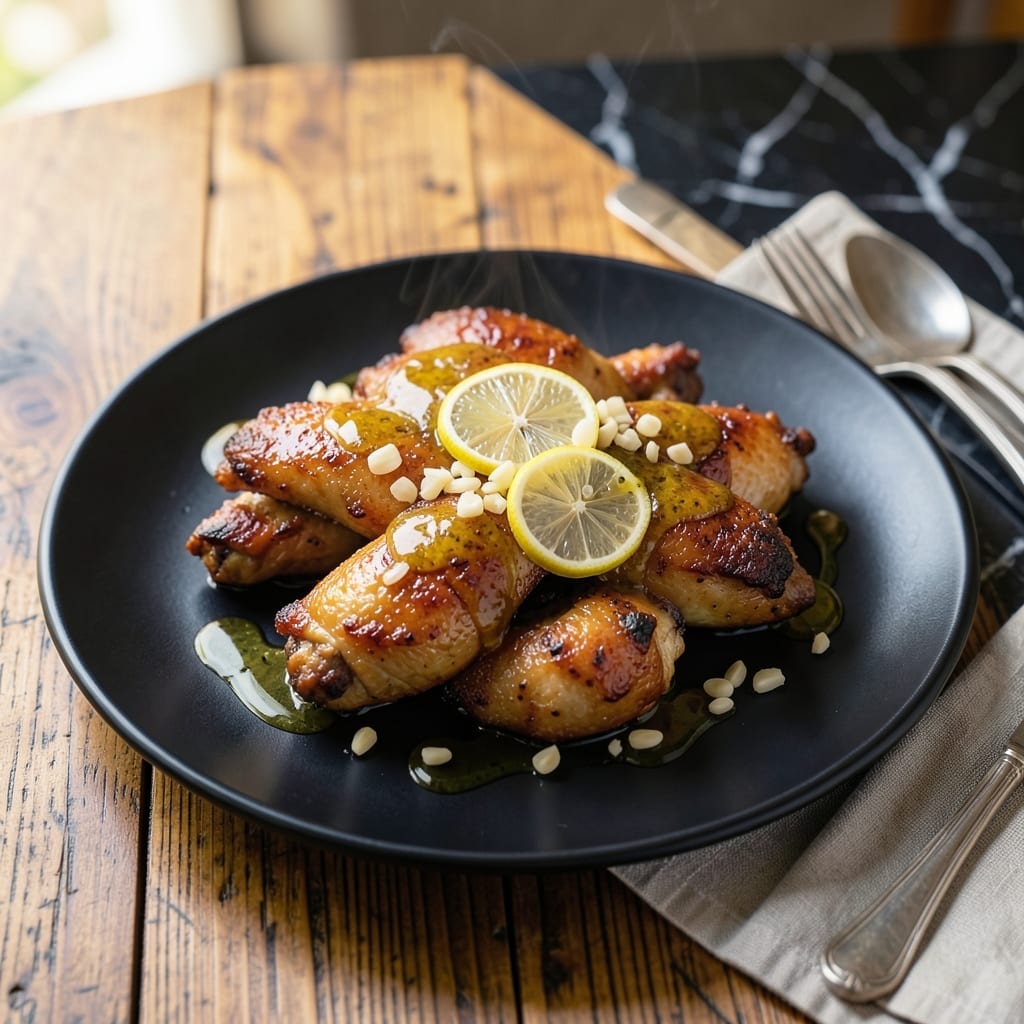
This Vietnamese lemon chicken delivers bright citrus flavors balanced with aromatic herbs in every bite. The marinade transforms ordinary chicken into something extraordinary with minimal effort.
The key is a simple blend of fresh lemon juice, garlic, and fish sauce that tenderizes while infusing flavor. A quick sear ensures golden brown skin, then a sticky glaze forms as it finishes cooking.
What emerges is juicy chicken with a tangy, slightly sweet coating and fragrant herb notes. The sauce reduces to a glossy sheen that clings perfectly to each piece.
Serve over steamed rice to soak up every drop of that incredible sauce. The whole dish comes together in under 45 minutes.
Ingredients for Vietnamese Lemon Chicken
Bright citrus and fragrant herbs transform simple ingredients into something extraordinary here.
| Ingredient | Amount | Notes |
|---|---|---|
| Chicken Thighs 🍗 | 2 lb | Boneless, skin-on preferred |
| Fresh Lemon Juice 🍋 | ½ cup | About 4-5 large lemons |
| Fish Sauce 🐟 | 3 tbsp | Vietnamese brand preferred |
| Garlic Cloves 🧄 | 6 cloves | Minced finely |
| Granulated Sugar 🍚 | 3 tbsp | Balances acidity |
| Soy Sauce 🫒 | 2 tbsp | Low-sodium for control |
| Fresh Ginger 🌿 | 1 tbsp | Grated or minced |
| Shallot 🧅 | 1 whole | Finely diced |
| Vegetable Oil 🫒 | 2 tbsp | For searing chicken |
| Fresh Cilantro 🌿 | ¼ cup | Chopped, for garnish |
| Fresh Thai Basil 🌿 | ¼ cup | Optional, for garnish |
| Cornstarch 🌾 | 1 tbsp | For thickening sauce |
| Water 💧 | 2 tbsp | Mixed with cornstarch |
The fish sauce is non-negotiable for authentic flavor. Red Boat or Three Crabs brands are widely available at Asian markets or the international aisle. Chicken thighs stay juicier than breasts—look for skin-on for that golden sear mentioned in the intro. The shallot and ginger add depth, so don’t skip them (fresh is a must here).
No Thai basil? Regular basil works fine, though the flavor profile shifts slightly. Swap lime juice at a 1:1 ratio if you’re out of lemons. For a gluten-free version, tamari instead of soy sauce does the trick. The cornstarch slurry is key for that glossy glaze—use cold water to prevent clumping.
The chicken is best served immediately, but leftovers keep for 3-4 days in the fridge. Reheat gently to avoid drying out the meat. The sauce thickens as it cools, so thin with a splash of water if needed.
Why You’ll Love This Recipe
- One Pan Wonder: I toss everything in a single skillet—chicken, garlic, lemon, fish sauce—and let the oven do the work.
- Sweet-Tangy Magic: The fish sauce and sugar caramelize into this sticky, citrusy glaze that clings to every bite.
- Weeknight Rescue: Between us, this is my Tuesday night lifesaver when I need dinner fast but still crave restaurant-quality flavor.
- Budget Stretcher: Chicken thighs stay juicy and cheap, and a little fish sauce goes a long way for maximum taste without breaking the bank.
Step-by-Step Instructions for Vietnamese Lemon Chicken
Here’s the method. Straightforward, tested, works every time.
Step 1: Sear the Chicken Thighs
Pat the 2 lb Chicken Thighs dry with paper towels—this ensures a good sear. Heat the 2 tbsp Vegetable Oil in a large skillet over medium-high heat until shimmering. Add the chicken thighs skin-side down and sear undisturbed for 5-6 minutes until the skin is deep golden brown and crisp.
Flip and cook for another 4-5 minutes until the chicken is cooked through. You’ll know it’s done when the internal temperature reaches 165°F and the juices run clear. Remove the chicken from the skillet and set aside on a plate.
Step 2: Sauté Aromatics for the Glaze
In the same skillet, reduce heat to medium and add the 1 whole Shallot (finely diced). Sauté for 2-3 minutes until softened and just starting to turn translucent. Add the 6 cloves Garlic Cloves (minced finely) and 1 tbsp Fresh Ginger (grated or minced), cooking for 30 seconds until fragrant.
Be careful not to let the garlic burn—it should turn a light golden color, not dark brown. This builds the aromatic base for your glaze, so take your time and stir frequently.
Step 3: Build and Thicken the Citrus Glaze
Pour in the 0.5 cup Fresh Lemon Juice, 3 tbsp Fish Sauce, 2 tbsp Soy Sauce, and 3 tbsp Granulated Sugar. Stir to combine and bring to a gentle simmer. Let this mixture cook for 3-4 minutes until the sugar fully dissolves and the liquid reduces slightly.
In a small bowl, mix the 1 tbsp Cornstarch with the 2 tbsp Water to create a slurry. Slowly pour this into the skillet while stirring constantly. Cook for another 1-2 minutes until the glaze thickens enough to coat the back of a spoon.
Step 4: Coat and Garnish the Chicken
Return the cooked chicken thighs to the skillet, turning them to coat evenly in the glaze. Cook for an additional 1-2 minutes to allow the flavors to meld together. The glaze should cling to the chicken, creating a glossy, sticky coating.
Transfer the chicken to a serving plate and garnish with the 0.25 cup Fresh Cilantro (chopped) and 0.25 cup Fresh Thai Basil (optional). Serve immediately with steamed rice to soak up the extra sauce.
Pro Tips For Making Vietnamese Lemon Chicken
- Sear Chicken First: Get a good golden crust on those thighs before adding liquids—I learned this the hard way after ending up with pale, soggy chicken in my early attempts.
- Balance the Marinade: Taste your lemon-fish sauce mix before marinating; the sugar should offset the saltiness, or the dish will taste harsh. My grandmother swore by this, and she was right.
- Skip the Bottled Juice: Fresh lemon juice makes a real difference here; bottled stuff lacks the bright acidity this dish needs.
- Let It Reduce: After adding the marinade to the pan, let it simmer for 3-4 minutes until slightly thickened—resist the urge to rush, or you’ll lose that glossy, sticky coating.
Dietary Considerations for This vietnamese lemon chicken
Gluten-Free Option
For a gluten-free version, simply swap the 2 tbsp soy sauce for tamari or a certified gluten-free soy sauce alternative. I recommend San-J Tamari as it maintains the same rich umami depth without compromising texture or flavor. 💡
Lower Sodium Adjustments
To reduce sodium, use low-sodium soy sauce and cut the 3 tbsp fish sauce in half, adding a splash more lemon juice to compensate for flavor balance. The result is just as vibrant but gentler on your system.
Dairy-Free by Nature
This creation is naturally dairy-free, so no substitutions are needed. The glossy glaze comes entirely from the cornstarch slurry and citrus base, making it safe for lactose-intolerant diners without any modifications.
Nut-Free and Safe
With no nuts or nut-derived ingredients, this dish is perfect for those with nut allergies. Just double-check your fish sauce brand—some may contain trace amounts from processing facilities.
Paleo Adaptations
Replace the 3 tbsp granulated sugar with coconut sugar or honey for a paleo-friendly version. Skip the cornstarch and thicken the sauce with arrowroot powder instead. Works beautifully every time. ✨
Keto-Friendly Tweaks
For a keto approach, reduce the 3 tbsp sugar to 1 tbsp and add 2 tbsp erythritol or your preferred keto sweetener. The dish stays bright and flavorful while keeping carbs in check.
Nutrition Facts
Frequently Asked Questions
Can I use chicken breasts instead of thighs?
You can, but thighs stay juicier. If using breasts, reduce cooking time to 4-5 minutes per side to prevent dryness. Pound them to even thickness for more consistent results.
What if my glaze is too thin?
Simmer it longer or mix 1 tsp cornstarch with 1 tbsp cold water and stir in. Cook for 1-2 minutes until it thickens to your liking. The key is patience—don’t rush the process.
How do I make it less salty?
Use low-sodium fish sauce or reduce it to 2 tbsp. Balance with extra lemon juice or a pinch of sugar. Taste as you go to adjust.

- Jollof Rice Sauce Recipe: West African Tomato and Spice Infusion - September 25, 2026
- Japanese Rice Soup Recipe: Umami-Rich Comfort in a Bowl - September 25, 2026
- Homemade Cream Of Rice Recipe: Silk-Smooth Breakfast in Minutes - September 25, 2026