
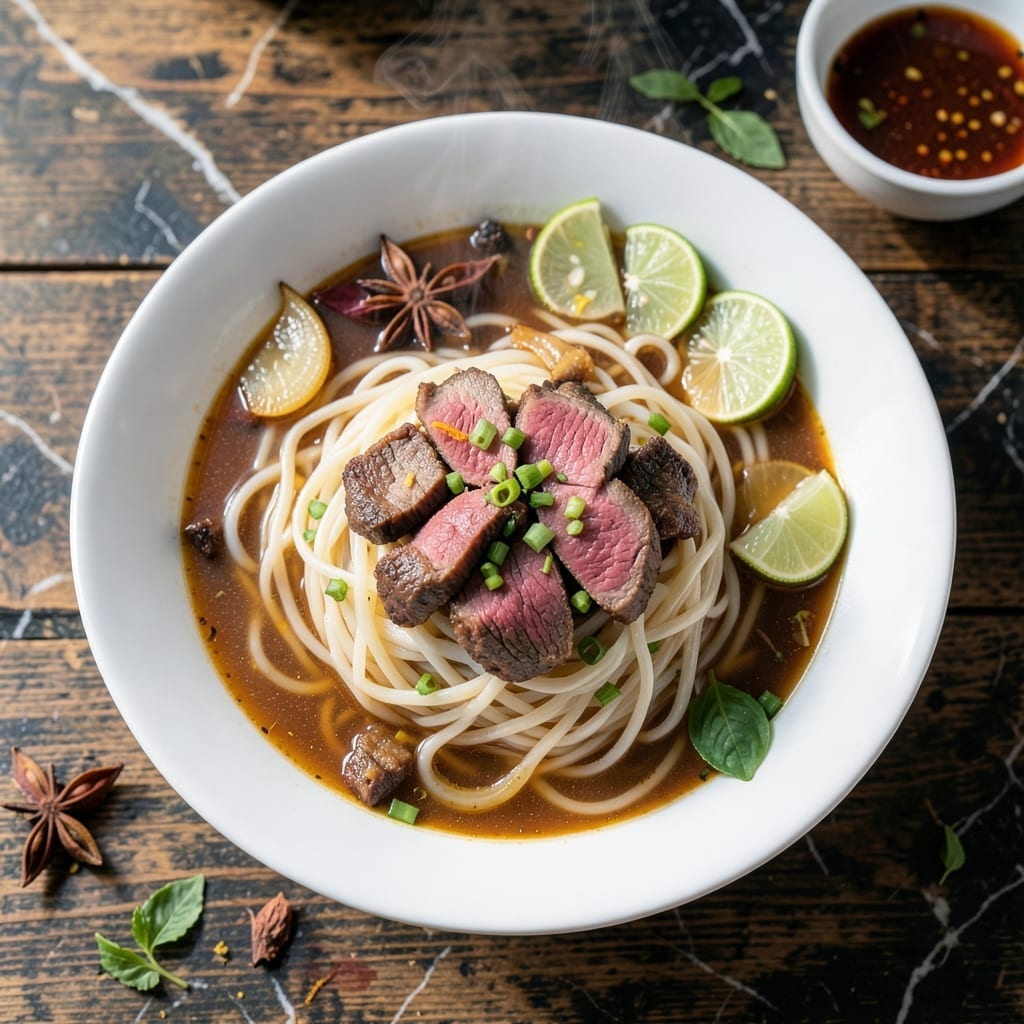
This Vietnamese rice noodle soup delivers a deeply aromatic broth that’s both comforting and complex. I’ve tested this recipe multiple times to perfect the balance of spices and herbs, ensuring every bowl is restaurant-quality without the fuss.
The broth is the heart of this dish, simmered with charred onion and ginger for depth, then finished with fish sauce and a touch of sugar. Thin rice noodles soak up the flavorful liquid, while fresh herbs like Thai basil and cilantro add brightness.
Toppings like tender slices of beef, bean sprouts, and lime wedges let everyone customize their bowl. The result is a soup that’s light yet deeply satisfying, with layers of flavor in every spoonful.
This is the kind of dish that transforms a simple meal into something special. Here’s how to make it at home.
Ingredients for Vietnamese Rice Noodle Soup
Deeply aromatic broth with fresh herbs and tender beef. Simple yet complex flavors await.
| Ingredient | Amount | Notes |
|---|---|---|
| Beef Bones 🥩 | 2 lb | Marrow or knuckle bones |
| Yellow Onion 🧅 | 1 whole | Halved, charred over flame |
| Fresh Ginger 🌿 | 4 oz | Thick slice, charred |
| Fish Sauce 🐟 | 3 tbsp | Vietnamese variety preferred |
| Rock Sugar 🍬 | 1 oz | Or sub granulated sugar |
| Star Anise Pods ⭐ | 2 whole | Whole, toasted lightly |
| Cinnamon Stick 🌰 | 1 whole | 2-inch piece |
| Cloves 🌼 | 3 whole | Whole, not ground |
| Cardamom Pods 🌿 | 2 whole | Lightly crushed |
| Rice Noodles 🍜 | 8 oz | Dry, thin variety |
| Sirloin Steak 🥩 | ½ lb | Thinly sliced against grain |
| Thai Basil 🌿 | 1 cup | Fresh leaves, loosely packed |
| Cilantro 🍃 | ½ cup | Fresh, rough chopped |
| Bean Sprouts 🌱 | 2 cups | Fresh, rinsed |
| Limes 🍋 | 2 whole | Cut into wedges |
The broth hinges on quality bones—ask your butcher for marrow or knuckle bones with plenty of connective tissue for gelatinous richness. Char the onion and ginger directly over a gas flame (or under the broiler) until blackened in spots for that signature depth. Asian markets carry rock sugar, but granulated works fine. For spices, Penzeys or bulk bins at natural food stores are reliable sources.
No beef bones? Chicken bones plus an extra tablespoon of fish sauce will work in a pinch. Vegetarian? Use shiitake mushrooms and kombu for umami depth. Thai basil can be tricky to find—regular basil plus mint gets you close. For the noodles, rice sticks labeled ‘pho’ are ideal, but any thin rice noodle works. The steak can be flank or ribeye if sirloin isn’t available.
Broth freezes beautifully for up to 3 months. Store fresh herbs wrapped in damp paper towels in the fridge for 5-7 days. Noodles and sprouts are best fresh—soak the noodles right before serving. Limes keep at room temperature for 1 week or refrigerated for 2 weeks.
Why You’ll Love This Recipe
- I’ll be real: the flavors actually improve overnight, so leftovers taste even more ridiculous the second day.
- Set It and Forget It: The beef bones simmer away while I tackle my to-do list—honestly, it’s the easiest hands-off broth I make.
- Deep Umami Richness: Fish sauce and charred onion create that complex, savory depth I crave in every spoonful.
- Feeds a Hungry Crowd: Between us, it’s my go-to for Sunday family dinners when everyone’s dragging in at different times.
Step-by-Step Instructions for Vietnamese Rice Noodle Soup
Master the technique and timing to build layers of flavor in this aromatic dish.
Step 1: Char and Parboil the Beef Bones
First, char the 2 lb Beef Bones under a hot broiler for 5-7 minutes until deeply browned. This caramelization step develops the rich, meaty depth that defines the broth. Meanwhile, char the halved 1 whole Yellow Onion and the thick slice of 4 oz Fresh Ginger directly over a gas flame or under the broiler until blackened in spots.
Transfer the bones to a large stockpot and cover with cold water. Bring to a boil, then parboil for 5 minutes. This removes impurities that would cloud your broth. Drain and rinse the bones thoroughly under cold water to remove any scum or blood.
Step 2: Simmer the Broth with Spices
Return the parboiled bones to the stockpot and cover with 8-10 cups of fresh cold water. Add the charred onion and ginger, then bring to a rolling boil. Reduce to a gentle simmer and skim off any foam that rises to the surface during the first 20 minutes.
Add the 2 whole Star Anise Pods, 1 whole Cinnamon Stick, 3 whole Cloves, and 2 whole Cardamom Pods. Stir in the 3 tbsp Fish Sauce and 1 oz Rock Sugar. Partially cover and maintain a low simmer for 3-4 hours, until the broth is deeply aromatic and richly colored. The spices should be fragrant but not overpowering.
Step 3: Prepare the Noodles and Toppings
Soak the 8 oz Rice Noodles in warm water for 20-30 minutes until pliable but still slightly firm. This prevents them from turning mushy when added to the hot broth. Drain and set aside until ready to assemble.
Thinly slice the 0.5 lb Sirloin Steak against the grain into ⅛-inch thick pieces. Rinse the 2 cups Bean Sprouts and drain well. Rough chop the 0.5 cup Cilantro and separate the leaves from the 1 cup Thai Basil. Cut the 2 whole Limes into wedges for serving.
Step 4: Strain the Broth and Assemble the Bowls
Strain the broth through a fine-mesh sieve into a clean pot, discarding the solids. You should have about 6 cups of rich, clear broth. Taste and adjust seasoning with additional fish sauce if needed. Keep the broth hot over low heat.
Divide the soaked rice noodles among four serving bowls. Top each with a portion of the raw sirloin slices and a handful of bean sprouts. Ladle the hot broth over the top, ensuring the meat is fully submerged. The hot broth will cook the steak to medium-rare in the bowl.
Step 5: Garnish and Serve Immediately
Garnish each bowl with a generous handful of Thai basil and cilantro. Serve with lime wedges on the side for squeezing. The herbs should be fresh and vibrant, adding a bright contrast to the rich broth. Encourage everyone to add herbs and lime to taste.
The bean sprouts should retain a slight crunch, and the noodles should be tender but not mushy. Serve immediately while the broth is piping hot and the aromas are at their peak.
Pro Tips For Making Vietnamese Rice Noodle Soup
- Char the Onions: Blacken your halved yellow onions directly over a gas flame or under the broiler for 5-7 minutes—this adds a deep, smoky sweetness to the broth that raw onions just can’t deliver.
- Parboil the Bones: Simmer the beef bones in boiling water for 10 minutes first, then rinse them under cold water to remove impurities; I learned this the hard way after my first few batches had a scummy, cloudy broth.
- Skim the Scum: Keep a fine-mesh skimmer handy during the first 30 minutes of simmering and remove any foam that rises to the surface—it’s tedious but guarantees a clean, clear broth.
- Use Rock Sugar Sparingly: Start with just 1 small piece of rock sugar (about 10g) and adjust to taste later; too much sweetness early on can overpower the savory balance of the fish sauce and ginger.
Troubleshooting Great vietnamese rice noodle soup
Broth Too Cloudy
If your broth looks murky, you likely skipped parboiling the bones. After charring, boil them for 5 minutes, then rinse thoroughly. This removes blood and impurities. Also, avoid boiling vigorously during simmering—keep it gentle. 💡
Bland Broth Flavor
Under-seasoned broth often needs more fish sauce or rock sugar. Start with 1 tbsp fish sauce at a time, tasting as you go. Remember, the charred onion and ginger add depth, so don’t skip that step.
Noodles Turn Mushy
Soak rice noodles in warm water for only 20-30 minutes until pliable. Over-soaking makes them gummy. Add them to bowls just before ladling hot broth to finish cooking. They should be tender but retain slight bite.
Tough Beef Slices
Slice the sirloin steak against the grain into ⅛-inch thick pieces. Thicker cuts won’t cook through in the hot broth. Use very thin slices for melt-in-your-mouth texture. The broth must be boiling hot when poured over.
Weak Aroma
Toast the star anise, cinnamon, and cardamom lightly before adding to the broth. This releases their essential oils. Also, ensure your onion and ginger are deeply charred—blackened spots are key. 🌟
Herbs Wilting Too Fast
Keep Thai basil and cilantro chilled in damp paper towels until serving. Add them to bowls last minute so they stay vibrant. Lime wedges can be prepped ahead but add their juice fresh for maximum brightness.
Nutrition Facts
Frequently Asked Questions
What kind of rice noodles work best?
Use thin rice sticks labeled for pho. Soak in warm water for 20-30 minutes until pliable. Banh pho noodles are ideal, but any thin rice noodle will work in a pinch.
Can I make this vegetarian?
Yes! Swap beef bones for shiitake mushrooms and kombu. Use soy sauce instead of fish sauce, and tofu or tempeh for protein. The charred onion and ginger still add depth.
How long does the broth keep?
Store strained broth in an airtight container in the fridge for up to 5 days. For longer storage, freeze for 3 months. Reheat gently to preserve flavors.
Why char the onion and ginger?
Charring adds smoky, caramelized depth to the broth. It’s a traditional technique that develops complex flavors. Skip this, and your broth may taste flat.

- Gambia Jollof Rice Recipe: West African One-Pot Spice Fusion - October 5, 2026
- Cream of Wild Rice Soup Recipe Minnesota: Northwoods Creaminess With Foraged Grains - October 5, 2026
- Frozen Cauliflower Fried Rice Recipe: Quick Low-Carb Wok Magic - October 5, 2026